Nature
How Warming Oceans Are Supercharging Hurricanes
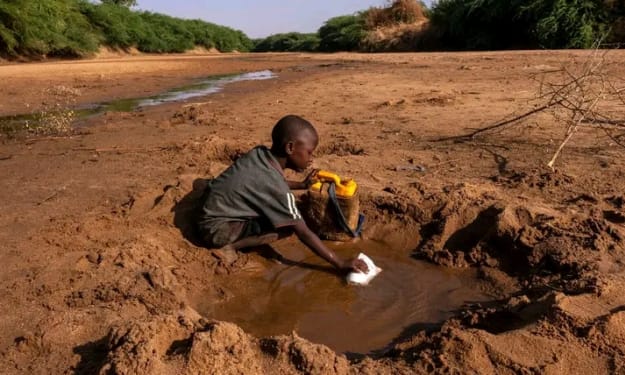
It’s getting worse in the form of stronger, wetter, more frequent hurricanes. The culprit? Cold water combat has been supercharged by warming oceans, with the storms hitting harder than ever on coastal communities. And as global temperatures rise, it becomes clearer that warming oceans mean more, bigger, stronger hurricanes. Right now, this is a growing threat.
By Mudassar saleem2 years ago in Earth
NASA tracks 120-foot asteroid 2024 XN1 nearing Earth on Christmas eve
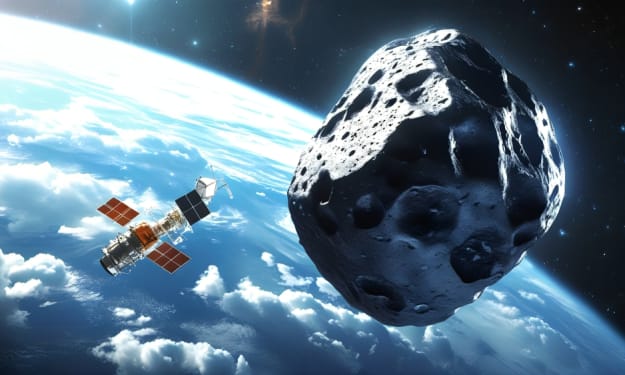
On Christmas Eve, December 24, 2024, the celestial skies will host a fascinating event. NASA has been closely monitoring an asteroid named 2024 XN1, which is set to pass Earth at a safe yet intriguingly close distance. This asteroid, measuring approximately 120 feet in diameter, will not only add excitement to the holiday season but also offer scientists a unique opportunity to observe and study a near-Earth object (NEO).
By Prashant Sharma2 years ago in Earth
Global warming
A Story of Global Warming It was the year 1987, and Emma sat by the window of her small coastal house, staring out at the ocean. The waves, once a serene blue, had turned a murky gray, lapping at the shores with an unsettling urgency. A thick fog hung in the air, something that had become increasingly common in recent years. It wasn’t just the weather that had changed; it was everything. The world, as she knew it, was no longer the same. Global warming, once a distant theory, had long since become undeniable reality. Emma, like many others, had grown up hearing about the rising temperatures, melting ice caps, and extreme weather events. As a child, she had been told that future generations would bear the brunt of the climate crisis, but she never imagined she’d be living through it. In 1996, when Emma was still a teenager, the world had started to wake up to the harsh realities of global warming. Scientists had warned that if immediate action wasn’t taken, the planet would face catastrophic consequences. But the response from governments, industries, and the general public had been too slow. Nations made promises at climate summits, but economic interests always took precedence. The fossil fuel industries, despite the mounting evidence, remained powerful and influential, lobbying against policies that could curb emissions. By the time Emma was in her twenties, the tipping point had arrived. The first signs were subtle. Heatwaves became more frequent and intense. Droughts ravaged once fertile lands, and floods overwhelmed cities that were unprepared for the rising waters. The Arctic ice began to melt at an alarming rate, raising sea levels and threatening coastal cities like Emma's. The storms, once mere natural events, grew stronger, more erratic, and more deadly. It was when Emma’s childhood home, a small village on the coast, was swallowed by the sea that the gravity of the situation truly hit her. The rising waters had come gradually, but the final storm surge had been ferocious. Her parents had insisted on staying in the house, but Emma had been able to convince them to evacuate. Still, it wasn’t enough. The house was lost to the ocean, and so were the memories tied to it. Emma’s family, like many others, relocated inland, but they were never truly safe. Climate refugees had become a new reality as millions of people were displaced by rising seas, wildfires, and collapsing ecosystems. Nations, unprepared for the scale of the crisis, struggled to accommodate the flood of displaced people, leading to social unrest, political instability, and even conflict. Now, at the age of 40, Emma found herself staring at the horizon, wondering if it was too late. The ocean seemed to encroach further each year, and scientists predicted that her coastal town would be completely underwater within a decade. But it wasn’t just the sea level rise that threatened the planet; the effects of global warming had spread to every corner of the Earth. In the past, Emma had attended climate protests, hoping to raise awareness, but the political inertia had been maddening. The promises of renewable energy and green technology had been slow to materialize, and even the few successes felt like drops in an ocean of need. At one point, she had truly believed that global action would be enough to avert the worst of the crisis. But as the years passed, the evidence was irrefutable: the climate had changed, and there was no going back. The conversation had shifted from prevention to adaptation. Communities had to learn how to live with the chaos, how to survive in a world where natural disasters were no longer rare occurrences, but regular events. The rich had the luxury of retreating into fortified cities, insulated from the worst impacts. But for those like Emma, the majority of people, survival had become a daily struggle. In the face of all this, Emma had begun to think about her own role in the world. She had become a scientist, dedicating her career to studying the effects of climate change and finding ways to mitigate them. She worked with a group of researchers focused on coastal defense systems—barriers, levees, and innovative technologies designed to protect people from the encroaching seas. But she knew that these solutions were only temporary. The real challenge was addressing the root cause—carbon emissions—and that required a global effort that still seemed out of reach. One day, as Emma walked along the beach near her house, she encountered a group of children, their faces full of wonder as they played in the sand. They had no idea that this same beach would soon be underwater, swallowed by the rising tides. Emma watched them for a while, her heart heavy. She knew that they would inherit a world very different from the one she had grown up in, a world where the planet’s ability to sustain life was no longer guaranteed. "How can I give them hope?" she wondered. The planet’s future seemed so uncertain. The path to a sustainable world required profound changes in every aspect of human life: in the way energy was produced and consumed, in how food was grown, in how cities were built, and how people interacted with the environment. The solutions were there, but the world was not ready to implement them. Despite the overwhelming challenges, Emma found herself clinging to a fragile thread of hope. It was the same hope that had driven her to study climate science in the first place: the belief that humanity, though flawed, was capable of change. She had seen small victories, like the rise of green energy solutions in some parts of the world, the growing awareness of the urgency of the crisis, and the small, everyday actions taken by individuals who were trying to make a difference. But she knew that the scale of the response needed to match the scale of the crisis. As she turned back toward her home, Emma thought about the future. It was clear that the world could not continue down its current path. People had to act now, and they had to act together. She had seen firsthand the devastating effects of inaction, but she had also seen the power of collective effort. If humanity could rise to the occasion, if the world’s leaders could put aside their differences and work toward a common goal, there was still a chance to prevent the worst of the climate disaster. But that required more than just small-scale solutions. It required an unprecedented global commitment to sustainability, to a future where the planet and its people could thrive in harmony. Emma knew that she might not live to see the world’s full recovery, but she had made a vow to herself: to keep fighting, to keep working, and to keep dreaming of a better world for the children who played on the beach. The struggle was far from over, but perhaps, just perhaps, humanity still had a chance to turn the tide. The Rising Tide:
By Karabo Mosoma2 years ago in Earth
Astrology movement . Content Warning.
Astrology Movement: Your Guide to Cosmic Wisdom The astrology movement is growing fast in our world today. I'm excited to share my insights into this fascinating field. Astrology offers us a special way to understand the universe and our own paths. It helps us see the mysteries of the stars and how they guide us.
By Waseem Muhammad Rafiq2 years ago in Earth
How Many Nepalese Are There in Australia? Understanding Nepalese Economic Characteristics
Blog Post: Understanding Nepalese Global Presence and Economic Characteristics Introduction Nepalese people have a significant presence globally, and the economic, social, and cultural dynamics of their diaspora contribute to Nepal’s identity. In this blog, we’ll explore intriguing questions such as how many Nepalese live abroad, visa policies for Nepalese citizens, and unique aspects of the Nepalese economy. How Many Nepalese Are There in Australia? Australia has become a favored destination for Nepalese immigrants seeking education, work, and a better lifestyle. As of 2023, it is estimated that there are over 100,000 Nepalese in Australia. This number reflects the growing Nepalese community in Australian cities like Sydney, Melbourne, and Brisbane. Which Countries Have Visa-on-Arrival for Nepalese Citizens? For Nepalese travelers, visa-on-arrival is available in several countries, primarily in Africa, Southeast Asia, and the Caribbean. Some notable countries include: MaldivesCambodiaMadagascar These destinations facilitate Nepalese travelers with hassle-free entry requirements. How Many Nepalese Are Working Abroad in 2023? The number of Nepalese working abroad is substantial, with estimates suggesting over 3 million individuals. Major destinations include: 1) Gulf Countries (such as Qatar, UAE, and Saudi Arabia) 2) Malaysia 3) south Korea Their contributions are a cornerstone of Nepal's economy, especially through remittances. -Why is Government Borrowing Important for the Nepalese Economy? Government borrowing plays a critical role in Nepal's economic development by: 1. Funding Infrastructure Projects: Investment in roads, bridges, and hydropower projects boosts national growth. 2. Stabilizing the Economy: Borrowing supports budget deficits, especially during crises like natural disasters or pandemics. Which Country is Best for a Working Visa for Nepalese? Countries like Japan and South Korea offer favorable working visa options for Nepalese citizens. Their structured programs provide opportunities in industries like agriculture, construction, and technology. How Can Nepalese Students Get Information About U.S.-Based Colleges? Nepalese students can access details about U.S. colleges through: Education Consultancies in Nepal Official Websites of Colleges EducationUSA Centers These platforms help students navigate admissions, scholarships, and visa requirements. Which Country is Easy to Get PR for Nepalese? Canada and Australia are popular among Nepalese for obtaining Permanent Residency (PR). Their transparent immigration systems and demand for skilled workers make them top choices. -- What Are the Characteristics of the Nepalese Economy? The Nepalese economy exhibits these key features: 1. Agriculture-Driven: Approximately 60% of the population relies on farming. 2. Remittance-Based: Remittances contribute nearly 30% to Nepal’s GDP.
By Unfiltered Guy2 years ago in Earth
The Super Story: The Rise of Everyday Heroes
In the bustling city of Cedarvale, where skyscrapers kissed the clouds and the streets thrummed with endless motion, lived a young boy named Liam. At twelve years old, Liam was a dreamer. He spent his days sketching superheroes in his worn notebook, imagining worlds where caped crusaders saved the day. But his world was far from the heroic tales he drew.
By oluwatoba ayomikun2 years ago in Earth
Is Earth in Danger? NASA’s Warning on the 84-Foot Asteroid That Is Close to Hitting Earth
Introduction: In recent months space agencies like NASA have remained on high alert regarding the potential threat posed by asteroids capable of crossing Earth’s orbit. One of those objects, a hulking 84-foot asteroid, is attracting media coverage because of how close it is. This asteroid is zooming through space — but should we be worried? How does NASA monitor these objects, and what is it doing to protect us? In this article, we describe what NASA’s asteroid warning systems are, why this particular asteroid is a close flyby worth paying attention to and what the asteroid could mean for Earth.
By Vinay Singh2 years ago in Earth
Sacred Valley Tour from Ollantaytambo to Cusco
The Sacred Valley of the Incas is one of Peru’s most enchanting regions, offering breathtaking landscapes, rich history, and vibrant culture. Sacred Valley tour from Ollantaytambo to Cusco takes you through some of the most significant archaeological sites and charming towns in the area. This journey is a must for history enthusiasts, adventure seekers, and anyone looking to explore the heart of Inca civilisation.
By Luan travel Peru2 years ago in Earth
Winter Solstice Wonder: Ancient Traditions for the Longest Night of 2024
When the Earth tilts as far from the sun as it can during its elliptical journey, something significant is taking place. The longest night of the year—a journey into darkness that precedes the gradual, hopeful rise towards light. This is the Winter Solstice, an astronomical event that has fascinated human imagination for millennia, inspiring cultures worldwide to honor the occasion with fervor and ritual. As we approach the Winter Solstice of 2024, let us delve into the ancient customs that pay tribute to this cosmic occurrence, and comprehend how societies, both historical and contemporary, honor the rhythms of nature.
By Musical Rainbow2 years ago in Earth