Nature
The causes of earthquakes.
Earthquakes have the ability to cause widespread devastation, loss of life, and significant economic damage. While earthquakes are unpredictable, scientists have developed an understanding of their causes, allowing us to mitigate their impact. This essay explores the primary causes of earthquakes, including tectonic activity, volcanic eruptions, human-induced factors, and other Geophysical processes.
By Badhan Sen2 years ago in Earth
The deepest part of the ocean.
The ocean depths conceal secrets of marine life, geological formations, and extreme environmental conditions. The deepest known part of the ocean is the Challenger Deep, located in the Mariana Trench of the western Pacific Ocean. This abyss, approximately 10,994 meters (36,070 feet) deep, is deeper than Mount Everest is tall. Understanding the Challenger Deep provides insight into Earth’s geology, extreme ecosystems, and the limits of human exploration.
By Badhan Sen2 years ago in Earth
How animals adapt to their environment.
Animal adaptations can be structural, behavioral, or physiological, allowing animals to obtain food, avoid predators, reproduce, and cope with changing conditions. This essay explores the various ways in which animals adapt to their environments, providing examples across different habitats, including deserts, polar regions, forests, and aquatic ecosystems.
By Badhan Sen2 years ago in Earth
Why seasons change.
The changing of seasons is one of the most remarkable natural phenomena on Earth. But why do seasons change? The answer lies in the Earth’s axial tilt, its orbit around the Sun, and the way sunlight reaches different parts of the globe at various times of the year.
By Badhan Sen2 years ago in Earth
The effects of Global warming.
Global warming refers to the long-term increase in Earth's average surface temperature due to human activities, particularly the burning of fossil fuels, deforestation, and industrial processes. This phenomenon has far-reaching consequences that affect ecosystems, weather patterns, sea levels, and human societies. Understanding the effects of global warming is crucial in addressing the challenges it presents and finding solutions to mitigate its impact.
By Badhan Sen2 years ago in Earth
Unlocking the Potential of Cannabis in Healthcare: The Science Behind Terpenes and Their Medicinal Benefits
The healthcare industry has witnessed revolutionary changes in recent years, with cannabis emerging as a significant player in medicine. Cannabis, a plant long associated with recreational use, has now gained recognition for its medicinal properties. Central to this transformation is the science of terpenes—organic compounds found in cannabis and many other plants. These compounds are proving to be powerful allies in the quest for better healthcare.
By Jarod Noble Harvey2 years ago in Earth
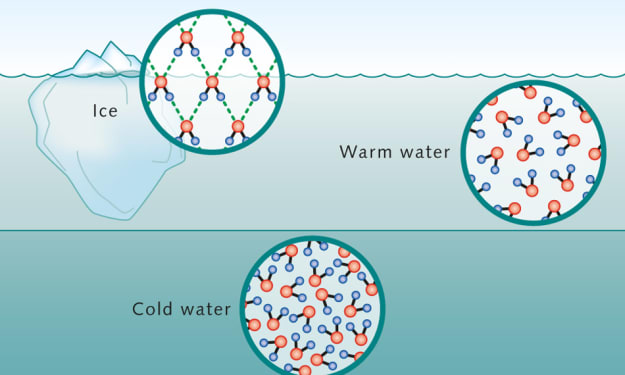
Why water expands when it freezes.
This phenomenon can seem a bit counterintuitive at first because most materials contract when they transition from liquid to solid. However, water behaves differently due to the unique properties of its molecules and the hydrogen bonds between them.
By Badhan Sen2 years ago in Earth
How plants make oxygen through photosynthesis.
Plants are essential to life on Earth, and one of their most vital functions is producing oxygen through a process called photosynthesis. This natural mechanism not only sustains the plants themselves but also supports nearly all life forms that depend on oxygen. In this process, plants use sunlight, carbon dioxide, and water to create glucose (a form of sugar) and oxygen. Let's break down this process in detail.
By Badhan Sen2 years ago in Earth
Why the sky appears blue.
The blue color of the sky is a result of a phenomenon known as Rayleigh scattering, which occurs when sunlight interacts with the atmosphere. To understand why the sky appears blue, it’s important to break down both the structure of sunlight and the composition of the Earth's atmosphere. Let's dive into it!
By Badhan Sen2 years ago in Earth
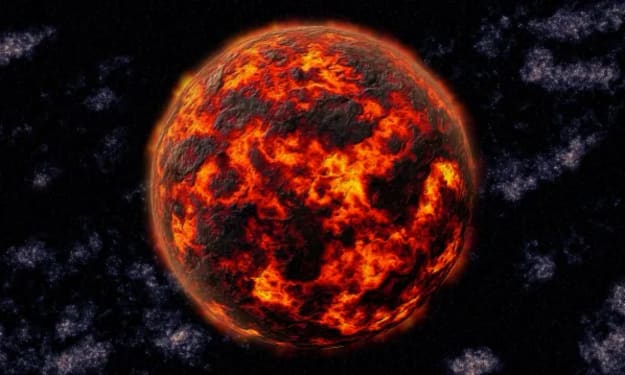
The formation of the Earth.
The formation of the Earth is a fascinating story that spans billions of years, beginning with the birth of the solar system about 4.6 billion years ago. Understanding Earth's formation requires us to explore the processes that led to its creation, starting with the conditions in space that gave rise to our planet.
By Badhan Sen2 years ago in Earth
Upper Dolpo Trek: Your Ultimate Guide to Exploring Nepal’s Hidden Gem. AI-Generated.
The Upper Dolpo Trek is one of the most remote and untouched trekking routes in Nepal, offering trekkers the opportunity to explore a part of the country that remains largely unexplored by the masses. Situated in the far northwest of Nepal, Upper Dolpo is a haven for those seeking isolation, adventure, and the chance to immerse themselves in a unique Tibetan culture.
By Lucifer Smith2 years ago in Earth