Nature
The Necessity of Emergency Flashlights and the Role of AA Batteries
Why Keep an Emergency Flashlight? 1. Immediate Source of Light During a power outage or emergency situation, darkness can create confusion and peril. An emergency flashlight provides immediate illumination, helping you navigate safely and effectively.
By Jone Smith2 years ago in Earth
Annapurna Base Camp Treks. AI-Generated.
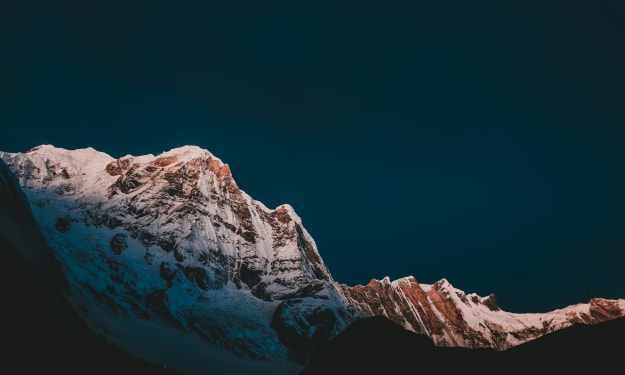
Annapurna Base Camp Treks take you on an amazing journey through beautiful landscapes, charming villages, and beautiful mountain views. If you love nature, adventure, and peaceful trails, this trek is perfect for you. Walking through green forests, crossing rivers, and seeing the mighty Annapurna range up close makes every step exciting and memorable.
By Rose Jenkins2 years ago in Earth
Annapurna Base Camp Trek
The Annapurna Base Camp Trek (ABC) is one of the most popular trekking routes in Nepal, drawing adventurers from around the world to experience the stunning natural beauty and cultural richness of the Annapurna region. Whether you’re an experienced hiker or a first-time trekker, the ABC trek offers a journey that combines majestic mountain views, diverse landscapes, and immersion in Nepalese culture.
By Anya Gurung2 years ago in Earth
A jump, 100 million seeds, and the rebirth of the Amazon!
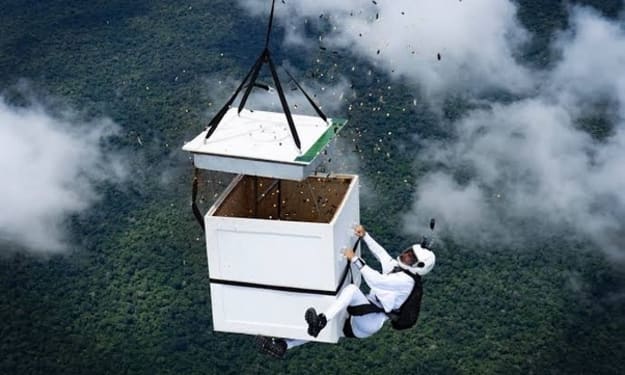
A small cargo aircraft was hovering in the sky at an altitude of 12,000 feet. Inside, Luiji Kani—a famous Brazilian skydiver and environmental worker—stood near the open hatch. In front of him was a large metal box containing 100 million seeds, meant to revive a destroyed part of the Amazon rainforest. This land, once green and full of life, had turned barren due to massive deforestation and devastating fires. Luiji took a deep breath and, without wasting any time, pushed the box out of the aircraft. Within seconds, he followed, diving straight into the open sky. The powerful wind currents hit his body, but his focus remained solely on the box, which was plummeting rapidly toward the earth. This was no ordinary skydive; it was a mission to restore life to a dying forest. The adrenaline rushed through his veins as he tried to reach the metal box. He extended his arms, and after a few tense moments, he managed to grab the edge of the box. But suddenly, a strong gust of wind spun him violently. His body flipped upside down, and his right wrist twisted sharply. A sharp pain shot through his arm. For a moment, he lost control, but years of skydiving experience helped him regain stability. He clenched his teeth, pushing aside the pain, and refocused on the mission. The altitude meter in his gear showed 6,000 feet. It was time. Using all his strength, he yanked open the box’s lid. As soon as the lid was off, the seeds burst into the air, scattering in all directions. The wind carried them over the land below—a vast area of burnt soil that once thrived with dense greenery. These seeds held the promise of rebirth. In a few years, they would grow into towering trees, some reaching heights of 50 meters, covering an area equivalent to 14,000 football fields. It was nature’s second chance. The Amazon rainforest is one of the most important ecosystems on Earth. It produces 20% of the world’s oxygen, regulates the climate, and provides a home for more than 10 million species of plants and animals. But human activities, including illegal logging, agriculture, and uncontrolled fires, have destroyed large portions of this vital forest. Scientists warn that if the deforestation continues, the Amazon may reach a tipping point where it can no longer regenerate itself. This mission was not just about planting trees; it was about restoring balance to nature. These 100 million seeds included a mix of native plant species, carefully selected to support biodiversity. Some would grow into towering hardwood trees, while others would provide food and shelter for animals. The idea was not just to replant trees but to rebuild an entire ecosystem. But the mission was not over yet. The danger was far from gone. Luiji's wrist throbbed in pain, and he still had to deploy his parachute. The altitude had dropped to 3,000 feet. He pulled the parachute cord, and the canopy burst open abruptly. A powerful jolt shook his entire body. For a moment, his vision blurred, and he felt like he might lose consciousness. But he fought against the dizziness and steadied himself. Slowly descending, he looked down. The seeds had dispersed exactly as planned. The barren land below would soon witness the miracle of regeneration. A wide smile spread across his face. His mission was successful. As he landed safely on a cleared patch of land, Luiji let out a deep breath of relief. He looked around and then up at the sky. He had done it. These seeds, now resting in the soil, would soon sprout with the arrival of the rains. This would not just be a new beginning for the forest but also a message to the world—one person, with courage and determination, could make a difference. Luiji Kani’s mission was not just an adventurous stunt; it was a call to action for the entire world. The Amazon rainforest, often called the "lungs of the Earth," had suffered immensely due to human activities. But if one person could take such a bold step toward its revival, imagine what humanity could achieve if they united for the cause. Perhaps, years from now, someone would walk through this forest, unaware of the extraordinary story behind its revival. They might not know that this lush green landscape was the result of one man’s daring leap—one jump that sowed the seeds of hope for the Earth’s future. A single jump, 100 million seeds, and the rebirth of the Amazon!
By Neeraj Tiwari2 years ago in Earth
Architects of Control
The Architects of Control: Who Profits from Humanity’s Repeated Resets? Throughout history, civilizations have collapsed, knowledge has been lost, and humanity has been forced to start over. But what if these resets aren’t accidents? What if they are carefully orchestrated events designed to keep true power out of the hands of the masses?
By Alexander Terrell2 years ago in Earth
NASA Image Reveals Earth's Tallest Lightning.
NASA Image Reveals Earth's Tallest Lightning. The recent capture of a rare atmospheric phenomenon known as a gigantic jet by the International Space Station (ISS) has once again sparked interest in the mysteries of Earth's upper atmosphere. This extraordinary form of lightning often called Earth's tallest lightning is a massive electrical discharge that occurs between powerful thunderstorms and the ionosphere reaching nearly 50 miles into the sky. Unlike conventional lightning that travels between clouds or from clouds to the ground gigantic jets extend upward piercing the atmosphere in a dramatic display of raw energy. These electrical events are rarely observed and even less frequently captured in photographs making this latest image a significant contribution to scientific understanding. Gigantic jets belong to a category of atmospheric discharges known as transient luminous events (TLEs). These phenomena include other unusual forms of lightning such as sprites blue jets and elves each with unique characteristics and behaviors. Gigantic jets however are particularly notable due to their immense scale and power. They have been described as electrical tendrils stretching toward space a stark contrast to the downward bolts of traditional thunderstorms. Though first documented in 2002 they remain an enigmatic aspect of atmospheric science with researchers still trying to determine the exact mechanisms behind their formation.
By Adnan Rasheed2 years ago in Earth
Cultural significance of traditional cuisines
Food is an integral part of every society, shaping not only how people eat but also their social structures, religious beliefs, and customs. The cultural significance of traditional cuisines lies in their role as a vehicle for storytelling, an expression of regional pride, and a means of preserving identity in a rapidly changing world.
By Badhan Sen2 years ago in Earth
The impact of genetically modified organisms on agriculture
GMOs are organisms whose genetic material has been altered using genetic engineering techniques, allowing for the introduction of new traits that are not naturally found in the species. These organisms have sparked debate worldwide, as their integration into agriculture has wide-reaching consequences, both positive and negative.
By Badhan Sen2 years ago in Earth
The role of green spaces in city planning
However, the integration of parks, gardens, and other green areas into city planning is crucial for promoting the well-being of urban residents and enhancing the sustainability of cities. Green spaces are not just aesthetic additions to cities but essential components that improve the quality of life, environmental health, and social interactions. This essay explores the significance of green spaces in city planning, highlighting their environmental, health, social, and economic benefits.
By Badhan Sen2 years ago in Earth
Urban sprawl and its environmental consequences
As cities grow, the demand for housing, infrastructure, and services increases, prompting the spread of residential, commercial, and industrial zones into the surrounding countryside. While urban sprawl can meet the demand for space and resources, it comes with significant environmental consequences that can harm ecosystems, contribute to pollution, and exacerbate climate change. This essay will explore the environmental effects of urban sprawl and discuss potential solutions for mitigating these impacts.
By Badhan Sen2 years ago in Earth