Nature
The Future of Energy: China's Thorium Reserves and Their Net Worth
China's contempo analysis of all-inclusive thorium affluence has the abeyant to decidedly appulse the all-around activity landscape. Thorium, a hardly radioactive metal, is advised a able another to uranium in nuclear activity assembly due to its affluence and abeyant for safer reactor designs. This commodity explores the implications of China's thorium resources, their estimated value, and the broader ambience of thorium in the all-around activity sector. Understanding Thorium and Its Potential Thorium (Th) is a artlessly occurring radioactive aspect begin in baby amounts in best rocks and soils. It is about three to four times added abounding than uranium in the Earth's crust, authoritative it a potentially added acceptable ability for nuclear energy. Thorium-based reactors action several advantages over acceptable uranium reactors: Abundance: Thorium's greater availability could ensure a longer-term activity supply. Safety: Thorium reactors are advised to be inherently safer, with lower risks of meltdowns. Waste: They aftermath beneath abiding radioactive decay compared to uranium reactors. Proliferation Resistance: Thorium's by-products are beneath acceptable for weaponization, abbreviation admeasurement risks. China's Thorium Reserves: A Game Changer Recent letters announce that Chinese geologists accept apparent abundant thorium deposits. While the exact abstracts abide classified due to civic aegis considerations, estimates advance that these affluence could be amid the better globally. A civic analysis assured in 2020 and afresh declassified accent that China's thorium deposits may be decidedly beyond than ahead estimated. SCMP.COM Prior to this discovery, China's thorium affluence were estimated at about 100,000 tons. EN.WIKIPEDIA.ORG However, the new allegation advance that the affluence could be abundant larger, potentially accession China as a baton in thorium resources. Estimating the Bread-and-butter Value Determining the exact bread-and-butter amount of thorium affluence is arduous due to several factors: Market Demand: Currently, thorium has bound bartering applications, primarily in specialized industries. Its amount is carefully angry to its abeyant use in nuclear energy, which is still beneath development.
By Say the truth 2 years ago in Earth
The Moon
The Moon: Earth’s Timeless Companion The Moon, Earth’s only natural satellite, has captivated human imagination for millennia. It has inspired myths, guided calendars, and influenced tides — all while silently orbiting our planet. Despite its calm appearance in the night sky, the Moon is a dynamic celestial body with a rich history and profound significance for life on Earth. This article explores the Moon’s origin, structure, effects on Earth, and its future in both science and exploration. Origin and Formation of the Moon The Moon is thought to have formed around 4.5 billion years ago, shortly after the Earth’s formation. The most widely accepted theory is the Giant Impact Hypothesis. According to this theory, a Mars-sized body called Theia collided with the young Earth. The impact was so massive that it ejected a large amount of debris into space. This debris eventually coalesced under the influence of gravity, forming what we now know as the Moon. Evidence supporting this theory includes the similarities between the chemical composition of the Moon and Earth’s outer layers, as well as the Moon's lack of a substantial iron core, suggesting it was formed from the Earth's mantle rather than from an independent planetary body. Structure and Composition of the Moon The Moon's structure is layered, much like Earth’s, though its composition and scale differ significantly. The Moon is about 3,474 kilometers (2,159 miles) in diameter — roughly a quarter of Earth’s size — and has a much weaker gravity, about 1/6th of Earth’s. The Moon’s structure consists of the following layers: Crust: The outermost layer, averaging about 50 kilometers thick, is composed mostly of silicate rocks. The crust is heavily cratered due to billions of years of meteor impacts. Mantle: Beneath the crust lies the Moon’s mantle, composed of solid rock rich in magnesium and iron. It is believed to have once been molten, helping to shape the Moon’s surface through volcanic activity. Core: The Moon's core is small, with a radius of about 350 kilometers. It contains a solid inner core made of iron and a fluid outer core, though both are much smaller compared to Earth’s core. Unlike Earth, the Moon lacks a global magnetic field, though localized magnetic anomalies exist, likely remnants from its early history when its core was more active. The Moon’s Influence on Earth Despite its smaller size, the Moon exerts a powerful influence on Earth. Its gravitational pull affects multiple aspects of our planet's natural systems: Tides: The most obvious effect of the Moon on Earth is its control over ocean tides. The Moon’s gravity pulls on Earth’s oceans, creating bulges of water that result in high and low tides. These tidal movements are essential for various ecosystems, helping to shape coastlines, regulate marine life cycles, and even influence weather patterns. Stabilizing Earth’s Axis: The Moon plays a critical role in stabilizing Earth’s tilt on its axis, which is responsible for the planet's seasons. Without the Moon, Earth’s axial tilt could vary dramatically, causing extreme climatic shifts that would make life as we know it far less stable. Slowing Earth’s Rotation: The Moon is gradually slowing down Earth’s rotation through a process called tidal friction. Over millions of years, this has lengthened our days. Scientists estimate that when the Moon first formed, a day on Earth was only about 5 hours long! The Moon’s Surface and Features The Moon's surface is a stunning, desolate landscape shaped by billions of years of cosmic impacts and volcanic activity. Key features of the Moon’s surface include: Craters: The Moon is dotted with thousands of impact craters caused by collisions with asteroids and comets. Notable craters include Tycho, with its distinctive ray system, and Copernicus, a large crater visible even to the naked eye. Maria (Lunar Seas): The Moon’s dark plains, known as maria (Latin for "seas"), were formed by ancient volcanic eruptions. They are composed of basaltic lava and cover about 16% of the Moon’s surface. The most famous maria include the Sea of Tranquility and the Ocean of Storms. Highlands: The Moon’s lighter, more reflective areas are its highlands, consisting of rugged mountains and older rock formations. These areas are heavily cratered and provide evidence of the Moon’s ancient past. Lunar Dust: The Moon’s surface is covered with a fine, powdery layer of dust called regolith. This dust was created by the constant bombardment of micrometeorites over billions of years. Interestingly, this dust poses a challenge for future lunar missions as it can damage equipment and be harmful if inhaled. The Moon and Human Exploration Human fascination with the Moon has led to incredible feats of exploration. Apollo Missions: The most famous lunar missions were NASA’s Apollo missions from 1969 to 1972. Apollo 11 marked a historic moment when Neil Armstrong became the first human to walk on the Moon, famously declaring, "That’s one small step for man, one giant leap for mankind." Scientific Discoveries: These missions brought back over 380 kilograms (840 pounds) of lunar rock and soil samples, helping scientists better understand the Moon’s composition and history. The discovery of water ice in permanently shadowed craters near the poles has renewed interest in future missions. Future Missions: Today, space agencies like NASA, ESA, and China’s CNSA are planning new lunar missions. NASA’s Artemis program aims to return humans to the Moon by the mid-2020s, with the goal of establishing a sustainable human presence and using the Moon as a stepping stone for future Mars exploration. The Moon’s Future and Its Role in Space Exploration The Moon's future is intertwined with human ambition and scientific curiosity. It may serve as a critical hub for future space exploration in several ways: Lunar Bases: Plans are underway to build permanent bases on the Moon, which could serve as research stations or refueling points for missions to Mars and beyond. Mining Resources: The Moon contains valuable resources like helium-3, which has potential for future nuclear fusion energy, and water ice, which can be converted into oxygen and hydrogen for rocket fuel. Astronomical Observations: The Moon's lack of atmosphere makes it an ideal location for telescopes, offering clearer views of the universe than Earth’s surface allows. Conclusion The Moon, though seemingly distant and silent, remains a vital part of Earth’s natural systems and human exploration efforts. It has shaped our planet's history, influenced our cultures, and now promises to be a gateway to deeper space exploration. As we prepare for a new era of lunar exploration, the Moon stands as both a reminder of our past and a beacon guiding us toward an exciting future.
By Budhirai Tripura2 years ago in Earth
The Sun
The Sun: A Vital Force in Our Universe The Sun, our nearest star, has been a subject of fascination and importance for humans for millennia. From ancient civilizations that worshipped the Sun as a god to modern scientists who study its energy and influence, the Sun has held a central place in both our cultural history and scientific understanding. In this article, we will explore the Sun's structure, its role in sustaining life on Earth, and its significance in the broader universe. The Sun’s Structure The Sun is a massive ball of hot, glowing gases, primarily composed of hydrogen (about 75%) and helium (about 24%). It is the source of almost all the energy that sustains life on Earth, radiating heat and light that are essential for the planet's weather systems, plant growth, and energy cycles. The Sun's structure can be divided into several layers: Core: The innermost layer of the Sun, where nuclear fusion occurs. The core is incredibly hot, with temperatures reaching about 15 million degrees Celsius (27 million degrees Fahrenheit). This is where hydrogen atoms undergo fusion to form helium, releasing enormous amounts of energy in the process. Radiative Zone: Surrounding the core, the radiative zone extends outward for about 70% of the Sun's radius. Here, energy produced in the core is transferred outward by radiation. The energy takes a long time to move through this zone, sometimes up to 100,000 years, as photons are absorbed and re-emitted by particles in the zone. Convective Zone: Above the radiative zone lies the convective zone, where energy is transported by convection. In this layer, hot plasma rises toward the surface, cools as it nears the outer edge, and then sinks again, creating a constant cycle of heat movement. Photosphere: The photosphere is the visible surface of the Sun. It is here that the Sun’s light is emitted, and its temperature is about 5,500 degrees Celsius (9,932 degrees Fahrenheit). This layer is what we see when we look at the Sun, although it is not solid, but a dense, hot layer of gas. Chromosphere and Corona: Above the photosphere lies the chromosphere, a thin layer of gas that is usually visible during a solar eclipse as a reddish halo. Beyond the chromosphere is the corona, the Sun's outer atmosphere, which is surprisingly much hotter than the surface of the Sun. The corona can reach temperatures of up to 2 million degrees Celsius (3.6 million degrees Fahrenheit) and extends millions of kilometers into space. The Sun’s Energy and Its Impact on Earth The Sun is the primary source of energy for Earth. Through the process of nuclear fusion in the core, the Sun produces an immense amount of energy, which travels through space in the form of electromagnetic radiation. This radiation reaches Earth in the form of sunlight, which is crucial for life on our planet. Heat and Light: The heat from the Sun keeps Earth warm enough to sustain life. Without the Sun’s heat, Earth would be a frozen, inhospitable planet. The light from the Sun enables photosynthesis in plants, which is the foundation of the food chain for all living organisms. Plants absorb sunlight and convert it into chemical energy, which animals and humans then consume for survival. Solar Energy: Humans have harnessed the Sun’s energy for thousands of years. Solar energy is a clean, renewable source of power that is used for heating, electricity generation, and even cooling. With advances in solar technology, solar panels can capture sunlight and convert it into electricity, helping reduce our reliance on fossil fuels and mitigate climate change. Solar Radiation and Weather: Solar radiation is also responsible for the Earth's weather patterns. The Sun heats the Earth unevenly, creating temperature differences that drive wind, ocean currents, and storms. The distribution of solar energy around the globe influences the climate, seasons, and various weather phenomena. Solar Wind and the Magnetosphere: The Sun emits a constant stream of charged particles known as the solar wind. These particles interact with Earth’s magnetic field, creating the beautiful auroras near the polar regions. In addition, the magnetosphere protects the Earth from harmful solar radiation, shielding us from the effects of solar storms and cosmic rays. The Sun’s Role in the Solar System The Sun’s gravity keeps all the planets, moons, asteroids, and other objects in our solar system in orbit. Without the Sun’s immense gravitational pull, Earth and other planets would drift off into space, and life as we know it would not exist. Solar System Formation: The Sun formed about 4.6 billion years ago from a cloud of gas and dust that collapsed under its own gravity. As the cloud collapsed, it heated up and formed a rotating disk, with most of the material gathering in the center to form the Sun. The remaining material formed the planets, moons, and other objects in the solar system. Solar Flares and Coronal Mass Ejections: Occasionally, the Sun experiences solar flares and coronal mass ejections (CMEs), which are eruptions of energy and charged particles from the Sun’s surface and corona. These events can have a significant impact on the solar system, especially Earth. Solar flares can disrupt communication systems, GPS, and satellite operations, while CMEs can cause geomagnetic storms that affect power grids and pose a danger to astronauts in space. The Sun’s Lifespan and Future The Sun, like all stars, has a finite lifespan. It is currently in the "main sequence" phase of its life, during which it steadily fuses hydrogen into helium. This phase will last for several billion more years. As the Sun runs out of hydrogen in its core, it will enter the next phase of its life cycle and become a red giant. During this phase, the Sun will expand, potentially engulfing the inner planets, including Earth. Eventually, the Sun will shed its outer layers, leaving behind a dense core known as a white dwarf. The white dwarf will gradually cool and fade over billions of years, marking the end of the Sun’s active life. This process will have a profound effect on the solar system, and life on Earth will cease long before that happens. Conclusion The Sun is far more than just a source of light and warmth. It is a dynamic, complex star that shapes the conditions for life on Earth and plays a crucial role in the broader workings of the solar system. Our understanding of the Sun continues to evolve, and with it, our ability to harness its energy, predict solar activity, and learn more about the fundamental processes that govern the universe. As we continue to explore and study the Sun, it remains a powerful reminder of the delicate balance between energy, life, and the cosmos.
By Budhirai Tripura2 years ago in Earth
Glimpse Into My World
What I Do: A Glimpse Into My World In a world full of endless possibilities, finding a path that aligns with your passion and skills is both a privilege and a journey. I am someone who constantly seeks growth, embraces challenges, and works towards turning ideas into realities. This article offers a transparent look at what I do, the fields I explore, and the goals that drive me. Exploring CPA Marketing and Affiliate Opportunities One of the core areas of my work revolves around CPA (Cost Per Action) marketing. I target the finance niche — a sector filled with high-value opportunities and impactful solutions for people seeking financial freedom, better investments, and smarter money management. I collaborate with platforms like CPAGrip, leveraging their offers to create effective marketing campaigns. My approach includes researching trending financial products, building engaging landing pages, and using strategic ad placements to drive quality traffic. It’s not just about earning commissions — it’s about connecting users to solutions that genuinely help them achieve their financial goals. Additionally, I’m venturing into the gaming niche — a rapidly growing industry brimming with enthusiastic audiences. From promoting in-game rewards to introducing new game releases, I aim to tap into the passion of gamers while creating win-win scenarios for both the advertisers and the audience. Creating Earning Websites with Carrd.co Another integral part of my work is designing earning websites using Carrd.co — a powerful yet simple platform for creating stunning one-page websites. I believe that simplicity is key when it comes to conversions. I focus on crafting clean, conversion-optimized pages tailored to the niches I target. Whether it’s a sleek finance lead capture page or a gaming rewards site, my goal is always the same: to build user-friendly platforms that inform, engage, and convert visitors into leads or customers. Passion for Karela Farming Beyond the digital realm, I have a deep-rooted passion for karela (bitter gourd) farming. Agriculture keeps me grounded and connected to nature, and growing karela has taught me patience and problem-solving in the most organic way. Like any farming endeavor, I face my share of challenges — from flower drop issues to yellowing leaves — but I continuously educate myself about sustainable practices and plant care. For me, farming is not just about harvesting crops; it’s about nurturing life, understanding ecosystems, and contributing to food security. Striking a Balance: Digital and Agricultural Worlds What sets me apart is my ability to balance two seemingly different worlds — the fast-paced digital marketing landscape and the serene, methodical art of farming. This combination allows me to stay creative and resilient. Marketing teaches me to be analytical, while farming keeps me patient. When I step away from my computer after designing a landing page or launching a CPA campaign, I find solace in my fields, checking on my karela plants. It’s a blend of innovation and tradition — a dynamic that keeps my life fulfilling. Looking Ahead: My Future Aspirations While I am proud of what I’ve achieved so far, I am far from done. My future goals include: Expanding my CPA marketing efforts into more niches, scaling successful campaigns, and exploring emerging trends. Building a network of high-converting earning websites that not only generate passive income but also provide valuable resources to users. Improving my karela farming techniques by adopting modern agricultural practices and sharing my knowledge with fellow farmers. Inspiring others by documenting my journey — showing that it’s possible to pursue both digital innovation and traditional practices simultaneously. Conclusion In essence, what I do is a reflection of who I am — a digital marketer with a flair for CPA strategies, a creator of impactful earning websites, and a passionate karela farmer. Each role fuels the other, making me more adaptable, creative, and grounded.
By Budhirai Tripura2 years ago in Earth
Earth’s Most Mysterious and Enigmatic Places
Mysterious and Unknown Places of the World: Natural Wonders and Extraordinary Locations. The Earth is a treasure trove of unexplored mysteries. While we often get caught up in the hustle and bustle of daily life, we overlook some of the most peculiar and enigmatic locations on our planet. These places, with their intriguing histories, unique natural beauty, and scientific puzzles, never fail to astonish the human mind. In this article, we will explore some of the Earth's most strange and unknown places, which you may have never heard of before.
By Md Rashidul Islam Nur2 years ago in Earth
The Amazon Rainforest: Earth's Lungs and a Biodiversity Hotspot
*** The Amazon Rainforest, often referred to as the "lungs of the Earth," is one of the most vital and diverse ecosystems on the planet. Spanning over 5.5 million square kilometers across nine countries in South America—Brazil, Peru, Colombia, Venezuela, Ecuador, Bolivia, Guyana, Suriname, and French Guiana—the Amazon is the largest tropical rainforest in the world. It is home to an unparalleled array of flora and fauna, indigenous communities, and natural resources that play a critical role in regulating the global climate. However, this magnificent ecosystem faces unprecedented threats from deforestation, climate change, and human exploitation. This article delves into the significance of the Amazon Rainforest, its biodiversity, its role in the global ecosystem, and the challenges it faces.
By Taiyab Ahmed2 years ago in Earth
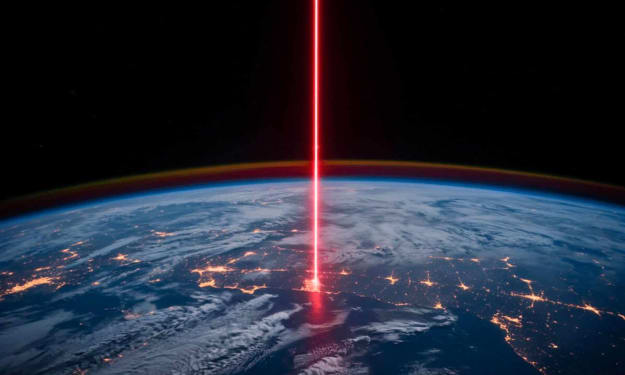
Straight Out of Sci-Fi: Earth Receives a Deep-Space Laser Message from 16 Million Kilometers Away.
NASA has achieved a groundbreaking milestone in space communication by successfully transmitting a laser-based message from the Psyche spacecraft to Earth across a staggering 16 million kilometers. This achievement, part of the Deep Space Optical Communications Experiment (DSOC), represents a major leap forward in interplanetary communication, potentially revolutionizing the way data is transmitted through space.
By Adnan Rasheed2 years ago in Earth
The Two Roads We Take
Jasmine had always been the type to rush through life, chasing after success like it was a bus about to leave her behind. She had a plan—finish school, get a high-paying job, buy a house, and live comfortably. Anything outside of that plan was a distraction.
By Taviii🇨🇦♐️2 years ago in Earth
The Benefits of Tomatoes: A Nutrient-Packed Superfood
The Benefits of Tomatoes: A Nutrient-Packed Superfood Tomatoes, frequently categorized as vegetables, are in fact fruits that are part of the nightshade family. They rank among the most popular foods globally, and this popularity is well-deserved. In addition to their striking color and adaptability in various culinary applications, tomatoes are a nutritional treasure, providing numerous health advantages. They contribute to enhanced cardiovascular health and promote better skin condition, making tomatoes a superfood that should be a staple in your diet. Let us delve into the numerous benefits of this modest yet remarkable fruit.
By Md Emran Khan2 years ago in Earth
The Last Message from the Stars
In the year 2047, humanity stood on the precipice of a discovery that would forever alter its understanding of existence. It began with a signal—a faint, rhythmic pulse emanating from the depths of space. At first, scientists dismissed it as cosmic noise, but as the pattern grew clearer, the world held its breath. The signal was not random. It was a message.
By Rocky Brahma2 years ago in Earth