Nature
Scariest Animals Found in the Amazon Rainforest. AI-Generated.
From snakes that guzzle down their victim's hole to these ferociously fanged fish that shred flesh for fun. This isn't a fever dream. It's the Amazon. A place crawling with creatures you were never meant to see. So grip your torch tight and don't look back as we venture into the dark heart of the rainforest, where each animal coming up will be scarier than the last.
By taylor lindaniabout a year ago in Earth
Strangest Places on Earth
Europe Iceland Iceland is a Nordic island country between the North Atlantic and Arctic Oceans, on the Mid-Atlantic Ridge between North America and Europe. The man-made Blue Lagoon offers visitors baths in thermal springs. This natural hot spring is surrounded by snow and volcanic rock. It has become a tourist attraction and people come to enjoy the lagoon. It holds a temperature of about 100 degrees year round.The lagoon is blue due to the high levels of silica in the salty water. The Blue Lagoon is close to the Keflavik International Airport.
By Rasma Raistersabout a year ago in Earth
When the Sky Forgot Its Name
One morning, just as the sun began to rise over the ragged hills of the north, the sky looked down on the earth and—forgot. Its color, its shape, its name. It forgot what it was supposed to be. And in that moment, everything changed.
By THE STORY ROOMabout a year ago in Earth
How Planet Smashing Collisions Stole Earth’s Life Essential Elements
How Planet Smashing Collisions Stole Earth’s Life Essential Elements The Earth teeming with life and natural beauty is a product of billions of years of cosmic evolution. But many people are unaware that the very elements critical to sustaining life such as carbon nitrogen and sulfur might have once been much more abundant here. Intriguingly recent scientific research suggests that planet smashing collisions in the early solar system might have robbed Earth of a significant portion of these vital ingredients. Understanding this cosmic theft offers deep insights into how rare and precious life on Earth truly is. The early solar system was a chaotic violent place. After the Sun formed about 4.6 billion years ago countless rocky bodies planetesimals orbited around it frequently crashing into one another. These collisions played a crucial role in building the planets including Earth. However they were not always constructive. Some impacts were so massive that they did not add material but instead stripped planets of their outer layers vaporizing minerals and elements critical to life. One particularly famous collision is the hypothesized giant impact that led to the formation of the Moon. Scientists believe that a Mars sized body named Theia slammed into the early Earth about 4.5 billion years ago. The debris from this cataclysmic event coalesced into the Moon. However it wasn’t just the Moon that formed. The violent energy of the impact also likely vaporized significant amounts of Earth's surface material sending essential volatile elements such as water carbon and nitrogen hurtling into space. Modern Earth is relatively poor in volatile elements compared to what scientists would expect based on the original building blocks of the solar system which are preserved in primitive meteorites known as chondrites. These meteorites are rich in carbon nitrogen sulfur and other life essential materials. Given that the early Earth should have started with a similar composition scientists have long wondered where did all the volatiles go? The idea that massive impacts could have vaporized and ejected these elements into space offers a compelling explanation. Studies using computer simulations show that high energy collisions could easily strip away a planet’s atmosphere and upper crust both of which would have contained high concentrations of volatile elements. In particular elements with low boiling points like carbon and sulfur would have been especially vulnerable to being lost during such catastrophic events.
By Adnan Rasheedabout a year ago in Earth
Climate Change and Its Effects on Our Future
Climate change is one of the greatest challenges facing humanity today. It refers to long-term shifts in temperatures and weather patterns, mainly caused by human activities like burning fossil fuels, cutting down forests, and large-scale farming. These activities increase the amount of greenhouse gases in the atmosphere, trapping heat and causing the planet to warm up. Although climate change has always occurred naturally over time, the speed and scale of today’s changes are alarming. The consequences for our future could be catastrophic if we don't act quickly. One of the most visible effects of climate change is the increase in extreme weather events. Hurricanes, floods, droughts, and wildfires are becoming more frequent and intense. For example, rising sea temperatures make hurricanes stronger, while prolonged dry conditions create the perfect environment for devastating wildfires. These disasters destroy homes, displace communities, and put a huge strain on emergency services and economies. As temperatures continue to rise, scientists predict that such events will become even more common, making it harder for societies to recover in between disasters.
By Rifan Samiabout a year ago in Earth
At Least 500 Injured in Large Explosion at Iran Port
A significant explosion struck the port city of Chabahar in southeastern Iran on Thursday, resulting in injuries to at least 500 individuals and extensive destruction. The incident, which took place close to the city's gas storage facilities, generated shockwaves throughout the region, prompting worries regarding safety measures and the possibility of sabotage in this strategically vital location.
By Tech Alaminabout a year ago in Earth
The Dream-Making Farmer
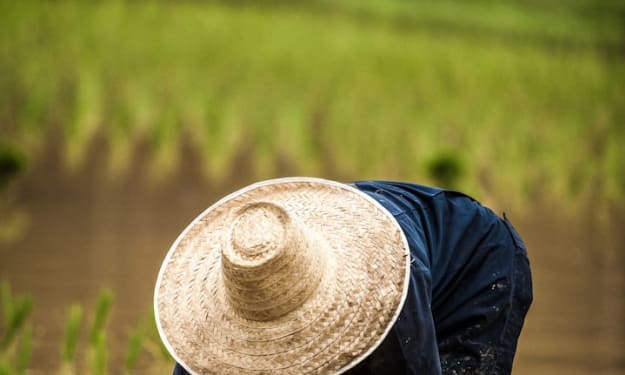
The Dream-Making Farmer In a world racing toward modernization, where skyscrapers replace fields and technology dominates daily life, the image of a farmer often feels like a relic of the past. Yet, among the rolling hills and golden fields, a new kind of farmer is rising — the dream-making farmer, a figure who redefines agriculture as not just a profession but a profound journey of hope, resilience, and creation. The dream-making farmer is not simply someone who tills the land or harvests crops; they are architects of possibility. Every seed planted is a whisper of the future, a promise that hard work and belief can yield something greater. These farmers are visionaries who see beyond the soil, imagining a world nourished by sustainable practices, vibrant communities, and a deep connection to nature. Unlike traditional perceptions, the dream-making farmer embraces innovation alongside tradition. They use technology wisely — drones to monitor crops, data to improve yields, and sustainable techniques to protect the earth for future generations. They respect the old ways, the wisdom passed down through generations, but they are not trapped by it. Instead, they blend the old and the new, crafting a farming style that serves both humanity and the planet. At the heart of the dream-making farmer’s journey is passion. It is not an easy life. Farming demands long hours, physical toil, and the constant risk of failure due to forces beyond one's control: droughts, floods, pests, market fluctuations. Yet, despite the hardships, these farmers persevere, driven by a love for the land and the life it supports. Their dreams are not just personal ambitions; they are rooted in a desire to create abundance, to feed families, to bring communities together, and to heal the earth. One of the most inspiring aspects of the dream-making farmer is their sense of purpose. Many enter farming not for wealth or fame, but to answer a calling. They dream of a world where food is grown ethically, where biodiversity is protected, where farming is an act of stewardship rather than exploitation. Their fields are canvases of creativity — rows of colorful vegetables, orchards bursting with life, gardens that not only feed the body but nourish the soul. The dream-making farmer also understands the importance of community. Farming is rarely a solitary endeavor. It thrives through cooperation, through the building of networks that support one another. Farmers’ markets, community-supported agriculture programs, and farm-to-table movements are all modern manifestations of this age-old truth: when farmers dream together, entire societies flourish. Moreover, the dream-making farmer is a teacher. They pass on knowledge to younger generations, inspiring them to see agriculture not as a last resort, but as a noble and rewarding path. They open their farms to schools, organize workshops, and mentor future farmers. In doing so, they ensure that their dreams outlast their own hands in the soil, weaving their visions into the fabric of the future. Sustainability is a key pillar in the dream-making farmer’s ethos. They understand that farming is a delicate dance with nature, not a battle to be won. Regenerative practices — crop rotation, cover cropping, composting — are tools they wield skillfully to enrich rather than deplete. By nurturing the land, they create a legacy of health and prosperity that extends far beyond their own lifetimes. The dream-making farmer also acts as a bridge between rural and urban worlds. In a time when many people are disconnected from the source of their food, these farmers tell the story of the land. Through social media, farm visits, and storytelling, they invite others to witness the magic of growth, the patience required for cultivation, and the miracles hidden in a single seed. In a broader sense, the dream-making farmer represents hope in an era of uncertainty. Climate change, economic instability, and social divisions threaten the future, but these farmers offer a different narrative — one of resilience, cooperation, and care. They remind us that meaningful change often begins quietly, with one person planting a seed, nurturing it with dedication, and dreaming of a harvest that will nourish not just themselves, but the whole world. In the end, the dream-making farmer teaches us that dreams are not just imagined; they are grown, day by day, with calloused hands and hopeful hearts. They show that real dreams are messy, full of failures and setbacks, but also rich with triumphs and joy. And perhaps most importantly, they remind us that every dream — like every seed — needs patience, love, and a willingness to believe in what is not yet seen. In the hands of the dream-making farmer, the future is fertile. It is a place where humanity and nature coexist in harmony, where food is a celebration, and where dreams are harvested alongside the crops. They are not merely feeding bodies; they are feeding hope, and through their work, they quietly change the world. ---
By Mahim khanabout a year ago in Earth
Bitcoin Tops $95K for the First Time in Months as Stocks Remain Flat
In a stunning display of resilience and market confidence, Bitcoin has surged past the $95,000 mark for the first time in several months, signaling renewed investor interest in the cryptocurrency sector. This milestone comes at a time when traditional stock markets remain largely flat, reflecting broader economic uncertainties and a cautious approach from institutional investors.
By GLOBAL NEWSabout a year ago in Earth
Ronaldo's Real Valladolid relegated from LaLiga after Betis rout
Real Valladolid, coached by Ronaldo, was relegated from the LaLiga following Betis's defeat. After a dramatic final day of the 2022–23 season, the Spanish football team Real Valladolid, which is majority-owned by Brazilian legend Ronaldo Nazário, has been relegated from LaLiga. Despite a last-ditch push to avoid the drop, a goalless draw against Getafe — coupled with Real Betis’ convincing 2-1 win over Valencia — sealed their fate.
By Tanjib @vocalabout a year ago in Earth