Nature
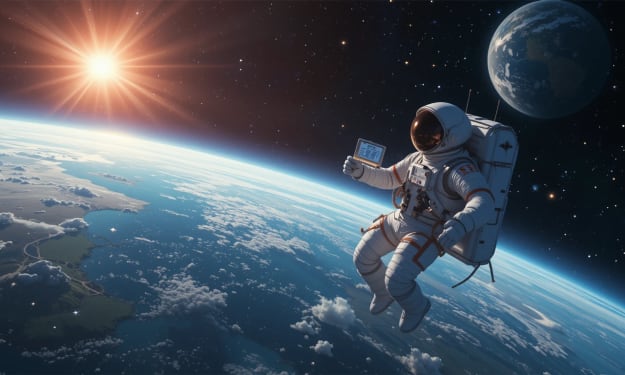
Seven Days in Space. AI-Generated.
Day One: The Launch Jacob had always dreamed of going to space. As a child, he would look up at the stars every night, wondering what it would feel like to leave Earth. Now, at twenty-eight years old, his dream was becoming real. He was chosen for a special mission — a seven-day trip around Earth’s orbit.
By Bilal Mohammadiabout a year ago in Earth
The Distance Between Earth and the Moon. AI-Generated.
For many thousands of years, people have looked up at the sky and seen a bright, glowing ball shining at night. This glowing ball is the Moon, Earth's closest neighbor in space. Even though it looks close, the Moon is actually very far away. The distance between Earth and the Moon is about 384,400 kilometers, which is equal to 238,855 miles. This number is so large that it is hard to imagine how far that really is.
By Bilal Mohammadiabout a year ago in Earth
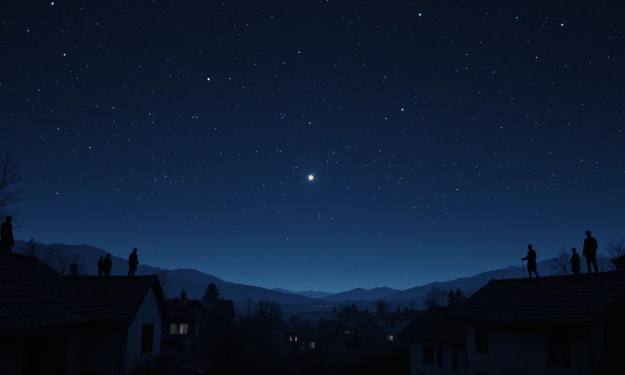
The Night Without the Moon. AI-Generated.
It was a peaceful evening in the small town of Elmsville. The sun had just set behind the hills, and the sky was slowly turning dark. People in the town were finishing their day. Children played their last games outside. Mothers called their kids to come inside. Shops closed their doors. The world was getting ready to sleep.
By Bilal Mohammadiabout a year ago in Earth
Seven Days in the Cave. AI-Generated.
It was a warm summer afternoon when Arman and his friends went on a trip to the mountains. The sky was blue, and the birds were singing. Arman was excited. He loved nature, and this was his first time visiting the old mountain that people in the village called "The Whispering Hill."
By Bilal Mohammadiabout a year ago in Earth
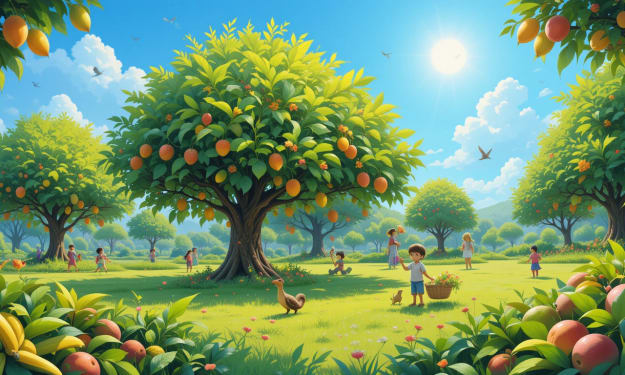
Summer’s Sweet Treasures. AI-Generated.
When the sun climbed high over the village of Orchard Hill, and the days stretched lazily into golden evenings, the world seemed to pause and breathe in harmony with the rhythm of summer. It was in this season of warmth and wonder that twelve-year-old Lila discovered the treasure that would change her life forever—not gold, not jewels, but something far sweeter.
By Bilal Mohammadiabout a year ago in Earth
The Elephant and the Little Boy. AI-Generated.
Sami was a small boy who lived in a quiet village near the big forest. He was eight years old, with short black hair, big brown eyes, and a heart full of dreams. Every day after school, he helped his mother with small jobs and played with his friends near the river. But there was one thing Sami loved more than anything — going into the forest.
By Bilal Mohammadiabout a year ago in Earth
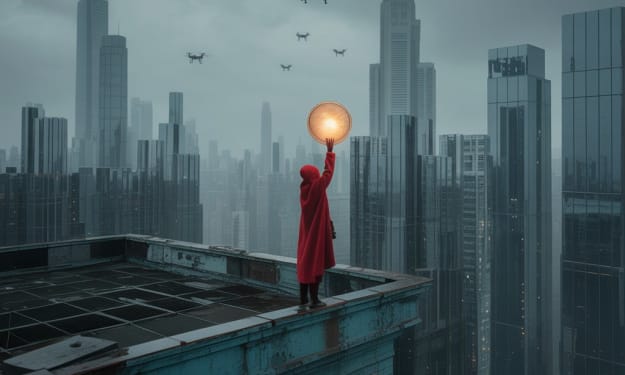
Beneath the Iron Sky
The sky was never blue anymore. Not since the Core rose and closed the heavens. Now it was always gray—polished metal stretching from horizon to horizon, a massive, domed canopy forged by the Regime to keep humanity safe... or so they claimed. Seventeen-year-old Kael had never seen stars. He had only ever heard whispers from old men who still remembered when the sky was open, when rain fell freely, when birds still flew. Now, the only thing that flew above was surveillance drones—quiet, watching, merciless. Kael lived in Sector 7-Delta, a concrete hive stacked with people and silence. No one spoke loudly, and no one questioned anything. Everything was monitored. Thoughts were discouraged. Feelings were dangerous. Hope was extinct. Or so it seemed—until the girl arrived. She came from the Outlands, where people were said to be feral, broken, or already dead. But she was none of those things. Her name was Mira, and she had fire in her eyes. Real fire, not the dull, programmed kind. They met by accident in the tunnel beneath the recycling plant. Kael had gone there to hide a book—a forbidden one—his grandfather’s last gift. She was already there, examining one of the dead surveillance drones like a puzzle. “You’re not supposed to be here,” he whispered, panicked. “Neither are you,” she replied, smirking. That’s how it started. --- For weeks, Kael met Mira in secret. She told him things he’d only imagined—about real clouds, wild oceans, forests with color, and stars that danced across a velvet night. “But that’s all gone,” Kael said one night. “The Core controls everything now. The sky is sealed. No one gets out.” Mira leaned closer, her voice barely a breath. “That’s what they want you to believe. But the world isn’t dead. It’s just buried beneath the lies.” Kael felt something stir in him then. Something long frozen. Curiosity. Mira showed him how to hack into surveillance blind spots. She taught him how to read Regime code and where to find the access tunnels they thought were sealed. She had a mission: to reach the Old Tower. Once, it had been a broadcast station—a voice to the world. Now, it was a relic, buried deep inside Core territory. But Mira believed it still worked. If they could reach it, they could send a signal, a message to the Outlands... maybe even to other hidden pockets of resistance. Kael didn’t believe at first. But belief wasn’t what made him go with her. It was the first time in his life he’d felt alive. --- The journey was suicide. The closer they got to the Tower, the heavier the drones. The streets were empty. Cameras blinked like artificial eyes. Once, they saw a man get vaporized by a Strike Sentinel just for stepping outside curfew. Still, they pressed on. On the seventh day, they reached the breach wall—the last barrier before the Tower. Mira climbed it with the ease of someone who had done it before. Kael struggled, his hands bleeding. At the top, he froze. For the first time, he saw beyond the Iron Sky. Through a seam in the great metallic dome, he saw it: a strip of open sky—deep blue, scattered with white clouds. He couldn’t breathe. It was too... vast. Too beautiful. Mira was watching him. “Now you know why we fight.” They entered the Tower that night. It was old, dust-covered, but Mira was right—it still had power. She connected her makeshift transmitter to the main console. Kael read her message as she typed: > "This is Sector 7. We are alive. We remember. The sky is not theirs. Find us. Rise." They activated the signal. For ten glorious seconds, the message broadcast across all channels, hijacking every screen in every Sector. But the Core responded fast. Sirens screamed. Red lights bathed the Tower in warning. Drones swarmed like hornets. “We have to run!” Kael shouted. Mira didn’t move. “There’s no running from this,” she said. “But you can still get out. Go back. Or go beyond.” “What about you?” “I was never going to survive this. I just had to light the spark.” She handed him a data shard. “Everything’s on here. Hide it. Pass it on.” Before he could protest, she shoved him toward the emergency chute. The last thing he saw was her smiling as the door sealed behind him. He ran. --- Kael escaped the Tower, barely. The Regime erased Mira from all records. They claimed the broadcast was a glitch. But it wasn’t. That night, people across the Sectors whispered. Something stirred in the silence. Rumors spread. A girl had seen the sky. A message had gone out. The Resistance wasn’t dead. It was just waiting. --- Years later, Kael stood at the edge of the Outlands. He had scars now. Stories. Followers. He pulled the data shard from his coat and loaded the message again. The same words, the same voice. Mira’s voice. > "We are alive. We remember. The sky is not theirs." Kael looked up. And though the Iron Sky still loomed above, he smiled. Because now, beneath it, something had begun to grow. Not fear. Not silence. But rebellion.
By Habib Ur Heman about a year ago in Earth
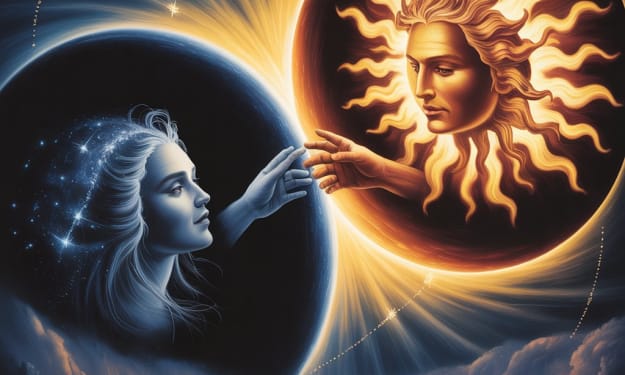
The Sun and the Moon
Long ago, before time moved in lines and the sky was mapped by stars, the world was ruled by two celestial spirits — Solas, the radiant Sun, and Lunea, the gentle Moon. They were born from the same cosmic breath — siblings of the heavens, equal in power but opposite in nature. Solas burned bright with passion, casting warmth and fire wherever he looked. Lunea shimmered with grace and mystery, bathing the world in soft, silver light and quiet dreams. Though they shared the sky, they were cursed to never meet. The heavens, afraid of their union, had woven the rhythm of day and night in such a way that when one rose, the other must fall. And so, the two circled each other endlessly — a silent chase across the firmament. But love, even in the stars, is a stubborn thing. Each day, Solas would rise and paint the skies with colors he thought would make her smile. He sculpted golden dawns and blazed sunsets in pinks and crimsons, hoping she would see them as she drifted just beyond the curve of the world. And each night, Lunea would respond with her own quiet poetry — glowing moons of every phase, scattered constellations shaped like whispers, and soft northern lights that danced like her laughter. They could never touch, but they spoke in light. The Earth, who watched them both with deep affection, took pity on the star-crossed lovers. “Once in a while,” she whispered, “I will tilt just right, and time will bend. For a brief moment, you may meet. But only in shadow.” Thus, the eclipse was born. The first time it happened, the world held its breath. As Solas rose, expecting his usual solitary path, he saw her — Lunea — shimmering just before him, her silver glow embracing his flame. Time stopped. Light and dark became one. For the first time in the life of the universe, day kissed night. They did not speak. They only held each other — their edges overlapping, their forms blurring into twilight. The world below was cloaked in a strange, beautiful stillness. Birds hushed their songs. Flowers paused their bloom. Even the oceans slowed. It lasted mere minutes, but to Solas and Lunea, it felt like forever. When the eclipse passed, and they began to drift apart again, neither wept. They simply smiled. Because even in a world that kept them apart, the universe had let them touch. From then on, they counted the days until the next eclipse. Each encounter became a ritual — a dance written in gravity and time. Solas would rise earlier, burning brighter in anticipation. Lunea would glow fuller, her silver form trembling with joy. And in that sacred pause between light and darkness, they would meet again — not in defiance of the laws of the sky, but within them. Yet, with every eclipse came a longing. The moments they shared were fleeting, and the ache of separation grew. They began to wonder if it was enough to touch only for seconds, to live lifetimes apart for a love they could never keep. “Perhaps,” Lunea whispered once, “we should stop meeting. Perhaps it is better to never feel the joy, than to suffer the absence.” Solas flared with sorrow, his flames dimming. “But without those moments, what would we be? Just ghosts in the sky? No. Let us love, even if the world calls it tragedy.” And so they did. Eclipse after eclipse, they embraced. The people of Earth began to notice. They told stories of the sky’s lovers — of a sun who waited all day for a moon who lingered all night. They marked eclipses on calendars, called them omens or miracles. Poets wrote of longing. Children whispered wishes to the sky when the light turned to dusk at midday. And still, Solas and Lunea met — never for long, but always with hearts alight. Over the ages, they changed. Solas learned patience, no longer burning in haste. He found joy in lighting the paths of mortals and warming the earth that housed so many tiny lives. Lunea became bolder, no longer just a quiet watcher of night. She began to guide tides, steer the dreams of sleeping minds, and paint the sky with constellations that told their tale. They became more than just lovers. They became balance. Because sometimes, love isn’t about possession. It’s about presence. About showing up, even for a moment, and choosing that moment over an eternity of silence. And so, even now, when the moon darkens the sun or the sun bathes the moon in fire, look up. You’re watching a reunion — not of just celestial bodies, but of souls who loved across time, through silence, and within shadow. For theirs was a love that could only meet… in eclipse.
By Habib Ur Heman about a year ago in Earth