Nature
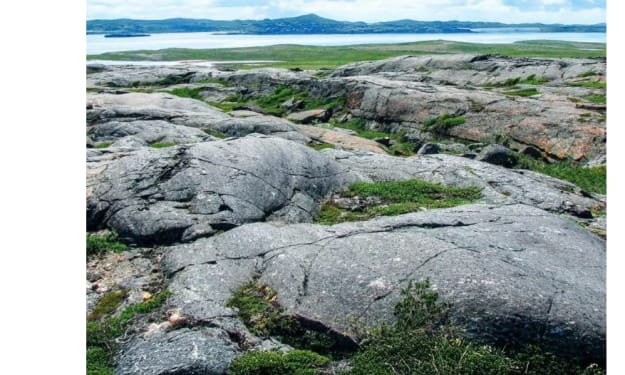
During Earth's previous global warming episodes, little marine animals have invariably become extinct.
Fusulines, which are shells tiny than a grain of sand, are some of the greatest pages in the extensive, detailed records of climate change kept by Earth's oceans.
By Francis Damiabout a year ago in Earth
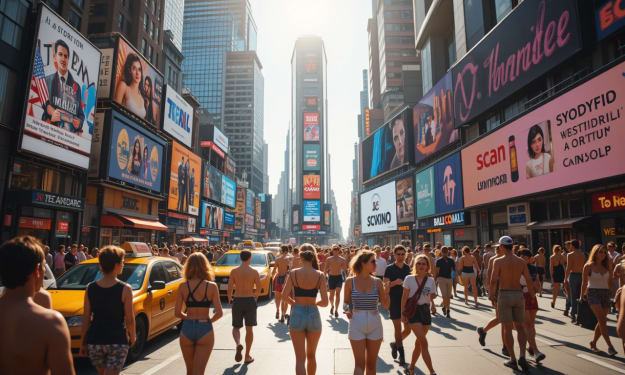
Scorching Summer Days in New York City. AI-Generated.
Summer in New York City is a special time. The days are long, the sun is bright, and people fill the streets. But sometimes, the heat becomes very strong. When this happens, life in the city changes. People must find ways to stay cool and safe.
By Bilal Mohammadiabout a year ago in Earth
"When the Earth Trembled"
*Understanding Earthquakes: The Science Behind the Shakes* Earthquakes are a fascinating yet terrifying natural phenomenon that has captivated humans for centuries. These seismic events occur when there is a sudden release of energy in the Earth's crust, often resulting in violent shaking of the ground. In this article, we will delve into the science behind earthquakes, exploring their causes, effects, and the measures that can be taken to mitigate their impact. *The Earth's Structure* To understand earthquakes, it's essential to comprehend the Earth's structure. The Earth is composed of several layers, including the crust, mantle, outer core, and inner core. The crust is the outermost layer, ranging in thickness from 5-70 km. It's broken into several large plates that float on the more fluid mantle below. These plates are in constant motion, sliding over the mantle at a rate of a few centimeters per year. *Plate Tectonics and Earthquakes* The movement of tectonic plates is the primary cause of earthquakes. As the plates interact, they can become stuck at their boundaries, causing stress to build up. When the stress becomes too great, the plates will suddenly move, releasing the stored energy as seismic waves. There are three types of plate boundaries: 1. *Divergent boundaries*: Where plates are moving apart, such as mid-ocean ridges. These boundaries are characterized by the creation of new crust as magma rises from the mantle to fill the gap. 2. *Convergent boundaries*: Where plates are colliding, such as subduction zones. These boundaries are marked by the destruction of crust as one plate is forced beneath another. 3. *Transform boundaries*: Where plates are sliding past each other, such as the San Andreas Fault. These boundaries are characterized by horizontal motion, with no creation or destruction of crust. *Types of Earthquakes* There are several types of earthquakes, including: 1. *Tectonic earthquakes*: These are the most common type, resulting from the movement of tectonic plates. 2. *Volcanic earthquakes*: These occur when magma or gas moves beneath a volcano, causing the ground to shake. 3. *Collapse earthquakes*: These occur when underground caverns or voids collapse, causing the ground above to shake. 4. *Human-induced earthquakes*: These are caused by human activities, such as injection of fluids into the ground or mining. *Effects of Earthquakes* The impact of an earthquake can be devastating, both in terms of human life and economic loss. Some of the effects include: 1. *Structural damage*: Buildings, bridges, and other infrastructure can collapse, leading to injuries and fatalities. 2. *Tsunamis*: Earthquakes that occur under the ocean can trigger massive tsunamis, which can cause widespread flooding and damage to coastal areas. 3. *Landslides and soil liquefaction*: The shaking can cause landslides and soil liquefaction, which can lead to further damage and instability. 4. *Economic disruption*: Earthquakes can disrupt economic activity, causing losses to businesses and industries. *Measuring Earthquakes* Earthquakes are measured using seismographs, which record the ground motion caused by seismic waves. The magnitude of an earthquake is typically measured on the Richter scale, which ranges from 0 to 10. However, this scale is logarithmic, meaning that each whole number increase in magnitude represents a tenfold increase in the amplitude of the seismic waves. *Earthquake Preparedness and Mitigation* While earthquakes cannot be prevented, there are steps that can be taken to prepare for and mitigate their impact. Some strategies include: 1. *Building codes*: Ensuring that buildings are designed and constructed to withstand seismic activity. 2. *Emergency planning*: Developing emergency response plans and conducting regular drills. 3. *Early warning systems*: Implementing early warning systems that can detect seismic activity and provide people with seconds or minutes to seek safety. 4. *Public education*: Educating the public on earthquake safety and preparedness. *What to Do During an Earthquake* If you are in an area prone to earthquakes, it's essential to know what to do during an earthquake. Here are some general guidelines: 1. *Drop, Cover, and Hold On*: Drop to the ground, take cover under a sturdy piece of furniture, and hold onto it to protect yourself from falling debris. 2. *Stay away from hazards*: Avoid standing near windows, mirrors, and any heavy furniture that could fall. 3. *Evacuate*: If you are in a building that is structurally unsound or has been damaged, evacuate the building immediately. *Conclusion* Earthquakes are a powerful reminder of the Earth's dynamic nature. While they cannot be prevented, understanding the science behind earthquakes can help us prepare for and mitigate their impact. By taking steps to prepare and mitigate, we can reduce the risk of damage and loss of life, and build more resilient communities. *The Future of Earthquake Science* As our understanding of earthquakes continues to evolve, scientists are working to develop more accurate and reliable methods for predicting seismic activity. Some of the areas of research include:
By Shakeel Ahmad about a year ago in Earth
Whispers of the Wooden Soul
In the heart of a vast and ancient forest, where the air was rich with birdsong and the rustling of leaves told forgotten tales, a young tree sprouted. He was an oak, strong and full of promise. Sunlight danced on his small leaves, and the earth beneath held him gently like a mother’s hand. His name, known only to the wind, was Warden.
By Raza Ullahabout a year ago in Earth
Title: I Quit My 9-to-5 to Travel — Here's the Truth No One Talks About
Quitting my stable 9-to-5 job to travel the world sounded like a dream. And honestly, that’s exactly what I thought it would be—an Instagram-worthy, soul-healing, life-defining dream. For years, I scrolled past people sipping coconuts in Bali or working remotely from charming cafés in Lisbon. I wanted that life. So, in 2022, after much internal wrestling, I handed in my resignation letter, booked a one-way ticket to Thailand, and thought I was off to find myself.
By shoaib khanabout a year ago in Earth
Pick Your Favorite Seal
Seals are semi-aquatic mammals in the order Carnivora. They differ in size from 3 ft 3 in for Balkan seals and 16 ft for southern Elephant seals. Their four limbs are flippers and when compared to dolpins, seals are more agile and flexible. Most seal species inhabit the cold waters of the Southern and Northern Hemispheres. They mate and give birth on the shores.
By Rasma Raistersabout a year ago in Earth
When the Axe Spoke
In a peaceful green forest, full of singing birds and rustling leaves, there stood a very old and wise tree named Old Meroo. He had lived there for more than a hundred years. His thick trunk was strong, his roots ran deep, and his branches stretched wide like arms ready to give a hug.
By Mansoor Ahmadabout a year ago in Earth
Kumrat Valley: Pakistan's Hidden Paradise
What is Kumrat Valley? The Upper Dir district of Khyber Pakhtunkhwa province in Pakistan is home to the picturesque Kumrat Valley. It has gained popularity among adventurers and environment enthusiasts due to its stunning natural beauty, verdant forests, and glistening rivers.
By JAMAL UDDINabout a year ago in Earth
Choking Skies
"When the air turned toxic, survival became the only story left to tell." The sky was once blue. People had forgotten what that looked like. For the last twenty years, the sky above the city of Virelia had been a permanent shade of gray—thick, heavy, and still. The sun rarely pierced through the layers of soot and smog, and when it did, it cast an eerie, orange glow that felt more like a warning than warmth.
By Masih Ullahabout a year ago in Earth