Nature
Why Active Volcanoes Endanger People’s Lives
Volcanic activity may seem like a dramatic movie subject, but you should know that, in reality, volcanoes do not sleep on our planet. It is estimated that there are currently about 1,500 active volcanoes on Earth, of which 75% are located in the Pacific Ring of Fire.
By Andrew Meyers5 years ago in Earth
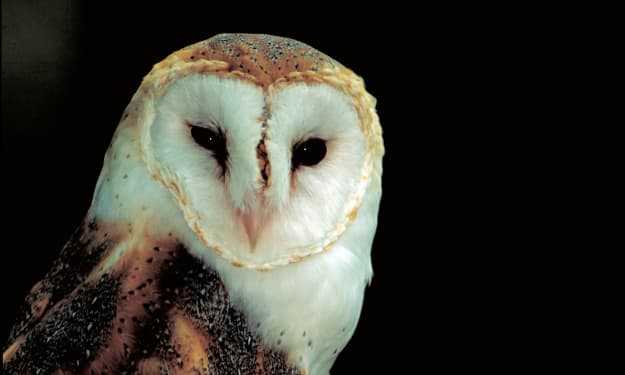
The Fascinating World of Owls
The challenge is for a short piece of fiction, so you could do just fine knowing nothing about owls. In fact, you could write “I was thinking about a barn owl, when suddenly…” and then write any story you wanted. But what fun would that be?
By Steve Lance5 years ago in Earth
Tennessee William's Red: Passion and Patience in the Desert
What Does the Earth Feel but Cannot Say? The significance for writing this paper is to reiterate and focus in on specific ideas Terry Tempest Williams brings up in Red: Passion and Patience in the Desert. Williams’s passion for the desert is the reason she wrote the book in the first place, and I will dig deeper into the way she writes to express nature. Red stands out as a work of literary non-fiction prose that explores Terry Tempest Williams’s attachment to the wilderness of Utah. Throughout the book, Williams portrays theme of beauty and destruction. She elaborately describes the beautiful landscapes of Utah and destruction of those landscapes. Unfortunately, animals, trees, and other parts of the outdoors cannot speak and ask for the destruction to stop. Terry Tempest Williams describe the suffering wilderness that cannot fight back by offering political, historical, and descriptive style. Williams writes about nature with deep connections to Utah and it amplifies her passion as she advocates to save the wilds of Utah and inspire others do the same in their area.
By Victoria Ward5 years ago in Earth
ZEALANDIA
Zealandia, the world’s eighth continent discovered after 375 years Prachi MahamiaDecember 28, 20214 min read Zealandia, the world's eighth continent discovered after 375 years We all know the geography of the earth by now. We are well aware that there are 7 continents on our planet earth. Of course, you are correct but the scientists may not agree with you. Scientists have made a discovery that may give us the world’s eighth continent. They’ve found a piece of land called Zealandia. 94 percent of it is underwater In 2017, a group of geologists made headlines when they published the finding of Zealandia. It is roughly six times the size of Madagascar and encircles 1.89 million square miles. Though the world’s encyclopedias, maps, and search engines had been arguing for some time that there are only seven continents. The team confidently acquainted the world that this was false. After all, there are eight of them and the most recent proliferation is the world’s smallest, thinnest, and youngest. The catch is that 94 percent of it is underwater, with only a few islands, such as New Zealand, jutting out from its depths. It had been lurking in plain sight the entire time. The first real evidence of Zealandia’s presence was collected by the Scottish naturalist Sir James Hector “This is an example of how something very obvious can take a while to uncover,” says Andy Tulloch. Andy is a geologist at the New Zealand Crown Research Institute GNS Science, who was part of the team that discovered Zealandia. However, this is only the beginning. Four years later, the landmass remains mysterious, its puzzles jealously guarded beneath 6,560 feet of water. How did it come to be? Who or what used to live there? How long has it been submerged? The first real evidence of Zealandia’s presence was collected by the Scottish naturalist Sir James Hector. He joined an expedition to study a group of islands of New Zealand’s southern coast in 1895. Despite this is an early breakthrough, the existence of a feasible Zealandia lingered in a dilemma until the 1960s. Then, in the 1960s, geologists eventually agreed on an explanation of a continent: a geological area with a high elevation, a distinct range of rocks, and a thick crust. It must also be large. “Things happen pretty slowly in this field,” says Nick Mortimer, a geologist at GNS Science who led the 2017 study. “You just can’t be a tiny piece,” says Mortimer. A mysterious elongation The final ornament came from satellite data, which can be utilized to study and map the seafloor by tracing tiny deviations in the Earth’s gravity across several parts of the crust. Zealandia is noticeable with this technology as a shapeless mass nearly the size of Australia. “If you think about it, every continent on the planet has different countries on it, [but] there are only three territories on Zealandia,” said Mortimer. Zealandia was once a part of Gondwana, a historical supercontinent that formed around 550 million years ago and almost incorporated all of the lands in the southern hemisphere. It inhabited a corner on the eastern side, where it shared borders with several other countries, including half of West Antarctica and the entirety of eastern Australia. Continental crust is typically 40km thick, significantly thicker than oceanic crust, which is typically 10km thick. Zealandia was stretched so much as a result of the strain that its crust now only extends 20km (12.4 miles) down. The water-thin continent eventually sank though not quite to the level of normal oceanic crust and vanished beneath the sea. The shape of Zealandia is another mystery. “If you look at a geological map of New Zealand, there are two things that stand out,” says Sutherland. One of these is the Alpine Fault, a plate boundary that runs along the South Island and is so significant, it can be seen from space. The second is that the geology of New Zealand, as well as that of the wider continent, is oddly bent. Both are split in two by a horizontal line, which is where the Pacific and Australian tectonic plates meet.
By Bijan Mondal5 years ago in Earth
I
I Earth Miocene era ~14M years ago central Africa, The concept of self-awareness, and although currently overlooked, this moment is what defines the modern human from our less-developed ancestors, so the relevance of this moment is of extreme historical importance. Behavioral dynamics suggest a breakage from the dynamics patterns collectively externalized by a society, which implies a degree of alienation from the affected social sphere towards the individual unable to abide by the status quo, and also involves an existential need for the species to adopt these new dynamic patterns; thus evolving. There seems to be a degree of significance between the process of quadrupedal to bipedal development that may be linked to the development of self-awareness
By Rafael Cisneros5 years ago in Earth
The Riddle of Rayne
There was a grey overcast haunting the sky, congested with storm clouds brewing by the second. Rayne felt the sand, slightly cold from the fall chill hanging in the air. The pieces fell through her fingers, never staying within the palm of her grasp, almost as if they became dismembered at the touch of her hand.
By Megan Serna 5 years ago in Earth
Lulu
Lulu is short for “huluppu” the ancient Sumerian word for a date palm tree. This tree was found after the Flood and rescued by the goddess of love and death, Inanna, Queen of Heaven. She planted it in her garden and nurtured it. This story re-envisions the original myth, "The Huluppu Tree" in which the tree is cut down by Gilgamesh. In this story, the tree survives both the Flood and Gilgamesh. Told from the perspective of the little, rescued tree, this story gives voice to her memories of the different stages of her life: as a dream within her parents memories, as a little seed being born, falling into the earth, rooting, and blossoming into maturity, becoming part of a community of trees, before being brutally uprooted by the flood. The sections are meant to be read out loud and spoken. Like the phrases of ancient stories, the meaning of each section changes when read in different rhythms (i.e., depending on where one pauses for a breath) creating a very personal experience with the tree.
By Kristina Koutsoudas5 years ago in Earth
Community Cultivation
In the heart of the city, there are blocks, after block of abandoned homes. Vacant buildings that were once promising businesses are now community eyesores neighborhood hazards and safe havens for rats, filth, and sadly the homeless. These high-risk areas attract crime, and in many areas drug activity. Many of these areas are historical and rich with history. I often wonder why city officials seem to ignore the obvious deterioration of our once beautiful, and productive city. I imagine we, who live in these communities no doubt must, take action, show more than initiative if we plan on saving our land, being purposeful. and having community growth.
By D.C.@UN-BrokenGRAMMAR5 years ago in Earth
What To Expect From the Climate In 2022 (from Entrepreneur.com)
In 2021 we experienced unprecedented devastating climate events. These caused thousands of deaths and billions of dollars in economic loss. These disasters are evidence of how little we have done to build long-term societal and economic resilience. One of the costliest disasters in 2021, was the Texas cold front that affected the state during February 10-19 2021. According to the Electric Reliability Council of Texas (ERCOT) the cold front caused $195 billion in damage and losses. Over 90 per cent of these losses could have been avoided with basic prevention measures. This is called investing in resilience and proactive prevention. For every dollar invested in prevention, we could save at least $20 in emergency response which is how we deal we disasters today.
By Andrea Zanon5 years ago in Earth
Floods
Puffin Colony, Maine, USA The wind rushes past, ruffling along the back edges of my feathers and stinging my eyes. My partner flies beside me, her wingstrokes almost in tandem with my own. We dip and glide between the ocean’s updrafts, flying in earnest towards the coastline far ahead, just below the horizon. The breeze shifts into warmer currents as we approach the shore, the one we see every year. Just a slope of green before the larger rocky coastline behind it, this island is where we come to breed; this is the island where I was born. We come back every year on the solstice, nesting before summer starts to come. Other pairs land first and latch their feet onto the land, one in front of the other, as they put their beaks to the ground, wings still outstretched. Some of them bump against one another and they part their beaks in momentary annoyance. Then their wings fold and they duck their heads into their burrows. My partner lands just before me and I follow. As she goes to inspect the outer edges of our burrow, the one we’ve used each year, I dip my head inside it.
By Tessa Markham5 years ago in Earth