Nature
"The Best Beaches in the World for 2021"
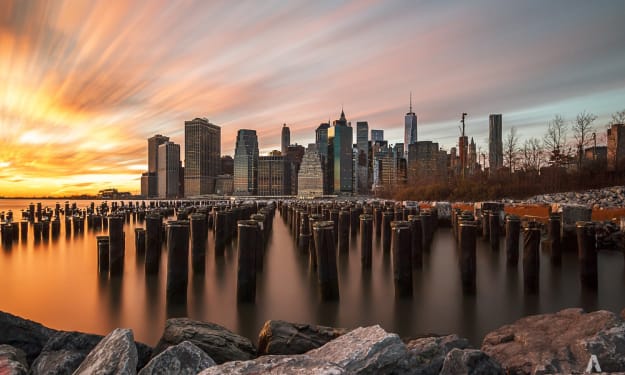
As summer approaches, many people are dreaming of sun, sand, and sea. And while there are countless beaches around the world to choose from, some stand out above the rest. From secluded coves to bustling party spots, here are the best beaches in the world for 2021.
By Muhammad Hamza3 years ago in Earth
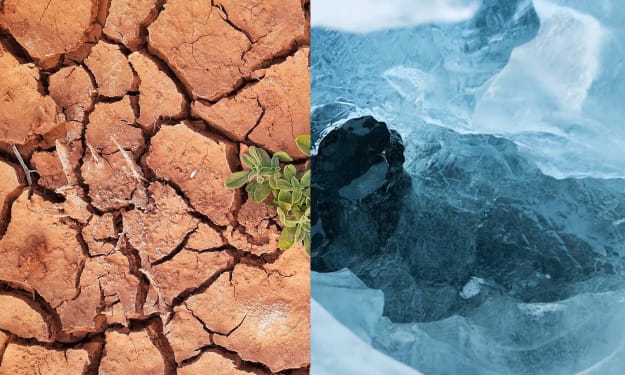
The Global Warming, Climate Change, and Ice Age Debate:
Climate change has been a hot topic for decades, with a plethora of conflicting opinions and theories surrounding its causes, impacts, and potential solutions. Some scientists and environmentalists argue that climate change is primarily caused by human activities, such as burning fossil fuels and deforestation, while others contend that it is a natural phenomenon that has occurred throughout the Earth’s history. However, there is a growing movement of people who believe that climate change, along with global warming and even the possibility of a new ice age, is all part of a pre-planned agenda by the government to gain more control over society.
By Muhammad Sarib Ali3 years ago in Earth
Facts About World
Once upon a time, in a world very much like ours, there lived a curious young girl named Emma. Emma had always been fascinated by the world around her, and she loved to learn new things. She was constantly asking questions and seeking out new information, and her parents often joked that she was like a walking encyclopedia.
By Salman SIddiqui3 years ago in Earth
Roots in a Sky : An Astronaut's Guide to Farming on Mars
Beyond M&Ms, space espresso and astronaut ice cream, a lot of work remains when it comes to securing nutrition in space. Knowing how to cultivate, culture and cycle consumable nutrients will be necessary for humans to successfully settle deep space. And it might be helpful for feeding hungry mouths on our home planet, too.
By Mark Xavier3 years ago in Earth
Climate Change and Environmental Sustainability
Climate Change and Environmental Sustainability Climate change is one of the most pressing global issues of our time, with far-reaching and potentially catastrophic consequences for the planet and its inhabitants. The scientific consensus is clear: the Earth's climate is changing due to human activities, particularly the emission of greenhouse gases like carbon dioxide from the burning of fossil fuels. The resulting warming of the planet is causing a range of impacts, from rising sea levels and more frequent and intense extreme weather events to species extinction and food and water insecurity. As such, there is an urgent need for action to mitigate and adapt to climate change, and for a transition towards environmental sustainability.
By Dilawar Shah3 years ago in Earth
Sustainability
Sustainability has become an increasingly important topic in recent years, with more people recognizing the need to protect the environment and preserve natural resources for future generations. Simply put, sustainability is about meeting the needs of the present without compromising the ability of future generations to meet their own needs. In this article, we'll explore the importance of sustainability, some of the challenges we face, and what you can do to get involved.
By Hammad Ullah3 years ago in Earth
India's Diversity in 4
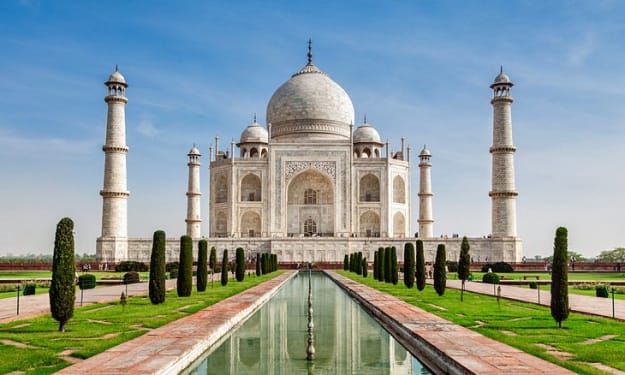
*Exploring the Wonders of India* India is a country located in South Asia and is the second most populous country in the world with a population of over 1.3 billion people. India has a rich history and culture that dates back thousands of years, and it is often referred to as the land of diversity, as it is home to a wide range of religions, languages, and cultures. Geographically, India is bordered by Pakistan to the west, China, Nepal, and Bhutan to the northeast, Myanmar to the east, and Bangladesh to the east of West Bengal. The Indian Ocean lies to the south of the country. The country's topography is quite diverse, ranging from the Himalayan mountains in the north to the deserts of Rajasthan in the west and the tropical forests in the south. The country is also home to several major rivers such as the Ganges, Brahmaputra, and Yamuna. India has a rich history that spans several millennia, and the country has been home to some of the most significant civilizations in the world. The Indus Valley Civilization, which dates back to around 2500 BCE, was one of the earliest civilizations in the world. The civilization was centered around the Indus River in what is now Pakistan and the western states of India. The civilization was known for its advanced urban planning, sophisticated architecture, and complex social structure.In the centuries that followed, India was home to several other significant empires, including the Mauryan Empire, the Gupta Empire, and the Mughal Empire. The Mughal Empire, in particular, is known for its great architectural achievements, including the Taj Mahal, one of the most famous landmarks in India and a UNESCO World Heritage site. India's struggle for independence from British rule is another significant event in the country's history. The Indian independence movement, led by Mahatma Gandhi, eventually led to India's independence in 1947, and the country became a republic in 1950. India is a diverse country, both culturally and linguistically. The country has over 22 official languages, with Hindi and English being the most widely spoken. India is also home to a wide range of religions, including Hinduism, Islam, Christianity, Sikhism, Buddhism, and Jainism, among others. The country's diversity is reflected in its rich cuisine, with each region having its unique food and cooking styles.India is also known for its rich art and literature. Indian literature dates back thousands of years and includes epic poems like the Ramayana and the Mahabharata. India is also known for its contributions to mathematics and science, with scholars like Aryabhata and Srinivasa Ramanujan making significant contributions to the field. India is a developing country, and it is currently one of the fastest-growing economies in the world. The country has a diverse economy, with agriculture, manufacturing, and services being the primary sectors. India is also home to several multinational corporations and is a major player in the global IT and software industry. India has made significant progress in recent years in improving its infrastructure, education system, and healthcare facilities. The country has also made significant strides in reducing poverty, with the poverty rate dropping from 55% in 1970 to 28% in 2000. However, the country still faces significant challenges, including inequality, corruption, and environmental issues.India is also known for its vibrant and colorful festivals, including Diwali, Holi, and Eid, among others. These festivals are celebrated with great enthusiasm across the country and are an excellent opportunity for visitors to experience Indian culture firsthand. In conclusion, India is a vast and diverse country with a rich history and culture. The country's diversity is reflected in its languages, religions, cuisine, and traditions, making it a fascinating place to visit.
By DINESH KUMAR.C3 years ago in Earth
Nature
Nature is a term that encompasses everything that is natural, from the smallest living organism to the largest mountain range. It includes all the living and non-living things that exist in our world, from the air we breathe to the water we drink, from the plants that grow in our gardens to the animals that roam the forests. Nature is an integral part of our lives, and we must learn to respect and cherish it for its beauty and importance.
By Asim Pervez3 years ago in Earth