Nature
Deadly Ocean Jacuzzi Discovered
Deep beneath the surface of the Gulf of Mexico lies an oceanic lake that has been dubbed the "Jacuzzi of Despair," and it is anything but inviting. Researchers recently discovered this deadly lake, measuring approximately one hundred feet in circumference and twelve feet deep. With such a forbidding name, one might expect to find a variety of sea creatures inhabiting its depths; however, most creatures that enter this mysterious lake never make it back out alive. This article will provide an overview of the Jacuzzi of Despair and explore what makes it so dangerous.
By Izabela Bąk3 years ago in Earth
Unlocking the Hidden Beauty of Mushrooms: Discover the Most Stunning Fungi in the World!
Mushrooms are fascinating organisms that come in a wide variety of shapes, sizes, and colors. While they are often thought of as a food source, they are also a subject of great interest to nature enthusiasts and photographers who seek to capture their beauty. If you're interested in finding beautiful mushrooms, here are some tips to help you get started.
By Berkay Karagöz3 years ago in Earth
The Intelligence of Dolphins.
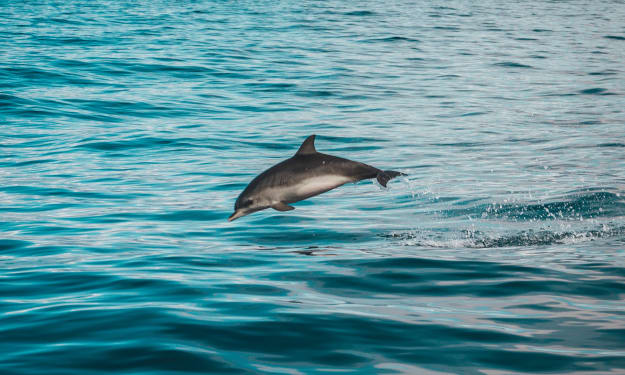
Dolphins are one of the most intelligent and sociable animals in the world. They have a remarkable ability to learn and solve problems, which is why they have been studied extensively by scientists and researchers for many years. In this article, we will explore the cognitive abilities and problem-solving skills of dolphins. Cognitive Abilities Dolphins are known for their high level of intelligence, which is evidenced by their ability to communicate with each other using a complex system of clicks, whistles, and body language. They have a well-developed brain, with a cerebral cortex that is even more complex than that of humans. This part of the brain is responsible for higher-level thinking, such as reasoning, problem-solving, and decision-making. One of the most fascinating aspects of dolphin intelligence is their ability to use tools. For example, some dolphins in Australia use sponges to protect their noses while foraging for food on the ocean floor. They place the sponge over their nose to prevent it from getting scraped on the rough surface. This behavior has been passed down from generation to generation, indicating that dolphins have a strong culture of learned behavior. Another remarkable cognitive ability of dolphins is their capacity for self-awareness. In a famous experiment, researchers placed a mirror in a dolphin's tank and observed its behavior. The dolphin was able to recognize itself in the mirror and even used it to examine parts of its own body that it couldn't see otherwise. This suggests that dolphins have a sense of self, which is a trait typically associated with higher-level cognition. Problem-Solving Skills Dolphins are also adept problem-solvers. In one experiment, researchers presented a group of dolphins with a series of tasks that required them to use their problem-solving skills. The tasks included opening a container that was locked with a series of latches and pulling a rope to release a treat from a trap. The dolphins were able to complete these tasks successfully, demonstrating their ability to think critically and solve problems. Dolphins are also known for their ability to innovate. In another experiment, researchers gave a group of dolphins a ball and observed their behavior. Initially, the dolphins simply tossed the ball around. But over time, they began to play with the ball in increasingly creative ways, such as tossing it in the air and catching it on their noses. This suggests that dolphins are not only able to solve problems but also have a capacity for creativity. Dolphins also exhibit social problem-solving skills. In one study, researchers observed a group of dolphins who had been separated from their pod due to human interference. The dolphins banded together and worked to solve the problem of finding their way back to their pod. They communicated with each other using their complex system of vocalizations and ultimately succeeded in rejoining their pod. This suggests that dolphins have a strong sense of social intelligence and are able to work together to solve complex problems. Implications of Dolphin Intelligence The high level of intelligence exhibited by dolphins has important implications for our understanding of animal cognition and the ethical treatment of animals. For many years, scientists believed that only humans were capable of complex thinking and problem-solving. But the evidence suggests that dolphins and other animals are much more intelligent than we previously thought. This knowledge should prompt us to reconsider the way we treat animals, especially those that are highly intelligent and social. Dolphins, for example, are often kept in captivity in theme parks and aquariums, where they are forced to perform tricks for human entertainment. This is highly unethical, given what we know about dolphin intelligence and their capacity for suffering. Conclusion Dolphins are highly intelligent animals with a remarkable set of cognitive abilities and problem-solving skills. They are able to use tools, exhibit self-awareness, and solve complex problems using critical thinking and innovation. Their social intelligence is also highly advanced, allowing them
By Mr Royal Honey 3 years ago in Earth
Dolphins in Popular Culture.
Dolphins are one of the most beloved and intelligent creatures on Earth, known for their playful nature, unique communication skills, and their close relationship with humans. As a result, they have been featured in popular culture in various forms, including film, literature, and art. This article will explore the representations of dolphins in these mediums and the impact they have had on popular culture. In film, dolphins have been depicted in various ways, ranging from factual documentaries to fictionalized narratives. One of the most well-known examples of a dolphin in film is Flipper, a 1963 film and subsequent television series that follows the adventures of a young boy and his pet dolphin. The character of Flipper became a cultural icon, representing the idea of a gentle and intelligent companion animal that could form a close bond with humans. Other films that have featured dolphins include the 2009 documentary The Cove, which exposes the annual dolphin hunt in Taiji, Japan, and the 2004 animated film Shark Tale, which includes a character named Lenny, a vegetarian shark who befriends a dolphin. In literature, dolphins have also been a popular subject, appearing in both fiction and non-fiction works. One of the most famous examples is the novel The Hitchhiker's Guide to the Galaxy by Douglas Adams, in which the character Arthur Dent meets a group of intelligent dolphins who have fled Earth before its destruction. The dolphins are portrayed as wise and knowledgeable beings who possess a greater understanding of the universe than humans. Other books that feature dolphins include The Island of the Blue Dolphins by Scott O'Dell, which follows the story of a young Native American girl stranded on an island with a group of dolphins, and the children's book series The Dolphin Diaries by Ben M. Baglio, which follows the adventures of a young girl and her pet dolphin as they explore the ocean. In art, dolphins have been a popular subject for centuries, appearing in various forms including paintings, sculptures, and murals. In ancient Greek and Roman art, dolphins were often depicted as companions of the sea god Poseidon (Neptune), and were seen as symbols of protection and guidance for sailors. The famous fresco in the Palace of Knossos in Crete, depicting dolphins and other marine creatures, is an example of this tradition. In modern art, dolphins have been featured in works by artists such as Damien Hirst, who created a sculpture of a dolphin in formaldehyde titled The Physical Impossibility of Death in the Mind of Someone Living, and Wyland, who is known for his large-scale murals of marine life, including dolphins. The representation of dolphins in popular culture has had a significant impact on the way people perceive and interact with these animals. They are often portrayed as intelligent, friendly creatures who are capable of forming emotional bonds with humans, which has led to increased interest in dolphin conservation and research. However, some representations of dolphins have also been criticized for perpetuating harmful stereotypes, such as the idea that dolphins are always happy and playful, which can lead to misconceptions about their natural behavior and needs. Overall, the representation of dolphins in popular culture reflects our fascination with these remarkable creatures and our desire to understand and connect with them. Whether depicted in film, literature, or art, dolphins continue to captivate and inspire us with their beauty, intelligence, and playful spirit. As we continue to learn more about these animals and their complex lives, it is important to ensure that our representations of them are accurate and respectful, and that we work to protect their habitats and well-being for future generations to enjoy
By Mr Royal Honey 3 years ago in Earth
The History of Dolphin-Human Interaction.
Dolphins have long captivated humans with their intelligence, agility, and seemingly playful nature. From ancient mythology to modern science, the history of dolphin-human interaction is rich and fascinating. In ancient Greece, dolphins were revered as sacred creatures associated with the god Apollo. It was said that Apollo turned himself into a dolphin and guided the ship of the Cretan king, Glaucus, to safety. The Greeks believed that dolphins had a special relationship with humans, and it was common for sailors to call upon them for help in times of trouble. In medieval Europe, dolphins continued to be seen as benevolent creatures. They were often depicted in art, and their images adorned everything from coins to coats of arms. The medieval belief in the healing powers of dolphin oil also led to the hunting of dolphins for their blubber, which was used to treat a variety of ailments. During the Age of Exploration in the 16th and 17th centuries, sailors encountered dolphins on their voyages to the New World. Many sailors recorded their interactions with these curious creatures, describing how they would swim alongside the ships, sometimes jumping and spinning in the air. These encounters helped to fuel the popular image of dolphins as friendly, playful animals.
By Mr Royal Honey 3 years ago in Earth
The Anatomy of Dolphins.
Dolphins are one of the most fascinating creatures that inhabit the ocean. Their streamlined bodies, sleek fins, and playful nature make them a beloved subject for marine enthusiasts and researchers alike. However, the anatomy of dolphins is not just beautiful; it is also perfectly adapted for life in the water. In this article, we will explore the unique adaptations that make dolphins such successful swimmers. Body shape and size The body shape and size of dolphins are perfectly adapted for their aquatic lifestyle. Their streamlined bodies are designed to minimize drag, making them swift and agile swimmers. The body of a dolphin is fusiform, which means that it tapers at both ends, giving it a fish-like appearance. This body shape allows dolphins to move through water with minimal resistance, reducing the energy needed to swim. Fins Dolphins have two types of fins: dorsal fins and pectoral fins. The dorsal fin is the one on the back of the dolphin and is used for stability when swimming. The pectoral fins are located on the sides of the dolphin's body and are used for steering and maneuvering. These fins are flexible, allowing the dolphin to make sharp turns and sudden movements. The pectoral fins also have bones that are similar to the human arm, making them incredibly versatile. Blowhole Dolphins breathe air through a single nostril called a blowhole, located at the top of their head. When a dolphin surfaces, it opens the blowhole and exhales, producing a spout of water and air. The blowhole then closes to prevent water from entering the dolphin's respiratory system. This adaptation allows dolphins to remain underwater for extended periods while still being able to breathe air. Teeth Dolphins have conical teeth that are perfectly adapted for their diet. They primarily eat fish and squid, and their teeth are designed to grasp and hold onto their prey. Dolphins' teeth are not used for chewing; instead, they swallow their food whole. Some species of dolphins have teeth that are adapted for specific prey. For example, the bottlenose dolphin has sharp, pointed teeth that are ideal for catching fish. Echolocation Echolocation is a biological sonar system that allows dolphins to "see" their environment using sound. When a dolphin emits a series of clicks, the sound waves bounce off objects in the environment and return to the dolphin's ears. The dolphin can then interpret the returning sound waves to create a mental image of its surroundings. This adaptation is incredibly useful for finding prey and navigating in murky water. Sensory system Dolphins have a highly developed sensory system that allows them to perceive their environment in great detail. Their eyesight is well adapted for underwater vision, and they have a unique structure called a melon that is located in their forehead. This structure is composed of fatty tissue and is used to focus and direct the clicks used in echolocation. The melon also helps to protect the dolphin's brain from the intense pressure changes that occur when diving. Thermoregulation Dolphins are warm-blooded mammals and need to regulate their body temperature in the water. They have a thick layer of blubber under their skin that acts as insulation, keeping them warm in cold water. They also have a specialized circulatory system that helps to conserve heat. When a dolphin dives, blood is redirected from the extremities to the vital organs, reducing heat loss. In conclusion, the anatomy of dolphins is a marvel of evolution, perfectly adapted for life in the water. From their streamlined bodies and flexible fins to their echolocation and sensory system, dolphins have a range of adaptations that make them incredibly successful swimmers. By understanding the unique adaptations of these magnificent creatures, we can better appreciate their beauty and the importance of protecting their natural habitats
By Mr Royal Honey 3 years ago in Earth
Abandoned towns to visit
There's a lot of mystery surrounding ghost towns today. These eerie places offer a window into the past, revealing a time and way of life that has long since disappeared. Before you add one to your bucket list, maybe you should think twice.
By Matilda Valentine3 years ago in Earth