Nature
10 Surprising Facts About Starfish You Didn't Know.
Starfish, also known as sea stars, are fascinating creatures that have captured the imagination of people for centuries. These marine animals have a unique appearance and many interesting characteristics that make them stand out from other sea creatures. In this article, we will explore 10 surprising facts about starfish that you probably didn't know. Starfish are not fish at all. Despite their name, starfish are not fish. They are actually echinoderms, which means "spiny-skinned". Other echinoderms include sea urchins, sand dollars, and sea cucumbers. The name "starfish" was given to them because of their star-like shape. Starfish don't have a brain or blood. Unlike most animals, starfish don't have a centralized brain. Instead, they have a decentralized nervous system that allows them to respond to their environment. Starfish also don't have blood. Instead, they have a unique water vascular system that helps them move, eat, and breathe. Starfish can regenerate their arms. One of the most fascinating characteristics of starfish is their ability to regenerate their arms. If a starfish loses an arm, it can grow back a new one. In some cases, a starfish can even regenerate an entire body from just one arm. Starfish can regenerate their entire body. Speaking of regenerating their bodies, some species of starfish can regenerate their entire body from just a small piece of their central disk. This means that even if a starfish is cut in half, each half can grow into a new starfish. Starfish have eyes, but not in the way we do. While starfish don't have a centralized brain, they do have eyespots on the tips of their arms. These eyespots can detect light and dark, but they don't allow starfish to see images like we do. Starfish can eat prey much larger than themselves. Starfish are known for their ability to eat prey much larger than themselves. They have a unique stomach that can extend outside of their body to digest food. Some species of starfish can even eat prey that is up to twice their size. Starfish can change their sex. Many species of starfish are hermaphrodites, which means they have both male and female reproductive organs. However, some species can also change their sex from male to female or vice versa. This allows them to increase their chances of reproducing. Starfish can move using tiny tube feet. Starfish move using tiny tube feet that are located on the undersides of their arms. These tube feet are filled with water and can be extended and retracted to move the starfish around. Starfish are important members of marine ecosystems. Starfish play an important role in marine ecosystems. They help to control the populations of other marine animals, such as clams and mussels, by eating them. This helps to maintain a balance in the ecosystem. Starfish are threatened by human activities. Unfortunately, many species of starfish are threatened by human activities such as overfishing, pollution, and habitat destruction. This is a cause for concern, as starfish are important members of marine ecosystems and their decline could have negative impacts on other marine animals. In conclusion, starfish are fascinating creatures with many surprising characteristics. They are not fish, don't have a brain or blood, can regenerate their arms and even their entire body, have eyespots on the tips of their arms, can eat prey much larger than themselves, can change their sex, move using tiny tube feet, and are important members of marine ecosystems. It is important to protect these unique creatures and their habitats to ensure their continued survival.
By Mr Royal Honey 3 years ago in Earth
The Fascinating History of Goldfish.
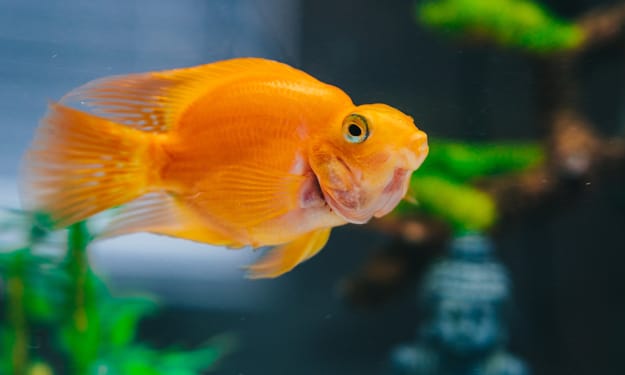
Goldfish are one of the most beloved and popular aquarium fish in the world. They are known for their bright colors, graceful movements, and calming presence. But did you know that these small, colorful fish have a fascinating history that dates back thousands of years? In this article, we will explore the history of goldfish, from their origins in ancient China to their popularity in modern-day aquariums.
By Mr Royal Honey 3 years ago in Earth
The Fascinating World of Starfish.
Starfish are fascinating creatures that can be found in oceans all around the world. They come in a wide variety of shapes and sizes, and their unique appearance and behavior have captured the interest of many people. In this beginner's guide, we'll explore the world of starfish and learn more about these incredible creatures.
By Mr Royal Honey 3 years ago in Earth
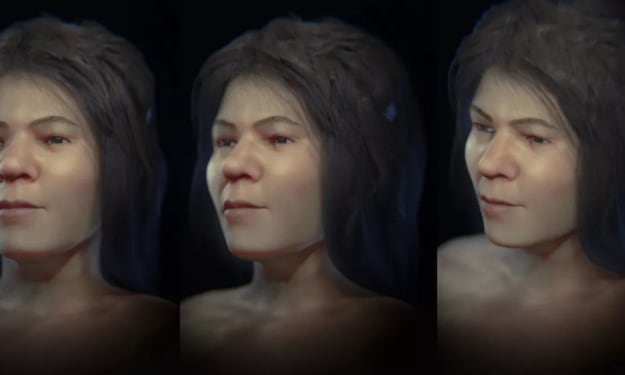
31 amazing facial reconstructions, from Stone Age shamans to King Tut's father
People from the past have left behind a treasure trove of clues about their lives — from enormous monuments to fragments of personal items, as well as the bones of the people themselves. But the people who left these clues are often a mystery. Now, thanks to modern scientific techniques and technology, researchers can accurately reconstruct what those people actually looked like, helping to bring long-dead people from history back to life.
By BURN BRIGHT3 years ago in Earth
WHAT IF : THE EARTH STOPS ROTATING FOR FIVE SECONDS
What if the earth's rotation were to cease for five seconds? How much harm would this abrupt cessation do? What would you encounter in various locations around the world. Would the earth still be habitable when it starts spinning again? What if the world stopped spinning for five seconds? This is what would happen. In a single day, the earth completes one full rotation around its axis. Thus, we have day and night. When the world was forming 4.6 billion years ago, as a massive disc of gas and dust swirled around the sun, dust and rock grains clumped together and produced forces that kept the planet rotating in one direction. It is because of these collisions that the earth is spinning today.
By SREENIVEATHA 3 years ago in Earth
How much U.S. forest is old growth? It depends who you ask
Last spring, President Joe Biden surprised forest scientists when he ordered the U.S. Forest Service (USFS) and Bureau of Land Management (BLM) to inventory their holdings of mature and old-growth forests by Earth Day 2023. The order triggered a scramble for the United States to, for the first time, formally define what constitutes “mature” and “old-growth” forests and to apply those definitions across millions of hectares of land.
By BURN BRIGHT3 years ago in Earth
Cooperative sperm outrun loners in the mating race
Even sperm gotta stick together. Bull sperm swim more effectively when in clusters, a new study shows, potentially offering insight into fertility in humans. In simulated reproductive tracts of animals like cattle and humans, the behavior increases the chances that groups of cooperative bovine sperm will outpace meandering loners as they race to fertilize a female egg cell, physicist Chih-kuan Tung and colleagues report September 22 in Frontiers in Cell and Developmental Biology.
By BURN BRIGHT3 years ago in Earth
In the wake of history’s deadliest mass extinction, ocean life may have flourished
Following the most severe known mass extinction in Earth’s history, vibrant marine ecosystems may have recovered within just a million years, researchers report in the Feb. 10 Science. That’s millions of years faster than previously thought. The evidence, which lies in a diverse trove of pristine fossils discovered near the city of Guiyang in South China, may represent the early foundations of today’s ocean-dwelling ecosystems.
By BURN BRIGHT3 years ago in Earth