Nature
A Whole New Underwater World
When we look at the ocean from the shore, it often appears as a vast blue surface stretching endlessly toward the horizon. But beneath those waves lies an entirely different universe, one that most of us rarely get the chance to explore. The underwater world is full of breathtaking beauty, fascinating creatures, and secrets that continue to amaze scientists and divers alike. It truly feels like stepping into another planet—one where life moves differently, where silence speaks volumes, and where every dive uncovers something new.
By aadam khanabout a year ago in Earth
Earth
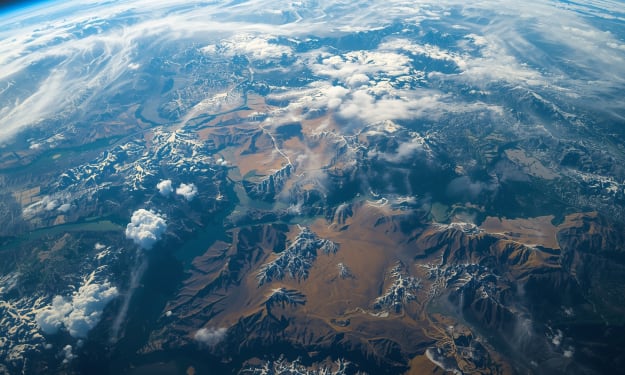
# Earth: Our Brittle Dejected Planet Earth, generally referred to as the “Blue Planet,” is the third planet from the Sun in our solar arrangement and the alone accepted angelic anatomy to anchorage life. Its different characteristics—ranging from its atmosphere and oceans to its assorted ecosystems—make it a arresting anchorage in the all-inclusive universe. Despite its familiarity, Earth charcoal a circuitous and aerial system, area accustomed processes and animal activities are intricately intertwined. Compassionate Earth’s structure, environment, and challenges is capital for ensuring its connected habitability for approaching generations. ## The Anatomy of Earth Earth is composed of several layers, anniversary with audible properties. At its centermost lies the close core, a solid apple primarily fabricated of adamant and nickel. Surrounding this is the alien core, which is in a aqueous accompaniment and amenable for breeding Earth’s alluring field. Above the amount is the mantle, a blubbery band of silicate bedrock that flows boring over millions of years, active tectonic movements. Finally, the band forms the planet’s exoteric layer, area bodies alive and ecosystems thrive. The coaction amid these layers causes phenomena such as earthquakes, agitable eruptions, and abundance formation, all of which appearance Earth’s apparent over geological time. ## The Atmosphere and Climate Earth’s atmosphere is a circuitous admixture of gases that sustains life. Comprising almost 78% nitrogen, 21% oxygen, and trace amounts of added gases like carbon dioxide and argon, the atmosphere bouncer action from adverse solar radiation and helps adapt the planet’s temperature. Layers such as the troposphere, stratosphere, mesosphere, and thermosphere anniversary comedy audible roles, from acclimate accumulation to attention Earth from meteoroids. Climate, the abiding arrangement of acclimate in a region, is afflicted by factors including sunlight, ocean currents, and atmospheric circulation. Earth’s altitude supports a array of biomes, from close rainforests to arctic tundras. However, animal activities such as deforestation, industrialization, and the afire of deposit fuels accept acquired cogent altitude changes. All-around warming, ascent sea levels, and acute acclimate contest are absolute after-effects of these alterations, highlighting the brittle antithesis of Earth’s environment. ## Oceans: The Lifeblood of Earth Covering added than 70% of Earth’s surface, oceans are basic to action and altitude regulation. They act as massive calefaction reservoirs, distributing thermal action beyond the planet through currents like the Gulf Stream. Oceans additionally blot carbon dioxide from the atmosphere, allowance to abstinent all-around temperatures. Moreover, they are home to an amazing assortment of life, alignment from diminutive plankton to the better mammals on Earth, the dejected whales. Despite their importance, oceans face abundant threats. Pollution, overfishing, and acidification affectation austere risks to abyssal ecosystems. Plastic waste, actinic runoff, and oil spills abuse abyssal action and agitate aliment chains. Preserving ocean bloom is acute not alone for amphibian breed but additionally for animal populations that await on abyssal assets for food, transportation, and bread-and-butter stability. ## Biodiversity and Ecosystems Earth’s biodiversity—the array of action forms in ecosystems—is capital for the planet’s resilience. Forests, grasslands, wetlands, and chastening anniversary abutment different communities of plants, animals, and microorganisms. These ecosystems accommodate casework such as apple-pie air, baptize purification, clay fertility, and pollination. Furthermore, biodiversity contributes to cultural and recreational values, alarming art, literature, and airy practices. Human activity, however, has accelerated breed afterlife rates. Habitat destruction, pollution, altitude change, and the addition of invasive breed abuse the antithesis of accustomed systems. Conservation efforts, including adequate areas, wildlife corridors, and acceptable adeptness management, are analytical for advancement Earth’s ecological health. ## Animal Appulse on Earth Humans accept had an aberrant access on Earth, about-face landscapes, altering ecosystems, and modifying atmospheric composition. Urbanization and industrialization accept adapted accustomed habitats, while agronomics has afflicted clay structures and baptize cycles. Moreover, deposit ammunition burning has led to cogent greenhouse gas emissions, active altitude change and ecology degradation. Despite these challenges, bodies additionally accept the accommodation to assure and restore Earth. Renewable energy, acceptable agriculture, reforestation, and abuse ascendancy are examples of strategies that can abate animal impact. International cooperation, ecology policies, and accessible acquaintance campaigns are capital to ensure that development occurs in accord with nature. ## The Approaching of Earth The approaching of Earth depends on our adeptness to antithesis animal needs with ecology stewardship. Scientific analysis and abstruse addition accommodate accoutrement for ecology climate, managing resources, and abbreviation pollution. Education and advancement empower communities to accept acceptable practices. Moreover, all-around initiatives such as the Paris Agreement aim to absolute altitude change and assure ecosystems. Earth’s animation has been activated over billions of years, constant ice ages, asteroid impacts, and accumulation extinctions. Yet, it continues to abutment action because of the intricate interactions amid its physical, chemical, and biological systems. Attention Earth is not aloof a moral responsibility—it is capital for the adaptation of all species, including humans. ## Conclusion Earth is added than aloof a planet; it is a complex, dynamic, and commutual arrangement that sustains action in means no added accepted apple can. Its atmosphere, oceans, ecosystems, and geological processes assignment calm to actualize a abiding environment. However, animal accomplishments accept placed aberrant burden on these accustomed systems, authoritative ecology aegis added burning than ever. By compassionate Earth’s structure, functions, and vulnerabilities, altruism can accomplish abreast choices to bottle this brittle dejected planet. Ensuring the bloom of Earth is not alone an advance in attributes but additionally a charge to approaching ancestors who will accede its wonders. ---
By YOGANATHAN KIRUSHANTHANabout a year ago in Earth
Whispers of the Green Tomorrow
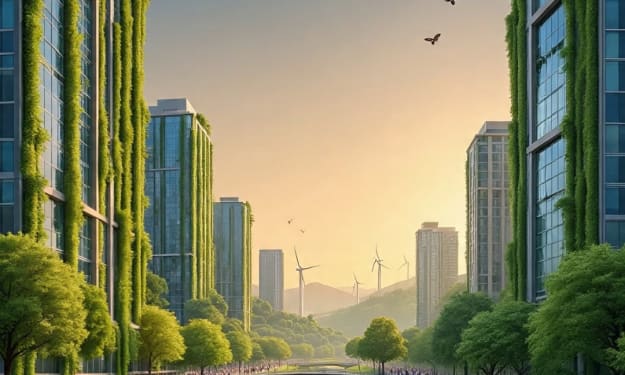
🌿 Whispers of the Green Tomorrow A Heartwarming Journey into a World Where Nature Heals, Hope Grows, and Humanity Thrives In the quiet valley of Aravelle, nestled between mountains painted in emerald hues, a transformation had begun. It wasn’t loud or sudden—no grand announcements or world leaders at podiums. It started with a whisper. A single voice, a single seed, and a spark of hope that spread like morning sunlight over dew-covered grass. Lena Wren, a schoolteacher in her early forties, had returned to her hometown after years in the city. The noise, the rush, the concrete—it had worn her thin. Aravelle was once a place of green hills and clean rivers, but like so many places, it had suffered. Trees had been cut down, the river had shrunk, and the birds had long forgotten the way home. But Lena believed in beginnings. With her savings, she purchased a small piece of neglected farmland on the edge of the village and began to plant—not just crops, but possibilities. She dug her hands into the soil, planted native trees, restored the stream with the help of some old village friends, and opened her land to children who had never seen a butterfly up close. At first, people smiled politely. "How lovely," they’d say, then continue scrolling on their phones or driving past in a hurry. But nature, like kindness, is contagious. One day, 9-year-old Tobi, who was always seen with headphones and a screen, wandered into Lena’s garden during a school field trip. He touched the bark of an old oak she’d planted and whispered, “It feels alive.” It was a small sentence, but for Lena, it was everything. Soon, other children followed. They came to plant, to paint rocks, to build bee hotels and birdhouses. They learned to listen to the wind and read the sky. Slowly, their parents began to join. Then neighbors. Then travelers who heard whispers of something special blooming in Aravelle. The garden became a sanctuary. Flowers danced with bees, and laughter flowed louder than ever. The once-dry river now sparkled, its waters returning with the trees. Birds built nests again, and deer peeked from the woods, curious about the joyful noise. Lena started something called “The Green Tomorrow.” It wasn’t just a garden anymore—it was a movement. People shared seeds and stories, planted hope in pots on balconies, and restored spaces long forgotten. News spread beyond the valley. A young filmmaker named Riya visited Aravelle to document the change. Her short film, Whispers of the Green Tomorrow, went viral. It wasn’t flashy—just moments of real people reconnecting with the earth, a boy’s laughter as a butterfly landed on his nose, a grandmother planting lavender with her granddaughter, Lena smiling with muddy hands. Viewers cried. They shared. They planted. Schools across countries began starting gardens. Cities painted murals of forests and turned rooftops green. People paused in their busy lives to breathe. And amidst all of it, Lena remained in Aravelle, tending her garden with the same quiet dedication. When asked why she did it, she would say, “Because I believe the earth remembers kindness—and gives it back.” Ten years later, Aravelle became a model village for sustainable living. Solar trees lined the paths, food was grown locally, and every child could name more birds than brands. But the real magic wasn’t in the technology or the policies. It was in the people—connected again, not just to nature but to each other. In one of the village’s new community centers, engraved on the wall were the words: “Hope is not a loud promise. It's a quiet seed that grows when someone dares to care.” And so, the whisper became a song. A melody of green tomorrows—sung by rivers, carried by winds, blooming in the hearts of people everywhere.
By Muhammad Saad about a year ago in Earth
Tragedy in Khyber Pakhtunkhwa Pakistan: Flash Floods Claim Over 300 Lives as Rescue Efforts Continue
Khyber Pakhtunkhwa (KP), a mountainous and often flood-prone province in Pakistan, is currently reeling from one of the deadliest natural disasters in recent years. Torrential rains and subsequent flash floods have devastated large swaths of the province, leaving a trail of death, destruction, and despair. According to a report issued by the Provincial Disaster Management Authority (PDMA) on Sunday, at least 314 people have lost their lives and 156 others have been injured as rescue operations stretch into their third day. A Province in Crisis The relentless downpours began earlier in the week, overwhelming rivers and submerging entire communities. Districts such as Buner, Swat, Shangla, and Mansehra have been hit the hardest, with many rural villages completely cut off from the rest of the province. Roads have been washed away, bridges collapsed, and communications in several areas remain down, severely hampering relief efforts. In response to the scale of devastation, the KP government declared a state of emergency on Saturday, mobilizing all available resources to aid in rescue and recovery operations. Civil and military personnel have been deployed, working around the clock to locate survivors, distribute aid, and begin the grim task of recovering the bodies of those lost. Buner: The Epicenter of the Catastrophe According to the PDMA, the district of Buner has suffered the highest number of casualties, with 209 confirmed deaths and 120 injuries. Local officials say the real toll may be higher, as many areas remain inaccessible and dozens of people are still believed to be trapped under debris or swept away by floodwaters. Eyewitness accounts paint a harrowing picture: entire families buried under landslides, houses reduced to rubble in seconds, and survivors wandering in search of lost loved ones. “We didn’t even hear it coming,” said one resident. “One minute we were sitting at home, and the next moment the flood took everything.” In Shangla, another hard-hit area, 36 people have been confirmed dead and 21 injured. Like Buner, the region's rugged terrain and lack of infrastructure are making rescue efforts painfully slow. Humanitarian Response and National Outcry Relief organizations and government agencies are working in coordination to provide emergency shelter, food, and medical care. Makeshift camps have been set up for displaced families, though resources are stretched thin. Many survivors are in urgent need of clean drinking water, blankets, and sanitation facilities to prevent outbreaks of waterborne diseases. Prime Ministerial officials and leaders from across Pakistan have expressed their condolences and pledged federal assistance to the provincial government. Yet, as rescue teams dig through mud and debris with bare hands in some cases, the scale of the disaster has laid bare the region’s vulnerability and lack of preparedness in the face of extreme weather events. Climate Change and Increasing Flood Risk Pakistan is no stranger to floods, especially during the monsoon season. However, experts warn that climate change is amplifying the frequency and intensity of these disasters. Rising global temperatures have led to irregular weather patterns, heavier rainfall, and accelerated glacial melting in the northern regions of the country—all contributing to a higher flood risk. The devastation in KP serves as a grim reminder of the urgent need for sustainable environmental planning, improved infrastructure, and early warning systems. Local officials say that many of the affected communities received little or no warning before the floods struck, leaving residents with no time to evacuate. What Comes Next? As the floodwaters begin to recede, the long-term impact of this disaster is just beginning to emerge. Thousands have been left homeless, livelihoods destroyed, and basic services disrupted. Rebuilding these communities will take months, if not years, and will require both national and international support. For now, the focus remains on rescue and recovery. Emergency teams continue to search for the missing and provide relief to the survivors. Yet the psychological toll on affected families—many of whom have lost multiple members—cannot be overstated. In times like these, solidarity and swift action are crucial. The people of Khyber Pakhtunkhwa are resilient, but they cannot face this calamity alone. If you’d like to help, consider donating to reputable humanitarian organizations operating in Pakistan, or spreading awareness about the situation in KP.
By Israr khanabout a year ago in Earth
Heart of the Green Giant
Heart of the Green Giant — A Journey Through the World's Largest and Most Lush Jungle — The sun rose like liquid gold over the canopy of the world’s largest jungle — a sea of green stretching endlessly to the horizon. Deep in the heart of the Amazon, the Earth pulsed with life. Birds sang in symphony, monkeys chattered between branches, and the mighty river curled through the trees like a silver serpent. For 12-year-old Lina Torres, this was more than just a trip — it was a dream come true. Lina had always been fascinated by nature. Growing up in São Paulo, she spent countless hours in the library reading about ecosystems, endangered species, and the rainforests that kept the planet breathing. Her grandmother, a retired forest biologist, often told her stories about her expeditions into the Amazon decades ago. Now, Lina was walking the same paths. She arrived with her parents and a group of researchers who were part of a conservation program working with local communities to protect the jungle. Their mission? To map an untouched section of forest, record its biodiversity, and install camera traps to study the elusive animals that roamed freely, unseen. From the moment she stepped off the boat and into the thick green world, Lina felt the jungle welcome her. The air was rich and heavy with the scent of life — wet leaves, earth, and distant flowers. Butterflies the size of her hands floated past, their wings flashing blue and gold. Overhead, scarlet macaws soared in pairs, calling to one another like old friends. Each day was a new adventure. By morning, the group hiked through towering trees, some as old as history itself. They waded through narrow creeks, climbed over tangled roots, and listened carefully to the whispers of the forest. Every rustle of leaves was a story waiting to be discovered. One afternoon, while helping set up a camera near a salt lick, Lina heard a soft rustling nearby. She froze, trying not to breathe too loudly. Slowly, through the underbrush, emerged a tapir — shy, gentle, and magnificent. It sniffed the air, stepped cautiously forward, then vanished like a shadow. It was her first close encounter with wild Amazonian wildlife, and she beamed with joy. The jungle had trusted her with its secret. As days passed, Lina learned not only from the scientists but also from the local guides — members of the Yawanawá community who had lived in harmony with the forest for generations. They taught her how to identify plants used for medicine, how to mimic bird calls, and how to walk lightly, without disturbing the life around her. “Nature is not something we visit,” said Aritana, a young guide and storyteller. “It is something we are part of. The jungle is our teacher, our guardian.” Lina nodded, taking every word to heart. One morning, as mist rose from the treetops and the air was thick with dew, Lina and Aritana climbed a small ridge to watch the sunrise. As they sat in silence, a family of howler monkeys began their morning calls, echoing like distant drums. Lina felt tears sting her eyes — not from sadness, but from awe. “This is the green giant,” she whispered. “Alive, breathing, and beautiful.” By the end of the two-week journey, Lina had filled her notebook with sketches of animals, descriptions of plants, and stories shared by the guides. Her heart was full, and her perspective forever changed. The jungle wasn’t just a place on a map — it was a living, breathing treasure, more powerful and delicate than she had ever imagined. Before leaving, the team gathered to plant seedlings in a reforestation area. As Lina placed a small Brazil nut sapling into the earth, she felt a sense of purpose. “I’ll come back one day,” she promised the tree, “and see how tall you’ve grown.” Back on the boat, watching the jungle fade into the distance, Lina knew that this was only the beginning. She had found her calling — not just to explore nature, but to protect it, share its beauty, and remind the world that the heart of the green giant beats for all of us. And somewhere deep in the jungle, where sunlight dances through emerald leaves and jaguars move like shadows, the forest remembered her too.
By Muhammad Saad about a year ago in Earth