Humanity
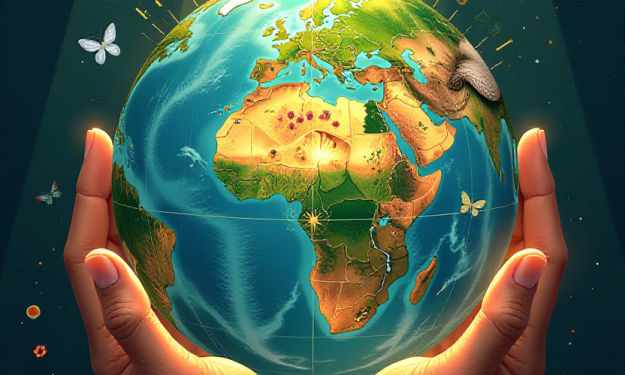
"Biodiversity: The Beauty of Life on Earth and Our Shared Responsibility"
Introduction Earth is home to an estimated 8.7 million species, yet human activity drives approximately 150 of them to extinction daily. This staggering loss isn’t just a statistic—it’s an unraveling of the intricate web of life that sustains us all. Biodiversity, the dazzling variety of life on our planet, is both a masterpiece of evolution and a lifeline for humanity. From the depths of coral reefs to the canopies of rainforests, every species plays a role in Earth’s grand symphony. This article explores the irreplaceable beauty of biodiversity, the existential threats it faces, and the collective action needed to safeguard our shared home.
By Shamshair Khan Hasan Zaiabout a year ago in Earth
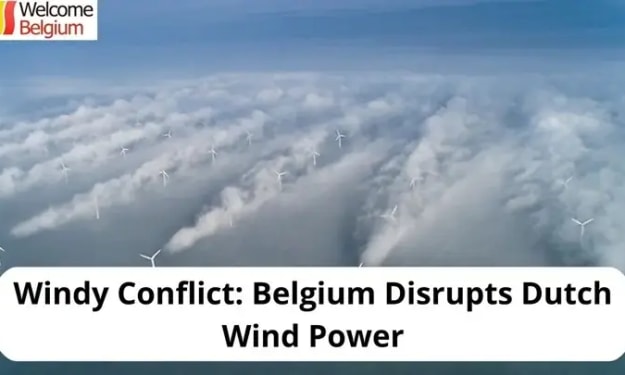
Belgium’s Wind Turbine Controversy: A Perfect Storm of Politics, Power, and Priorities
What began as a technical proposal to expand Belgium’s offshore wind energy capacity has quickly evolved into a political maelstrom, exposing fault lines not only between regional and federal governments, but also between environmental goals and local interests. In a country where compromise is the norm and political complexity is baked into the system, this wind turbine debate is shaping up to be one of the most divisive green energy issues in recent memory.
By Ретро Манияabout a year ago in Earth
Trump confronts South African leader with baseless claims of the systematic killing of white farmers
In a move that sparked international controversy and drew widespread condemnation, former U.S. President Donald Trump reignited a debunked conspiracy theory involving South Africa, accusing its government of allowing or even orchestrating the “systematic killing of white farmers.” The claims, widely criticized as misleading and racially charged, surfaced during a diplomatic interaction with South African leadership and have since raised concerns about the spread of misinformation, the misuse of international platforms for domestic political gains, and the potential to inflame racial tensions. Trump’s remarks echoed a narrative long propagated by far-right groups both in the United States and abroad. During his presidency in 2018, Trump tweeted that he had asked then-Secretary of State Mike Pompeo to “closely study the South Africa land and farm seizures and expropriations and the large scale killing of farmers,” citing a segment from Fox News host Tucker Carlson. The statement, which aligned closely with white nationalist rhetoric, was made without consulting the U.S. Embassy in South Africa or checking with intelligence officials. It was immediately met with strong rebuttals from both the South African government and independent fact-checkers. The South African government responded at the time via Twitter, stating, “South Africa totally rejects this narrow perception which only seeks to divide our nation and reminds us of our colonial past. South Africa will speed up the pace of land reform in a careful and inclusive manner that does not divide our nation.” President Cyril Ramaphosa’s office later clarified that Trump had not contacted him directly before making the statement. More recently, Trump has revived these assertions during campaign events and interviews, again referring to alleged violence against white farmers as part of what he called a “genocide.” However, independent data from South Africa’s government and civil society organizations continues to contradict these claims. The South African Police Service (SAPS) tracks farm attacks and murders, and the data consistently shows that while rural crime is a serious issue, it affects both black and white farmers. Furthermore, white South Africans, though a minority, still own the vast majority of agricultural land in the country—a legacy of apartheid-era dispossession. Experts argue that Trump’s statements are not rooted in genuine concern for South African farmers but rather serve to stoke racial fears among his political base. The narrative fits into a broader pattern of white grievance politics, in which Trump has repeatedly portrayed white people as victims of discrimination or violence, both in the United States and abroad. This rhetoric, critics warn, risks legitimizing extremist ideologies and encouraging racial paranoia. “Trump’s remarks are not just inaccurate, they are dangerous,” said Dr. Mandisa Malinga, a political scientist at the University of Pretoria. “They import a foreign narrative of racial victimhood that is not supported by evidence and ignores the complex socio-economic realities of rural South Africa. Worse, they undermine the legitimate land reform efforts of a country still grappling with the legacy of apartheid.” Trump’s claims also come amid rising global concern over disinformation in politics. By leveraging unfounded allegations on a global stage, Trump reinforces his broader political strategy of deflecting attention from domestic controversies and energizing his support base through outrage. Critics argue that such tactics erode the credibility of international diplomacy and further isolate the U.S. from African allies. South African observers note that the country’s land reform process—aimed at addressing deep-seated inequality from decades of institutionalized racial segregation—is fraught with challenges but is being handled within a legal and constitutional framework. No credible evidence has emerged to support claims of a government-sponsored campaign to murder white farmers. The persistence of this myth—bolstered by social media echo chambers, fringe news outlets, and opportunistic political figures—illustrates the enduring power of racially charged disinformation. For South Africa, it is yet another reminder of how its complex internal issues are vulnerable to distortion and exploitation by foreign actors. As Trump continues his political campaign in the U.S., observers warn that such baseless narratives may not only further inflame domestic divides but also strain international relationships, especially with nations like South Africa that are striving to overcome their troubled pasts through difficult but necessary reform. In a world already grappling with rising nationalism and political polarization, the use of debunked foreign conspiracy theories for political gain serves as a stark warning of the dangerous intersection between disinformation, race, and power.
By Md Abdullaabout a year ago in Earth
Gaza on the Brink
Gaza on the Brink: A Deepening Humanitarian Crisis Amid Escalating Conflict The crisis in Gaza continues to escalate, with the Israel-Palestine conflict plunging into an increasingly devastating phase. As of May 2025, the region faces intensified Israeli military operations, a worsening humanitarian catastrophe, and mounting international concern. Global leaders are calling for urgent action to stem civilian suffering amid these grim developments. *Escalating Military Operations and Civilian Casualties Israeli forces have broadened their ground offensives and aerial bombardments across Gaza, targeting areas such as Khan Younis and Gaza City. These military actions have resulted in a sharp rise in civilian casualties, with Gaza’s Health Ministry reporting tens of thousands of Palestinians killed and over 100,000 wounded since October 7, 2023. Women and children bear the brunt of these losses. Recent strikes have hit displacement shelters, schools, and zones previously deemed safe, causing numerous fatalities in single incidents. The focus on Rafah—the site of over a million displaced Palestinians seeking refuge—has been particularly troubling. Israeli operations here aim to dismantle Hamas’s remaining strongholds and secure the release of hostages; however, they have wreaked havoc on the civilian population. In just the past few days, over 100,000 Palestinians have been displaced, escalating what was already a dire humanitarian situation. Satellite images from late 2024 indicated that nearly half of Rafah’s buildings had been damaged or destroyed; ongoing attacks are intensifying this destruction. *A Humanitarian Crisis of Unprecedented Proportions Gaza teeters on the brink of famine. Months of Israeli blockades have severely hampered access to essential supplies. While Israel has permitted limited aid entry recently, aid organizations and the UN describe it as insufficient—a mere “drop in the ocean.” - **Starvation and Malnutrition:** The Integrated Food Security Phase Classification (IPC) warns that Gaza’s entire population faces critical hunger risks, with many in emergency or catastrophic conditions. Thousands of children are at imminent risk of death from malnutrition, and numerous community kitchens have shut down due to lack of supplies. - **Healthcare Collapse:** Overwhelmed hospitals are running out of medicines and essential equipment. Many health facilities have been targeted or forced to close, leaving residents without adequate care for war injuries and routine health issues. - **Displacement and Lack of Safe Shelter:** Most of Gaza’s 2.3 million residents have been displaced multiple times, seeking refuge in overcrowded, unsanitary tents with little access to clean water, food, or medical services. For many, there is nowhere safe to seek refuge within the besieged enclave. * International Outcry and Diplomatic Efforts The world’s frustration and alarm are intensifying. Leaders from the UK, France, and Canada have issued a joint statement condemning ongoing Israeli military escalation, threatening sanctions if offensive operations persist and aid restrictions aren’t lifted. The UK has suspended trade talks with Israel and summoned its ambassador. The UN and numerous humanitarian organizations continue to call for an immediate ceasefire, safe and unrestricted humanitarian access, and adherence to international law. Concern over potential violations, including war crimes, is widespread. Despite efforts at mediation by the U.S., Qatar, and Egypt, a lasting ceasefire remains elusive. Hamas reaffirmed its demand for a ceasefire and full Israeli withdrawal, coupled with the release of remaining hostages—conditions rejected by Israeli Prime Minister Benjamin Netanyahu, who has vowed to continue the campaign until Hamas is defeated and all of Gaza is under Israeli control. *The Road Ahead The trajectory of the conflict indicates a deepening humanitarian disaster, demanding urgent international intervention to protect civilians and facilitate crucial aid deliveries. The prospects for regional stability and peace remain uncertain, with long-lasting implications that threaten to shape the geopolitical landscape for years to come.
By jubair hossainabout a year ago in Earth
Where Should We Focus in 2025?
As climate change accelerates, 2025 marks a pivotal moment in our response to a warming world. From rising sea levels and record-breaking heatwaves to floods and wildfires, the consequences of climate change are no longer abstract predictions—they are part of our everyday reality. In this context, policymakers, scientists, and communities are faced with a crucial dilemma: Should we focus more on adapting to the effects of climate change or on mitigating its root causes?
By Iftekhar Islam Jihadabout a year ago in Earth
Where Is the Hottest Place in the Universe?
Have you ever wondered what the hottest place in the universe is? And what the actual temperature is—or was—at that location? When I used to hear that the fuel of Hell would be stones and humans, it left me puzzled. We’re used to thinking that fire needs wood to burn, so how could stones possibly ignite? How could rocks become fuel for fire? But once I began studying the universe, this mystery unraveled in the most astonishing way. I realized that the heat of burning stones can far surpass that of any wood-based fire. If you’re skeptical, like I once was, then this article is especially for you. Let’s begin with the basics. We know that water freezes at 0°C (32°F)—this is the freezing point for water, not for all substances. If something contains water molecules, it will solidify at this temperature. Now consider the average room you’re in right now—its temperature is probably around 25°C. The normal human body temperature is 37°C, and even a slight fluctuation can cause health issues, because our bodies are finely tuned to operate at this range. The highest temperature ever recorded on Earth's surface is 56.7°C (134°F), and water boils at 100°C. These are familiar figures—but the temperatures we’re about to explore go far beyond anything we encounter in daily life. Let’s venture beyond Earth. The closest planet to the Sun is Mercury. Thanks to NASA’s space missions, we now know that Mercury can reach temperatures of up to 427°C. However, it's Venus, the second planet from the Sun, that holds the title of the hottest planet in our solar system, with surface temperatures around 462°C. This is due to its thick atmosphere, which traps heat through a runaway greenhouse effect. Let’s go hotter. Molten lava, which emerges from Earth’s volcanoes, can reach temperatures of around 1,200°C. That’s hot enough to melt many metals. For instance, iron melts at 1,538°C, and beyond that, it can vaporize into gas. Imagine temperatures where solid metals behave like steam. Now let’s look at our Sun. The surface of the Sun burns at approximately 5,500°C, while the core—the heart of the Sun where nuclear fusion takes place—reaches a staggering 15 million°C. That’s fifteen million degrees Celsius. Hard to imagine, right? But the universe still has more surprises. When a massive star reaches the end of its life, it undergoes a supernova explosion—a violent burst of energy that marks the star's death. During this cataclysmic event, temperatures can soar up to 550 million°C. That’s 550,000,000 degrees Celsius. To put this in perspective, we humans struggle with 50°C weather, and here we’re talking about over ten million times hotter. Yet the story doesn’t end here. Next comes the neutron star—one of the densest and most mysterious objects in the universe. When a massive star collapses under its own gravity after a supernova, it can form a neutron star. The heat generated during this process is almost unimaginable: 12 billion°C (12,000,000,000 degrees Celsius). That’s billion with a ‘B’—making neutron stars some of the hottest known objects in the current universe. And still, we’re not at the ultimate temperature. To find the hottest point ever, we need to go back in time—to the birth of the universe itself. According to the Big Bang theory, all matter, energy, time, and space were compressed into an infinitely small, dense point known as a singularity. The universe as we know it began from this singularity in a colossal burst around 13.8 billion years ago. Now, brace yourself. Scientists estimate that at the exact moment of the Big Bang, the temperature of this singularity reached an incomprehensible 142 nonillion°C. That’s 142 followed by 30 zeros: 142,000,000,000,000,000,000,000,000,000,000°C This is called the Absolute Hot—the highest possible temperature in theoretical physics. At this point, our current laws of physics break down. Temperatures beyond this are not just unknown—they are unknowable with current science. This figure marks the upper limit of thermal energy. Beyond this, our equations, our theories, and our understanding cease to function. No object or environment in our universe—or any universe we can currently theorize—has ever reached a temperature higher than this. Final Thoughts What began as a simple curiosity about how rocks can burn led us on a breathtaking journey through space, time, and science. From volcanic lava to supernovae, from neutron stars to the very origin of the cosmos, the range of temperatures in our universe is staggering. So the next time you feel the heat of a summer’s day, remember—you’re only scratching the surface of what the universe is capable of. The hottest place in the universe isn’t a planet or a star. It’s a moment—a flashpoint in time when everything began. And that moment burned hotter than anything we can truly comprehend. ---
By Umair Khanabout a year ago in Earth
5 Tech Innovations That Could Reshape Global Power Dynamics by 2030
Our ability to make things has always shaped human civilization. Productivity has been a key component in changing society from the agrarian age to the industrial revolution and the age of advanced technology.
By sabbir Ahmedabout a year ago in Earth
Transitioning to Geothermal Heating in Urban Areas with Climate Change Experts including Rasha Anayah
Urban centers are constantly seeking cleaner and more efficient energy solutions. As climate change accelerates and cities become more densely populated, traditional heating systems struggle to meet environmental and performance demands.
By Rasha Anayahabout a year ago in Earth