Humanity
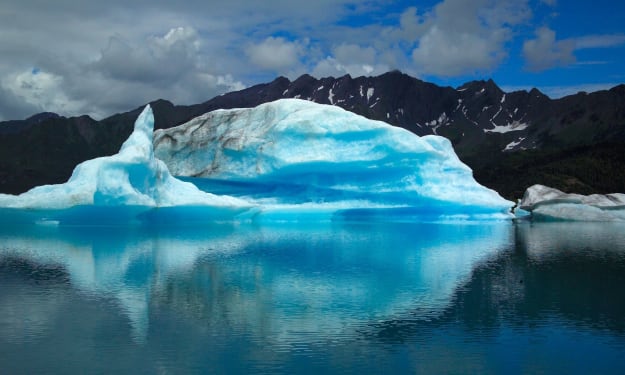
The Rise of Eco-Anxiety
Climate change is one of the most pressing issues facing our planet today, and it is having a profound impact on our mental health. The term "eco-anxiety" is used to describe the feelings of fear, worry, and stress related to climate change and its consequences. As the impacts of climate change become more evident and severe, the prevalence of eco-anxiety is increasing.
By Melodic Narrator3 years ago in Earth
"Unleashing the Power of the Sun: Is Sunlight Reflection the Key to Cool Our Planet?"
Unleashing the Power of the Sun: Is Sunlight Reflection the Key to Cool Our Planet? The eruption of Mount Pinatubo in the Philippines in 1991 was one of the largest volcanic eruptions of the 20th century. Its ash plume rose above the atmosphere and spread a layer of aerosol particles across the globe, creating a solar umbrella that reflected sunlight and caused global temperatures to drop by almost half a degree Celsius for nearly two years. This phenomenon was not unique to Mount Pinatubo, as other large volcanic eruptions have also had a cooling effect on global temperatures. Major volcanic eruptions such as El Chichón in 1982 have also caused significant drops in global temperatures by about half a degree Celsius, similar to other major eruptions in the past century. Today, scientists are investigating the possibility of replicating this phenomenon using a technology called solar geoengineering to combat global warming. Proponents argue that given the worsening effects of climate change, it is important to explore all potential solutions to alleviate suffering. However, opponents contend that the risks associated with this technology are too great and should not be considered as a viable response to global warming. While technological advancements have undoubtedly brought about many benefits, there are also inventions that some may wish had never been created. This raises an important question when it comes to solar geoengineering: should we be exploring this option? Given the high stakes of the survival of humanity on Earth, I interviewed a range of experts, including scientists, lawyers, and indigenous leaders, who hold strong opinions on both sides of the debate. Despite differing views, scientists agree that solar geoengineering has the potential to cool down the planet by reflecting sunlight away from the Earth and preventing heat from becoming trapped in the atmosphere. One approach involves injecting aerosols into the stratosphere, mimicking the effects of volcanic eruptions. This approach is currently the most commonly researched method. Scientists are exploring various methods for solar geoengineering, including brightening marine clouds and deploying reflective shields in outer space. However, these technologies are still in the research phase and would require massive intervention in our complex climate system to achieve large-scale cooling effects. Solar geoengineering is supported by some scientists because we are currently on a concerning path with rising carbon dioxide emissions. While reducing emissions is essential in the long run, it is not sufficient to eliminate climate risk because the risk stems from accumulated emissions. University of Chicago Professor David Keith argues that in order to mitigate the worsening impacts of climate change, we must move beyond just reducing emissions. Extreme weather has already resulted in a significant percentage of global deaths, and heat-related deaths are on the rise. Supporters suggest that we should explore climate processes, use computer modeling, and develop technologies to determine if and how we could safely deploy them globally, alongside other solutions. However, meddling with the global climate is a complicated issue as the whole system is interconnected. Adding new elements into our atmosphere or stratosphere could create unpredictable changes in the way the climate system responds and potentially exacerbate extreme weather events caused by climate change. Despite the risks, there is a need to understand the benefits and risks of solar geoengineering. Nevertheless, we cannot answer the most significant questions about the climate system response unless we undertake a full-scale deployment, which would require unprecedented global cooperation in terms of scale and time. Moreover, even if we stop emitting greenhouse gases, the warming effect of the carbon dioxide we have emitted since the industrial revolution will persist for thousands of years. The proposed solar geoengineering techniques have a short lifetime in the atmosphere and require constant deployment for continued cooling effect, which poses an unprecedented burden on future generations to adhere to treaties and institutions for thousands of years. In case of an international disagreement, war, or sudden termination, the world could face rapid warming known as termination shock. Critics view solar geoengineering as ungovernable and unsustainable, given the unpredictability and drastic changes it might awaken in climate, weather, and biodiversity. Sweden's rejection of a solar geoengineering project in 2021 highlights concerns raised by environmental and indigenous groups. Most solar geoengineering research takes place in labs with models and simulations due to opposition like this, turning the debate into one about the extent of research. In January 2022, 400 scientists called for a non-use agreement on solar geoengineering The proposed solar geoengineering techniques have a short atmospheric lifespan, which means they would need to be continuously deployed for centuries to have a long-term cooling effect. This would require future institutions and treaties that can be upheld for thousands of years, an unprecedented burden on future generations. In the event of war, global depression, or sudden termination of solar geoengineering, rapid warming, also known as termination shock, could occur, posing a significant risk to the planet. Despite the opposition from environmental and indigenous groups, some scientists are in favor of low-risk research, such as fundamental climate processes, computer simulations, and modeling. However, research that develops technology leading to full-scale deployment is opposed by many scientists, as they fear it could be ungovernable and unsustainable. Some scientists call for a robust international scientific assessment that includes experiments to advance solar geoengineering technology. Still, they stress that research does not imply support for its use and that we cannot prevent future generations from using the technology. I spoke with Sarah Doherty, a researcher at the University of Washington who studies marine cloud brightening, about the significance of ongoing research in this area. According to her, it is crucial to conduct this research now to make informed and equitable decisions in the future, as the knowledge about these options is already widespread. Some advocate for immediate deployment of these technologies, indicating the likelihood of their use in the future. However, both sides agree that solar geoengineering could negatively impact efforts to reduce carbon emissions, as it may serve as an excuse for continued fossil fuel use. While there is a political concern that these technologies may be exploited, it should not serve as an ethical basis to restrict potentially risk-reducing research. Mexico is currently the only country that has banned solar geoengineering experiments, whereas the US is developing a research plan in this area. Climate-focused global organizations are now conducting assessments and issuing recommendations, but there is no clear consensus on the path forward. Despite this, everyone I spoke to on both sides of the issue is deeply invested in preserving our planet's future. The tension between opposing views can lead to more thoughtful and rigorous solutions to the problems we face. For instance, volcanic eruptions like Mount Pinatubo's in 1991 have shown that aerosol particles in the stratosphere can lower global temperatures by half a degree Celsius for almost two years, as was the case with other eruptions in the past century. Scientists have been investigating the possibility of replicating the cooling effects of massive volcanic eruptions through solar geoengineering, a technology that some believe could help mitigate the impacts of global warming. While some see solar geoengineering as a valuable tool in the fight against climate change, others argue that its potential risks outweigh its benefits. The benefits and risks of solar geoengineering were explored by speaking with scientists, lawyers, and indigenous leaders who hold opposing views on the matter. While solar geoengineering could potentially cool the planet by reflecting sunlight away from Earth through the injection of aerosols into the stratosphere or brightening marine clouds, its large-scale deployment could interfere with the complex climate system and lead to unintended consequences. Nevertheless, some scientists argue that we must explore solar geoengineering as we currently face a dire situation with rising emissions and continued climate change impacts, which could worsen even if emissions are cut to zero. According to a recent study, extreme weather is responsible for almost 10% of global deaths, with an increase in heat-related deaths. Supporters of mitigating these effects argue that we need to explore climate processes, use computer modeling, and develop technology to safely deploy solutions. However, solar geoengineering, which involves interfering with our global climate, is very complex and could create unpredictable changes in the way the climate system responds. Adding new elements to our atmosphere or stratosphere could worsen the extreme weather caused by climate change. Additionally, a full-scale deployment of solar geoengineering would require unprecedented global cooperation and commitment for thousands of years, which is a burden to put on future humanity. Critics argue that solar geoengineering is ungovernable and unsustainable due to the risk of rapid warming caused by termination shock. Opposition to solar geoengineering has led to most research taking place in labs with simulations, and in 2022, 400 scientists called for a non-use agreement on solar geoengineering. They supported low-risk research on fundamental climate processes that doesn't lead to deployment. Critics of solar geoengineering are concerned that increased modeling could lead to full-scale deployment, but they admit that some simulations are useful and cannot be eliminated. They are opposed to research that could lead to technology development and deployment. However, some scientists support research into solar geoengineering, including experiments that could advance technology, but they do not support the use of the technology itself. They acknowledge that we cannot prevent people from using these technologies in the future, but we can make more informed and equitable decisions through research. Solar geoengineering could have negative impacts on decarbonization efforts and may be used as an excuse for continuing fossil fuel sales. However, restricting research based on political concerns is not an ethical approach. Mexico has banned solar geoengineering experiments, while the US is developing a research plan. Climate organizations are making assessments and recommendations, but there is no clear path forward. Both sides of the issue care deeply about the future of our planet, and the tension between them can lead to more thoughtful and rigorous solutions to our current environmental challenges.
By John Lewis 3 years ago in Earth
Music Lover Looking For A TUNA Fish
Maria was a music lover who had always been drawn to the rhythm and melody of different genres. She spent most of her time listening to music and attending concerts, always seeking out new and exciting sounds to fill her soul. One day, she stumbled upon a story about a rare tuna fish that was rumored to make the most beautiful music when it sang. Maria was intrigued and determined to find the fish, so she set out on a journey to the ocean.
By Bashir Ndawula3 years ago in Earth
"Dragon of the Lost Sea"
Dragon of the Lost Sea" is a fantasy novel written by Laurence Yep. The story follows the journey of a dragon named Shimmer who was transformed into a human and banished from the Dragon King's court. In human form, Shimmer takes the name of Thorn and travels to the mortal world with the help of a magician named Civet.
By BURN BRIGHT3 years ago in Earth
"Dragon Sword and Wind Child"
"Dragon Sword and Wind Child" is a Japanese fantasy novel by Noriko Ogiwara. The story takes place in a fictional world called "Tenkai," which is divided into two warring kingdoms: "The Kingdom of Light" and "The Kingdom of Darkness." The two kingdoms are separated by a magical barrier that prevents them from directly attacking each other.
By BURN BRIGHT3 years ago in Earth
Can We Built a Planet From SCRATCH ?
Apple’s annual Worldwide Developers Conference (WWDC) is one of the biggest events in the tech industry, and this year's edition, held virtually from June 7 to 11, was no exception. During the event, Apple announced updates to all of its operating systems, new features, and some exciting new products. Here’s a summary of the major announcements made at the event.
By Bashir Ndawula3 years ago in Earth
secrets of the earth and the sky
Samantha had always been a dreamer. She spent her childhood lost in her own world of imagination, concocting grand stories and daring adventures. As she grew older, the world around her became more and more real, and her dreams slowly began to fade away.
By RAJA FAISAL SHAHZAD3 years ago in Earth
The Ozone Layer Relation To Earth
The ozone layer is a critical component of Earth's atmosphere, serving as a protective shield against the harmful effects of the sun's ultraviolet (UV) radiation. Without the ozone layer, life on Earth would be dramatically different, if not impossible.
By Anthony K. Bryan-KagintonPackage3 years ago in Earth
Understanding Climate Change
If you've ever spoken about climate change anywhere on the internet, you've probably heard something along the lines of "Smarty Pants" like this. Changes in the climate are inevitable. Do you know what an Ice-Age is? I was told once that Antarctica had palm trees. Climate change caused by humans has been proven false. Presently assuming you're like me, this remark makes your eye jerk in that specific manner that possibly appears to happen while you're thinking about exactly the way in which hard you can smack your own brow without giving yourself a blackout.
By Mary_Online3 years ago in Earth
Car charging station
Title: The Rise of Car Charging Stations: Fuelling the Future of Electric Vehicles Introduction (100 words) The rapid growth of electric vehicles (EVs) has necessitated the development of robust charging infrastructure to support their widespread adoption. Car charging stations have emerged as a crucial component in the electric mobility ecosystem, enabling convenient and efficient recharging for EV owners. This article explores the significance of car charging stations, their various types, benefits, challenges, and the future outlook of this crucial infrastructure.
By LOCKLIN NAKEYA RENEE3 years ago in Earth
Most terrifying planets
T-r-e-s-2b is a planet where night never finishes and it's not your standard Knight with stars sparkling in the lovely Skie. Here it's black as night and searing High Tres 2B is a gas monster approximately one and a half times more huge than Jupiter and its surface retains light better compared to charcoal it could likewise have a weak dim red sparkle as a result of it's consuming air which is essentially as hot as new magma exquisite in the star arrangement of 55 malignant growth, there are five planets four of which are gas goliaths like Jupiter and Saturn however the fifth one or rather the first since it's nearest to the star is different in a most terrible manner. 55 Cancrie is so near its Sun that a portion of the planet's surface is a strict Sea of liquid magma the other half is an everlasting Haziness since it never sees the sun the planet is constantly gone to its star on one side and between the singing and the dull there's a Twilight Zone is a meager portion of miserable nothingness hd189377 B Well I won't say that again is the just exoplanet in the circle of its star and right away, it looks very lovely blue and white twirls making up wondrous examples on a superficial level yet these Wonderful varieties come from hard silicate particles in the planet's air which implies it downpours glass here,, however the most terrible is that breezes arrived at the speed of 5400 miles each hour or nearly Mach 7. Well for correlation the quickest wind speed on Earth was 254 miles each hour more than 20 times less in this way the glass tumbling from the sky ventures on a level plane at HypersonicFry speeds destroying everything in its way. The following planet whose name I won't attempt to articulate, this one has three exoplanets that are by and large leisurely obliterated by their star, it happens on the grounds that that star is certainly not a customary it's a pulsar a quickly turning center of a detonated star it makes strong electromagnetic heartbeats in a few bearings while pivoting at a few thousand times each second, subsequently the planets circling this perished stars are gradually being consumed and will ultimately vanish completely. kepler-70 is a blistering blue small star that detonated into a red goliath exactly quite a while back at the time it was circled by no less than two planets the nearer of which was a Jupiter-like gas monster its name was Kepler-70b it actually exists yet the congested star consumed it and changed it into a blasting warm Rough world right presently it's perhaps of the most sizzling planet at any point found its temperature is higher then the outer layer of our sun, it was fortunate to endure investing energy inside the star yet it's dissipating now and will presumably be not any more soon. Wasp 12b is one of the strangest and saddest planets out there, the colossal, the gravity of its star joined with the planets comprising generally of gas bring about the star gradually eating up its protege. Wasp 12b has proactively appeared as an egg extended toward its barbarous sun and it cannot do anything with its condition in another 10 million years, the planet will definitely capitulate to the ravenous star's hunger. Assuming that you at any point considered what it resembles to stroll on ice and warm coals simultaneously lesi 436b is a planet that would provide you with a distinctive instance of being incredibly near its Sun. Neptune's size exoplanet flaunts temperatures more sizzling than a bursting broiler but it's shrouded in ice which consumes relentlessly. This ice is a lot denser because of the gigantic gravity of the planet remaining strong considerably under outrageous circumstances and not dissolving endlessly. No rundown of startling universes could manage without referencing Venus the World's detestable twin, the second planet from the sun has an air so thick and brimming with mists that its surface is a lot more blazing than that of mercury. Volcanic ejections continually whip Venus, its gravity is very nearly multiple times more grounded than our own and those mists I referenced are not made of water yet of sulfuric corrosive which consolidates and descends upon the ground adding to the Hellfire yet regardless of whether you were fearless or insane enough to attempt to go through these mists you likely proved unable, the breezes up are pretty much areas of strength for as probably the most remarkable typhoons back on The planet. Here we have an extremely lengthy name for an incredibly chilly planet albeit the host star isn't excessively far away, it's little and rather cool. Red Bantam whose light in heat scarcely even arrived at the planet, the temperatures out there fall low as less 370 degrees which is just possibly hotter than outright zero the exoplanet is subsequently dull melancholy and shrouded in Everlasting eyes that never defrost still, assuming that it has a rough center it could produce some intensity so quite possibly's far beneath the frozen surface a few obscure outsider things could sneak dimidium found around 50 light-years from our nearby planet group is a planet threatening to any residing thing on many records it's tidally locked to its sun which implies one of its sides is continuously confronting the star while the other is constantly dismissed the sweltering side is warmed to north of 1800 degrees ceaselessly blown over with winds coming to 600 miles per hour regardless of dimidium being a gas goliath, it has a lot of iron in it which liquefies and vanishes in the air making mists and when those cool down they fall on a superficial level in the diabolical downpour of liquid iron oxygen is typically seen as a component that would carry life to a planet yet this isn't true for Osiris researchers were stunned to find oxygen on this planet or rather around this is on the grounds that it's multiple times nearer to its star than Mercury is to the sun this outrageous distance makes Osiris a residing Blend where whatever might consume will. It's additionally answerable for the extremely short circle of the planet around the star. A year on Osiris is only three and a half days on The planet. The climate of the planet is continually blown and dissolved away by the intensity from its Sun. karate xo3b is neither hot nor as cold as a portion of the others on this rundown, yet at the same it's startling all alone. More Tricky way it's a gas goliath comparable in size to Jupiter yet multiple times denser, this makes this exoplanet's gravity burden everything on its surface multiple times more than it would on The planet. Stepping on it would be your definitive destruction since you'd be quickly squashed by the thickness of its environment. karate 7B is another stove like world, the everyday temperature is more than 4000 degrees joined with the rough surface, it presents a fiendish scene the stones on the ground air pocket and bubbles vanishing into the climate where they cool down and in the long run return to the surface in a brimstone downpour. The saddest thing about Karate 7B is that it could have once been a gas monster whose environment liquefied away from the intensity leaving just the singed center. We're accustomed to believing that space rocks are the main free-drifting rocks in space yet things like parts 44 make you reconsider and shudder envision a planet multiple times more gigantic than Jupiter Wandering In space without being bound to the circle of any Star. Given its tremendous size and mass if ots-44 crashes into some other planet it would absolutely obliterate it and continue drifting as though nothing occurred, more frightening still researchers make certain there are a huge number of such rebel planets out there simply ready to be found. There's no hard evidence of their reality yet hypothetically, carbon planets have shaped some place nearer to the focal point of our system any Oxygen getting in their air will get into a response with carbon and change into CO2, framing dark harmful mists on the ground there would be seas made of tar regurgitating up fountains of methane and unrefined petroleum there would be downpour as well however they'd be not even close to reviving, deluges of unadulterated gas and hot fluid black-top would impact the ground and most likely burst into flares on influence and difficult to envision whatever would endure such circumstances. OK here you are in the sea, it's perpetual yet you can't see it since there's a thick haze all over. The thick mists conceal the enormous yet faint sun, is it day or night you don't have the foggiest idea about there's just a dim fog around you, you're distant from everyone else regardless of whether you attempt to swim down, following a few hours you actually will not have the option to see the lower part of the sea and that is a run of the mill water plant for you. I realize it sound sort of dim yet it isn't so much that terrible, these water universes are more fascinating than they might appear to be so we should investigate them. The sea planet is a planet that comprises as you would have speculated fundamentally of water ice and perhaps a few rocks, consider the World's seas, Its shocking profundities, the Mariana Channel what not and presently could you at any point think about how much space all the water on Earth takes up 0.025 percent precisely now attempt to envision a universe of 40 to 60 percent water assuming you make a plunge there, the profundity can surpass 60 miles contrasted with the Six. The mile profundity of our Mariana Channel seems don't like anything and no doubt the tension there will be colossal it can arrive at up to Earth's air exceptionally pulverizing now. It might sound unnerving yet it actually would be perfect to figure out additional about these planets luckily as per researcher computations, there might be a great deal of such planets in our world alone. Well you don't need to go far you can find these water folks even in our planetary group not planets obviously but rather moons. Jupiter has Ganymede and Callisto and Saturn has Titan and Enceladus, the sea can arrive at up to 30 percent of the mass of these moons despite the fact that it isn't certain if these seas are covered with a thick outside layer of eyes yet we've found many undeniable sea planets. This is on the grounds that the circumstances in which these planets might exist are explicitly for instance this planet ought to be some place six to multiple times bigger then the earth assuming it's more modest it'll have a rough surface yet on the off chance that it's greater it'll transform into a gas monster, simultaneously it should be in the livable zone of its star a little further and the planet promptly transforms into a frosty goliath or a virus super-Earth no doubt these folks are extremely finicky. We initially began investigating these planets, thinking back to the 1970s anyway from that point forward we tracked down several them however they're still extremely fascinating. The principal planet is galise 1214b it was the absolute first sea planet that we found, at first the researchers saw just a little faint speck this spot ended up being the red small star glease 1214, an unexceptional, totally standard star that is multiple times less than our sun and multiple times dimmer, researchers wouldn't stress over it by any stretch of the imagination however back in 2009 they saw that this star had one single planet and this planet ended up being very odd. This super-Earth was over twice greater than our Earth and six and a half times heavier and yet, it had a minuscule thickness and about a similar gravity as our planet. All in all there were practically no stones and metals on it except for it was anything but a gas goliath either so there was just a single choice left, it was canvassed in water and ice and that is the manner by which we found the main sea planet. Well we can expect that it comprises of water that is what the numerical estimations say; truly this planet is very befuddling it's hard to investigate thus far researchers haven't had the option to find anything there, no hydrogen, no helium, no water Nothing that is on the grounds that the external the layer of the environment of this planet is exceptionally thick and it is completely high in organization, yet all things considered it's likely a water world. Galise 1214b is exceptionally near its star it's just 0.014 cosmic units away which is not exactly the distance between the Moon and us, the year there last around a day and a half and the temperatures to understate the obvious are simply wild researchers propose that the typical temperature there can reach 250 to 535 degrees Fahrenheit, that is hot. Recall the dreadful portrayal all along, well really investing energy in Khaleesi 1214b would be a little unique more like swimming in a steam heater in view of such immense temperatures of the sea on a superficial level will be continually in the state near Bubbling without truly arriving at it. So envision that you're diving to the outer layer of this planet flying through billows of steam and afterward you unexpectedly wind up in the water however when did it happen well that is on the grounds that the limit among Steam and water on gliese 1214b will be extremely obscured obviously you will not have the option to swim to the lower part of this sea yet in all probability this base is covered with an exceptionally thick layer of purported hot ice it's like normal ice however it couldn't care less about the laws of material science so it simply doesn't liquefy even at tremendous temperatures and the thickness of this ice can reach however much 3000 miles so that is all there is to it for the unpleasant qualities 1214b and not an Airborne in sight. Presently in spite of the fact that we mightn't 100 ensures that it's a water world we at any point actually have one more possibility for this position, it's a newfound planet called toi 1452b this planet situated in the winged serpent heavenly body is very nearly 100 light-years from us, it was found utilizing the test telescope by a gathering of scientists from the College of Montreal. This planet additionally has a place with the class of super-Earths, it's multiple times bigger than our planet however multiple times heavier. Again this is at an exceptionally low thickness due to this researchers have proposed that practically the whole planet comprises of a monster sea. Here we were somewhat more fortunate this world won't be only a goliath puddle and some thick ice on this planet, there's presumably a rough surface profound under the water very much like in a regular sea; don't get too energized however this sea will unquestionably be altogether different based on what we're utilized to. 1452b likewise circles a little red midget and not a solitary one however two on the double simultaneously, on the off chance that the past planet was near its sun, this one going against the norm is incredibly far away. It's over twice farther from its Stars than Pluto is from the sun and it moves at extraordinary speed. A year there endures just 11 days however we actually don't know numerous things about this planet, we'll likely get some new data when researchers notice it from the James Webb Telescope. Well that is all there is to it; stand by did you expect something different? Good I know the inquiry that annoys you the most. Might there be a daily existence? Well this is a troublesome inquiry we as a whole realize that water implies life furthermore these planets are in the tenable zones of their Stars so possibly, yes there may be life not a few undeniable civic establishments obviously but rather microbes fish and a few dreadful goliath beasts I mean you know why not, but this is far-fetched water alone isn't sufficient to make life despite the fact that it's vital there ought to likewise be a few microelements and a few minerals and tragically for most water planets the structure will just comprise of water and extremely thick ice. There won't be any minerals there yet don't surrender there are still a few likelihood, most importantly a few shooting stars and comets can carry the fundamental minerals to the planet, the more frequently they collide with it the higher the likelihood that they'll bring something like this into the sea and consequently make life. Also toi 1452b has these minerals, yes we don't have the foggiest idea how profound the rough base is situated there, yet on the off chance that it exists, certainly something might have started there, hopefully that new examination with strong telescopes will permit us to figure out reality and who realizes perhaps one day we'll have the option to visit such a planet ourselves. The main life that we are sure about up until this point the whole universe is on planet Earth, whether that life is smart suppose questionable yet anyway it's not shocking that we're resolutely looking for life in different planets. Up until this point they've found more than 4000 of them however what's considerably cooler NASA has ordered another rundown of 24 planets that aren't simply Earth-like they're better, the circumstances on them are great to such an extent that they're more agreeable than on our planet so how about we look at some of them. Koi 5715.01, we should be demure will we, this awesome planet is in the group of stars Cygnus and for what reason is it so magnificent? Well our sun is a yellow midget and sorry child despite the fact that you're not terrible at supporting life a few stars can not improve anything individual. The planet koi 5715.01 circles close to an orange diminutive person, orange midgets are stars marginally more modest then our sun and have a little lower radiance, did you like the similar sounding word usage there, a way don't concern it doesn't mean we're going to live in complete obscurity as a matter of fact on the off chance that the planet is found nearer to the sun and it has a thicker climate it might try and be lighter and more brilliant than on The planet. Presently our sun has an exceptionally short life expectancy right now it has seven to eight billion years left to carry on with somewhat longer than Earth's age however orange midgets can live from 45 to 70 billion years, this is extraordinary not just in light of the fact that we'll have the option to hang out on this planet longer yet in addition on the grounds that the planets around these stars have additional opportunity to shape life. Presently in a perfect world we would have to track down a planet close to an orange bantam that is around 7 billion years of age it's logical there will be a few creatures there in any event. Koi 571501 is around 5.5 billion years of age better believe it may not appear to be developed enough however that is OK neither do our Earth is a billion years more youthful and that didn't stop us, the planet is very near it's star and is in a livable zone. The temperature there is 52 degrees Fahrenheit which is somewhat not exactly our own 57 however it for the most part feels hotter there on the grounds areas of strength for that assists it with clutching heat in the air longer, it's excessively far away however like 3000 light-years from Earth which is around 18 quadrillion miles, that's right better carry a huge lunch with you. Koi 3010.01, this planet is viewed as close to the star koi 2010 this planet seems like an extremely lovely world the normal temperature of this way planet is 67 degrees so somewhat hotter than our own however that is something to be thankful for, researchers bethroneaonena wonderful Planet the temperature ought to be just around 10 degrees more blazing than on Earth the more intensity there is in the world the more agreeable it is to live there likewise the higher possibilities creating life. The sweep of this planet is almost one and a half times bigger than Earth, there's some environment despite the fact that we're not yet certain about its piece but rather it's presumably similar to the World's. Researchers imagine that we'll find a sea there and it can conceal to 60 percent of the surface which is likewise cool. Ideally water and land ought to be disseminated more uniformly than on our planet, somewhat more land implies a somewhat more area and assets right however listen this planet is quite like the Earth the similarity is striking to the point that researchers accept we have a 84 percent opportunity to characterize life there obviously not really a smart life but rather in any event a few creatures, wouldn't that be cool now what how about they resemble very Earth-like planet yet with more grounded gravity. Well on the off chance that somebody lives there they're presumably enormous yet have a little level areas of strength for and legs sound charming and frightening however we will not have the option to figure out reality at any point in the near future such a long ways for us these presets are tiny dabs in space we just have a few dry exhausting information about them and don't actually have the foggiest idea what they resemble we'll need to hold on until we can figure out how to draw nearer to these planets. Kepler 186f, this is likewise one of the most mind-blowing contender for having a daily existence on. This somewhat intense planet was nicknamed the World's cousin since it has serious areas of strength for a, in any case these two planets resemble sisters not twins. Kepler-186f pivots close to a red midget, red diminutive people are stars significantly dimmer and more modest than orange midgets no doubt they'll likewise live for seemingly forever yet their Glow is additionally very low anyway Kepler-186f is nearer to its star than were to our sun so it ought not be excessively dull there. Well basically not night like dull the sky on this planet makes certain to be a surprising shade of red like dusks, on Earth what do you think would you like living on a planet with an everlasting dusk. The size of this planet is about equivalent to Earth, not terrible flawed why so on the grounds that the coolest planets are those that are greater than Earth and have more grounded gravity presently you'll presumably say; yet wouldn't it be more diligently to stroll there and, surprisingly, harder to get up on Monday, obviously yet then again this planet will pull the climate better, the air will be thicker and denser which implies additional security from the startling space stuff, more oxygen and more intensity also the way that the greater planets have more space to settle amazing right at the same time, obviously, the World's size is likewise a phenomenal decision. Another cool truth is that the slant of Kepler-186f is about equivalent to our own it intends that there ought to be steady seasons and a typical light cycle, do you have any idea how significant the slant of the planet is we should check Mars out. Mars is likewise as a matter of fact tracked down in the livable zone of our sun yet its slant is truly unsteady and thus the whole sea that might have been on it once now totally evaporated today is only a red desert and there's no life there, essentially not supposedly yet you perceive how significant these little subtleties are. This planet is likewise very far away from us 490 light years, it's around three quadrillion miles no doubt about it we're about to continue to sit tight for Intergalactic travel. Kepler 62e and 62f, these planets were known as the most Earth-like before we found Kepler-186f they're entirely tantamount to our home. Kepler-62e is around one and a half times bigger than Earth and Kepler62f is simply somewhat more modest than that they're situated in the group of stars Lyra which is around 1200 light years from us. The two of them likewise circle a red midget, one year on Kepler-62e goes on around 122 days even not exactly on that first planet we discussed. Researchers accept that both 62e and 62f are somewhat water universes warm places for the most part or even totally covered with water assuming there is land there it's presumably only a few islands. A world comprising totally of islands a dream for a few think Hawaii and a bad dream for others think Megalodon yet in the event that you really love old marine creatures simply envision how tremendous they could be there, still there are numerous things we have barely any familiarity with this planet, does it have a surface, what might be said about its sythesis thickness. One day perhaps we'll have the option to respond to these inquiries as that is all there is to it for the super-Earths. Presently the best thing pretty much this is on the grounds that these are planets that are superior to the Earth yet we likewise know huge number of other exoplanets that are sufficiently near our own and the chances are a couple of them have in any event some type of life yet they're extremely far away so we have no real way to look at it right currently maybe in the distance we'll discover a few cool animals on a considerable lot of them.
By Muokelo Charles3 years ago in Earth
Climate Change and the Environment: A Comprehensive Analysis of Current Advances
Introduction: Climate change poses one of the greatest challenges of our time, affecting every corner of the globe and demanding urgent action. This article provides a comprehensive analysis of current advances in understanding and mitigating climate change's impact on the environment. By examining recent scientific research, technological innovations, and policy developments, we explore the complex interplay between human activities, global warming, and the natural world. Through this analysis, we aim to shed light on the pressing issues at hand and highlight the promising advancements in the fight against climate change.
By Hafsa Nasir3 years ago in Earth