Humanity
"From Seed to Remedy: Exploring the Medicinal Garden Kit"
In today's fast-paced and often stressful world, finding natural and sustainable ways to promote health and wellness has become increasingly important. One such method gaining popularity is the creation of a medicinal garden at home. A medicinal garden provides a bountiful array of plants that can be used for various health benefits, ranging from soothing common ailments to supporting overall well-being. With the advent of medicinal garden kits, anyone, regardless of their gardening experience, can now embark on this transformative journey of self-care and natural healing. In this article, we will explore the world of medicinal garden kits, their benefits, and how they can empower you to harness nature's healing power right in your own backyard.
By christopher cedano3 years ago in Earth
The End of Earth
Introduction: The fate of Earth hangs precariously in the balance. As the consequences of our actions continue to unfold, a looming sense of urgency pervades our collective consciousness. The threat of catastrophic events that could bring about the end of Earth as we know it is a stark reality that demands our attention. In this essay, we will explore the potential disasters that await us, the search for a new habitable planet, and the unwavering motivation to save our beloved home.
By Ashok kumar3 years ago in Earth
Our planet earth
Earth is the third planet from the sun and the only known planet with a diverse range of life forms. It is also the fifth largest planet in the solar system and is approximately 4.54 billion years old. Earth is a complex and dynamic system that is constantly evolving. It has a unique combination of physical, chemical, and biological processes that work together to make it the planet we know today.
By Hamza Mustafa3 years ago in Earth
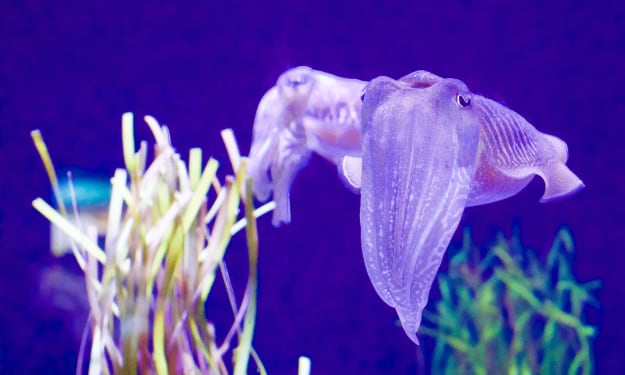
Squid Behavior.
Squid Behavior: Insights into the Habits and Interactions of These Intelligent Cephalopods Squids are fascinating creatures that inhabit the vast oceans of our planet. With their remarkable intelligence and complex behaviors, they have captured the curiosity of scientists and enthusiasts alike. In this article, we will delve into the habits and interactions of these intelligent cephalopods, shedding light on their intriguing behavior.Squids, fascinating creatures of the ocean, are known for their remarkable intelligence and complex behaviors. This article delves into the habits and interactions of these cephalopods, shedding light on their captivating world. One of the most striking aspects of squid behavior is their ability to communicate. Squids possess a sophisticated system of communication that involves a combination of visual displays, body patterns, and bioluminescent signals. These signals are used to convey various messages such as warnings, courtship displays, and even camouflage techniques. By rapidly changing the color and pattern of their skin, squids can effectively blend into their surroundings or communicate their intentions to other members of their species. Squids are highly social creatures and often engage in complex social interactions. They form schools or shoals, consisting of hundreds or even thousands of individuals. These schools serve several purposes, including defense against predators, finding mates, and foraging for food. Within these schools, squids exhibit coordinated movement patterns, swimming in unison and creating mesmerizing displays of synchronization. Researchers believe that these displays may help confuse predators or attract potential mates. Reproduction is a critical aspect of squid behavior. When it's time to mate, male squids engage in elaborate courtship rituals to attract females. These rituals involve a display of visual signals, such as changing skin color and pattern, along with complex body movements. In some species, males also compete for the attention of females by engaging in aggressive behaviors, including wrestling and grappling with their rivals. Once a male successfully courts a female, he transfers a packet of sperm, known as a spermatophore, to the female's body. The female stores the sperm until she is ready to lay her eggs, ensuring successful fertilization. Squids are known for their remarkable hunting skills and adaptability. They are carnivorous predators, feeding on a wide variety of prey, including fish, shrimp, and other squids. Squids employ different hunting strategies depending on the species and the availability of prey. Some species are ambush predators, relying on stealth and camouflage to surprise their prey, while others are active hunters, pursuing their prey with speed and agility. Squids also have a unique feeding mechanism. They capture their prey using their long tentacles armed with suction cups and sharp hooks. Once the prey is captured, the squid tears it into manageable pieces using its beak-like jaws. In addition to their hunting prowess, squids possess remarkable defense mechanisms. When threatened, many species of squids have the ability to release a cloud of ink into the water, creating a dark, smokescreen-like distraction that confuses predators and allows the squid to escape. Some squids can also rapidly change their skin color and pattern to match their surroundings, providing effective camouflage against potential threats. These defense mechanisms, combined with their agility and speed, make squids formidable opponents for many predators. In conclusion, the behavior of squids is a testament to their intelligence and adaptability. Their sophisticated communication systems, complex social interactions, and remarkable hunting skills showcase their remarkable capabilities. By studying their habits and interactions, scientists gain valuable insights into the intricate workings of these intelligent cephalopods. However, there is still much to discover about these enigmatic creatures, and further research is essential to unlock the full extent of their behaviors and unravel the mysteries of the deep sea.
By Mr Royal Honey 3 years ago in Earth
Whispers of the Forest"
Once upon a time, in a mystical forest shrouded in secrets 🌳🌌, a young girl named Lily discovered an enchanted book hidden within the hollow of an ancient tree 📚🌿🧒. As she opened the book, a soft whisper emanated from its pages, beckoning her into a world of wonder and possibility 🌟📖🔮.
By Sonia khan 3 years ago in Earth
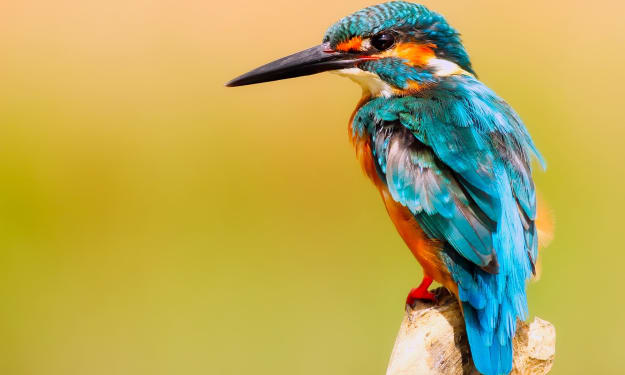
Adaptations for Fishing: Kingfishers' Specialized Anatomy
Title: Kingfishers' Specialized Anatomy: Adaptations for Successful Fishing Introduction: Kingfishers are a fascinating group of birds known for their remarkable fishing skills. They have evolved over time, developing specialized anatomical adaptations that enable them to excel at catching fish. In this article, we will explore the key features of a kingfisher's anatomy that contribute to its exceptional fishing abilities.Kingfishers are remarkable birds renowned for their unparalleled fishing abilities. Their success lies in their unique and specialized anatomy, which enables them to excel in their aquatic hunting pursuits. In this article, we will explore the fascinating adaptations that make kingfishers such skilled fishers. 1. Beak Shape and Length: One of the most distinctive features of kingfishers is their long, dagger-like beaks. These beaks are perfectly shaped for diving into the water and grabbing fish. The beak is relatively large, sharp, and pointed, allowing the kingfisher to swiftly and accurately strike its prey. Furthermore, the beak's length provides a significant advantage, as it allows the bird to reach fish that may be hiding in narrow crevices or vegetation. 2. Binocular Vision and Depth Perception: Kingfishers have exceptional binocular vision, meaning their eyes are positioned in a way that allows them to focus on a single point and perceive depth accurately. This is crucial for successful fishing, as it enables the bird to precisely judge the position of its prey relative to its own location. With their eyes positioned on the front of their heads, kingfishers can accurately calculate the distance and angle required for a successful dive, ensuring they strike their target with remarkable precision. 3. Nictitating Membrane: Another unique adaptation possessed by kingfishers is the nictitating membrane. This specialized third eyelid protects the bird's eyes while diving into the water. The membrane is transparent and covers the eye, functioning as a shield against the potential impact of water and other debris. This protective mechanism allows kingfishers to dive at high speeds without risking damage to their sensitive eyes, ensuring they maintain clear visibility during the critical moments of hunting. 4. Muscular Build and Agility: Kingfishers have a robust muscular build, which contributes to their incredible agility in the air and underwater. These birds are highly skilled at rapidly changing their flight trajectory, enabling them to adjust their diving angle or change direction swiftly to intercept fast-moving fish. Their muscular bodies allow for quick, powerful movements, giving them an edge in pursuing prey and making precise captures. 5. Hydrodynamic Shape: The body structure of kingfishers is streamlined and hydrodynamic, making them excellent divers. Their slender bodies minimize water resistance during entry and swimming, facilitating faster and more efficient movement underwater. This streamlined shape, combined with their strong wings and specialized feathers, enables kingfishers to plunge into the water with minimal splash and disturbance, increasing their chances of surprising and catching their prey. 6. Feet and Claws: Kingfishers have adapted feet and claws that play a vital role in capturing and securing fish. Their feet are short and stout, with partially fused toes that form a strong grip. The sharp claws help the bird grasp slippery fish while emerging from the water or perching on a branch. The sturdy feet and powerful grip of kingfishers ensure that their prey does not escape before they can consume it. Conclusion: Kingfishers' specialized anatomy showcases their remarkable adaptations for successful fishing. From their long, pointed beaks to their streamlined bodies and agile movements, every aspect of their anatomy is finely tuned for underwater hunting. These birds have developed a unique set of characteristics that allow them to thrive in aquatic environments, exemplifying the wonders of natural adaptation and evolution. Observing and appreciating the intricacies of the kingfisher's anatomy provides us with a greater understanding of the remarkable diversity of life on our planet.
By Mr Royal Honey 3 years ago in Earth
How To Lose Weight With Keto
The Ultimate Keto Meal Plan has emerged as a revolutionary approach to achieving sustainable weight loss and promoting overall health. With its focus on low-carb, high-fat meals, this comprehensive plan aims to guide individuals towards the metabolic state of ketosis, where the body burns fat for energy. In this 1000-word review, we will explore the key aspects of The Ultimate Keto Meal Plan and highlight its important features and benefits
By Titas Jankovskis3 years ago in Earth
Witness the Majestic Birth of Earth - A Journey to Primordial Wonder
In the vast expanse of the cosmos, at a time when time itself was but a fledgling concept, lies the awe-inspiring destination of Earth, born 4.5 billion years ago. Here, you shall witness the mesmerizing dance of celestial forces, as the young planet emerges from cosmic chaos, shaping itself into the blue jewel we know today. Brace yourself, for this is a journey to the very genesis of existence, where the symphony of creation unfolds in magnificent beauty.
By Poetic pulse3 years ago in Earth