Humanity
New York City: The Heart of Dreams and Diversity
Introduction to the Big Apple New York City, often called “The Big Apple”, is one of the most famous cities in the world. Located in the state of New York, on the northeastern coast of the United States, it is a place where history, culture, art, business, and dreams collide. With over 8.5 million people living in the city and millions more visiting each year, New York is often described as “the city that never sleeps.” It’s a place where every street has a story, every neighborhood has its own personality, and opportunities seem endless.
By Be The Best12 months ago in Earth
The World Ahead
It was the year 2075 when Smith, a history professor, sat in front of his class of students in the Global University of Knowledge, a massive learning hub that connected young minds from every corner of the planet through holographic classrooms. His lecture for the day was not about the past, but about the journey that humanity had taken to shape the present and what the future might yet hold.
By Article Writing Master12 months ago in Earth
The Silent Race Toward World War III
World on Edge: The Silent Race Toward World War III The 21st century was supposed to be the age of globalization, digital progress, and interconnection. Instead, it is increasingly becoming an era marked by mistrust, militarization, and fragile alliances. From the power games in Europe to the bloodshed in the Middle East, the world is quietly slipping into a dangerous trajectory. While politicians avoid the phrase “World War III,” the signs of converging crises suggest that such a catastrophe may no longer be unthinkable.
By Wings of Time 12 months ago in Earth
The Fragile Present
Humanity in late 2025 finds itself standing at a crossroad. The challenges we face are neither isolated nor distant; they are interconnected, unfolding simultaneously across borders and directly shaping the lives of billions. Climate disasters arrive with increasing frequency, economies show signs of fragility, conflicts strain international trust, health systems remain vulnerable, and new technologies promise both prosperity and peril. While the headlines often focus on the problems, there is also an urgent need to highlight solutions—practical steps that nations, communities, and individuals can take to navigate these turbulent times.
By Article Writing Master12 months ago in Earth
Shadows and Resilience: Life in Afghanistan Today
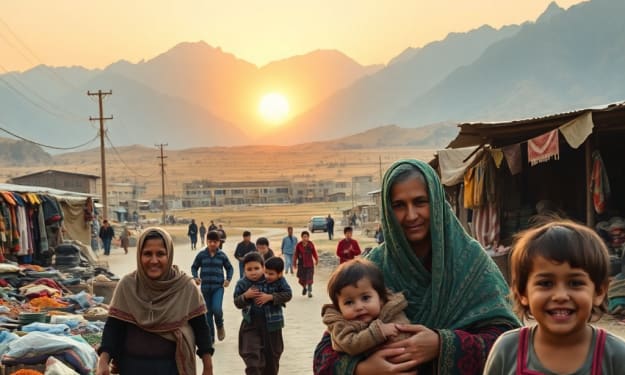
Afghanistan is a land of breathtaking landscapes and rich culture, but it is also a country where life is a daily test of resilience. From the bustling streets of Kabul to the quiet villages in the mountains, the people of Afghanistan face challenges that are hard to imagine for much of the world. Yet, amid the shadows of conflict, economic hardship, and political uncertainty, Afghan families continue to live with courage, hope, and an unwavering spirit.
By Roman raufi12 months ago in Earth
Poverty and Global Politics
The history of the world has always revolved around power, wealth, and politics, and the larger nations have always influenced the smaller and poorer ones. The truth is that poverty is not merely an economic issue but also a weapon that powerful nations use for their own interests. Most of the world’s poor regions have always been victims of the policies of major powers, and the fruits of their labor often end up in the accounts of the wealthy nations. To keep their economies strong, powerful countries buy resources cheaply from weaker states, exploit the cheap labor of their workers, and then use various tactics to keep them politically under control. This is why many regions of Africa, South Asia, and the Middle East remain trapped in poverty and backwardness. The people of these regions work day and night, but the true results of their earnings are reaped by powerful countries, while the local populations remain in misery.
By Muhammad yar12 months ago in Earth
Orbs and comets a sign strange things unfolding in the heavens
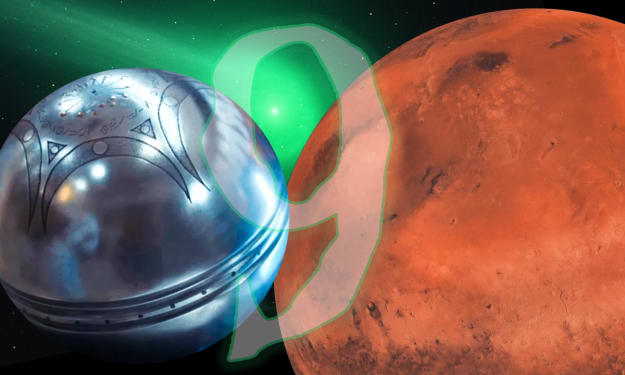
With all that’s unfolding on the surface of our planet this year, and has been for the past five years or more, it’s hard not to wish for intervention from some benevolent samaritan who leads mankind on a new path to enlightenment, where humanity’s greed and self-interest is replaced by a spiritual awakening and cosmic transformation.
By Steve Harrison12 months ago in Earth
Animal Entitlement to Life
Biologically speaking, life is an endless chemical balancing act. When a population of a plant or animal species fluctuates, at least one other species is directly disturbed, while many others become indirectly influenced. With this general truth in mind, one could logically conclude that all living beings share equal value in the planetary scheme. Each living being on Earth has its own niche in the biosphere, down to the smallest microorganisms. Our food chain quite literally is a circular cycle of life. Plants are eaten by animals which are eaten by larger animals. Feces from the animals helps fertilize the soil to grow more plants to sustain plant-eating life. It is a continuous system of locked interdependence. Yet, when it comes to the rights of animals in domesticated, commercial, scientific, or even natural wildlife settings, some humans attempt to argue the idea that they are not deserving of basic rights. In a society of intelligent beings that are evolving on various levels, it is time that humanity come to a consensus that all conscious living beings are entitled to pursue a life free from unwarranted cruelty and neglect.
By Lolly Vieira12 months ago in Earth
The Secret Life of Spices: How Flavor Changed Human History
Introduction – A World in a Pinch of Flavor Open a kitchen drawer, and there they sit—a stash of miniature glass jars—cinnamon, black pepper, turmeric, nutmeg, paprika. They rest quietly, unobtrusively, until called upon to sprinkle into a sauce or dust over bread. But for two millennia, these minute shavings of plants mounted epic journeys, founded empires, overthrew dynasties, rewired economies. Spices are not just flavor—they are history, medicine, and memory reduced to pinches and handfuls.
By The Chaos Cabinet12 months ago in Earth
Bagram Revisited: A Historic Afghan Hub at the Center of Global Tension
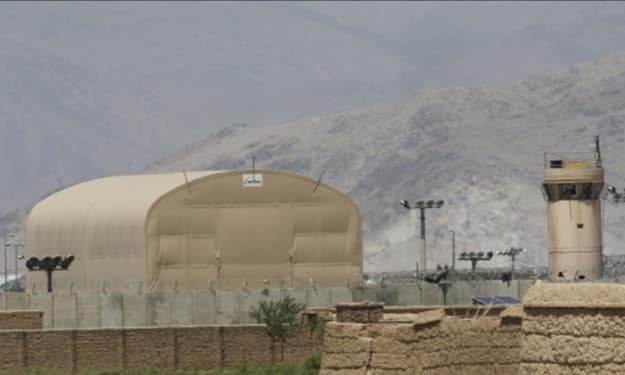
Bagram is once again the focal point of power narratives. Built in the 1950s by the Soviet Union at the foot of Afghanistan’s snow-covered mountains, this airbase became the military hub for two global powers — the Soviet Union and the United States. Today, it is under the administration of the Afghan Ministry of Defense. Yet, the history of this site in Parwan province in northern Afghanistan is centuries old. It should be recalled that the Taliban government in Afghanistan has rejected the U.S. announcement of regaining control of the Bagram airbase, saying that those with such ambitions “should look at the history of Afghanistan.” Following the U.S. announcement, not only did the Taliban respond, but China also issued a strong reaction. At the crossroads of Central Asia, South Asia, and the Middle East, about 60 kilometers north of the Afghan capital Kabul, Bagram lies on a high plateau at the foot of the Hindu Kush mountains. It has at different times served as the headquarters of Alexander the Great’s armies, and later, as the summer capital of Kushan kings. Buddhist monasteries once echoed here with the ringing of bells, and in the 7th century Arabs transformed the spiritual character of this region. As a key junction on the ancient Silk Road, caravans from Rome, Iran, India, and China passed through this trading hub. The Encyclopedia Britannica notes that the city of Alexandria-Capisa, founded by Alexander the Great, gradually became the most important center for India’s western trade. According to Britannica: “Not only goods but also ideas and beliefs passed through here. India’s religious concepts, particularly Buddhism, along with literary and artistic styles flourishing in Gandhara (present-day northwestern Pakistan, between the Kabul River’s lower valley, the Kunduz River, and the Indus River) and Mathura (Punjab, northwestern India), reached Bactria through these routes — from where they spread to Kashmir, Tibet, China, and sometimes as far as the remote oasis towns of Xinjiang.” In Archaeological Gazetteer of Afghanistan, Warwick Ball and Jørgen Glædgaard write: “The Buddhist and Hindu statuary from this city indicates that it was initially ruled by people of Indian origin — either migrants who came here, or those who mingled with Iranian peoples such as the Kamboja from Bactria who entered the region.” When Alexander’s successors were fighting among themselves, the Mauryan Empire was rising in northern India. Its founder, Chandragupta Maurya, confronted an invading army led by Seleucus I, Alexander’s general, in 305 BCE. A brief war ended in a treaty under which Seleucus ceded Gandhara, Arachosia (centered on ancient Kandahar), and the regions south of Bagram (modern southeastern Afghanistan) to the Mauryan Empire. During the nearly 120-year Mauryan era, Buddhism was introduced to southern Afghanistan, where it grew alongside Zoroastrianism and local ancient religions. Coins from the Mauryan period have been discovered in Bagram and Mir Zakah, pointing to either trade or administrative presence in the region. Later Called “Kapisa” Today, one of Afghanistan’s provinces still bears the name Kapisa. References to the city of Kapisa appear as early as the 5th century BCE in the writings of the Indian scholar Panini, who also mentioned the locally produced Kapisiana wine. The name Kapisa appears on the coins of Indo-Greek rulers Apollodotus and Eucratides, as well as on those of the Nezak Huns. Archaeological remains of ancient Kapisa (today’s Bagram) are found in the surrounding areas. Historian Tristan Hughes notes: “This city witnessed several invasions by ancient superpowers: the Persians, Alexander and his successors. But it was during the Kushan Empire that the prosperous, ancient Bagram saw its golden age.” According to Abdul Wahid Alikozai in A Concise History of Afghanistan: “Between the 1st and 4th centuries CE, the Kushan Empire — stretching from northern Afghanistan to northwestern India — established its summer capital here. It played a key role in the defense of the Greco-Bactrian kingdom.” “The city had high walls and towers. Along its main avenue stood the magnificent Kushan palace, housing workshops and shops filled with Indian ivory carvings, Indian lacquer chests, Egyptian and Roman glass, plastered panels, and goods brought along the Silk Road.” This famed “Bagram Treasure” testifies to the vibrant trade during the Kushan era. Even after Kapisa’s decline, goods brought via the Silk Road were found stored here in the Sassanian period. Later Periods After the Kushan Empire, Kapisa remained part of a kingdom ruled by a Buddhist Kshatriya monarch. The Chinese pilgrim Xuanzang visited here in 644 CE and wrote that the local king ruled over ten neighboring states. Xuanzang also mentioned the region’s famous horses, its grains, fruits, and an aromatic root grown here. The book Mughal India: Art, Culture and Empire (edited by J.P. Losty and Malini) notes that Islamic conquests in Afghanistan and adjacent Pashtun regions began in the 7th century, shortly after the conquest of Iran. According to Richard Nelson Frye in Encyclopaedia of Islam, in 1221 the province of Parwan, where Bagram lies, was the site of a historic battle in which invading Mongol forces led by Genghis Khan were defeated by the Khwarazmian ruler Jalal al-Din Mangburni. Mughal India also records that Afghanistan’s fully Islamic identity was established under the Ghaznavids. The region later came under Timurid and Mughal control. It is believed that the present-day town was built on the ruins of the ancient city by Zahiruddin Babur. In his memoir Baburnama, he described his 1519 journey, noting a settlement of Hindu ascetics that fascinated him. Frye writes that in 1747, Ahmad Shah Durrani incorporated Parwan into his Durrani Empire. Later, in 1840, during the First Anglo-Afghan War, Parwan again became the site of a major battle in which British forces were defeated. A Great Crossroads According to Hughes, this city was once a great hub linking China, India, and the Mediterranean. Goods produced across Eurasia arrived here through trade and diplomacy. One particular collection symbolizes this connection: the Bagram Hoard. French archaeologists discovered this treasure — a stunning assortment of objects from ancient China, India, and the Roman Mediterranean, all gathered in one place. In 1939, excavations revealed that Kapisa was also a center of wine trade in antiquity. Bottles, fish-shaped jars, and drinking vessels were found — typical paraphernalia of the wine trade. Grapes and wine from this region are also mentioned in several ancient Indian texts. Under the distribution system of that time, the discoveries were divided between the Musée Guimet (Paris) and the National Museum of Kabul. After the Kabul Museum’s closure in 1978, the whereabouts of ivory artifacts became uncertain, and many were looted in the 1990s. Robert J. Morgan in On This Day quotes the Times of London headline of October 22, 1996: “Lost Forever: A Nation’s Heritage Looted by Its Own People.” The paper wrote: “Kabul’s National Museum lies in ruins. Once home to one of the greatest collections of multicultural antiquities in the world — Persian, Indian, Chinese, Central Asian, and beyond — it has been destroyed. The basements were blown apart, showcases smashed, antiquities looted and sold worldwide for quick cash. Rockets pierced the roof, burying ancient bronzes under tons of rubble. Prehistoric pots were stuffed into sacks as though they were cheap porcelain.” “The Bagram Treasure — one of the greatest archaeological discoveries of the 20th century — disappeared. Nearly 40,000 coins, among the world’s oldest, vanished. A radiant past was wrecked by an unrestrained present. A nation was robbed of its history.” Peter Beaumont wrote in The Guardian that in 2004, some of these missing objects resurfaced, and 20 more antiquities being sold illegally through dealers were recovered. After restoration at the British Museum, they were exhibited in 2011.
By Real content12 months ago in Earth