Humanity
How Dinosaurs Became Extinct. Content Warning.
The extinction of the dinosaurs is one of the most fascinating mysteries in Earth's history. These magnificent creatures once ruled the planet for millions of years, but their reign came to a sudden and cataclysmic end. In this blog, we will explore the leading scientific theories and evidence that shed light on how the dinosaurs met their demise around 65 million years ago.
By Biprojit saha3 years ago in Earth
iPhone 15 Pro . Content Warning.
Apple recognized that the iPhone 15 Ace and 15 Genius Max experience the ill effects of overheating issues and blamed a bug in iOS 17. A fix is in progress, yet another issue has surfaced - remote charging may be harming the NFC module. There are a couple of disengaged occurrences revealed for the present, yet it has happened frequently sufficient that it can't be overlooked.
By Kazi Shaiful Islam3 years ago in Earth
Dady’s little girl
Once upon a time in a quaint little town, there lived a loving father named Daniel and his cherished daughter, Emily. Daniel had always been dedicated to providing Emily with the best upbringing possible. He believed in instilling values of kindness, empathy, and resilience in her from a very young age.
By Ikran Cadey3 years ago in Earth
Unearthing the Emotional Turmoil
Introduction: Earthquakes are natural disasters that can strike with little to no warning, leaving behind a trail of destruction and emotional scars. Delhi, the heart of India, a city teeming with life, history, and dreams, has also witnessed the unforgiving embrace of earthquakes over the years. In this emotional narrative, we will delve into the heart-wrenching experiences of the people of Delhi who have endured the tremors of nature, exploring the trauma, resilience, and hope that emerge in the aftermath of such catastrophic events.
By Kammari Navaaneeth3 years ago in Earth
rooted in change
Title: "Rooted in Change" Once upon a time, in the tranquil village of Willowbrook nestled deep within a lush valley, there lived a humble farmer named Samuel. For generations, his family had tilled the fertile soil, their lives intertwined with the land. But as the world outside evolved, so did the challenges facing Samuel's beloved village.
By Cyril Njoku3 years ago in Earth
Climate Anxiety and Eco-Grief
**Title: Whispers of the Vanishing Forest**In a quiet corner of the world, nestled deep within the embrace of a lush, ancient forest, lived a young woman named Elara. She had grown up under the verdant canopy, her life intertwined with the rhythms of nature. From the gentle rustling of leaves to the symphony of birdsong, every sound, every scent, every sight was a part of her very soul.But as Elara ventured further into adulthood, a growing unease gnawed at her heart. The forest, her beloved sanctuary, was changing. The once vibrant emerald leaves began to wither, their edges tinged with the faintest hint of brown. The streams that used to sing their melodious songs had grown quieter, their flow weakened by the relentless grasp of drought. Elara's heart ached with each fallen leaf, each parched streambed.The whispers of the vanishing forest haunted her every step.One crisp autumn morning, as the leaves began their descent to the forest floor, Elara decided to take a solitary journey deep into the heart of the woods. With a leather-bound journal and her father's old compass in hand, she ventured into the unknown. She needed to document the changes, to bear witness to the fading beauty of the world she held so dear.As she walked deeper into the forest, the canopy overhead grew denser, casting dappled shadows on the path. The once familiar trail had transformed into a maze of gnarled roots and tangled undergrowth. But Elara pressed on, her heart heavy with both determination and sorrow.She came upon a clearing where a once-mighty oak had stood, its roots a gnarled testament to centuries of life. Now, all that remained was a towering stump, the jagged wound of its felling a cruel reminder of the forest's vulnerability. Elara could feel the grief welling up within her, threatening to consume her like the encroaching darkness.Kneeling beside the stump, Elara ran her fingers over the rough, splintered surface. Her tears fell freely, mingling with the dew that clung to the leaves. She whispered an apology to the tree, as if her words could somehow soothe its spirit. "I'm sorry," she said, her voice choked with emotion. "I'm so, so sorry."As she continued her journey through the forest, Elara encountered other signs of distress. Withered ferns, their vibrant green replaced by a sickly yellow, crunched beneath her feet. Birds that once filled the air with their songs were noticeably absent. It was as if the very heart of the forest was breaking, and Elara couldn't bear to watch it suffer.Night fell, and Elara found herself in a small, moonlit glade. She opened her journal, its pages illuminated by the soft glow of fireflies. With trembling hands, she began to write. She poured her heart onto the pages, detailing the changes she had witnessed, the grief that gnawed at her, and the helplessness that threatened to overwhelm her.As she wrote, she heard a faint rustling in the underbrush. Elara looked up and saw a pair of luminous eyes peering at her from the darkness. A fox, its fur the color of autumn leaves, emerged from the shadows and approached her with cautious curiosity.Elara held her breath as the fox drew nearer, its gaze unwavering. It was as if the creature could sense her pain, her love for the forest, and the desperate need for connection. Slowly, she extended a hand, and the fox, with a gentle nuzzle, accepted her touch.Tears welled in Elara's eyes as she stroked the fox's fur. In that moment, she felt a profound connection with the natural world, a reminder that even in the face of adversity, there was still beauty, still life, and still hope. The forest may be changing, but it was not lost, not yet.With renewed determination, Elara made a promise to the forest and to the fox that she would not stand idly by. She would become a steward of the land, a guardian of the fragile balance between humanity and nature. She would fight for the world she loved, for the whispering leaves and the murmuring streams, and for the generations yet to come.As the first light of dawn broke through the trees, Elara left the glade, her heart lighter than it had been in days. The whispers of the vanishing forest were still there, but now they carried with them a message of resilience and hope. Elara would share her story, she would inspire others, and together they would write a new chapter for the forest and for the world.
By Christian Chukwuemeka3 years ago in Earth
"Navigating Climate Change"
Introduction The Earth's climate is undergoing unprecedented changes, driven by human activities such as burning fossil fuels, deforestation, and industrial processes. These changes are resulting in a wide range of environmental and societal challenges. This blog post will explore the current state of our climate and environment, the challenges we face, and some potential solutions to address these pressing issues.
By Paula Klein3 years ago in Earth
"The Artistry of Nature"
For centuries, painters, poets, and philosophers have found inspiration in nature. Numerous pieces of music, literature, and art have been created as a result of its beauty, complexity, and diversity. Nature itself is a masterpiece, a singular artist who creates stunning landscapes, complicated patterns, and astounding phenomena. Nature is not just a source of inspiration. This essay will examine the artistic beauty that surrounds us every day in nature, from the fine veins of a leaf to the brilliant colors of a sunset. The Delicate Veins of a Leaf
By Misha story writer3 years ago in Earth
A Journey of Hope. Content Warning.
Once upon a time, in a quaint coastal village named Oceantide, there lived a humble fisherman named Elias. His weathered hands and salt-encrusted boots told the story of a life intertwined with the sea. Oceantide had prospered for generations, its lifeblood being the bounty of the ocean. But, as the years passed, Elias noticed a change in the waters that troubled him deeply.
By Oshilim Anwuli First3 years ago in Earth
Do mosquitos actually bite some people more than others?
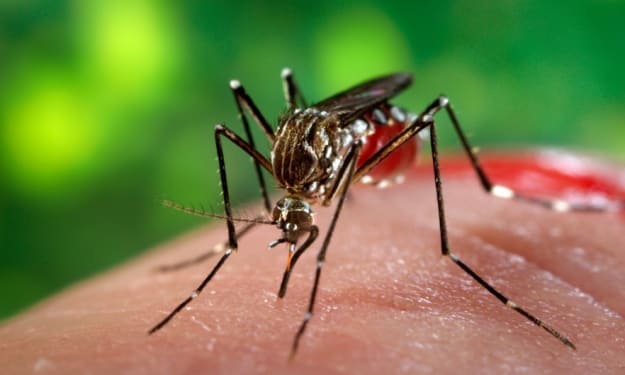
Some swear they’re cursed to be hunted by mosquitoes while their close-by companions are regularly left unscathed. But is this an illusion? If it's not, what's going on? And what can we do about it? It all comes down to how— and why— mosquitoes find us. While male mosquitoes stick to nectar for sustenance, females also seek out blood to provide the nutrients they need for their eggs. Different mosquito species evolved to feed on different animals. And, probably within the last 10,000 years, multiple mosquito lineages independently evolved a predilection for people. As human settlements became more permanent, they provided plenty of standing water, even through intense dry seasons, which supported mosquito reproduction year-round. Female mosquitoes are equipped with antennae covered in hair-like appendages that contain odor-sensing receptors and neurons. These pick up on the signals of their preferred hosts, And over thousands of years, the mosquitoes that target humans have gotten extremely good at tracking us down. They also target parts of our bodies where we’re less likely to notice them. And they’re sensitive to visual cues and changes in airflow, so when we try to defend ourselves, they can make swift escapes. They even learn to avoid particularly defensive people altogether. But before these close encounters happen, several factors alert mosquitoes to people's presence. Female mosquitoes can pick up on the carbon dioxide humans constantly exhale from about 10 meters away. Once they’ve gotten the CO2 cue, they become especially interested in dark, high-contrast objects and the hues found in human skin. As they follow the carbon dioxide plume to its source, they eventually sense body heat and odors. These smells are generated by the many microorganisms that live on our skin. They break down the secretions our bodies produce, like sweat and sebum. In doing so, our skin microbes create smaller organic compounds that can vaporize and get picked up as smells— smells that human-homing mosquitoes are especially attuned to. Getting extra sweaty can temporarily make people more attractive to mosquitoes— as can ingesting alcohol or being pregnant. And the Plasmodium parasite that causes malaria makes the people it infects more appealing to mosquitoes by increasing the amounts of certain fruit-smelling aldehyde compounds on their skin. This is extremely helpful to the parasite because it depends on both humans and mosquitoes to reproduce. But in addition to these temporary factors, about 20% of people are thought to be naturally high attractors, or mosquito magnets, who are disproportionately targeted year after year. If you’re one of them, you’re probably well aware. Sorry about that. Why this is seems to come down to some skin-specific characteristics. While carbon dioxide exhalations and body heat consistently signal the presence of warm-blooded animals, human body odor is more distinctive. And everyone hosts different microbial communities on their skin, which contribute to unique body odors that likewise vary from person to person. Researchers reveal that the receptors mosquitoes use to detect acidic compounds are especially important in helping them navigate towards humans. And, indeed, humans with more abundant skin acids prove to be consistently more attractive to mosquitoes. Because it’s such a persistent trait, certain genes may play a role, perhaps by helping determine the skin’s microbial composition. Scientists have observed that mosquitoes demonstrate similar levels of attraction among identical twins while responding more variably to fraternal twins, which supports that there may be some genetic basis at play. But beyond confirming that mosquitoes are, in fact, conspiring against some of us specifically, understanding what makes people mosquito-magnets has serious, large-scale implications. Every year, hundreds of thousands of people die from mosquito-borne diseases. And resources aren’t reaching those who need them most. This knowledge can help inspire solutions, like more effective insect repellents that manipulate the skin's microbiome and odors. And knowing that some people are especially strong mosquito attractors could also help efforts to get them resources like repellents, bed nets, vaccines, tests, and treatments. The results could not only be less itchy, they could break transmission cycles and save countless lives.
By Antonín Valda3 years ago in Earth