Humanity
Red Alert
While the world was in the grasp of the most serious intensity in 2023, presently as per the new Report of World Meteorological Organization, 2024 will be the most blazing year on the planet. Seen in 2023, the outrageous intensity has liquefied numerous ice sheets and opened up new skylines to people on The planet.
By Ahmad Riaz2 years ago in Earth
The Rain, The World
I’ll often stand beneath the rain. It feels like a soothing balm gently calming the torrent that often crashes through my life. I used to think of it as purifying, that it could wash away every harsh memory entrenched in the fibres of my being; but that was impossible.
By Griffen Helm2 years ago in Earth
Why NASA has warned Earth against asteroid 2024 EU4. Content Warning.
NASA closely monitors asteroid 2024 EU4, set to approach Earth on March 23, 2024, at 101,885 km/h. While its size and speed raise concerns, JPL predicts a safe pass by. This event underscores NASA's planetary defense efforts, combining ground and space-based observatories. Public interest in asteroids grows, but NASA's vigilance offers reassurance. As 2024 EU4 nears, it highlights the need for ongoing investment in space science and defense, promising valuable scientific insights.
By Aabusad Pathan2 years ago in Earth
Would Humans Go Extinct?
In an uncertain world fraught with potential existential threats, the prospect of an asteroid impact or a rapidly spreading deadly virus looms large. The fragility of human existence on Earth is a reality that cannot be overlooked. However, amidst this uncertainty, there exists a beacon of hope in the form of Mars—a planet that holds the promise of becoming a sanctuary for humanity in the face of catastrophe. Imagine a scenario where a giant asteroid hurtles towards Earth, its impact looming ominously on the horizon. Or picture a scenario where a virulent virus spreads like wildfire, threatening to wipe out entire populations before a cure can be developed. In such dire circumstances, the survival of the human species hangs in the balance. But what if none of us made it? Would that spell the end for humanity as a whole? Not necessarily. Enter Mars—the red planet, our celestial neighbor, and potentially, our savior. The idea of colonizing Mars as a means of ensuring the continuation of the human species is not new. However, the practical challenges of establishing a viable human presence on Mars have thus far proven to be formidable. The harsh conditions on Mars present significant obstacles to human habitation. With its thin atmosphere, limited water resources, and extreme temperatures, Mars is inhospitable to life as we know it. Yet, despite these challenges, the concept of terraforming Mars—transforming it into a more Earth-like environment—remains a tantalizing possibility. At the heart of the terraforming process lies the idea of harnessing the resources of Mars itself to make it more habitable. One key resource that could play a crucial role in this endeavor is frozen carbon dioxide, abundant in the polar ice caps of Mars. By releasing this frozen CO2 into the atmosphere, scientists believe it may be possible to initiate a greenhouse effect, gradually warming the planet and creating conditions conducive to life. But warming Mars is just the beginning. To truly make the planet hospitable to human life, we must also address other crucial factors such as the availability of water and the composition of the atmosphere. One proposed solution involves introducing cyanobacteria to Mars—an ancient lifeform capable of photosynthesis. These organisms could not only produce oxygen, but also help enrich the Martian soil with nutrients, laying the foundation for more complex forms of life to thrive. Of course, the idea of terraforming an entire planet is not without its challenges. It raises ethical questions about the potential impact on any existing Martian ecosystem, as well as practical concerns about the feasibility of such a monumental undertaking. Yet, despite these challenges, scientists are actively exploring various strategies to make Mars more hospitable to human life. One proposed method involves the deployment of giant mirrors in orbit around Mars, which would focus sunlight onto the polar ice caps, accelerating the process of releasing CO2 into the atmosphere. Another, more controversial suggestion involves the use of nuclear weapons to heat up the Martian surface, releasing trapped CO2 in the process. However, such drastic measures come with significant risks and uncertainties. The long-term consequences of altering the Martian environment are not fully understood, and any attempts to terraform the planet must be approached with caution and careful consideration. Moreover, the timeline for terraforming Mars is likely to be measured in centuries, if not millennia. The challenges involved are immense, and the resources required are staggering. Yet, if we are to ensure the long-term survival of our species, it may be a journey worth undertaking. In the meantime, as we continue to explore the possibilities of colonizing Mars, it is essential not to lose sight of the pressing challenges facing our own planet. Climate change, environmental degradation, and the ever-present threat of pandemics remind us that the fate of humanity is intimately linked to the health of our home planet. Ultimately, whether we succeed in terraforming Mars or not, the quest to explore and understand our place in the universe is a testament to the resilience and ingenuity of the human spirit. And in the face of uncertainty, it is this spirit that will continue to drive us forward, towards new horizons and new possibilities, wherever they may lead.
By Sanjana Dixit2 years ago in Earth
God creator
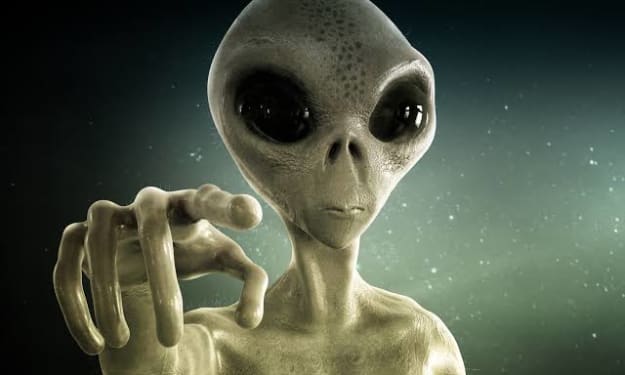
God or Gods… Goddess or Goddesses… The subject of deity is a tricky one. There are a plethora of possibilities when it comes to the existential and the ethereal, and as mankind constantly clings to discover its humble beginnings, the seeking of a higher power or deity always comes to mind and continuously remains in play. People cling to their beliefs and rightfully so, but that makes it hard for different thoughts on the subject to take root or to truly take on some form that could garner any accreditation. God is a mystery and it would seem and could be argued that as a human species, we almost prefer him, her, it as a mystery if solely for it to benefit our own ideologies and reinforce our own callings. But the mystery of God is as much about our history and origin as it is trying to find the answers to who and what God is, and in finding those answers, we could quite possibly need to look to the sky and the stars and space… If you were to really look at it – this world and existence that we call life, you would have to come to the conclusion that something is amiss; nature seems to live off itself, thrive with the give and take, the cause and effect. you can see how all other living species somehow contributes to the overall environment and ecosystem The weak of the species either adapt and survive or die and replenish the earth in a different form or method. When it comes to habitat, other species use their surroundings and environment for their immediate necessities… Exempt from this are human beings. Humans seem to be the only species on this planet that does not give back, does not fully contribute, but rather depletes. The case could very well be made that a planet that is built for reciprocity would naturally birth or spawn living organisms that function in very much the same capacity, especially those that are supposed to be the most sentient. However, humans do not. if humanity is the only species that causes depletion and that all other species use or contribute to the ecosystem then just maybe, the former is not originally a part of the latter, but rather a planted organism, placed within the confines of an environment that is more suited to its needs than not. Maybe humanity’s origin lies with something else – Gods, maybe – but more likely scientists, extraterrestrial scientists to be more exact, intelligent life that decidedly used this planet, Earth, as a grounds for genetic engineering and whatever else that may be known, detected, or speculated. To entertain the idea that the human species does not originate on earth is not a new thought. Rather, it is steeped from the historical chronicles of biblical stories, some Christian and Judaic (and more). The idea of visiting aliens delivering human beings, depositing us in some form on this planet, is not that foreign of an idea, nor is it new-age. In the Old Testament of the Christian Bible, which is also part of the Judaic Torah, Ezekiel is visited by a kind of ‘chariot’ and its description by many scholars have led some the brightest and best minds to at least accept the possibility that what the writer of the ancient book experienced was an alien visitation. The construction of Stonehenge, the pyramids, the tales of Atlantis and all the marvels that exist in the world must practically stem from something of substance, and based on earlier writings of the ancients, it was common for the so-called ‘sky-gods’ to visit and thus the stories of old that came to form the religious folklore that was later tailored around doctrine and dogma. What we are left with as human beings is the same notions and ideas that we have always had – that there’s something larger and bigger at work that we derive from. We're seeing more and more that human beings are not only looking to the skies for the answers, but have also begun to bring those same stars, skies, space down to the earth in an almost visible and palpable, tangible, exchange of understanding to give some sort of meaning to this thing call life.
By Yonafika Joseph2 years ago in Earth
The Whispering Oak
In a secluded forest untouched by time, there stood a majestic oak tree, its branches reaching towards the heavens like outstretched arms. This ancient sentinel had witnessed the passing of countless seasons, its gnarled roots anchored deep within the earth.
By Doopie Lexzy2 years ago in Earth
Saudi Arabia's AI Revolution: Unleashing Risk Appetite And Financial Power
As the Saudi Public Investment Fund (PIF) marches towards an impressive $1 trillion by 2025, it solidifies its position as a major player in global investments, particularly in transformative tech. PIF, guided by Crown Prince Mohammed Bin Salman (MBS), is the 5th largest Sovereign Wealth Fund in the world, with $926 billion in assets (SWFI). Please note that only 3 weeks ago PIF had $676 billion at his disposal. PIF is the main financial vehicle to execute the Crown Prince's Vision 2030, a transformative initiative designed to diversify Saudi Arabia's economy, generate employment, and prosperity for its youthful population (80 percent of which is younger than 35). PIF is investing in sports, AI, tourism, clean energy, smart cities, and floating industrial towns.
By Andrea Zanon2 years ago in Earth
HUMAN THINKING
Human thinking is a complex and multifaceted process that sets us apart from other species on Earth. It encompasses a wide range of cognitive activities, from simple decision-making to creative problem-solving. Our ability to think critically and analytically allows us to navigate the challenges of everyday life, explore new ideas, and make sense of the world around us.
By Ogunwomoju ademola oluwafemi2 years ago in Earth
The New Largest Star in the Universe 2024. Content Warning.
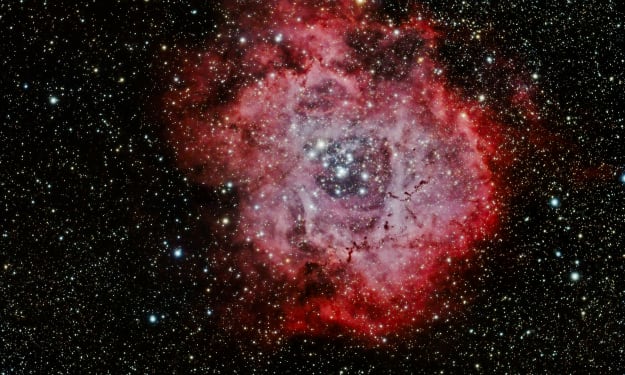
The New Largest Star in the Universe 2024 On a clear, moonless night, above our heads, we can observe thousands of glistening stars. But that's just what we can see with the unaided eye. Observe the galaxy with powerful telescopes, and billions more are revealed. In fact, the Milky Way galaxy alone is estimated to have between 100 to 400 billion stars. And looking even further to our neighboring galaxies and beyond, there are unaccountable amounts more.
By Culture Discovery2 years ago in Earth