Humanity
Ozempic Explained: What You Need to Know About Pop Culture’s New Favorite Weight Loss Drug
Disclaimer: I am not a medical practitioner. This article is for entertainment and educational purposes only. If you are interested in semaglutide as a medical option, please consult a qualified health practitioner to determine if this option is right for you. Always approach online medical information with skepticism.
By Olivia L. Dobbs2 years ago in Earth
The Silent Surge
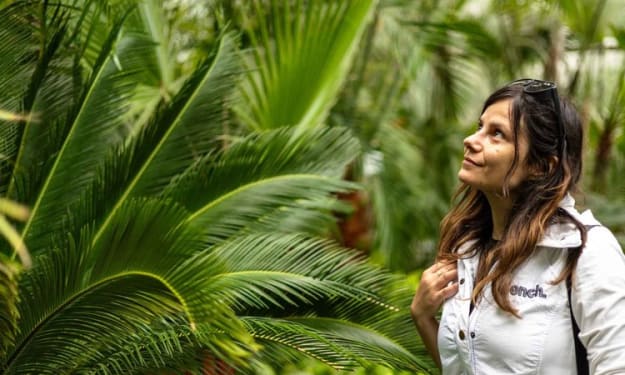
### The Silent Surge: Europe's Growing Passion for Forest Bathing In the fast-paced digital age, where screens dominate our lives and urbanization is the norm, a silent revolution is taking root in Europe. Forest bathing, or "shinrin-yoku" as it’s known in Japan, is rapidly gaining popularity across the continent. Despite its growing traction, it remains a largely under-the-radar trend, offering a fresh perspective on mental health and wellness that is ripe for exploration.
By Joy Mwanza2 years ago in Earth
Top 10 Hidden Travel Gems You Must Visit in 2024
In the age of social media and travel influencers, it can feel like every destination on earth has been discovered, photographed, and shared. However, there are still many hidden gems waiting to be explored. For the adventurous traveler looking to escape the crowds and experience something unique, here are the top 10 hidden travel gems you must visit in 2024. These destinations offer rich culture, stunning natural beauty, and unforgettable experiences.
By Adewale Edward2 years ago in Earth
Impact on Biodiversity: How climate change affects various species and ecosystems.
In the heart of the Amazon rainforest, where the dense canopy of emerald leaves filters the sunlight into a mosaic of green and gold, life thrived in an intricate dance of interdependence. The air was thick with the hum of insects, the calls of birds, and the rustle of animals moving through the underbrush. This was a world teeming with biodiversity, a masterpiece of nature's design, where every creature, from the tiniest ant to the mightiest jaguar, played a vital role. But the harmony of the Amazon was under siege. The invisible enemy was climate change, a force so pervasive and relentless that it began to unravel the delicate web of life that had taken millions of years to weave. Marina, a biologist who had devoted her life to studying the rainforest, could feel the change deep in her bones. She had spent years trekking through the dense foliage, cataloging species, and marveling at the sheer diversity of life. But recently, her excitement had been replaced by a gnawing dread. The signs were everywhere. The first to suffer were the plants. Some species of trees, unable to cope with the rising temperatures and erratic rainfall patterns, began to wither. The once-thriving canopies turned patchy, creating gaps that let in more sunlight than the forest floor could bear. This sudden change in light and temperature disrupted the delicate balance that many plants and animals relied on. Marina noticed that the orchids, which had once bloomed in riotous colors, were becoming scarce. These delicate flowers, so sensitive to changes in their environment, were some of the first casualties. She remembered a specific species, the Amazonian Lady's Slipper, whose vibrant pink blossoms had once dotted the forest like jewels. Now, they were nowhere to be found. As the plants suffered, so did the animals that depended on them. The brilliant blue morpho butterflies, which relied on the orchids for nectar, became rare sightings. Marina recalled a time when she would see them fluttering through the trees in dazzling swarms. Now, they appeared only occasionally, their numbers dwindling. The changes in the forest also affected the food chain. With fewer plants to feed on, herbivores like the howler monkeys struggled to find enough sustenance. Marina had grown accustomed to the deep, resonant calls of the howler monkeys echoing through the trees each morning. But those calls grew fainter and less frequent, a haunting reminder of the forest's decline. Predators, too, were not immune. The jaguars, apex predators of the Amazon, found it increasingly difficult to hunt as their prey became scarcer. Marina had always considered herself fortunate to have witnessed these majestic cats in their natural habitat. She remembered the thrill of spotting a jaguar's sleek form moving silently through the underbrush, its golden eyes piercing through the foliage. But those encounters became rare, and the thought of a rainforest without its apex predator filled her with a profound sense of loss. Even the rivers that snaked through the forest were not spared. The changing climate altered rainfall patterns, leading to more frequent and severe droughts. The once mighty Amazon River, a lifeline for countless species, began to shrink. Fish populations declined, and with them, the animals that relied on them for food. The pink river dolphins, with their playful antics and curious nature, were among the victims. Marina remembered the first time she had seen these gentle creatures, their pink bodies gliding gracefully through the water. Now, their numbers were dwindling, and their future seemed uncertain. As the days turned into months, Marina's despair deepened. She felt like a witness to a slow-motion catastrophe, powerless to stop it. The forest, once a place of wonder and discovery, now felt like a graveyard. Every walk through the trees was a painful reminder of what had been lost. But amid the sorrow, there were glimmers of hope. Marina knew that nature had an incredible capacity for resilience. If given a chance, the forest could heal. She dedicated herself to conservation efforts, working tirelessly to protect the remaining fragments of the Amazon. She collaborated with local communities, raising awareness about the importance of preserving the rainforest and implementing sustainable practices. One day, while exploring a particularly remote part of the forest, Marina stumbled upon a small grove of Amazonian Lady's Slippers. The sight of the delicate pink flowers brought tears to her eyes. It was a sign that, despite everything, life persisted. The forest, though battered and bruised, still had the capacity for renewal. Marina's discovery rekindled her determination. She knew that the battle against climate change was far from over, but she also knew that giving up was not an option. The Amazon, with all its complexity and beauty, was worth fighting for. In the years that followed, Marina saw the fruits of her labor. Conservation efforts began to bear fruit, and some areas of the forest showed signs of recovery. The calls of the howler monkeys grew stronger, the blue morpho butterflies returned in greater numbers, and the rivers flowed with renewed vigor. The journey was far from easy, and the threat of climate change still loomed large. But Marina held on to the hope that, with continued effort and global cooperation, the Amazon and its incredible biodiversity could be preserved for future generations. The forest's silent cry had been heard, and there were those who were willing to answer.
By Goodness Mannese 2 years ago in Earth
When Pirates Ruled Asia
Negotiations are taking place at the towering pagoda. The bustling trade scene at China's open port in Guangzhou is on display. Madame Zhang, renowned as Asia's greatest pirate, is in a standoff with representatives from the Qing Empire, Portuguese naval officers, and officials from the English East India Company. Piracy has a long history in East Asia, with coastal areas being perfect for activities such as robbery, smuggling, and kidnapping. The impact of East Asian piracy on society and politics has been significant, ranging from small raids to the establishment of vast pirate empires. For 400 years, Japanese pirates known as Wako played a crucial role in shaping Asian history. The Wako attacks were a result of external factors like Mongol invasions, plagues, typhoons, and droughts. In response, the Japanese government swiftly executed 90 perpetrators, restoring peace to the seas. The Mongol Emperor's plan to conquer Japan was fueled by widespread famine and rampant piracy, leading to extreme measures being taken. After failed attempts to make Japan a vassal, the Mongol Emperor decided to take action.
By Isaac Ekow Anyidoho2 years ago in Earth
A Year-Round Battle for Survival
Susan Aikens resides in the challenging conditions of Kavik River Camp, depending on hunting for sustenance and survival. Despite being the sole inhabitant and proprietor of the camp, she must accommodate seasonal visitors to sustain the business. She endures 9 months of extreme conditions, relying on her resourcefulness to survive by hunting for the meat she consumes. Hunting bears in open fields requires quick action to avoid startling them. It is essential to consider hunting strategies while observing bear behavior and movement patterns. The process of bending runners is delicate, as they must be a matched pair and cannot be replicated. Careful bending is crucial and demands attention to detail. Bear in mind that; hunting bears in open fields requires quick action to avoid startling them. It is essential to consider hunting strategies while observing bear behavior and movement patterns.
By Isaac Ekow Anyidoho2 years ago in Earth
The Curse of the Afterlife. AI-Generated.
The concept of a "dead curse" is a chilling notion that has captured human imagination for centuries. While often relegated to the realm of superstition and folklore, this idea continues to intrigue and puzzle both historians and psychologists alike. What is a dead curse, and why does it persist as a powerful symbol in various cultures around the world?
By luka trosic2 years ago in Earth
The World's Lungs: The Six Largest Rainforests
Rainforests, often dubbed the "lungs of the planet," are vital ecosystems teeming with biodiversity and playing a crucial role in regulating global climate. These vast, verdant expanses are home to millions of plant and animal species, many of which remain undiscovered. Let's explore the six largest rainforests on Earth.
By Moharif Yulianto2 years ago in Earth