Humanity
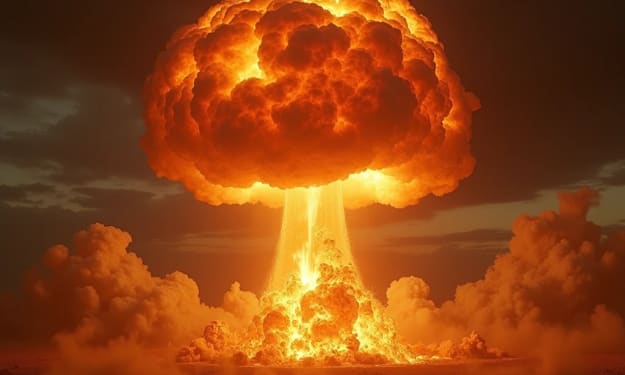
Can Nuclear Bombs Save the Planet?
A Midnight Thought Experiment Do you ever lie awake at night, staring at the ceiling, your mind spiraling into impossible solutions for problems too big to ignore? I do. Sometimes I imagine some kind of cosmic eraser—something that could just wipe away all our mistakes in one clean sweep. Like nanobots programmed to devour carbon dioxide molecule by molecule, or trees engineered to grow skyscraper-tall and breathe in smog like it’s fresh air. Or maybe… just maybe… there’s a way to pull infinite energy from the fabric of reality itself. (Yeah, right.) Then again, dreams are free.
By Francisco Navarro2 years ago in Earth
The Kindness of a stranger
It was one of those cold, crisp mornings in early autumn when I found myself walking briskly through the busy streets of the city. The wind bit through my jacket, and I clutched my bag tightly, trying to keep it from slipping off my shoulder. The hustle and bustle of the crowd seemed distant, with everyone wrapped up in their own world, moving purposefully along the crowded sidewalks. I had a full day ahead, and the last thing I expected was a small act of kindness from a stranger that would make me rethink my outlook on life.
By Badhan Sen2 years ago in Earth
The fall of an ancient civilization
The fall of an ancient civilization is often attributed to a combination of internal decay and external pressures. The decline of such societies, though tragic, offers valuable insights into the rise and fall of human endeavors. Take, for example, the fall of the Indus Valley Civilization, a once-flourishing society that spanned much of present-day Pakistan and northwest India around 4,000 years ago. The civilization, with its impressive urban planning and advanced technology, is a testament to human ingenuity. Yet, despite these achievements, it collapsed mysteriously, leaving behind only remnants of its greatness.
By Badhan Sen2 years ago in Earth
A final whisper
**A Final Whisper** The room was quiet except for the rhythmic beeping of the heart monitor. Soft rays of evening sunlight filtered through the hospital window, casting golden streaks across the white sheets. Jacob lay still, his breaths shallow, his frail fingers curled around Sarah’s hand. She held on tightly, as if her grip alone could keep him tethered to this world.
By Badhan Sen2 years ago in Earth
Watching the sunset alone
There is something profoundly peaceful about watching the sunset alone. As the golden orb dips beyond the horizon, the sky transforms into a masterpiece of colors—soft pinks, fiery oranges, deep purples. The world slows down, and for a few moments, everything feels still, as if the universe itself is holding its breath.
By Badhan Sen2 years ago in Earth
The comfort of an old bookstore
There is something magical about stepping into an old bookstore. The moment you push open the creaky wooden door, a gentle chime announces your arrival. The air is thick with the scent of aged paper, ink, and a faint mustiness that speaks of time itself. Unlike modern bookstores with their bright lights and neatly arranged displays, old bookstores have a personality—an unpolished charm that feels like home to anyone who loves books.
By Badhan Sen2 years ago in Earth
A slow walk on a Sunday morning
### A Slow Walk on a Sunday Morning Sunday mornings have a charm of their own. The world moves a little slower, the air feels a little fresher, and the usual rush of life seems to pause, allowing for a moment of peace. On this particular Sunday morning, I decided to take a slow walk through my neighborhood, letting the quiet beauty of the day unfold before me.
By Badhan Sen2 years ago in Earth
The Kindness of a stranger
It was one of those cold, crisp mornings in early autumn when I found myself walking briskly through the busy streets of the city. The wind bit through my jacket, and I clutched my bag tightly, trying to keep it from slipping off my shoulder. The hustle and bustle of the crowd seemed distant, with everyone wrapped up in their own world, moving purposefully along the crowded sidewalks. I had a full day ahead, and the last thing I expected was a small act of kindness from a stranger that would make me rethink my outlook on life.
By Badhan Sen2 years ago in Earth
What If Bees Never Existed?. AI-Generated.
A World Without Bees: The Silent Collapse Bees are small, but their impact on the planet is enormous. These buzzing insects are responsible for pollinating around 75% of the world’s flowering plants, including nearly 35% of global food crops. Without them, entire ecosystems would be thrown into chaos. But what if bees had never existed? What would the world look like today?
By Ahmet Kıvanç Demirkıran2 years ago in Earth
why do we need money in our life?
Money is essential for meeting our basic needs such as food, shelter, and clothing. Without money, it is impossible to obtain the things we need to survive. Education: Money plays a significant role in education. It enables us to pay for school fees, buy books, and access other educational resources. Money impacts our well-being, relationships, opportunities, and the world around us. It serves as a tool for personal growth, independence, and the pursuit of dreams. Making a budget and sticking to it is more important than earning a large salary. Money is a medium of exchange. It allows people and businesses to obtain what they need to live and thrive. Bartering was one way that people exchanged goods for other goods before money was created. Like gold and other precious metals, money has worth because it represents something valuable. Money facilitates commercial transactions, enabling people to obtain the resources to survive and to thrive from others. Human beings need money to pay for all the things that make your life possible, such as shelter, food, healthcare bills, and a good education. To summarize, money has taken many forms through the ages, but money consistently has three functions: store of value, unit of account, and medium of exchange. Without money we would be forced to obtain goods and services from each other through a barter system. Money can't buy happiness, but it can buy security and safety for you and your loved ones. Human beings need money to pay for all the things that make your life possible, such as shelter, food, healthcare bills, and a good education. In addition to basic needs, money enables us to improve our quality of life. It allows us to afford education, healthcare, and other services that contribute to a better life. For instance, a good education can lead to better job opportunities, and quality healthcare ensures that we stay healthy. Human beings need money to pay for all the things that make your life possible, such as shelter, food, healthcare bills, and a good education. Money is simply a medium of exchange. - Without money we would be forced to obtain goods and services from each other through a barter system. With greener energy sources and healthier communities being implemented at a growing rate, natural living is already a reality, but may be made much more mainstream in the future to come. “For over 90 percent of our time on the planet, a period when we lived much more ecologically, we lived without money. Your primary purpose in life is not to make money nor is your self worth attached to your net worth. Money is a powerful tool so give it the respect it deserves. Money is an area we focus on because it is where most of humanity puts their refuge. The importance of money comes from its ability to provide efficient transactions in an economy. It is a means of exchange. Money is one of the most important tools in an economy as it allows transactions. In the absence of money, the transactions would become inefficient, and the economy will not be able to produce. The word "money" comes from the Latin word moneta, which means "coin". It also comes through the French word monnaie. Etymology Moneta* is thought to have originated from the temple of Juno on Capitoline Hill in Rome. Juno was often associated with money in ancient times. The temple of Juno Moneta was the location of the mint of Ancient Rome. History of money The first known use of money was in the 14th century. Metals like iron and silver have been used as money throughout history. The earliest coins were made of electrum, a natural mixture of gold and silver. The value of the metal was initially measured by weight, but governments eventually stamped it to avoid the need for weighing. Money in economics The money market is an important part of the economy because it allows people to save, borrow, and earn a return on their savings. The money market is made up of financial institutions and investors who trade in short-term debt instruments. Basic Needs: Money is essential for meeting our basic needs such as food, shelter, and clothing. Without money, it is impossible to obtain the things we need to survive. Education: Money plays a significant role in education. It enables us to pay for school fees, buy books, and access other educational resources.
By Budhirai Tripura2 years ago in Earth
The Footprints We Leave Behind
Every moment we spend on this earth leaves a trace—sometimes visible, often invisible—but all contribute to the legacy we create. These traces, seem footprints in the sand, remain long after we’ve walked away. The footprints we leave behind are not just those of our physical presence; they extend into our actions, our words, and the impact we have on the world around us.
By Badhan Sen2 years ago in Earth