Humanity
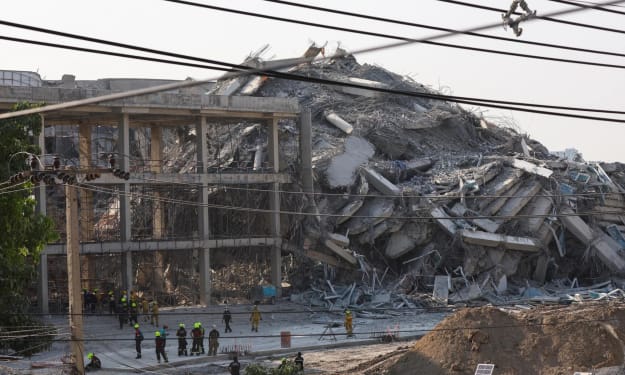
Southeast Asia Earthquake. March 28th, 2025
A 7.7 magnitude earthquake caused destruction across Southeast Asia, most notably Mandalay, Myanmar as the country’s second largest city was the epicentre. Bangkok, Thailand would also see destruction, along with multiple provinces in China having recorded the earthquake. The scale of destruction in the city of Mandalay is unknown at this time aside from at least 144 deceased and an estimated 730 injured, with casualties expected to rise.
By Jacob Newsonabout a year ago in Earth
Human Rights Advocacy
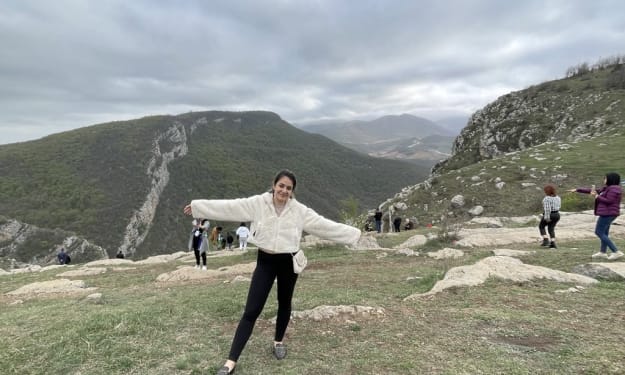
Human rights advocacy is a fundamental pillar of justice, ensuring that every individual has the right to dignity, freedom, and equality. Across the globe, advocates work tirelessly to address injustices, fight discrimination, and promote policies that protect human rights. Among these dedicated voices, Yasmin Bashirova has emerged as a passionate and influential figure in the movement, striving to create meaningful change in society.
By Yasmin Bashirovaabout a year ago in Earth
Massive 7.7-Magnitude Earthquake Strikes Myanmar, Causing Widespread Devastation
Massive 7.7-Magnitude Earthquake Strikes Myanmar, Causing Widespread Devastation. On March 28, 2025 a devastating 7.7 magnitude earthquake struck central Myanmar causing widespread destruction and loss of life across Southeast Asia. The quake's epicenter was near Mandalay Myanmar's second largest city leading to significant damage in the region and affecting neighboring countries, particularly Thailand.
By Adnan Rasheedabout a year ago in Earth
Magnitude-7.7 Earthquake Strikes Myanmar Tremors Felt Across Thailand and Neighboring Regions
Magnitude-7.7 Earthquake Strikes Myanmar Tremors Felt Across Thailand and Neighboring Region. A powerful earthquake of magnitude 7.7 struck Myanmar causing widespread panic and potential destruction. The tremors were felt across Thailand India Bangladesh and China alarming residents and prompting emergency responses.
By Adnan Rasheedabout a year ago in Earth
Biology: The Fascinating Study of Life and Living Organisms
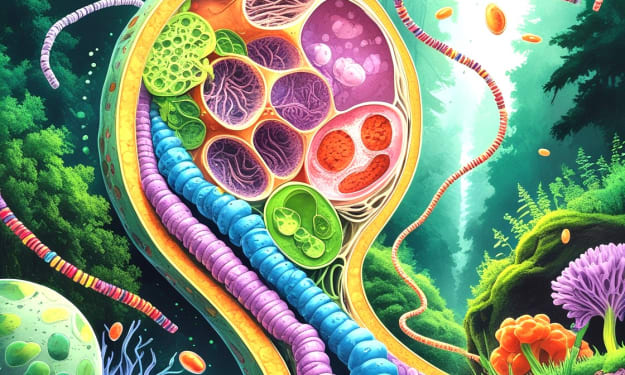
Biology, derived from the Greek words bios (life) and logos (study), is the scientific exploration of life and living organisms. It spans an immense range of topics—from the microscopic structures within cells to the vast, interconnected ecosystems that sustain life on Earth. This discipline helps us comprehend the structure, function, growth, origin, evolution, and distribution of all living beings. By studying biology, we gain insight into the mechanisms that drive life, paving the way for medical breakthroughs, environmental conservation, and technological advancements.
By Rocky Brahmaabout a year ago in Earth
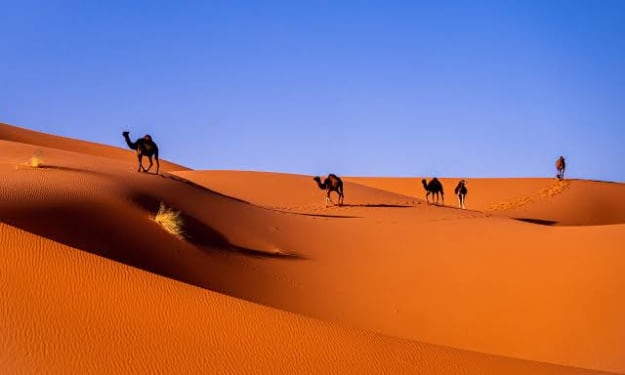
The Secret of Plants That Survive in the Desert
Plants that survive in the harsh conditions of the desert have developed remarkable adaptations that allow them to endure extreme temperatures, droughts, and a lack of nutrients. These survival strategies not only showcase the ingenuity of nature but also provide valuable lessons in resilience, adaptation, and resource efficiency. Many of these plants have evolved to store water, reduce water loss, and make the most out of the limited resources available in their environment. Let’s take a closer look at some of the most impressive desert survivors.
By AQUÁ PLANTASabout a year ago in Earth
Japanese astronaut's demonstration of playing baseball in space.
Japanese astronaut's demonstration of playing baseball in space. Japanese astronaut Koichi Wakata recently captivated the world by demonstrating baseball in space an event that combined elements of entertainment education and scientific inquiry. The demonstration took place aboard the International Space Station (ISS) where Wakata became the first astronaut to show how the sport could be played in microgravity an environment that significantly alters the way objects move. This unusual display of athleticism and science not only fascinated baseball fans but also sparked discussions about the physics of motion in space. BeIn the video that went viral Wakata floated effortlessly inside the ISS tossing a baseball into the air before swinging at it with an imaginary bat. Due to the absence of gravity the ball didn’t fall back to the ground as it would on Earth. Instead it drifted along and Wakata had to chase it and catch it mid air. The video clearly showcased how the basic principles of baseball would change in space. On Earth gravity pulls objects down, and the friction of air affects how a baseball travels. However in the microgravity environment of the ISS the ball continued to float in the direction it was hit unless acted upon by another force. This demonstration was not only a fun and creative activity for Wakata but also a way to highlight the fascinating differences between how objects move in space compared to Earth. Baseball a game deeply rooted in Japanese culture is the most popular sport in Japan and the idea of playing it in space was a fitting tribute to Japan’s love for the game. Koichi Wakata who has had an illustrious career as a Japanese astronaut is no stranger to making waves. His baseball demonstration was both a symbol of his cultural heritage and a unique contribution to the space exploration narrative. Japan's passion for baseball is well documented. The country’s professional league Nippon Professional Baseball (NPB) is one of the most competitive and successful in the world. Several Japanese players have made their mark in Major League Baseball (MLB) in the United States further enhancing the sport’s popularity. Wakata’s space baseball demonstration therefore served as both a personal and national celebration showcasing how space exploration can intertwine with human culture and passions in unexpected ways. His act of playing baseball in space generated enormous pride in Japan and brought a fresh perspective to the connection between Earth and space. While playing sports in space may sound like a novelty this is not the first time astronauts have experimented with sports in a zero gravity environment. In fact throughout history astronauts have used their time in space to conduct light hearted yet educational activities. In 1971 NASA astronaut Alan Shepard made headlines when he famously hit two golf balls on the Moon. Although the activity was more symbolic than competitive, it captured the imagination of millions around the world. Similarly Russian cosmonauts have attempted to play soccer in space, while astronauts have tried their hand at basketball and table tennis albeit in modified forms. These attempts highlight the challenges of recreating Earth-based sports in a weightless environment.
By Adnan Rasheedabout a year ago in Earth
Industrial Safety Program: Enhancing Workplace Protection
Introduction Workplace safety is a critical priority for industries dealing with hazardous environments. An industrial safety program ensures that employees have access to protective measures, reducing accidents and ensuring compliance with safety regulations. One essential component is an industrial safety eyewear program, which provides workers with high-quality eye protection tailored to their needs. This article explores the importance of industrial safety programs, focusing on eye protection, costs, and best practices.
By Morgan Drewabout a year ago in Earth
The Oldest Trees in the World and What They Can Teach Us
The ancient trees that have withstood the test of time are not only impressive but also hold deep lessons for humanity. These trees have existed for centuries, some for millennia, and their resilience offers a glimpse into the wisdom of nature. Here is a closer look at some of the oldest trees on the planet and the valuable lessons they can teach us:
By AQUÁ PLANTASabout a year ago in Earth