Climate
A Polar Bear in Paradise
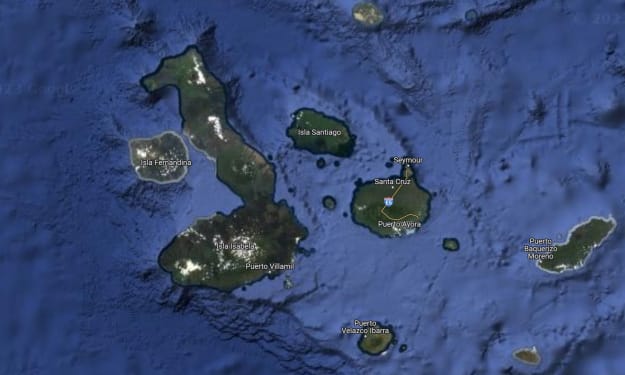
When admitted entry to the Galapagos for scientific research of an endangered tortoise, the last thing I dared hope to find was a polar bear. Yet as I moved over an enormous, white body on the dusky beach, the undeniable black-eyed face blinked back at me. And then it also roared.
By Jenna Sedi4 years ago in Earth
"What Is Super Moon"
A super moon is a full moon or a new moon that occurs when the moon is at or near its closest point to Earth in its elliptical orbit, making it appear larger and brighter in the sky. The term "supermoon" is not an astronomical term, but rather a popular term used to describe this phenomenon.
By Aathi Kesavan4 years ago in Earth
The Ultimate Keto Meal Plan
The Ultimate Keto Meal Plan is a comprehensive guide that provides individuals with a roadmap to follow a ketogenic diet effectively. The ketogenic diet is a low-carb, high-fat diet that has gained popularity in recent years for its ability to help individuals lose weight and improve their overall health. This meal plan is designed to make it easier for people to follow a ketogenic diet by providing them with all the resources they need to succeed.
By Prashant Solanki4 years ago in Earth
Climatic change and sustainability
Sustainability is the ability to meet the needs of the present without compromising the ability of future generations to meet their own needs. It is a concept that considers the interplay between environmental, economic, and social systems, and aims to balance these systems in a way that ensures long-term viability.
By Udhaya Karthika4 years ago in Earth
Scientific Theories and Quranic Principles
1.Theories of Evolution and Quranic teachings The theory of evolution is a scientific explanation of how species have changed over time through the processes of natural selection and genetic variation. The theory of evolution proposes that all life on Earth, including humans, evolved over billions of years from a common ancestry. The main mechanism of evolution is natural selection, which is the process by which certain traits become more or less common in a population over generations based on how well those traits enable individuals to survive and reproduce. On the other hand, the Quranic teachings in Islam hold that God created all life on Earth, including humans, and that the species were created in their present form and have not changed over time. According to Islamic beliefs, God has complete control over the universe and all its creatures, and everything in creation serves a purpose in fulfilling God's will. The Islamic creation story as described in the Quran is that Allah created the universe and everything in it, including humans. According to Islamic tradition, Allah created Adam and Eve, and they were the first humans on Earth. From their descendants, the human race has spread throughout the world. The Islamic view of evolution is complex and nuanced, with some interpretations accepting elements of the scientific theory while rejecting others. Some scholars have interpreted the Quran to suggest that species may change over time, but only within limits set by God, and that the process of evolution is guided by God's will. However, others interpret the Quran as rejecting evolution outright, arguing that the idea of evolution contradicts the Islamic belief in the creation of humans and all life by God. In conclusion, the theory of evolution and Quranic teachings offer two different perspectives on the origin and development of life on Earth. The theory of evolution is a scientific explanation based on empirical evidence, while the Quranic teachings are based on religious beliefs and faith. While some may see these two perspectives as incompatible, others believe that they can coexist and complement each other. 2.The Big Bang and Quranic creation account The Big Bang and the Quranic creation account are two vastly different views of the origin of the universe. The Big Bang is a scientific theory that explains the evolution of the universe from a singularity to its current state, while the Quranic creation account is a religious perspective on the creation of the universe based on Islamic scripture. In this essay, we will explore both of these views in detail, including their similarities and differences. The Big Bang is the prevailing scientific theory of the origin of the universe. According to this theory, the universe began as a singularity, an infinitely dense and hot point in space. At this moment, the universe was thought to be composed of all the matter and energy that would later make up the galaxies, stars, and planets. Approximately 13.8 billion years ago, this singularity suddenly and dramatically expanded in a massive explosion known as the Big Bang. This expansion led to the formation of matter and energy, which eventually cooled and coalesced into stars and galaxies. One of the key pieces of evidence for the Big Bang is the cosmic microwave background radiation, which is a faint glow of light that permeates the universe and is thought to be the afterglow of the Big Bang. In addition, the observed large-scale structure of the universe, including the distribution of galaxies and clusters of galaxies, is also consistent with the predictions of the Big Bang. The Quranic creation account, on the other hand, is a religious perspective on the origin of the universe. According to Islamic scripture, Allah created the universe in six days, each of which is described as a period of time that is longer than a human day but is still finite. The Quranic account of creation emphasizes the role of Allah as the creator of the universe, who brought everything into existence from nothing through his power and wisdom. The Quranic creation account is described in the first chapter of the Quran, Al-Fatihah, which states, “Praise be to Allah, the Lord of the Worlds. The Most Gracious, the Most Merciful. Master of the Day of Judgment. You alone we worship, and You alone we ask for help. Guide us to the straight path.” There are several similarities between the Big Bang and the Quranic creation account. For example, both views emphasize the idea that the universe had a definite beginning and was created from nothing. Both also suggest that the universe is vast and complex, with a wide range of different structures and processes. However, there are also some significant differences between the two views. The most notable difference is that the Big Bang is a scientific theory, while the Quranic creation account is a religious perspective. As a scientific theory, the Big Bang is subject to empirical testing and verification through observations and experiments, while the Quranic creation account is based on religious faith and cannot be directly tested or verified through scientific means. Another difference between the two views is their perspective on the nature of time. In the Big Bang, time is considered to be a fundamental aspect of the universe and is thought to have begun with the explosion itself. In the Quranic creation account, time is created along with the universe and is considered to be a finite and relative concept. In conclusion, The Big Bang and the Quranic creation account are two vastly different views of the origin of the universe. The Big Bang is a scientific theory that explains the evolution of the universe from a singularity to its current state, while the Quranic creation account is a religious perspective on the creation of the universe based on Islamic scripture. Both views have similarities and differences, but ultimately, the choice between them depends on an individual’s beliefs and values 3. Quranic principles and modern scientific theories The Quran is a holy book revered by Muslims all over the world. It contains the teachings of Islam and provides guidance on all aspects of life. One of the most remarkable aspects of the Quran is its emphasis on the importance of knowledge and the pursuit of truth. This has led to the development of a number of Quranic principles that are relevant to modern scientific theories. One such principle is the concept of creation. According to the Quran, Allah (God) created the universe and all that is in it. The Quran states that Allah created the universe in six days and that he created the world, the sky, the stars, and the earth in this order. This is similar to the Big Bang theory, which proposes that the universe was created from a single point and expanded rapidly in a short amount of time. Another Quranic principle that is relevant to modern science is the concept of evolution. According to the Quran, Allah created all living things and gave them the ability to grow and evolve. This is consistent with the theory of evolution, which proposes that species have evolved over time through a process of natural selection. The Quran states that Allah created different species of animals and plants for a specific purpose, which is similar to the idea of adaptation in the theory of evolution. The Quran also contains a number of principles related to the natural world. For example, it states that Allah created the earth and the heavens, and that he has set laws in motion to govern the behavior of natural phenomena. This is consistent with the laws of physics, which describe the behavior of matter and energy in the universe. One of the most significant Quranic principles is the idea of balance and harmony. According to the Quran, Allah created the universe with balance and harmony, and that this balance is essential for the survival of all living things. This idea is reflected in modern ecological theories, which propose that the earth's ecosystem is a complex system that depends on the balance of different species and their relationships with each other. Finally, the Quran emphasizes the importance of responsibility and ethical behavior. It teaches that humans are responsible for their actions and must be accountable for their decisions. This is consistent with modern theories of ethics and morality, which propose that humans have a moral obligation to act in a responsible and ethical manner. In conclusion, the Quranic principles and modern scientific theories have many similarities and complement each other. The Quran provides guidance on how to live a meaningful and fulfilling life, while modern science provides a deeper understanding of the natural world. Together, they provide a comprehensive framework for understanding the universe and our place in it.
By Islamic Insight 4 years ago in Earth
Our Earth
Earth is the third planet from the sun and the only known planet to support life. It is a complex and dynamic planet, shaped by processes both slow and rapid, both above and below its surface. With its abundant water, air, and life, it is a truly unique place in the universe.
By Mahesh mahto4 years ago in Earth
Exploring the Mysteries of the Antarctic Vortex Phenomenon
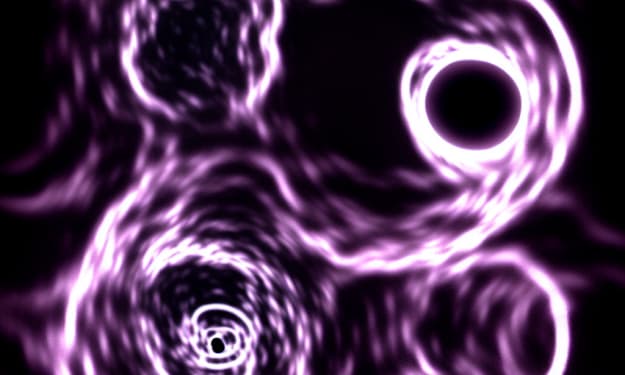
The Antarctic and its surrounding environment is a vast, isolated entity of which little is known. While its icy expanse has been the subject of scientific exploration for hundreds of years, the Antarctic remains one of the most mysterious bodies of land on Earth. One of the most bizarre phenomena from this area is the Antarctic Vortex, a strange and powerful weather formation which results from the unique atmospheric conditions of the Southern Hemisphere. In this blog post, we'll explore this strange phenomenon and attempt to uncover some of its mysteries.
By Mohammad Hammash4 years ago in Earth
"The Ultimate Guide to a Bike Trip in Leh Ladakh"
Leh Ladakh, the Land of High Passes, is a cyclist’s paradise. It’s a scenic, remote, and challenging destination that offers a once-in-a-lifetime biking adventure. With its diverse terrain, stunning mountain scenery, and unique culture, Leh Ladakh is a must-visit for any serious cyclist. Here’s the ultimate guide to a ladakh tour bike.
By omkar salunkhe4 years ago in Earth
The story of Earth and Dinosaurs
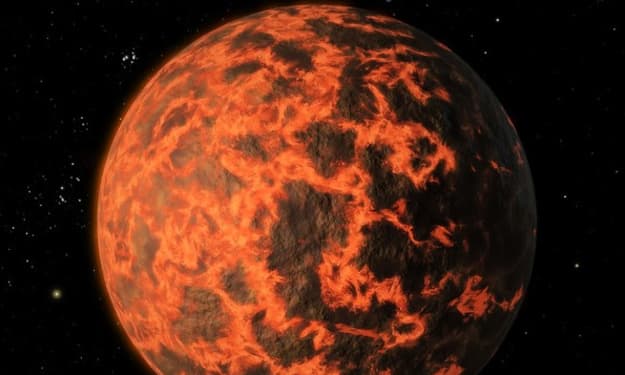
The story of Earth The story of Earth is a tale of billions of years of formation, evolution, and change. It all began around 4.5 billion years ago when the solar system was formed from a cloud of gas and dust. As the cloud collapsed, it spun and flattened into a disk-like shape, with the sun at its center and planets forming from the remaining material. One of these planets was the Earth.
By R S Charan4 years ago in Earth