Climate
The Wonders of Our Planet
Auther Name (Hazratullah) Our planet is more than just a world we live in—it is a living miracle, full of beauty, strength, and mystery. Every part of Earth, from the highest mountains to the deepest oceans, contributes to a delicate system that makes life possible. Each element, whether it is a tree, a river, or even the smallest insect, plays an important role in keeping this balance alive.
By Asmatullahabout a year ago in Earth
Mysteries of the universe
What Will Tomorrow Bring? Every evening, as we prepare to rest, this question arises within us: what will tomorrow hold? Perhaps it is the greatest mystery for all humankind. We can’t help but wonder about the future—what it has in store for us, and whether uncertainties or joys lie ahead.
By Blessing Ngoziabout a year ago in Earth
The Night Sky In September 2025: Two Eclipses, Bright Aurora And Saturn
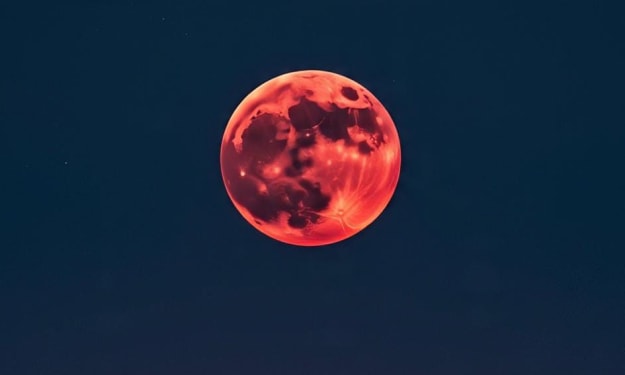
September ushers in a season of dramatic celestial events, from Saturn at opposition and some close planetaring pairings to a spectacular “blood moon” total lunar eclipse — though the latter is not visible in North America. As days shorten ahead of the autumnal equinox, stargazing becomes an evening activity, and a rewarding one as the constellations rise and fall with the changing of the season up above. Here’s everything you need to know about stargazing in September 2025.
By Muhammad Sabeelabout a year ago in Earth
Get Ready for a Glorious Harvest Blood Moon on September 7.
The Corn Moon and Its Meaning September’s full moon is often called the Corn Moon, a name passed down through Native American and European farming traditions. It marked the season of harvesting late-summer crops, especially corn, before the chill of autumn arrived. While many associate September’s full moon with the Harvest Moon, that title officially goes to whichever full moon is closest to the autumn equinox. In 2025, the Harvest Moon falls in October, leaving September with the traditional Corn Moon.
By USA daily update about a year ago in Earth
The Day the Earth Spoke
M Mehran It began quietly. No earthquakes, no storms, no sudden fire in the sky. Just a sound, deep and low, that rippled beneath the feet of every person across the world. At first, people thought it was construction, or thunder rolling in from some unseen storm. But when it continued for minutes, then hours, scientists confirmed what no one wanted to believe. It was the Earth itself. Speaking. In Greenhaven, a small town nestled between hills and farmland, the strange hum felt like a heartbeat under the ground. Children pressed their ears to the soil and swore they could hear words—slow, heavy syllables that didn’t belong to any human tongue. Among them was twelve-year-old Lila Perez, who had always felt a strange closeness to the land. Her grandmother used to tell her, “The Earth listens, mija. Every footstep, every seed, every tear—it remembers.” That evening, when the sky burned with sunset, Lila stood barefoot in her backyard. The hum grew stronger. And then, in her mind—not her ears—she heard it: “I am tired.” Lila gasped. She stumbled backward, her heart hammering. The voice was immense, like an ocean given language, but it was also… sad. The news spread quickly. Around the world, people reported the same experience: the Earth was communicating, though not everyone could hear words. Some only felt emotions—weariness, pain, longing. Others, like Lila, received clear messages. In Greenhaven, the town gathered at the community center to discuss it. Farmers, teachers, shopkeepers—everyone buzzed with worry. Could the planet really speak? And if so, what did it want? Dr. Elias Monroe, a geologist who had studied earthquakes for decades, shook his head. “It must be a natural phenomenon. Vibrations through the crust, misunderstood by our brains.” But Lila, sitting in the back row, whispered, “It isn’t vibrations. It’s a voice.” The mayor laughed gently. “And how do you know that, young lady?” “Because,” Lila said, standing now, her small frame trembling, “the Earth told me it is tired.” The room fell silent. Days turned into weeks, and the phenomenon grew impossible to dismiss. Crops withered overnight in some places, while rivers suddenly surged in others. It was as though the planet’s exhaustion had become physical, reshaping the land. Scientists scrambled, governments panicked, but ordinary people—especially children—seemed to understand best. One night, as Lila lay in bed, the voice returned. “You take and take. Dig deep, cut forests, burn the air. I cannot breathe.” Tears welled in her eyes. “I’m sorry,” she whispered. “We didn’t know.” “You knew.” The Earth’s voice was heavy, like stone crumbling. “But you forgot how to listen.” The next morning, Lila told her parents. They didn’t laugh. Her father, a farmer, looked at his fields of dry soil and nodded grimly. “If the Earth is speaking, we’d better start listening.” Greenhaven changed first. The townsfolk planted trees along empty lots, turned off lights at night to give the stars back their shine, and shifted the farms to use less water. They called it “The Listening Project.” Word spread. Other towns and cities began doing the same. A global movement stirred—not out of fear of punishment, but out of a newfound sense of responsibility. Children everywhere painted signs that read, “The Earth is tired. Let’s help her rest.” Still, not everyone listened. Large corporations dismissed the voice as hysteria. Factories roared on, oil wells drilled deeper, ships poured smoke into the sky. And every time, the Earth’s hum grew louder, shaking buildings, rattling glass, making it impossible to ignore. One night, the voice came again to Lila, but softer this time, almost like a lullaby. “There is hope. You are young. You will remember.” Lila asked, “What can we do?” The ground beneath her pulsed gently. “Live smaller. Share more. Love the soil, the water, the sky. And teach others to do the same.” She promised she would. Years passed. The “Listening Project” grew into a worldwide movement. People no longer waited for governments—they took action in their neighborhoods, schools, and farms. Children planted gardens on rooftops. Artists painted murals of rivers and forests. Scientists developed cleaner energy not for profit, but for survival. In Greenhaven, Lila became known as “the girl who heard the Earth.” By the time she was eighteen, she was speaking at global summits, reminding leaders of the promise she had made years ago. “Every poem, every prayer, every promise we keep to this planet,” she said once at the United Nations, “is a piece of medicine. The Earth is not asking for miracles. She is asking us to remember she is alive.” And slowly, remarkably, the Earth’s voice began to soften. The hum that once carried exhaustion now carried something gentler. Gratitude. One evening, as Lila stood barefoot again in her backyard, the voice returned for what felt like the last time. “Thank you, child. I can rest now.” The ground was quiet after that. Some said the Earth had gone silent forever. But Lila knew better. The Earth had not stopped speaking—humanity had finally learned how to listen without needing words.
By Muhammad Mehranabout a year ago in Earth
A Fury of Floods
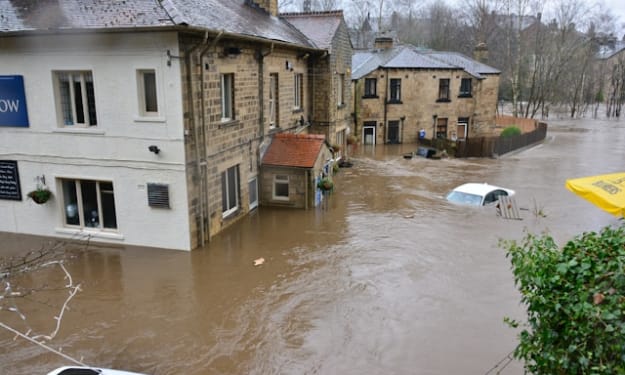
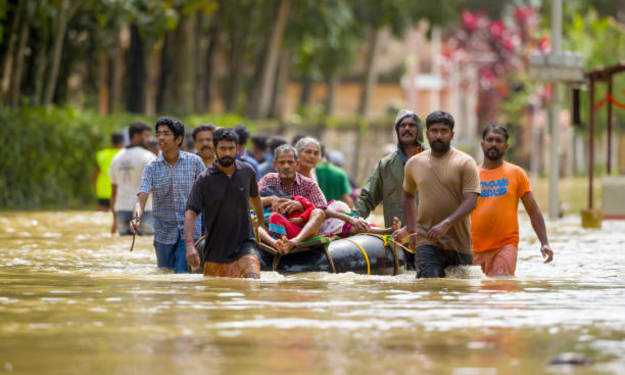
Auther Name (Hazratullah) The monsoon rains had arrived with an intensity no one had anticipated. For days, the skies poured relentlessly over the small village of Darban, filling the rivers and streams beyond their limits. The villagers had witnessed floods before, but this time, the water rose faster and with a fiercer voice, as if nature itself was sending a warning.
By Asmatullahabout a year ago in Earth
The Rising Tide: How Floods Are Reshaping Our World. AI-Generated.
Floods are among the most destructive natural disasters in human history. They arrive with little warning, sweep away everything in their path, and leave behind scars that take years to heal. From urban cities to rural villages, no community is entirely safe when floodwaters rise. With climate change accelerating, floods are becoming more frequent, more intense, and far deadlier than ever before. In this article, we will explore why floods happen, their devastating effects, and how communities can prepare for the future. 🌧️ Why Do Floods Occur? Floods are essentially an overflow of water onto normally dry land. They occur due to a variety of factors, including: Heavy Rainfall – Prolonged or sudden downpours overwhelm drainage systems. River Overflow – Rivers and streams swell beyond their banks during storms or snowmelt. Storm Surges – Coastal areas face flooding when hurricanes push seawater inland. Dam Failures – When man-made structures collapse, downstream communities suffer. Urbanization – Rapid construction reduces natural water absorption, increasing the risk of flash floods. Climate change plays a critical role by intensifying storms, raising sea levels, and melting glaciers, all of which increase the likelihood of catastrophic flooding worldwide. 🌍 The Global Toll of Floods According to the United Nations Office for Disaster Risk Reduction (UNDRR), floods affect more people worldwide than any other type of natural disaster. Each year, millions are displaced, thousands lose their lives, and billions of dollars are lost in economic damage. Some notable examples include: Pakistan 2022 Floods – One-third of the country was submerged, affecting 33 million people and causing $30 billion in damages. Bangladesh Floods – Known as one of the most flood-prone countries, where millions face water-related disasters every year. Hurricane Katrina (2005, USA) – A deadly storm surge and levee failure devastated New Orleans, leaving long-lasting social and economic impacts. These events highlight how floods are not limited to one region or income level—they are a truly global crisis. 🏚️ Human and Economic Impact Floods are more than just rising water. Their consequences ripple through every layer of society: Loss of Life – Thousands perish each year due to drowning, disease, and lack of access to medical care. Displacement – Families are forced to abandon their homes, sometimes permanently. Health Risks – Stagnant water becomes a breeding ground for diseases like malaria, cholera, and dengue. Economic Devastation – Crops are destroyed, businesses shut down, and entire infrastructures collapse. Psychological Trauma – Survivors often suffer from anxiety, depression, and PTSD after experiencing such disasters. For vulnerable communities, the impact is even harsher. Poor infrastructure, lack of insurance, and limited government support mean recovery can take decades. 🔍 Floods and Climate Change: An Unbreakable Link Scientists warn that climate change is supercharging floods. Rising global temperatures lead to: Melting glaciers and ice caps, adding more water to oceans. Sea-level rise, threatening coastal cities like New York, Karachi, and Jakarta. Extreme rainfall, where storms release massive amounts of water in a short period. Without urgent action to reduce carbon emissions, the future may see floods of unprecedented scale. 🛡️ How Can We Prepare for Floods? While floods cannot be prevented entirely, preparedness and resilience can save lives and reduce damage. Communities and governments must work together by: Early Warning Systems – Technology-driven alerts help people evacuate in time. Better Infrastructure – Building stronger dams, levees, and flood-resistant housing. Urban Planning – Designing cities with natural water absorption zones, like parks and wetlands. Community Awareness – Educating people about evacuation plans and safety measures. Climate Action – Reducing greenhouse gas emissions to slow down global warming. On an individual level, families can prepare emergency kits, waterproof important documents, and identify safe shelters. 🌟 Stories of Hope and Resilience Amid the destruction, human resilience shines through. During the 2022 Pakistan floods, volunteers formed human chains to rescue stranded families. In Bangladesh, floating schools and hospitals provide education and healthcare during flood seasons. After Hurricane Katrina, community organizations led rebuilding efforts that inspired urban renewal. These stories remind us that even when water levels rise, so does human courage. 📢 Final Thoughts Floods are a wake-up call from nature. They show us the fragility of human settlements in the face of climate change and poor planning. But they also present an opportunity—to rethink how we live, how we build, and how we adapt. The rising tide is not just water—it is a challenge to humanity’s survival. By combining science, policy, and community spirit, we can build a safer, flood-resilient future.
By Sajjad Aliabout a year ago in Earth
The Day the Earth Spoke
M Mehran On a quiet morning, long before the world woke up, the Earth let out a sigh. It wasn’t the rumble of thunder or the roar of a storm—it was the kind of sigh you only notice if you’re paying attention. Birds stopped their songs, trees swayed as if listening, and the rivers seemed to pause. It was as though the Earth itself wanted to tell us a story. --- The Ancient Beginning “I was born in fire,” the Earth whispered. “My skin once boiled with lava, and my skies were storms of rock and ash. But in time, I cooled. I became blue oceans, green forests, and golden deserts. I grew mountains that touched the clouds and valleys where rivers danced. And in my heart, life bloomed.” The Earth had seen creatures rise and fall. Dinosaurs thundered across plains, only to vanish in a flash of fire. Tiny mammals crawled from caves and eventually learned to stand tall. Humanity arrived late—just yesterday in Earth’s vast memory—yet left the deepest marks. --- The Gift of Life The Earth remembered when humans first learned to plant seeds. “You tilled my soil, and in return, I gave you wheat, rice, and maize. You drank from my rivers, warmed yourselves with my forests, and gazed at the stars from my hills. I gave you everything I had—water, air, land, and beauty.” But the Earth’s voice trembled as it continued. “Somewhere along the way, you began to forget.” --- The Age of Forgetting Factories rose where forests once stood. Smoke covered skies once painted with stars. Rivers that once sang with life turned black with waste. Animals—friends of the Earth—disappeared, their songs silenced forever. The Earth wasn’t angry. It was tired. Tired of carrying the weight of a species that took without giving back. Yet even in its sorrow, the Earth still hoped. “You are my children,” it whispered. “And children can learn.” --- Signs and Warnings Over the years, the Earth began to speak louder—not with words, but with signs. Hurricanes grew stronger. Summers burned hotter. Glaciers melted into the seas. Fires raged through forests that once stood tall and proud. “These are not punishments,” the Earth sighed. “They are reminders. I am not endless. I need care, just as you do.” But were we listening? --- The Awakening In many places, the answer was yes. Children marched with signs demanding a future. Communities planted trees where none had stood for decades. Farmers returned to ancient methods that healed the soil instead of harming it. Cities painted their rooftops green, built homes powered by the sun, and cleaned rivers once thought lost. Small acts became great movements. And though the Earth still carried scars, it felt the healing touch of hope. --- What the Earth Wants “If you ask what I want,” the Earth said softly, “the answer is simple. I do not need riches, monuments, or grand gestures. I only need your kindness. Plant a tree, and I will breathe easier. Protect the rivers, and I will quench your thirst. Walk gently upon my soil, and I will cradle you for generations.” The Earth did not ask for perfection—only partnership. --- The Promise As the sun rose higher, the sigh faded, replaced by a steady hum—the heartbeat of a planet that still believed in its people. The Earth’s story is not finished. Every choice we make becomes a sentence in that story. Will it be a tale of ruin, where the rivers dry and the forests fall silent? Or will it be a tale of renewal, where humans remember that they are not rulers, but guardians? The answer lies not in the distant future, but in the steps we take today. Because the Earth is still speaking. The question is—are we listening?
By Muhammad Mehranabout a year ago in Earth
The New World
The New World Humanity has always been defined by its ability to dream of a better tomorrow. From the first fire struck by stone to the satellites orbiting Earth, every invention has carried us a step closer to a new world. But never before has the pace of progress been so rapid, nor the possibilities so limitless. Today, we stand at the threshold of a technological revolution that is reshaping every part of life—medicine, communication, space travel, and even the way we think. This “new world” is not centuries away; it is being built around us right now.
By Wings of Time about a year ago in Earth
🌍The Hidden Hum of Earth: A Mystery No One Told You About
The Earth Is Never Silent (But No One Told You That) If you step outside right now, close your eyes, and listen — what do you hear? Maybe cars rushing by, birds in the distance, or the faint buzz of electricity. But here’s the twist: even if the world went completely silent, the Earth itself would still be making a sound.
By Awais Qarni about a year ago in Earth
Snowflakes and Silence
Auther Name (Hazratullah) Winter does not arrive with noise; it steps softly, like a traveler returning from a long journey. The first signs are subtle—a crisp breeze, a paler sky, and then, finally, the gentle descent of snowflakes. They fall without hurry, covering the earth in white silence. With each flake, the busy rhythm of the world slows down, as if nature itself has pressed pause. This is the true spirit of winter: not emptiness, but a calm that invites us to listen more deeply to life.
By Asmatullahabout a year ago in Earth