Climate
The Living Canvas
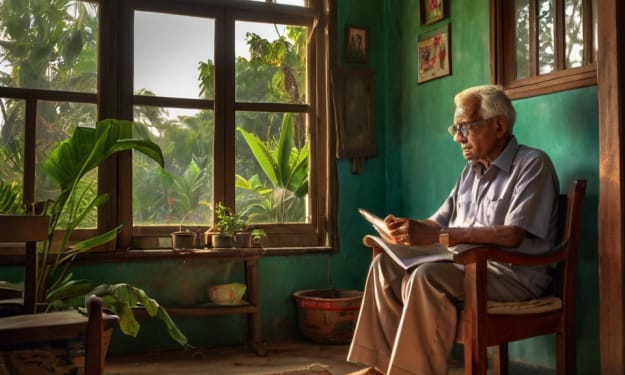
M Mehran Earth is more than a planet. It is a living canvas, painted with mountains, rivers, forests, and skies. It breathes in winds, whispers in oceans, and pulses beneath our feet with a rhythm older than humanity itself. Yet, despite its beauty, humans often forget that we are merely guests in this vast masterpiece. --- The Morning Awakening I remember the first time I truly noticed Earth. I was hiking in the Himalayas, far from cities, far from schedules, far from noise. Dawn broke over the snow-capped peaks, painting the world in shades of gold and pink. The wind carried a scent of pine and soil, crisp and alive. For a moment, I felt insignificant. My worries, ambitions, and fears seemed trivial in the face of such grandeur. But in that same moment, I also felt connected—to the mountains, to the soil, to the very air I breathed. Earth, in its quiet strength, reminded me that life is both fleeting and eternal. --- The Rivers That Remember Rivers have always fascinated me. They carry water, yes, but they also carry stories. Stories of rainfall, of glaciers melting, of forests nourished, of civilizations built along their banks. I once stood by the Ganges in India, watching pilgrims pour water, offering prayers. The river seemed to listen, absorbing centuries of devotion and despair alike. Earth preserves memory in ways we cannot imagine. Its rivers, winds, and rocks are archivists of existence, holding secrets we are only beginning to understand. --- The Forest’s Whisper Forests are Earth’s lungs, and walking through them is like inhaling history itself. Trees sway, leaves murmur, and the forest floor teems with life unseen. I hiked in the Amazon once, guided by a local elder who spoke as if the trees were his kin. “Listen,” he said. “They remember everything. They know who walks lightly and who takes too much.” I closed my eyes and let the forest surround me. The earth beneath my feet was alive. The canopy above whispered wisdom. Humans, I realized, are just one species in a web far more intricate and resilient than we can comprehend. --- The Cost of Carelessness Yet, for all its wonder, Earth suffers. Plastic clogs rivers, smoke chokes skies, and species vanish before we even meet them. I have walked along beaches littered with human waste, and the sight fills me with shame. Earth gives generously, but it asks for care in return. Every piece of trash we discard, every river we poison, every forest we cut, leaves a scar. Unlike humans, Earth cannot speak, cannot protest. Its voice is subtle, found in floods, droughts, storms, and fading biodiversity. --- The Small Acts But humans are not powerless. Earth has taught me that even the smallest acts ripple outward. Planting a tree, cleaning a stream, reducing waste—these are gestures of respect. Every conscious choice is a note in a larger symphony of restoration. I joined a local project once, restoring a degraded wetland. At first, it seemed insignificant. One person’s effort against acres of destruction. But over weeks, as saplings grew and birds returned, I saw proof that care matters. Earth responds when we act with intention. --- The Mirror of Humanity Looking at Earth, I see a mirror of ourselves. Like the planet, humans are resilient yet fragile, beautiful yet vulnerable. We have the capacity to create and destroy, to nurture and neglect. Just as Earth can recover if treated kindly, we too can heal, if we recognize our mistakes and act. When storms rage or wildfires burn, Earth is not punishing us. It is reminding us of balance, resilience, and responsibility. And just as we marvel at sunsets or waterfalls, we must marvel at the opportunity to coexist wisely with the planet that cradles us. --- Closing Reflection Earth is not a resource to exploit; it is a teacher, a refuge, and a living testament to life’s complexity. It shows us what is possible when elements coexist in harmony—mountains, oceans, forests, deserts—all thriving together in a delicate dance. Walking on its soil, feeling the wind on my face, hearing the rivers and birds, I am reminded that every human action matters. Each choice we make can either honor or harm the living masterpiece we call home. To live fully, we must see Earth not as background, but as protagonist in our story. To wander its forests, climb its mountains, listen to its rivers, is to understand our place in a larger narrative—one of stewardship, respect, and awe. Earth does not demand perfection. It only asks awareness, gratitude, and care. If we heed its lessons, we might not only preserve our planet but rediscover what it means to be human—connected, humble, and in awe of life itself.
By Muhammad Mehranabout a year ago in Earth
The Power of Patience
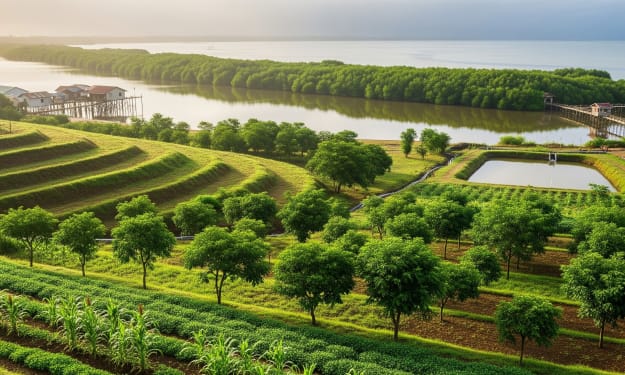
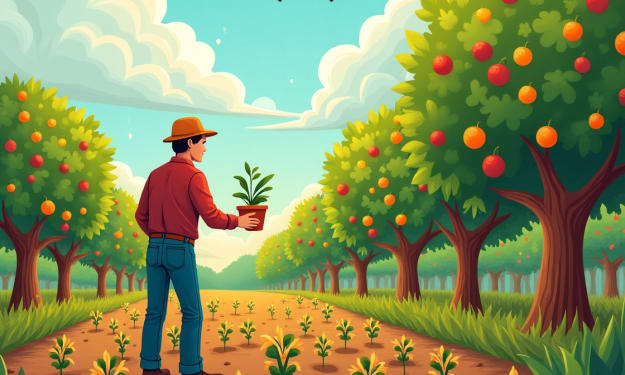
How Small Steps Build Big Success Success does not come overnight. It is built step by step, day by day, with patience and persistence. To understand this truth, let me tell you the story of a farmer named Kareem, whose life became an example of how patience changes everything.
By Wings of Time about a year ago in Earth
Blood Moon 2025: Total Lunar Eclipse on September 7 — A Celestial Spectacle You Can’t Miss. AI-Generated.
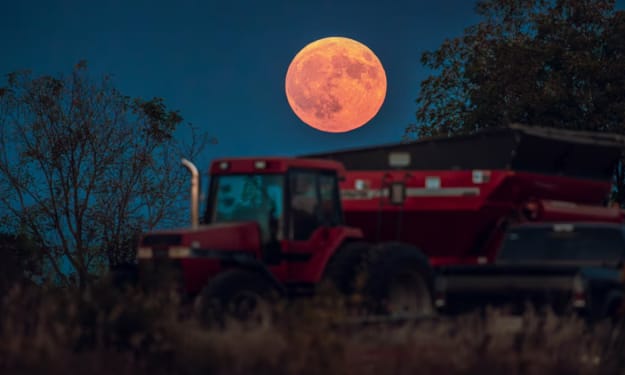
On the night of September 7, 2025, the world will pause to look upward. A rare astronomical spectacle — the Blood Moon, or total lunar eclipse — will paint the sky in shades of copper and crimson. For many, this isn’t just science; it’s a cosmic reminder of wonder, mystery, and connection.
By KAMRAN AHMADabout a year ago in Earth
Tornado Alley: Chasing America’s Most Violent Winds
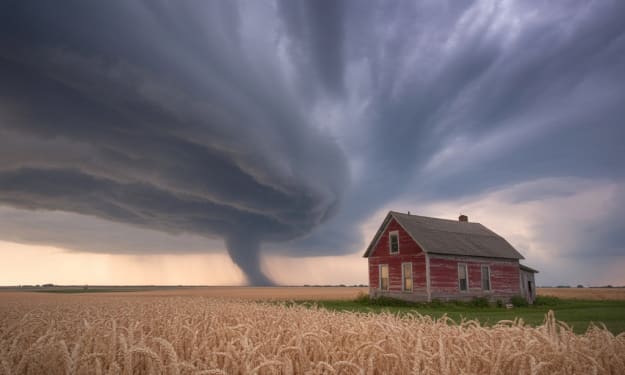
Few natural forces inspire both awe and terror quite like a tornado. These swirling giants of wind can flatten entire neighborhoods in minutes, leaving behind paths of destruction that stretch for miles. Nowhere are they more infamous than in the heart of the United States—a region nicknamed Tornado Alley.
By Echoes of Lifeabout a year ago in Earth
Climate Change and Our Responsibility . AI-Generated.
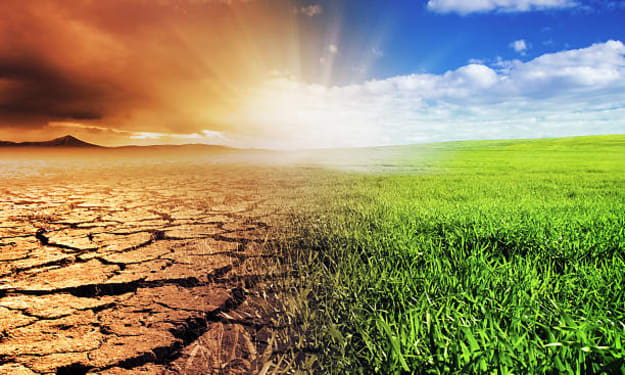
Climate change is one of the biggest challenges the world is facing today. It refers to the long-term changes in temperature, rainfall, and weather patterns on Earth. While these changes can happen naturally over hundreds or thousands of years, the pace at which they are happening now is not natural. Human activities, especially since the Industrial Revolution in the 18th century, have made the problem worse. The burning of fossil fuels like coal, oil, and gas has released large amounts of carbon dioxide (CO₂) and other greenhouse gases into the atmosphere. These gases trap heat, causing the Earth to warm up with faster rate than it should.
By Shah Fidaullah about a year ago in Earth
The Summer the Streets Melted
The first thing I remember about that July morning was the silence. Cities are rarely quiet, but the heat pressed down on every surface like a heavy blanket, smothering sound. Even the birds were missing, as though they had flown away in search of cooler skies.
By arsalan ahmadabout a year ago in Earth
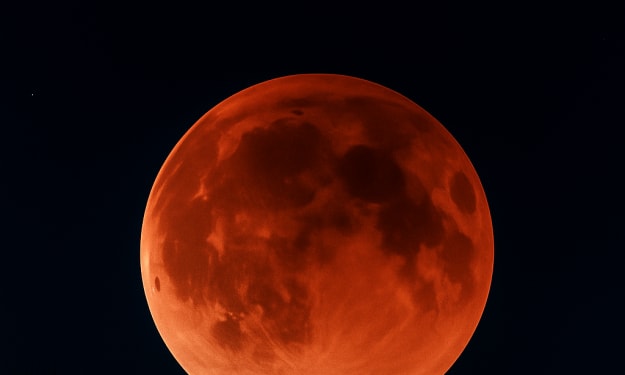
When the Moon Turned Red: Witnessing the Blood Moon of September 2025
On the night of September 7, 2025, I found myself gazing upward, waiting for the Moon to change. Slowly, as Earth aligned perfectly between the Sun and the Moon, our planet’s shadow crept across its glowing surface. The Moon dimmed, then deepened into a rich, coppery red.
By Ian Muneneabout a year ago in Earth
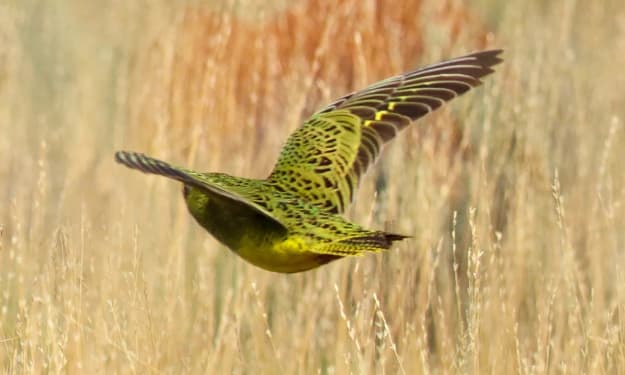
The Mysterious Night Parrot: From Extinction’s Shadow to Rediscovery
In the vast and often unforgiving landscapes of Australia, there lives a bird so elusive that for over a century it was believed extinct. The night parrot (Pezoporus occidentalis) is one of the world’s rarest and most mysterious birds, cloaked in secrecy and survival. Long hidden in the arid interior, its ghostly reputation made it a legend among ornithologists and bird enthusiasts alike.
By Briar Roseabout a year ago in Earth