Climate
Climate change and pollution
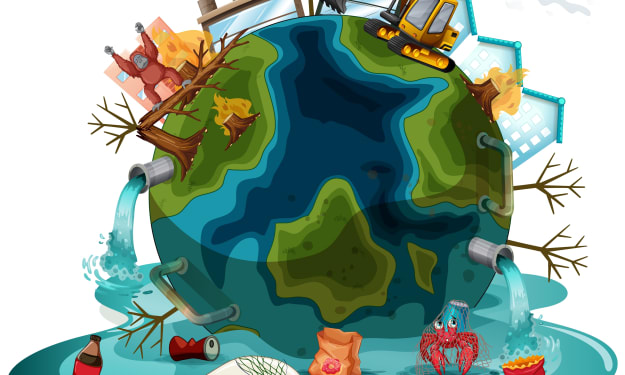
Air pollution and climate change: two sides of the same coin Erupting volcanoes, earthquakes, dust storms and meteorites smashing into the Earth’s crust are natural phenomena that can cause climate change and air pollution: dinosaurs may have met their end after a giant meteorite kicked up so much dust that it blocked out the sun for decades, reducing photosynthesis and preventing the growth of plants. Adding to these potential threats, we have also been contributing to air pollution and global warming through our resource-intensive lifestyles. We’re producing and consuming more than ever before, and we’re generating more greenhouse gases as a result, as well as air pollutants in the form of chemicals and particulate matter, including “black carbon”. Windmills Switching to renewable sources of energy is an important part of the solution to both climate change and air pollution. Photo Credit: hpgruesen/Wikimedia Commons Although they may seem to be two very different issues, climate change and air pollution are closely interlinked, so by reducing air pollution we also protect the climate. Air pollutants include more than just greenhouse gases—principally carbon dioxide but also methane, nitrous oxide and others—but there’s a big overlap: the two often interact with each other. For instance, air pollution in the form of particulate matter from diesel engines is circulated around the globe, ending up in the most remote places, including the polar regions. When it lands on ice and snow it darkens them slightly, leading to less sunlight being reflected back into space, and contributing to global warming. The slightly warmer temperatures encourage plants in the sub-Artic region to grow a tiny bit bigger, and as they grow through the snow they cast a shadow, which, when multiplied over millions of small plants, also has the effect of darkening the Earth’s surface, leading to further warming. The good news is that immediate changes to air pollution levels also have immediate effects. Quick action on reducing highly potent, short-lived climate pollutants - methane, tropospheric ozone, hydrofluorocarbons and black carbon—can significantly decrease the chances of triggering dangerous climate tipping points, like the irreversible release of carbon dioxide and methane from thawing Arctic permafrost. Although they may seem to be two very different issues, climate change and air pollution are closely interlinked, so by reducing air pollution we also protect the climate. Air pollutants include more than just greenhouse gases—principally carbon dioxide but also methane, nitrous oxide and others—but there’s a big overlap: the two often interact with each other. For instance, air pollution in the form of particulate matter from diesel engines is circulated around the globe, ending up in the most remote places, including the polar regions. When it lands on ice and snow it darkens them slightly, leading to less sunlight being reflected back into space, and contributing to global warming. The slightly warmer temperatures encourage plants in the sub-Artic region to grow a tiny bit bigger, and as they grow through the snow they cast a shadow, which, when multiplied over millions of small plants, also has the effect of darkening the Earth’s surface, leading to further warming. “When addressing air pollution, we also address a critical and easy-to-implement solution to climate change. Short-lived climate pollutants are negative in all senses, and we have proven technologies and policies to economically and immediately reduce air pollution,” says UN Environment climate change specialist Niklas Hagelber A recent concern is trichlorofluoromethane, or CFC-11, which is to be phased out worldwide under the Montreal Protocol, the global agreement to protect the ozone layer. The industrial gas, used illegally, for example, in insulation material, also contributes to global warming. Aerosols, the atmospheric pollutant with an effect on the climate The October 2018 report by the Inter-governmental Panel on Climate Change (IPCC) highlights the importance of keeping global temperature rises to 1.5˚C below pre-industrial era levels. Urgent action is need over the next 12 years if there is to be any chance of achieving this target. Aerosols may be of either natural or anthropogenic origin and can influence climate in several ways: “through both interactions that scatter and/or absorb radiation and through interactions with cloud microphysics and other cloud properties, or upon deposition on snow- or ice-covered surfaces thereby altering their albedo and contributing to climate feedback,” says the Panel’s report. It defines aerosols as “a suspension of airborne solid or liquid particles, with a typical size between a few nanometres and 10 μm that reside in the atmosphere for at least several hours.” The report defines air pollution as “degradation of air quality with negative effects on human health or the natural or built environment due to the introduction, by natural processes or human activity, into the atmosphere of substances (gases, aerosols) which have a direct (primary pollutants) or indirect (secondary pollutants) harmful effect.” Air pollution is the theme for World Environment Day on 5 June 2019. The quality of the air we breathe depends on the lifestyle choices we make every day. Learn more about how air pollution affects you, and what is being done to clean the air. What are you doing to reduce your emissions footprint and #BeatAirPollution? The 2019 World Environment Day is hosted by China.
By Waliyullahi Ganiyu3 years ago in Earth
Hope and Inspiration
Once upon a time in a small coastal town, there lived a young girl named Maya. She had grown up amidst the breathtaking beauty of the ocean and the vibrant life that surrounded it. The rhythmic sound of the waves crashing against the shore was like a lullaby that soothed her soul. However, as Maya grew older, she began to witness the devastating effects of climate change on her beloved coastal paradise. The once-teeming coral reefs were bleaching, their vibrant colors fading away like distant memories. The rising sea levels threatened to swallow the homes of her neighbors, forcing families to abandon the places they had called home for generations. Maya couldn't bear to see her community suffer, so she decided to take action. She started educating herself about climate change, attending workshops, and researching sustainable practices. With every bit of knowledge she gained, her determination grew stronger, fueled by a flicker of hope. Driven by her newfound purpose, Maya rallied her friends and neighbors together. They formed a small environmental group dedicated to making a difference. Together, they planted trees to combat deforestation, organized beach cleanups to protect marine life, and launched campaigns to raise awareness about the urgent need for action. Despite facing skepticism and indifference from some, Maya and her group refused to give up. Their passion and resilience became infectious, inspiring others to join their cause. Slowly but steadily, their efforts began to bear fruit. One day, a renowned marine biologist named Dr. Hernandez visited Maya's town. She was renowned for her groundbreaking research on coral reef restoration. Intrigued by the stories of Maya's community, Dr. Hernandez decided to offer her expertise and guidance. Under Dr. Hernandez's mentorship, Maya's group embarked on an ambitious project to restore the dying coral reefs. They tirelessly collected fragments of healthy coral, nurturing them in special tanks and carefully transplanting them onto damaged sections of the reef. It was painstaking work, but their determination never wavered. Months turned into years, and Maya watched as the reef gradually transformed. The once bleached and lifeless corals regained their colors, as marine creatures returned to their vibrant sanctuary. The community's hope soared, knowing that they had played a part in reviving their precious ecosystem. News of Maya's community's success spread far and wide, reaching people from distant lands who were also grappling with the effects of climate change. Inspired by their story, others started taking action in their own communities, creating a ripple effect of positive change across the globe. Maya's heart swelled with pride as she witnessed the collective power of individuals united by a shared purpose. Her small coastal town had become a beacon of hope, a shining example of what could be achieved when people refused to surrender to despair. The emotional journey of Maya and her community reminded the world that even in the face of immense challenges, there is always hope. It showed that the actions of a few can inspire and empower countless others to rise and make a positive difference. Through their unwavering dedication, Maya and her community had not only restored a reef but also reignited a flame of hope that burned brightly in the hearts of people around the world, fueling their determination to protect and heal our precious planet.
By Iweka Omagbu3 years ago in Earth