Climate
Unveiling the Microbial Marvels
In the grand theater of climate change mitigation, scientists and environmentalists often cast a spotlight on high-profile actors like renewable energy sources, carbon capture technologies, and reforestation efforts. Yet, in the shadowy wings, an ensemble of unsung heroes quietly works its magic: microbes. These microscopic organisms, inhabiting every corner of our planet, are emerging as unexpected champions in the ongoing battle against climate change. In this comprehensive exploration, we will delve deep into the remarkable world of microbes and unveil their astonishing contributions to mitigating climate change, all while shedding light on their potential applications in building a more sustainable future for our planet.
By asdasd asd3 years ago in Earth
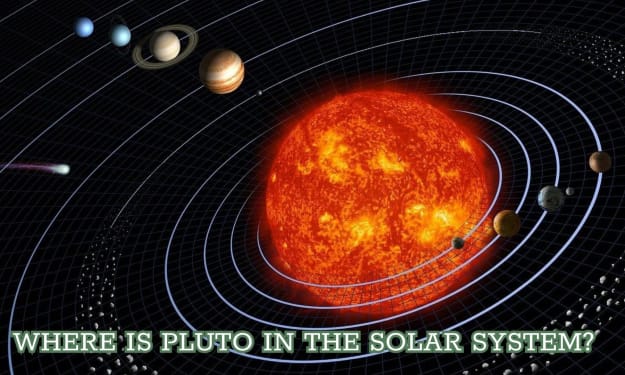
Where is Pluto in the solar system? Secrets of Pluto
I showcase the journey New Horizons took in order to get to Pluto, its moons, geological features, and Pluto's atmosphere. In 2015, the space community was abuzz with excitement as the New Horizons space probe flew by Pluto, providing us with unprecedented detail and fidelity of the dwarf planet and its moons. Prior to this, the best image we had of Pluto was a few blobs of color variation captured by the Hubble telescope. The New Horizons mission was part of NASA's New Frontiers program, and it was launched in 2006 with the goal of exploring Pluto as soon as possible. The spacecraft used Jupiter as a gravity assist to shave three years off its arrival time and also took remarkable videos and images of the planet and its moons during the trial run. After the successful trial, the spacecraft went into hibernation mode to prevent wear and tear of its instruments. Leading up to its approach in 2015, the team turned the systems back online, and every day, the spacecraft sent back images of the Pluto system. On July 14th, 2015, the New Horizons probe made its closest approach to Pluto at only 12,500 km from the surface of Pluto. The spacecraft sent back spectacular images of mountain ranges, ice plains, glaciers, and an atmosphere. One of the most interesting things observed was Pluto's unusual relationship with its moons. For example, Charon, Pluto's biggest moon, orbits very closely to Pluto and is also very big in comparison. This means that the barycentre of the two objects is outside of the primary object, and they both orbit around a point in space. Additionally, both objects are tidally locked to each other, which means that if you stand on one, the other won't move from that point in the sky.
By Saomai20033 years ago in Earth
Beneath the Smog
In the heart of the city, where the skyline touched the heavens, lay a neighborhood forgotten by progress. Here, amidst the towering factories and billowing smokestacks, lived the resilient residents of Westwood Heights, a predominantly African American community. They had forged a tight-knit bond over generations, but their connection ran deeper than shared history; it was cemented by an invisible enemy lurking in the air they breathed.
By Shamsu Anwaar Kassim3 years ago in Earth
A Harmonious Symphony
In the grand orchestration of the universe, Earth stands as a unique celestial composition, a precious celestial body graced with the symphony of life and nature. This delicate balance has been finely tuned over billions of years, fostering the growth and evolution of humanity. However, as the conductor of this remarkable ensemble, humanity faces the profound responsibility of preserving and nurturing this planetary masterpiece. Climate science, the conductor's baton in this epic performance, guides our understanding of the intricate interplay between Earth, humanity, and nature, unveiling both the harmony and discord that echo through our world.
By asdasd asd3 years ago in Earth
Eclipse of the Century: 'The Ring of Fire' - A Once-in-a-Lifetime Solar Spectacle in October 2023
The upcoming celestial events of two back-to-back eclipses are not to be missed. The first event will be an annual solar eclipse on 14 October 2023, which will sweep across North America, Central America, and most of South America. This eclipse will be visible from the United States after an absence of almost 11 years. The second event will be a partial lunar eclipse, visible from parts of Asia, Russia, Africa, Europe, Antarctica, and Oceania. This article provides every detail on how to watch the upcoming eclipses and witness the two most striking moments during an annular eclipse: the Ring of Fire and Bailey's beads I recommend that you read my articles and subscribe to experience the wonders of science.
By Ms. Hellena3 years ago in Earth
"The Language of Birds: Understanding Nature's Messengers"
Few animals in the wide natural world are as captivating to our imagination and admiration as birds. Humans have always been in awe of birds' beautiful flights, colorful plumage, and musical melodies. Beyond just being beautiful, birds have a unique language of their own, a fascinating and sophisticated system of communication that has fascinated poets, scientists, and bird lovers alike. In this article, we set out on a quest to decipher the secrets of birds' feathers, flights, and whistles in an effort to understand their unique communication methods.
By Misha story writer3 years ago in Earth
"Eco-Warriors: Protecting and Preserving our Natural World"
A group of committed people have emerged as the champions of nature, working diligently to conserve and preserve our natural world in a world confronting unprecedented environmental problems. These eco-warriors are ardent advocates and campaigners, not typical troops, who have made it their goal to stop the increasing threats to our planet. This article examines the experiences and initiatives of these eco-warriors, illuminating the critical role they play in preserving the environment for coming generations.
By Misha story writer3 years ago in Earth
Why Do Scientists Believe Most of the Universe Is Hidden?
The universe is full of mysteries, and one of the greatest is the nature of dark energy. The scientific explanation for the origin of the universe begins with the Big Bang, an explosion that caused space to expand. About 15 billion years ago, all the matter and energy that make up the observable universe today were packed into a space smaller than the head of a pin. The universe then exploded in a colossal event, and everything started expanding in all directions. However, scientists have discovered that the expansion of the universe is not uniform, with matter moving away from us more rapidly the farther it is. This unusual behavior is believed to be caused by dark energy, which remains a mystery. In this article, we will explore the concept of dark energy, including what it is, why scientists believe it exists, and what it means for our understanding of the universe. Our universe is more complex than it appears at first glance, and we have only begun to comprehend its structure in the last century. Before that, we thought the universe was just a single galaxy filled with stars, but astronomers began to suspect that there were other galaxies beyond our own. In the 1920s, American astronomer Edwin Hubble confirmed this idea by studying the Andromeda galaxy and measuring the distance to a Cepheid variable star within it. He discovered that the universe was expanding, which challenged even Einstein's understanding of physics. In this episode, we will delve deeper into these discoveries and explore some of the ways scientists are studying dark energy to unravel its secrets.
By Saomai20033 years ago in Earth