Climate
Why Water Is Essential for All Living Things
Introduction Often described as the elixir of life, water is essential for the survival of all living things on earth. Its importance goes beyond its daily use, because it plays a vital role in the existence and functioning of every organism, from the smallest microbe to large mammals. In this article, we explore the reasons why water is essential for the well-being and survival of all living things.
By Sarang Panhwar3 years ago in Earth
What is the science behind Eclipse?
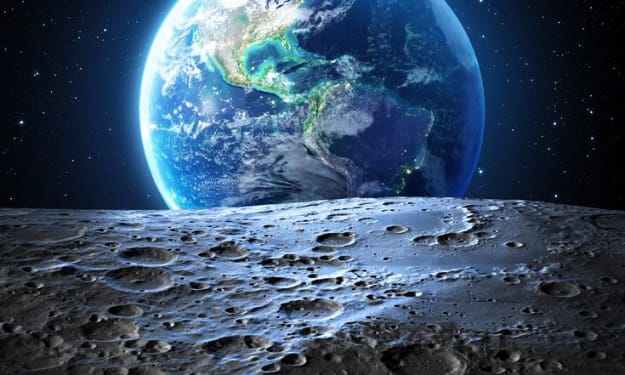
What is a lunar eclipse? The moon moves in an orbit around the earth. At the same time, the earth revolves around the sun. Sometimes the Earth moves between the Sun and the Moon. When this happens, the Earth blocks sunlight that normally reflects off the Moon. (That sunlight makes the Moon shine.) Instead of hitting the Moon and its surface, the Earth's shadow hits the Moon. This is a lunar eclipse or lunar eclipse. A lunar eclipse can only occur when the Moon is full.
By Sarang Panhwar3 years ago in Earth
Tackling the Tropospheric Trends: Reducing Ruminant Rumblings 🌍
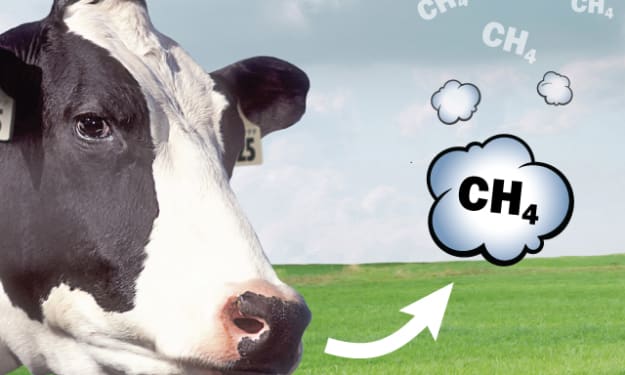
Cattle farming is a major source of methane emissions, a greenhouse gas that is warming the planet. With over 1.5 billion cows worldwide that each emit up to 220 pounds of methane per year through belching and flatulence, enteric methane from livestock accounts for about 4% of global greenhouse gas emissions. As the international community works to reduce global methane by 30% by 2030 through initiatives like the United Nations Global Methane Pledge, addressing methane from cattle is a key part of the climate solution. While reducing beef consumption would lower emissions, changing human diets on a global scale presents difficulties. Researchers are thus exploring diet-based solutions directly targeted at cattle to lower their methane output. One promising avenue being studied involves supplementing cattle feed with seaweed. The reason cattle produce large amounts of methane is due to their specialized digestion system. Their four-compartment stomach, particularly the largest one called the rumen, hosts microbes that break down tough plant fibers through enteric fermentation. This enzymatic process provides calories and nutrients to the cow but also generates methane as a byproduct. The cow then belches this methane, releasing it into the atmosphere. Methane emissions can be influenced by diet—foods like grass and hay that remain in the rumen longer tend to produce more methane than grains like corn. Researchers are thus investigating food additives that can tweak cattle diets to suppress methane-producing enzymes or microbes in the rumen. One such additive showing potent methane-reducing effects is a species of red seaweed. In 2018, a study led by Dr. Ermias Kebreab at UC Davis found that adding dried red seaweed to cattle feed slashed methane emissions by over 95% in Australian cows. In 2021, Kebreab's team successfully replicated these results in a live trial with dairy cows in California, observing an 82% decrease in methane. The key compound in this seaweed responsible for its anti-methane properties is bromoform, which suppresses the enzyme that generates methane during digestion. Remarkably, the seaweed does not negatively impact the cows' health, growth, or milk production. Other feed additives under investigation include fatty acids and extracts from plants like oregano and cinnamon bark. Fatty acids work by altering rumen microbes and limiting carbohydrate fermentation, while botanical essential oils may curb specific methane-producing bacteria. Kebreab notes seaweed has been the most potent additive identified so far. Its widespread cultivation also has environmental co-benefits, as seaweed farming does not compete for scarce resources like freshwater. Seaweed growth could aid in combating ocean acidification caused by rising carbon dioxide levels as well. While seaweed shows tremendous promise, scaling up its use faces logistical hurdles. Dried seaweed is heavy and transporting from subtropical farms to cattle operations in places like the continental U.S. risks negating emissions reductions through increased shipping. Packaging and distribution must be optimized to deliver seaweed economically. More research is also needed to assess if the bromoform compound could potentially impact cow or human health with long-term exposure. Additionally, a recent Australian study found the same seaweed variety only reduced cattle methane by under 30%, indicating effects may vary. No single solution will suffice, and a portfolio of options is required. Alternative feed additives are still in development. Genetic selection of cattle that naturally produce less methane is another potential avenue. Improving grazing land management practices and manure treatment can further lower outputs. Most importantly, reducing overconsumption of red meat through dietary shifts and supporting plant-based alternatives will significantly curb emissions. With continued innovation and global cooperation through initiatives like the UN Methane Pledge, scientists are working to deploy practical methane mitigation strategies on cattle farms worldwide one step at a time. The ultimate goal is developing robust solutions that protect both the climate and vital food production systems in a sustainable manner.
By Rakindu Perera3 years ago in Earth
The Changing Landscape of Solar Power in the United States 🔋 🇺🇸
America's relationship with solar power has evolved rapidly over the past decade. As leaders set ambitious climate goals and demand for renewable energy rises, utilities have scrambled to build utility-scale solar farms across vast stretches of open land. However, this approach has not been without controversy. In many rural regions, massive solar installations have disrupted fragile desert ecosystems and farmland. "Joshua trees are torn down to make way for solar projects," lament critics. As piles of bulldozed trees attest, projects have caused an uproar by altering plant and animal habitats on a large scale. Agriculture advocates also argue valuable farmland is being lost. Looking ahead, finding suitable land to build solar at the necessary scale remains a challenge. According to studies, over half of utility-scale solar facilities already utilize deserts. Another third occupy croplands, with the remaining facilities situated in grasslands and forests. Urban areas, accounting for just 2.5% of installations thus far, represent an untapped resource. Photovoltaics researcher Joshua Pearce has studied solar power for two decades. He believes parking lots could help address solar's land problem, if covered with canopies of solar panels. "There is an awful lot of parking lot space in the United States that we can take advantage of that's already essentially unused," notes Pearce. "It's wasted space except for parking underneath it. And it's not even used most of the time."Many US cities were designed decades ago prioritizing cars over other modes of transportation. As a result, parking lots cover over 5% of developed urban land nationwide. Repurposing these concrete jungles could generate significant solar capacity without disturbing natural habitats or farmland. France is already embracing this model. A 2023 policy will require outdoor parking lots with over 80 spaces to cover at least half their surface with solar panels. Officials estimate this could add the equivalent power of ten nuclear plants worth of solar. Most importantly, parking lot solar utilizes cleared space close to existing infrastructure and customers. The benefits don't stop at energy generation. Canopies provide valuable shade for overheating vehicles while covering from snow. On hot days, shaded asphalt could even help combat urban heat islands. However, significant obstacles remain for parking lot solar to take off in the US. Chiefly, canopies are much more expensive - 50% to 100% pricier - than ground-mounted farms. Their elevated design requires extra structural support and anchoring to withstand high winds. For companies to recoup this higher upfront investment, strong policies and electricity pricing are needed. To better understand solar canopies' economic potential, Pearce co-authored a 2017 study using Walmart Supercenters as a model. Surprisingly, the researchers found canopies could turn a profit even in lower sun areas like Michigan through selling power to the grid. At Walmart stores nationwide, canopy capacity was estimated at a massive 11.1 gigawatts - comparable to France's parking lot goal. Pairing canopies with rooftop panels at each location would likely generate more than enough electricity to power operations. Stores could also sell excess power to the local utility or act as anchors for community microgrids during outages. While canopies may not be practical everywhere, Pearce's work demonstrates their viability as renewable investments in the right high-flux, high-traffic locations. If more US companies and policymakers embrace the concept, parking lots represent untapped potential to meaningfully advance the nation's clean energy transition. By putting underused urban spaces to work generating hometown power, solar canopies offer a win-win approach balancing climate, economic and community needs. As the landscape of solar development continues evolving, parking lot installations deserve stronger consideration. With conscious planning, they could help address criticisms of sprawling desert and farm projects while bringing solar's benefits closer to the nearly 80% of Americans living in urban areas. By leveraging existing infrastructure in our cities, canopy solar points the way towards a renewable future defining new purpose in overlooked asphalt wastelands.
By Rakindu Perera3 years ago in Earth
THE WAY FORWARD FOR THE WORLD TO BE GRATE AGAIN.
The quest for worldwide harmony is an honorable and fundamental objective for mankind. In a world set apart by struggle, imbalance, and various difficulties, making a more tranquil world requires a multi-layered approach that tends to the underlying drivers of viciousness and advances collaboration, equity, and understanding. Here is an exhaustive arrangement for building a more quiet world:
By CHIBUEZE DONATUS3 years ago in Earth
The last dance of the snow leopard. Content Warning.
In the remote valleys of the Himalayas, where the world's highest peaks kiss the heavens and dense forests conceal the secrets of a thousand species, an extraordinary tale unfolds. It is a story of survival and loss, of resilience and fragility, and of a creature whose very existence dances on the edge of extinction. This is the story of the snow leopard, a magnificent and elusive species facing the wrath of climate change.
By Evuka Ozioma 3 years ago in Earth
10 FACTS ABOUT EARTH YOU DIDN'T KNOW ABOUT.
While we might think we know all there is to know about our home planet, the truth is that our Earth is full of astonishing mysteries yet to be fully unraveled by science. As we continue to explore the universe, our understanding of our own world evolves as well. Join us as we delve into ten captivating facts about our planet that might surprise you.
By Jeremiah “Jeremy” SEAL3 years ago in Earth
Climate change
"This report uncovered the devastating carelessness shown by this administration which has left England with higher bills, less steady employments, our energy security debilitated, and the environment crisis neglected," said Work's Shadow Environment and Net Zero Secretary Ed Miliband.
By Zizi sheikh 3 years ago in Earth