Climate
Why the Dutch Embrace Floating Homes: Living on Water in a Changing World. AI-Generated.
In a country where much of the land lies below sea level, the Dutch have developed a unique relationship with water. The Netherlands, famous for its picturesque canals, windmills, and tulip fields, faces constant threats from floods and rising sea levels. In response, floating homes — or “drijvende huizen” — have emerged as a practical, sustainable, and even stylish solution. These homes, gently resting on water, are no longer just a niche idea; they are a reflection of Dutch ingenuity, resilience, and lifestyle innovation.
By Ayesha Lashari8 months ago in Earth
Polar Vortex Collapse Forecast. AI-Generated.
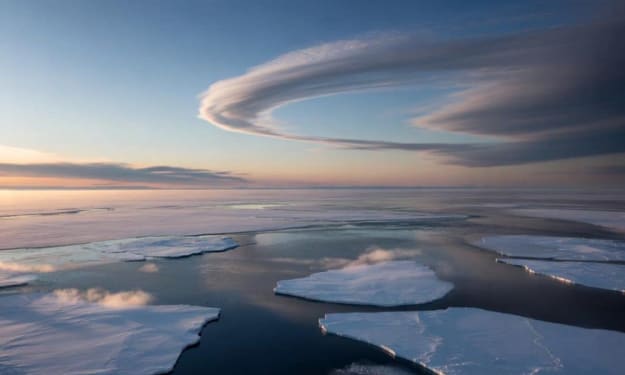
Every winter, the polar vortex quietly controls much of the weather across the Northern Hemisphere. Most people only hear about it when extreme cold suddenly sweeps into places like North America or Europe. Recently, scientists and meteorologists have begun forecasting conditions that suggest a possible polar vortex collapse, a major atmospheric disruption that could lead to unusual and prolonged winter weather.
By Sajida Sikandar8 months ago in Earth
The Invisible Grid Build-out
by Futoshi Tachino Why this is under-the-radar progress Everyone talks about how slow it is to build new transmission lines. Less noticed is how much capacity is being freed — right now — on the wires we already have. Three families of “grid-enhancing technologies” (GETs) are scaling fast: (1) advanced reconductoring with modern high-performance conductors that can double capacity within existing rights-of-way; (2) dynamic and ambient-adjusted line ratings (DLR/AAR) that raise safe operating limits based on real weather, not worst-case assumptions; and (3) power-flow control, topology optimization, and other software tools that route power away from bottlenecks to under-used lines. Together, these are connecting more renewables, cutting curtailment and congestion, and buying precious time while big new lines are planned and built [1–3,13–14].
By Futoshi Tachino8 months ago in Earth
Full Moon Snow Moon. AI-Generated.
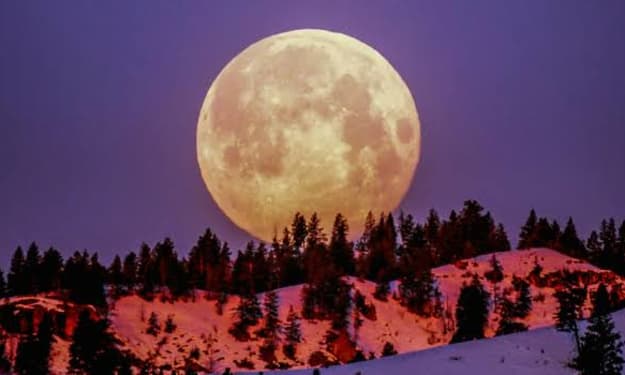
On cold winter nights, when the air feels sharper and the sky appears unusually clear, the Moon often seems brighter and more commanding than at any other time of year. One of the most evocative lunar events of winter is the full moon Snow Moon, a name that carries both astronomical meaning and deep cultural history. Beyond its poetic title, the Snow Moon invites people to look up, reflect on the rhythms of nature, and ask timeless questions—like what planet is next to the moon tonight? This article explores the origins, science, and quiet magic of the Snow Moon, while also explaining why the Moon sometimes appears to travel with a bright planetary companion. --- What Is the Full Moon Snow Moon? The full moon Snow Moon is the traditional name given to the full Moon that occurs in February. The name originates from Indigenous tribes of North America, particularly the Algonquin people, who tracked time through lunar cycles rather than modern calendars. February was historically the snowiest month in many regions, making travel and hunting difficult. As a result, the Moon that rose during this period became known as the Snow Moon. Over time, these lunar names were preserved in farming almanacs and passed into popular culture. While the Snow Moon does not look physically different from other full Moons, its seasonal context gives it a distinct identity. Astronomically speaking, a full Moon occurs when the Moon is positioned opposite the Sun, with Earth in between. This alignment allows the Moon’s face to be fully illuminated, creating the bright, round disk visible throughout the night. --- Why the Snow Moon Feels Brighter Many skywatchers notice that winter full Moons seem especially luminous. This is not just imagination. During winter months in the Northern Hemisphere, the Moon’s path across the sky is higher and longer, allowing it to stay visible for extended periods. Cold air also tends to be clearer and drier, reducing atmospheric distortion. When snow blankets the ground, it reflects moonlight, amplifying brightness and giving landscapes a soft, glowing appearance. Under a Snow Moon, even familiar surroundings can feel transformed—quiet, reflective, and slightly otherworldly. --- Cultural Meanings of the Snow Moon Across cultures, the Snow Moon has symbolized endurance, patience, and preparation. In traditional communities, February was a time of scarcity, when stored food ran low and survival depended on resilience. The Moon served as a reminder that winter, no matter how harsh, was temporary. In modern interpretations, the Snow Moon is often associated with introspection. It marks a midpoint between the start of the year and the arrival of spring, encouraging people to pause, reassess goals, and conserve energy before renewal begins. --- What Planet Is Next to the Moon Tonight? One of the most common questions during any full Moon event is: what planet is next to the moon tonight? The answer depends on timing, location, and the movements of planets along the ecliptic—the same path the Sun and Moon follow across the sky. The Moon frequently appears near bright planets because they all orbit within roughly the same plane. The most common planetary companions include: Venus, often the brightest object in the night sky after the Moon. When nearby, it shines with a steady, white glow. Jupiter, large and luminous, sometimes appearing as a brilliant point close to the Moon. Saturn, softer and golden in tone, often visible when skies are clear. Mars, identifiable by its reddish hue, though it is dimmer than Venus or Jupiter. These close visual pairings are known as conjunctions. They are not signs that the Moon and planet are physically close in space, but rather that they appear near each other from Earth’s perspective. If you’re curious about what planet is next to the Moon on a specific night, astronomy apps, star charts, or local sky guides can provide accurate, up-to-date answers based on your location. --- The Snow Moon and Stargazing The Snow Moon offers an excellent opportunity for casual stargazing. While the brightness of a full Moon can wash out faint stars, it enhances visibility of brighter objects like planets and constellations. During February evenings, constellations such as Orion, Taurus, and Gemini often dominate the sky. When a planet appears near the Moon, it becomes easier for beginners to identify celestial bodies without telescopes or advanced equipment. Even a few minutes of quiet observation can reconnect people with the natural world, especially during winter when outdoor experiences are limited. --- Scientific Significance Without the Hype It’s important to note that the Snow Moon does not exert unusual physical effects on Earth beyond the normal gravitational influence shared by all full Moons. Tides, for example, behave as expected during any full Moon phase. What makes the Snow Moon special is not scientific rarity, but human perspective. Its timing during the depth of winter gives it emotional and symbolic weight that resonates across generations. --- A Moment to Look Up In a fast-moving digital world, the full moon Snow Moon offers a quiet pause. It doesn’t demand attention with dramatic events or rare alignments. Instead, it invites stillness. Whether you notice a bright planet nearby and wonder what planet is next to the moon tonight, or simply admire its glow against a cold sky, the Snow Moon reminds us that some of the most meaningful experiences are also the simplest. As winter continues and spring slowly approaches, this lunar moment stands as a gentle marker of time—steady, reliable, and beautifully unchanged.
By Saboor Brohi 8 months ago in Earth