Climate
"Echoes of the Past":
In the year 2150, the world is unrecognizable. Cities lie abandoned, reclaimed by nature's relentless advance. The air is thick with regret, heavy with the burden of hindsight. Amidst the ruins, a young woman named Maya uncovers a hidden archive, a time capsule from the early 21st century. Inside, she finds letters, journals, and scientific reports detailing the warnings ignored, the opportunities missed. As Maya reads, she feels a deep ache in her chest, a sorrow for the world that once was and a rage at the shortsightedness of those who came before. She reads about the fierce debates over climate change, the political inaction, the relentless pursuit of profit at the expense of the planet. But amidst the despair, Maya also finds hope. She reads about the grassroots movements, the activists who fought tirelessly for change, the innovations that could have saved the planet if only they had been embraced sooner. Inspired by these stories, Maya sets out to honor the past by changing the future. She joins a group of environmentalists working to restore the planet, planting trees, cleaning up oceans, and advocating for sustainable living. As she works, Maya feels a sense of purpose she has never known before. She feels connected to the past, to the people who fought so hard for the world she now fights for. And though the road ahead is long and uncertain, Maya knows that as long as there are those who remember, there is always hope for a better tomorrow.As Maya delves deeper into the archive, she discovers a personal connection to the past. She finds a diary written by her great-grandmother, Sarah, who lived through the early stages of the environmental crisis. In Sarah's words, Maya learns about the world before the drastic changes took place. She reads about the lush forests, the clear rivers, and the diverse wildlife that once thrived. Sarah's diary also recounts the growing awareness of environmental issues and the initial efforts to address them. But as Maya reads on, she feels a growing sense of dread. Sarah writes about the increasing severity of natural disasters, the loss of biodiversity, and the struggles of communities around the world. Maya realizes that the warnings were there all along, but they were ignored, dismissed as exaggerated or inconvenient. Through Sarah's eyes, Maya witnesses the mistakes of the past unfold in heartbreaking detail. She sees the opportunities for change that were squandered, the technologies that could have made a difference if only they had been developed sooner. But amidst the despair, Maya finds a glimmer of hope. She reads about the resilience of communities, the power of grassroots movements, and the innovative solutions that emerged in the face of crisis. Maya realizes that the same spirit that drove her great-grandmother to fight for a better world lives on in her. With renewed determination, Maya joins forces with others who share her vision. Together, they work to build a future where the mistakes of the past are not repeated, where the echoes of history serve as a guide rather than a warning. And as they plant trees, restore habitats, and advocate for change, Maya knows that she is not just fighting for the future, but also honoring the past.Maya's journey of discovery takes her to places both physical and emotional. She visits the sites where pivotal events of the past occurred, standing in awe at the stark contrast between what was and what is. She sees the remnants of once-great cities, now reclaimed by nature, and the haunting beauty of landscapes forever altered by human hands. As she travels, Maya meets others who, like her, are driven by a desire to learn from the past and change the future. She meets scientists who are developing new technologies to mitigate the effects of climate change, activists who are advocating for policy changes at the highest levels, and ordinary people who are making small but meaningful changes in their daily lives. But Maya also encounters resistance. There are those who deny the reality of climate change, who cling to the old ways despite overwhelming evidence of their failure. Maya feels a deep frustration at their willful ignorance, but she also understands that change is never easy, especially when it requires us to confront uncomfortable truths about ourselves. Despite the challenges, Maya remains steadfast in her resolve. She knows that the future of the planet depends on the actions we take today, and she is determined to do her part. And as she looks to the horizon, she sees not just a world in crisis, but also a world full of possibility, a world where the echoes of the past can be transformed into a chorus of hope for generations to come.Maya's journey into the past leads her to a small coastal town that once thrived on fishing. She walks along the deserted docks, imagining the bustling activity that once filled the air. In the town's abandoned library, Maya discovers old records and photographs that depict a time when the sea was teeming with life, when fishermen brought in bountiful catches day after day.But as Maya reads on, she learns of the signs of trouble that were ignored. Fishermen reported dwindling catches, scientists warned of overfishing and habitat destruction, but economic interests prevailed over environmental concerns. The town's decline began slowly, almost imperceptibly, until one day, the fish were gone, and with them, the livelihoods of the people who depended on them.As Maya reads these stories, she feels a deep sense of sadness for the people who once called this place home. She imagines their struggles, their hopes, and their dreams for the future that were dashed by forces beyond their control. But she also feels a sense of kinship with them, knowing that their story is not so different from the stories of countless communities around the world that have been devastated by environmental change.Determined to honor the memory of the town's residents, Maya joins forces with a group of local activists who are working to restore the health of the ocean. Together, they plant seagrass beds, create marine protected areas, and advocate for sustainable fishing practices. As they work, Maya feels a sense of connection to the past, knowing that the actions they take today will shape the future for generations to come.But Maya's journey is not just about the past; it is also about the future. Along the way, she meets a young girl named Lila, whose passion for the ocean mirrors Maya's own. Together, they form a bond that transcends generations, united in their commitment to protecting the planet they love.As Maya and Lila work side by side, they become a beacon of hope for their community. They show that change is possible, that the mistakes of the past can be learned from, and that by working together, we can create a future where humans and nature thrive in harmony.And as Maya looks out at the vast expanse of the ocean, she knows that her journey is far from over. There is still much work to be done, many challenges to overcome. But she also knows that as long as there are people like her and Lila, who are willing to fight for what they believe in, there is always hope for a better tomorrow.
By Campbell Williams3 years ago in Earth
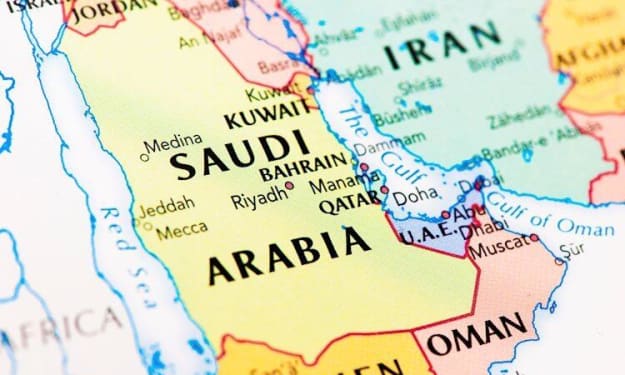
Saudi Arabia's AI Revolution: Unleashing Risk Appetite And Financial Power
As the Saudi Public Investment Fund (PIF) marches towards an impressive $1 trillion by 2025, it solidifies its position as a major player in global investments, particularly in transformative tech. PIF, guided by Crown Prince Mohammed Bin Salman (MBS), is the 5th largest Sovereign Wealth Fund in the world, with $926 billion in assets (SWFI). Please note that only 3 weeks ago PIF had $676 billion at his disposal. PIF is the main financial vehicle to execute the Crown Prince's Vision 2030, a transformative initiative designed to diversify Saudi Arabia's economy, generate employment, and prosperity for its youthful population (80 percent of which is younger than 35). PIF is investing in sports, AI, tourism, clean energy, smart cities, and floating industrial towns.
By Andrea Zanon3 years ago in Earth
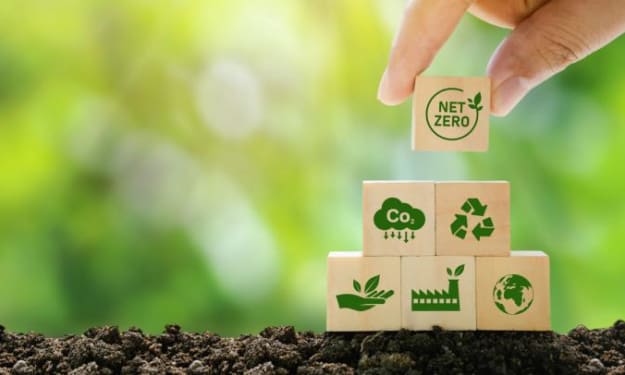
The balancing act of oil and clean energy investment
Last year, both the United States and Canada have increased their oil and gas production, reaching record targets and profits. In fact, in December 2023, the U.S. became the largest oil producer globally, with 13.5 million barrels of oil produced per day (BPD). In early 2024, Canada produced 4.9 million barrels per day, becoming the fourth-largest oil producer behind the U.S., Saudi Arabia, and Russia. Both countries are expected to hit new records in 2024, with 14 million bpd and 5.4 million bpd, respectively.
By Andrea Zanon3 years ago in Earth
Embarking on a Weather Observation Journey
In the hustle and bustle of daily life, it's easy to overlook the subtle changes happening in the world around us. Yet, amidst the chaos, lies an opportunity for discovery and connection with nature. One such avenue is keeping a weather journal—a simple yet enriching practice that allows adults to reconnect with the natural rhythms of the environment.
By Sanjana Dixit3 years ago in Earth
Can Saudi Arabia buy the future? A trillion bet on tech
It is well known that Saudi Arabia's Public Investment Fund (PIF) aims to become a 1 trillion-dollar fund by 2025. To reach this goal, Saudi Arabia transferred a $164 billion stake in Aramco to PIF, propelling it to the second-biggest fund in the Middle East. Just a few months ago PIF had $670 billion of asset under management.
By Andrea Zanon3 years ago in Earth
CLIMATIC CHANGE
In the ongoing discourse surrounding the climate crisis, it's crucial to move beyond the mere figures and statistics. While these numbers serve as important indicators, they fail to capture the true essence of what's at stake: human lives and well-being. Among those most profoundly impacted are our children and youth, scattered across the globe.
By BAAFOUR NANA AKOTO NTI aka BAA(4)3 years ago in Earth
Echoes of Resilience: A Symphony of Nature's Cry for Help
In a curious town settled between moving slopes and rich woods, there carried on with a little kid named Elara. She had consistently felt a profound association with nature, tracking down comfort in the murmurs of the breeze and the delicate stir of leaves. In any case, recently, those murmurs appeared to convey an alternate tone — a sad request for help that pulled at Elara's heartstrings.
By MD ALEXENDER3 years ago in Earth
Why the 2024 Solar Eclipse is Such a Big Deal. Content Warning.
The 2024 solar eclipse is highly anticipated due to its remarkable cosmic alignment, involving the Sun, Earth, and Moon. Despite the vast disparity in size between the Sun and Moon, a fortuitous celestial coincidence allows them to appear almost identical in size from Earth's perspective. As a result, when the Moon passes directly between the Sun and Earth, it creates a solar eclipse, an awe-inspiring event that captivates observers worldwide.
By Tehmas Anjum3 years ago in Earth
Global Warming
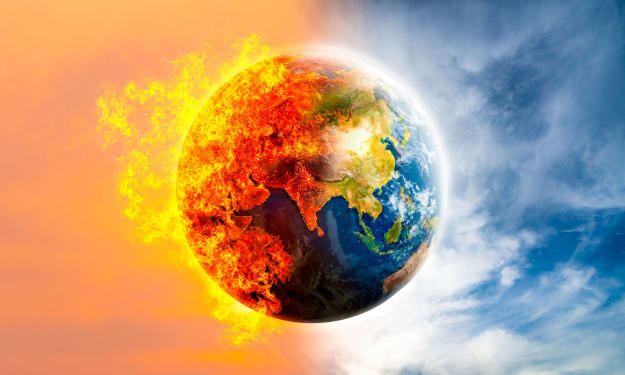
The Earth's climate has exhibited a dynamic pattern of change over a vast timescale of 2.5 million years, characterized by cyclical shifts between ice ages and warmer interglacial periods. These natural fluctuations have been essential components of the planet's environmental history, shaping ecosystems and geological landscapes. However, the recent century has witnessed a remarkable departure from this historical norm, marked by a rapid and unprecedented rise in global temperatures by approximately 1.2 to 1.4 degrees Fahrenheit, a phenomenon widely recognized as global warming.
By Sanjana Dixit3 years ago in Earth