Climate
Poisoned Waters
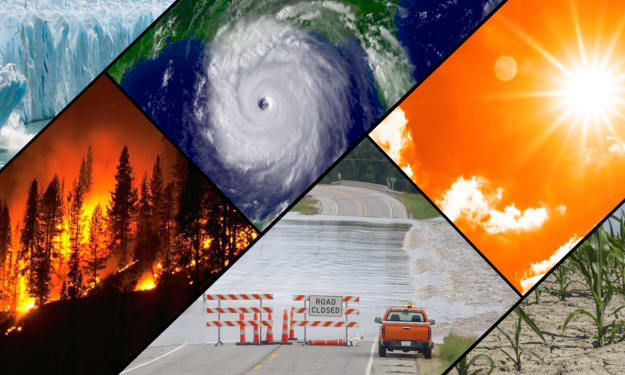
America's waterways are facing a grave threat. Both Puget Sound and the Chesapeake Bay are experiencing alarmingly high levels of pollution. The primary culprit behind this pollution is industrial waste from agriculture, which poses a significant danger to both wildlife and human health. The situation in the Chesapeake Bay is particularly concerning, with far-reaching implications. Larry Sims, an experienced waterman, has witnessed the bay's deteriorating health over the course of six decades. The decline in the crab catch, which has plummeted by over 50% in just 25 years, has had a profound impact on the traditional way of life for watermen. Pollution is causing the emergence of dead zones in bodies of water across the globe. These oxygen-deprived areas are responsible for the death of countless fish, crabs, and oysters, and their frequency and size are rapidly increasing on a global scale. Furthermore, pollution is also negatively affecting human health and recreational activities, leading to the closure of numerous beaches due to contamination.
By Isaac Ekow Anyidoho2 years ago in Earth
The 2010s Were a Waste for Scientific Discovery—Or Were They?
The last decade was undeniably one of the richest periods of scientific discovery ever. Researchers across all disciplines tested hypotheses, found proofs, and visited places that have made us rethink our understanding of not only our own planet but of the entire universe. It was the decade when we finally began to understand one of the greatest challenges humankind has ever faced, and we've learned far more than ever before about some of the most destructive objects in existence. Let's take a look at five of the most amazing scientific discoveries of the 2010s.
By Mojalefa Mokoena2 years ago in Earth
Climate and Environment in the UK
Climate and Environment in the UK: Navigating Challenges in 2023 The United Kingdom continues to grapple with pressing climate and environmental issues as it strives to meet ambitious targets amid global challenges. As we enter 2023, the landscape of policies, initiatives, and concerns surrounding climate change and environmental sustainability in the UK remains dynamic and critical.
By Michael Donald 2 years ago in Earth
The Summer Solstice: Significance and Impact
The **Summer Solstice** is a pivotal astronomical event that marks the longest day of the year. Its occurrence plays a crucial role in Earth's climatic patterns and holds significant cultural importance across various societies.
By Kingsley Egeke2 years ago in Earth
"Mysteries of the Deep"
In the remote reaches of the Pacific Ocean, where sunlight struggles to penetrate the depths and the ocean floor remains largely unexplored, a team of marine archaeologists embarked on a daring expedition aboard the state-of-the-art submersible vessel, Neptune's Quest. Leading the expedition was Dr. Emily Hayes, a renowned oceanographer with a passion for uncovering secrets hidden beneath the waves. For years, she had studied ancient maps, folklore, and satellite data, piecing together clues that pointed to the existence of a lost city submerged beneath the ocean abyss. As Neptune's Quest descended into the murky depths, tension aboard the vessel was palpable. The crew monitored sonar readings and navigated through labyrinthine underwater canyons, following a trail of anomalies that hinted at something extraordinary lying in wait. Suddenly, the sonar pinged with unprecedented intensity, signaling a massive structure looming ahead. Dr. Hayes held her breath as the submersible's floodlights illuminated towering pillars and intricate carvings obscured by centuries of silt and marine life. "We've found it," she whispered, her voice echoing through the submersible's cockpit. The lost city, now dubbed Atlantis by the crew, stretched across an expansive underwater plateau. Buildings crafted from stone and coral rose from the seabed like ancient sentinels, their architecture hinting at a civilization lost to time. Streets lined with toppled statues and crumbling monuments painted a poignant picture of a once-thriving society. As the expedition progressed, each dive brought new revelations. Artifacts recovered from the ocean floor—ceramic vessels, ornate jewelry, and tools intricately carved from obsidian—spoke of a culture steeped in artistry and innovation. Hieroglyphs etched into stone tablets hinted at a language waiting to be deciphered, offering tantalizing glimpses into Atlantis's rich history. Yet, amidst the marvels lay mysteries that defied explanation. An enormous stone structure, dubbed the "Temple of the Tides," stood at the city's heart, its purpose and significance shrouded in speculation. Murals depicting celestial alignments and mythical creatures adorned its walls, raising questions about Atlantis's spiritual beliefs and cosmological understanding. As news of the discovery spread, the scientific community buzzed with excitement. Dr. Hayes and her team collaborated with linguists, geologists, and anthropologists from around the world, pooling their expertise to unravel Atlantis's enigmatic past. But the expedition was not without its challenges. The harsh underwater environment tested the limits of Neptune's Quest, while unexpected currents and predatory marine life posed constant threats. Yet, fueled by their passion for discovery, the crew pressed on, driven by the desire to unearth Atlantis's secrets before the ocean reclaimed its treasures once more. Months turned into years as Dr. Hayes and her team painstakingly documented every artifact, mapped every structure, and pieced together the puzzle of Atlantis. The lost city became a beacon of hope and inspiration, a testament to human curiosity and the boundless depths of Earth's mysteries. In a poignant moment of reflection, Dr. Hayes stood on the deck of Neptune's Quest, gazing out at the vast expanse of the ocean. Atlantis lay beneath her, its secrets laid bare yet its mysteries lingering in the depths. She knew that their discovery was not just a triumph of science, but a reminder of the fragility and resilience of civilizations lost and found. As the sun set over the horizon, casting a golden glow across the waves, Dr. Hayes whispered a silent vow to continue exploring, to continue pushing the boundaries of knowledge, and to honor the legacy of Atlantis—the lost city that had captured the world's imagination and rewritten history books forever.
By Dharanidharan T 2 years ago in Earth
The Silent Desperation of Climate Refugees
In a world increasingly besieged by the impacts of climate change, one of the most heart-wrenching issues we face is the plight of climate refugees. These individuals and families, driven from their homes by the relentless advance of environmental degradation, represent a poignant and often overlooked human dimension of the global climate crisis.
By Gerald Okoye2 years ago in Earth
Brace for Impact: How to Survive an Asteroid Apocalypse
Picture this: You're chillin' 66 million years ago during the late Cretaceous Period. Dinosaurs are the ultimate party animals, with T-Rexes chasing Triceratops for sport and the Apatosaurus towering over Texas like the world's first skyscraper. Meanwhile, the Ankylosaurs, the OG armored tank, is swinging its tail like it's auditioning for a wrecking crew.
By Mojalefa Mokoena2 years ago in Earth
How the Tortoise Got His Shell
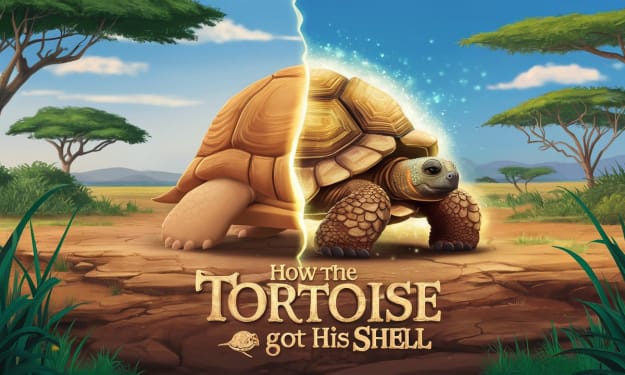
In the heart of Africa, long before humans roamed the savannah, the animals lived in harmony under the rule of King Lion. Among these animals was Tortoise, known for his cleverness and wit but also for his fragile, unprotected body. Tortoise, without the shell he is known for today, was soft-skinned and vulnerable, yet his mind was sharp and resourceful.
By Tinyiko Shitlhangu2 years ago in Earth