Climate
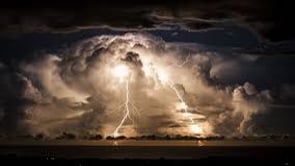
Following Saturday's storms that tore through Greater Cincinnati, some 8,000 people are without power.
Updated at 8 p.m. While severe thunderstorm watches are still in place for seven Greater Cincinnati counties through midnight on Saturday, severe storm warnings are being permitted to expire.
By Billy Williams2 years ago in Earth
Baffling phenomena of the natural world
A tapestry of marvels, the natural world is woven with fascinating patterns and perplexing occurrences that have long captured the human mind. This tapestry also contains a lot of mysteries. Our globe is a treasure mine of inexplicable wonders that continue to test our knowledge and stimulate our interest. These marvels may be found anywhere on our planet, from the depths of the underwater world to the heights of the mountains.
By victor archibong2 years ago in Earth
Scary sounds in space
An Investigation into the Chilling Sounds of Other Universes It is common to portray space, which is considered to be the last frontier, as a nothingness that is quiet and where no one can hear you scream. On the other hand, this is not a completely correct statement. We now have access to some of the most horrifying and awe-inspiring noises that come from the depths of the cosmos, and this is all because to the progress that has been made in technology and the inventiveness of scientists working for NASA.
By victor archibong2 years ago in Earth
Why Uranus and Neptune swapped places
Uranus and Neptune, the two planets in our solar system that are located at the furthest reaches of the solar system, are believed to have moved about at some point in the past. This incredible event has piqued the curiosity of both astronomers and scientists due to the fact that it provides significant new insights into the evolution of our solar system. Within the scope of this study, we will investigate the factors that lead to this remarkable event, as well as the implications that it has for our understanding of planetary migration.
By victor archibong2 years ago in Earth
30+ Fantastic 'What If' Scenarios You Never Thought About
30+ Fabulous 'Consider the possibility that' Situations You Won't ever ponder In the domain of creative mind, 'consider the possibility that' situations fuel imagination, interest, and examination. They permit us to investigate elective real factors and contemplate the potential outcomes of various results. Here, we dive into more than 30 interesting 'imagine a scenario in which' situations that stretch the limits of our ordinary reasoning.
By robail shahzadi2 years ago in Earth
Why Cars Are Evil
Owning a car can make for a nice luxury. It’s private and more freeing than the alternatives, and to live in some cities, it’s all but a necessity that you have one to get around in. This article is not meant to criticize individuals for owning cars. It’s often the best decision for them. However, if one could design a city to be car-centric versus having well-developed public transportation, there’s no question that the latter is a much better aim than the former. By every conceivable metric, cars extract an unnecessary cost when compared to the alternative.
By Martin Vidal2 years ago in Earth
The last tree
The village of Verde lay nestled in a valley that once boasted lush forests and flowing rivers. But those days were long gone. Deforestation and climate change had turned the land into a dry, barren place, with only one tree remaining—a towering oak that stood as a lone sentinel against the relentless march of time and environmental decay. Twelve-year-old asha had grown up hearing stories from her grandmother about the forest that used to thrive around Verde. The oak tree, known as the Guardian, was the last of its kind, a relic from a bygone era when nature and humanity coexisted in harmony. Every day after school, Asha would visit the Guardian. She felt a deep connection to the tree, often sitting beneath its sprawling branches to read or simply to think. It was her sanctuary, a place where she could escape the harsh reality of a world plagued by environmental degradation. One particularly dry summer, Asha noticed the Guardian's leaves were turning yellow and brittle. Panic gripped her heart. She rushed home to her grandmother, the village's unofficial historian and storyteller. "Grandma, the Guardian is dying," Asha said, her voice trembling. Her grandmother's face grew somber. She had feared this day would come. "The land is thirsty, child. The climate is changing, and the rains are not coming as they used to. The Guardian is struggling to survive." Asha refused to accept this fate. "There must be something we can do," she insisted. Her grandmother thought for a moment, then nodded. "There might be a way. The tree needs water, and not just any water, but the purest we can find. We must create a system to bring water from the distant mountains where streams still flow." Asha's eyes sparkled with determination. "I'll do it, Grandma. I'll save the Guardian." With the help of her grandmother and some villagers who still remembered the old ways, Asha began constructing a simple irrigation system. They used bamboo and clay pipes to channel water from the mountains to the village. It was hard work, and the scorching sun made the task even more challenging, but Asha's determination never wavered. The village was initially skeptical. "It's just a tree," some said. "What difference can one tree make?" But as they saw Asha's unwavering dedication, more villagers joined the effort, bringing their skills and labor to the project. Finally, after weeks of relentless work, the system was complete. Water trickled down from the mountains, flowing through the pipes and into a makeshift reservoir near the Guardian. Asha carefully watered the tree, her heart filled with hope. The change was not immediate, but slowly, the Guardian began to show signs of recovery. New leaves sprouted, green and vibrant. The tree seemed to stand taller, its branches spreading wide as if embracing the sky. The villagers, inspired by the tree's resilience and Asha's determination, started planting new trees around the Guardian, using the irrigation system to nurture them. As the years passed, the once-barren valley began to transform. New trees took root and flourished, and the air grew cooler and cleaner. Wildlife returned, drawn by the renewed habitat. The Guardian stood at the center of it all, a symbol of hope and a testament to what could be achieved through collective effort and a deep respect for nature. Asha, now a young woman, often sat beneath the Guardian with her own children, telling them the story of how the last tree had almost died and how the village had saved it. The tree had given them more than just shade and fruit; it had given them a reason to believe in the future. In the end, the Guardian was not just the last tree—it was the first of many in a reborn forest, a living reminder of the power of hope, community, and the enduring bond between humanity and the environment.ha
By Anthony mutafela 2 years ago in Earth
The Dramatic Battle for Climate Justice and Equity. AI-Generated.
Friends, Romans, countrymen, lend me your ears—no, seriously, stop scrolling through TikTok for a second and pay attention because we need to talk about something more pressing than the latest celebrity Twitter feud. I'm talking about climate justice and equity. Yes, I know, that sounds about as thrilling as a tax audit, but stick with me here because we’re diving into the wild world of environmental justice, where the stakes are higher than who gets the final rose on "The Bachelor."
By ScienceStyled2 years ago in Earth
10 interesting facts about planet Earth that you may not have known . AI-Generated.
Millions of people around the world celebrate International Earth Day today, with which the United Nations wants to raise awareness about the importance of preserving our planet's natural resources and facing the challenges of climate change. The date chosen by the UN to honor the Earth recalls the events of April 22, 1970, when 20 million people took to the streets of major cities in the United States to protest the damage that human activities were causing to the Earth. environment. On the occasion of Earth Day, BBC Mundo reviews some fascinating facts about the planet we call our home. 1- The Earth is not a perfect sphere Our planet is usually represented as a perfect sphere, but that is not its precise shape. The Earth is flattened at the poles, so its shape is more like an ellipse than a circle. As happens on other planets, the effect of gravitation and centrifugal force produced by rotation on its axis generates polar flattening and equatorial widening. Thus, the diameter of the Earth at the equator is about 43 kilometers greater than the diameter from one pole to the other. 2- Water covers more than 70% of the Earth On Earth, water is found in solid, liquid and gaseous states. Furthermore, it covers three-quarters of the earth's surface in the form of swamps, lakes, rivers, seas and oceans. The latter contain around 97% of all the water on the planet. 3- The border between Earth and space is 100 kilometers high It is considered that the border between the atmosphere and space is called the Kármán Line, which is 100 km high. 75% of the atmospheric mass is found in the first 11 km of altitude from the sea surface. 4- The Earth is an iron planet Earth is the densest and fifth largest planet in the Solar System. The most present chemical elements are iron (around 32%), oxygen (around 30%), silicon (around 15%). Scientists believe that the Earth's core is composed primarily of iron (about 88%). 5- Earth is the only known planet with life The Earth is the only astronomical body in which we have been able to confirm that there is life. There are currently around 1.2 million cataloged species of animals, although scientists believe that is only a small percentage of the total. The Earth formed approximately 4.5 billion years ago and life has been present on it for much of that period. The physical properties of the Earth, its geological history and its orbit have allowed life to exist for millions of years. 6- Gravity is not the same in all places on Earth Our planet is not really in the shape of a sphere, but rather a shape closer to an ellipse. Furthermore, the Earth's soil is irregular and the mass of our planet is not distributed perfectly homogeneously. This causes variations in the value of the gravitational field. Thus, for example, as we move from the equator towards the poles, the intensity of the gravitational field gradually increases, although the difference is imperceptible to humans. 7- The Earth is a planet of extremes Our planet is full of contrasts. The variety of its geographical areas and climates means that practically each region has its own particularities. There are several candidates to be considered the warmest places on Earth, but the place with the highest temperature ever recorded is in Death Valley in the United States, where on July 10, 1913 the thermometer rose to 56.7°C. At the other end is Antarctica. At the Vostok station on July 31, 1983, the measuring instruments reached −89.2 °C. 8- The largest living structure on Earth The Great Barrier Reef, located off the coast of Australia, is the largest single structure made up of living organisms on the planet, to the point that it is the only one that can be seen from space. It extends for more than 2,000 kilometers and is home to thousands of marine species. In 1981, it was declared a World Heritage Site by UNESCO. 9- Earth is the only planet in the solar system with active tectonic plates The movement of these plates causes the surface of our planet to be constantly changing, being responsible for the formation of mountains, seismicity and volcanism. The cycle of these plates also plays an essential role in regulating the Earth's temperature, contributing to the recycling of greenhouse gases such as carbon dioxide, through the permanent renewal of the ocean floor. 10- The Earth has a protective shield The Earth's magnetic field acts as a shield against the continuous bombardment of particles from the Sun. This field extends from the Earth's inner core to the boundary where it meets the solar wind. Among other things, the magnetic field also helps the orientation of some animals and ours, with the use of compasses.
By Isabela Stender 2 years ago in Earth
Disappearing Acts: Unraveling the Bermuda Triangle Mystery
The Bermuda Triangle, also known as the Devil's Triangle, has long been a subject of fascination and intrigue. This loosely defined region, located in the western part of the North Atlantic Ocean, is notorious for the unexplained disappearances of ships and aircraft. Over the years, the Bermuda Triangle has spawned numerous theories, ranging from the scientific to the supernatural. This article delves into the history, mysteries, and scientific explanations of the Bermuda Triangle, seeking to unravel the enigma that continues to captivate imaginations worldwide.
By Aravind 17072 years ago in Earth