Climate
The End of Daylight Saving Time: What You Need to Know
As fall rolls in, there’s one day that stands out for many – the day we “fall back” and set our clocks one hour behind. For some, it’s a chance to enjoy an extra hour of sleep or an extra hour before bars close. For others, it means waking up on Sunday feeling refreshed or showing up early for church or brunch. Regardless of what it means to you, the day we switch from daylight saving time back to standard time is a welcome moment for many. But when exactly do we fall back this year, and why do we even do it in the first place? Let's take a closer look. When Do We Fall Back to Standard Time? Daylight saving time officially ends on the first Sunday in November. This year, that day falls on Sunday, November 3rd. The switch happens at 2 a.m., so before you go to bed on Saturday, November 2nd, remember to set your clocks back one hour. Most smartphones and devices will automatically update, but traditional clocks will need to be changed manually. This is also a great time to do some quick home safety checks. Many experts recommend changing the batteries in your smoke detectors during this transition. It's a simple habit that can help keep your home safe. What If We Didn’t Fall Back? Imagine waking up during winter and not seeing the sun until late in the morning. That’s what life would be like if we didn’t fall back. Without the switch back to standard time, sunrises in December could be as late as 8:30 a.m., making mornings feel even darker. While it might seem convenient to have extra daylight in the evening, there would be trade-offs. If daylight saving time were to continue, you might have sunlight until about 5:30 p.m., but the dark, late mornings could make it harder to start your day. Why Some States Don’t Observe Daylight Saving Time Interestingly, not every state in the U.S. observes daylight saving time. Hawaii and most of Arizona are exceptions. These places don’t adjust their clocks for a couple of reasons: - Arizona: This state, known for its hot climate, decided that longer evenings with sunlight weren’t beneficial during the scorching summer months. However, the Navajo Nation, a Native American territory in Arizona, does observe daylight saving time. - Hawaii : Due to its location near the equator, Hawaii experiences consistent sunlight throughout the year. Since the length of days doesn’t change much there, adjusting the clocks is unnecessary. Additionally, U.S. territories like Puerto Rico, Guam, American Samoa, the Northern Mariana Islands, and the U.S. Virgin Islands also skip daylight saving time. Could Daylight Saving Time End? You might be wondering if daylight saving time will ever end altogether. In 2022, there was some momentum in Congress to make this change. The U.S. Senate passed a bill called the Sunshine Protection Act, which aimed to make daylight saving time permanent. However, the bill faced some challenges in the House of Representatives. The debate wasn’t just about whether to keep daylight saving time or not, but also whether daylight saving time or standard time should become the official year-round time. With disagreements on the best option and other legislative priorities, the bill didn’t move forward, and it never reached the president’s desk. Why Do We Have Daylight Saving Time? You might be wondering why we even have daylight saving time in the first place. The idea behind it is simple: by moving the clock forward an hour during the warmer months, we can make better use of the daylight in the evenings. This can save energy since people are less likely to turn on lights earlier in the evening. However, daylight saving time has become less critical with advancements in technology. Modern homes use energy-efficient lighting, and people’s routines have changed over the years. As a result, some people argue that it no longer serves its original purpose. Preparing for the Switch As we approach November 3rd, it’s a good idea to prepare for the time change. Here are a few simple steps to help make the transition smooth: 1. Set your clocks back : Before going to bed on November 2nd, remember to move all your clocks back one hour. 2. Check your devices : Most smartphones, computers, and other electronic devices will update automatically, but it’s always good to double-check. 3. Change smoke detector batteries : This is the perfect time to ensure your smoke detectors are working properly by replacing their batteries. 4. Adjust your sleep schedule : An extra hour of sleep is a bonus, but it can still take a few days to adjust to the new time. Try going to bed at your usual time to avoid feeling off balance the next day. Conclusion Daylight saving time has been around for a long time, but it’s still a topic of debate. As we prepare to “fall back” on November 3rd, take a moment to enjoy the extra hour, whether it’s for sleep, brunch, or something else. And don’t forget to update your clocks and smoke detectors! While daylight saving time continues for now, there’s a possibility that one day, we won’t have to change our clocks at all. But until then, enjoy the small gift of an extra hour this fall!
By Black Rose2 years ago in Earth
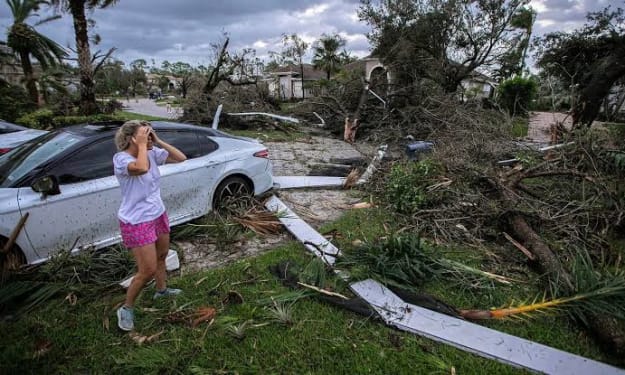
"Gas Giveaway: Florida Residents Get 10 Free Gallons as Hurricane Recovery Efforts Ramp Up
Gas Giveaway: Florida Residents Get 10 Free Gallons as Hurricane Recovery Efforts Ramp Up Gas Giveaway: Florida Residents Get 10 Free Gallons as Hurricane Recovery Efforts Ramp Up
By Global News Update2 years ago in Earth
The Impact of Climate Change on Global Migration: A Detailed Analysis
As the world goes up against the developing difficulties of environmental change, one of the most significant effects is its impact on worldwide relocation designs. Environment-instigated movement is turning into a huge compassionate concern, reshaping lines, networks, and economies. This article investigates how environmental change adds to dislodging, the locales generally impacted, and how legislatures and associations are tending to this rising emergency.
By Usman Zafar2 years ago in Earth
Breaking Barriers of Gender and Identity
The Summer Games were always Alex’s dream. From the moment they could run, jump, or swim, the Olympic torch seemed to light a path in their mind. But for Alex, it wasn’t just about gold medals or world records. It was about being seen—for who they truly were.
By Aliyu muhammad2 years ago in Earth
Flood
Flooding, a catastrophic event that has happened over the entire course of time, affects the climate. While floods can be essential for regular environment cycles, human-actuated changes, including urbanization and environmental change, have strengthened their effect. This exposition investigates how flooding harms the climate, taking into account different factors like environment annihilation, water contamination, soil corruption, biodiversity misfortune, and the drawn-out results of these effects on biological systems and human social orders.
By nadia khanom2 years ago in Earth
What Are Sustainable Shoes?
In a world increasingly aware of environmental issues, sustainability in fashion has taken center stage. Footwear, often overlooked in sustainability conversations, is now becoming a significant focus for both consumers and manufacturers. As more people seek out ethical, eco-friendly products, the demand for sustainable shoes continues to grow. But what truly makes a shoe sustainable, and how can we ensure the companies producing them adhere to both environmental and ethical standards?
By Md. Nurul Afsar2 years ago in Earth
We Just Had the Hottest Summer on Record in the Northern Hemisphere
Los Angeles isn’t exactly known for its mild summers. Growing up in The Valley (San Fernando), those fateful months of every childhood year were spent hiding in neighborhood pools, running through summer camp sprinklers, and sitting in the back of minivans in bumper-to-bumper traffic trekking towards sandy shores along the coast. As a young kid, I lamented the thermostat reporting a balmy 90° Fahrenheit ( 32° C) day — or god-forbid the temperature climbed up to 100° F (38° C).
By Olivia L. Dobbs2 years ago in Earth
The Benefits of Using Recycled Polyester Staple Fiber in Fashion.
The fashion industry is highly transforming into a significant aspect with the importance of sustainability paramount from the brand and consumer's end. Among the most promising innovation in the changing scenario, one of the biggest drivers of change is the application of Recycled Polyester Staple Fiber (RPSF). Produced from post-consumer PET (polyethylene terephthalate) bottles, among other types of recycled polyester products, the material provides an environmentally friendly alternative for the environment besides offering a numerous package of benefits that is helping reshape the world of fashion. As more and more brands become sensitive to RPSF, the dominant trend is now part of the global movement towards fashion sustainability.
By Rakshitam Ecofibre2 years ago in Earth
As The World Burn
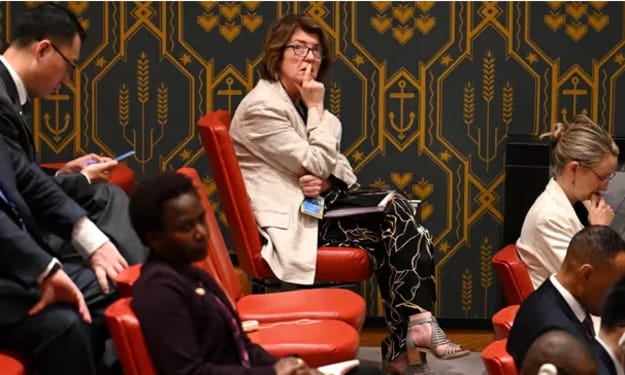
Cassandra, daughter of the King and Queen of Troy, knew that if her brother Paris went to Sparta and came back with Queen Helen, the destruction of Troy would follow. Cassandra had the gift of prophecy bestowed upon her by Apollo, but because she refused to give herself to the god, he added this curse: No one would believe her. Thousands of years separate us from this story. But dire prophecy, deeply rooted in truth, is staring us in the face. Like the ancient Trojans, we refuse to take action. The arrival of New York Climate Week that coincides each year with the gathering of global leaders for the UN General Assembly meetings must inspire us to do just that. Until recently, a stable climate persisted through the past ten thousand years of Earth’s history, enabling human economies and the civilizations that depend on them to flourish and grow. The integrity of nature, in all its complexity, provided this “Goldilocks” period – nestled comfortably between too cold and too hot — for humanity to thrive. But in recent decades, we’ve eroded nature’s integrity and exceeded its capacity to absorb the ever-increasing stresses we’ve thrown at it. Years ago, climate scientists saw the approach of the days of reckoning we are living through. They warned us—in thousands of pages of peer-reviewed publications, in tomes of assessment reports produced over 35 years by the venerable International Panel on Climate Change, in an infinity of PowerPoint presentations, and even at the movies. We know that nature regulates the earth’s climate through the powerful buffering effects of the world’s oceans and forests that absorb heat, dampen what would otherwise be unlivable temperature extremes and regulate the movement of water around the planet. Nature’s biogeochemical processes also maintain the balance and flux of carbon dioxide between the atmosphere and terrestrial and marine ecosystems. Carbon dioxide is the main “greenhouse gas” that locks in heat from the rays of the sun and keeps the Earth’s surface warm. The integrity of terrestrial and marine ecosystems had kept the balance of carbon dioxide in the atmosphere fairly constant for millenia, but that balance depended on keeping enormous reservoirs of fossilized carbon inert and buried beneath the Earth’s surface. Those deposits of coal, oil and gas formed from the biological residue of ancient ecosystems subjected to millions of years of pressure within the earth’s interior. At the beginning of the Industrial Revolution, we didn’t know that burning billions of tons of fossil fuels would wreak havoc on the climate we depend on. But we’ve known for decades, even as fossil fuel companies conspired to bury the truth. Late in the war, when Odysseus conceived the ruse of gifting to Troy a giant wooden horse, filled with the invading armies’ deadliest soldiers, Cassandra knew it was a trick to get the Trojans to bring the enemy inside the city gates. She shouted the truth at the top of her lungs, lit a torch and ran toward that wooden beast to burn it to the ground and incinerate the enemy within. But the people of Troy held her back. They loved that horse. And they knew Cassandra was out of her mind. Until that night, when the finest warriors ancient Greece could muster stealthily emerged from the hollow belly of the horse and destroyed their city. Like the ancient Trojans, we’re in denial. And like Cassandra, today’s climate scientists are tolerated but the urgency of their facts and fears is ultimately dismissed. The question at hand is whether, unlike the Trojans, we have the wherewithal to change our fate. The odds are not in our favor. Time is short. Because we’ve waited so long to act decisively, we now have just a few years left before we’re fully committed to a future hotter than any that has existed on earth since humanity emerged. What is to be done? The answers are not particularly complex. But their implications are manifold. First, we must rapidly reduce greenhouse gas emissions from every economic sector. Among others, the United Kingdom, Norway, and Costa Rica, have shown how to do this in the power, transport, and land-use sectors, respectively. The rest of the world must follow suit. Second, we must protect and strengthen the integrity of nature, which regulates the climate and reduces the impacts of the unnatural disasters we’ve wrought in the form of unprecedented heat waves, wildfires, and more powerful storm systems. Investing in nature and its stewards must move from the margins to the mainstream of our financial systems. Third, we must accelerate the removal of excess carbon dioxide from the atmosphere, through every sensible means available, from proven biological sequestration above- and below-ground in diverse forest and agricultural systems, to technological solutions that must still be proven effective and safe at scale. And fourth, we must adapt to the climate conditions on our already warmer planet, because we’ve taken too long to accept the facts that climate scientists have been shouting at us for decades. We can sympathize with the Trojans for ignoring Cassandra at their peril. After all, she was cursed by a god. As world leaders gather once again in New York City to address the climate crisis, what excuse do we have for following in their footsteps?
By Uzma Halepoto 2 years ago in Earth