Climate
Sleep Paralysis: When the Mind Plays Tricks in the Night
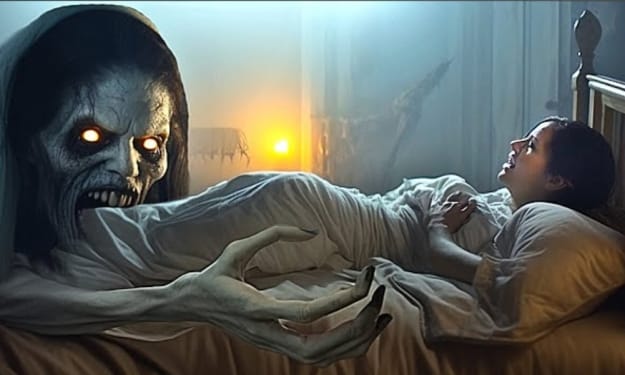
It’s one of those nights when you find yourself drifting in and out of sleep. Suddenly, your eyes snap open, and you try to move, but your limbs won’t cooperate. You glance around the room, feeling a strange sense of unease, and notice a figure standing near the door. A man, dressed in an old-fashioned hat, enters. The most unsettling part? You can’t see his face—only darkness where his eyes, nose, and mouth should be. As he approaches, you can sense his stare, cold and unblinking. It’s not a nightmare. This is a real experience that has been reported by people from all over the world. The entity, known as the “Hatman,” has become a popular and terrifying subject on the internet since the late 2000s. Descriptions vary, but most people agree that the Hatman is a tall silhouette, often dressed in a top hat, fedora, or some other style of hat, depending on the story. His appearance is more than just a shadow figure—he’s solid, seemingly alive. Some say he’s dressed in a long coat or even a cape, adding to his eerie and mysterious nature. After making his unsettling entrance, he doesn’t vanish into thin air; instead, he walks or glides through the door, often leaving the room without saying a word. So, who—or what—is the Hatman? There are many theories. Some people believe he’s a dark, supernatural being. Others argue that he’s an interdimensional entity. However, the most widely accepted explanation is that the Hatman is a product of the mind during sleep paralysis. This condition occurs when a person wakes up during the REM sleep phase, which leaves the body temporarily paralyzed. In this state, the brain is active, but the muscles remain dormant, except for those controlling breathing and eye movements. Sleep paralysis affects a significant number of people, with about 25 to 50% of Americans experiencing it at least once in their lives. This condition can be frightening, especially when it happens outside of REM sleep, causing the brain to think the person is awake while the body is still locked in the deep sleep phase. During this state, hallucinations are common, and one of the most frequent types of hallucinations is known as the "Intruder." The Intruder phenomenon often includes a sense of being watched or even hearing disturbing sounds, like footsteps or breathing. The Hatman is one such manifestation of this eerie experience. While he doesn’t physically harm you, his presence is enough to make anyone feel terrified. Why is his stare so frightening? Sleep researchers believe that waking up paralyzed can trigger a fight-or-flight response. In our evolutionary past, being unable to move while feeling watched signaled potential danger. Our brains are wired to become hyper-alert in these situations, increasing our sensitivity to possible threats. This heightened sense of vigilance is a survival mechanism. If you feel watched, your body enters a state of heightened awareness, even if there’s no actual danger present. During sleep paralysis, when you wake up in a dark room and can’t move, your brain jumps to conclusions, making you perceive a threat where none exists. This can lead to vivid hallucinations, like the Hatman, that seem terrifyingly real. While the Hatman is a common image in modern sleep paralysis experiences, older accounts describe similar entities: shadowy figures, monstrous beings, or even hooded figures with glowing red eyes. These creatures, whether they appear as the Hatman or something else, seem to be a universal aspect of sleep paralysis. People have reported feeling the presence of these beings for centuries, showing how the fear of such entities transcends cultural and generational boundaries. But the Hatman isn’t the only nocturnal figure that makes a visit during sleep paralysis. In Brazil, there’s a chilling story about an entity called *padeira*, an old woman who sits on people’s chests while they sleep, preventing them from breathing. She’s known for lurking on rooftops and targeting those who have overstuffed stomachs. *Padeira* is an example of the incubus phenomenon, where a figure puts pressure on the chest of a sleeping person. This condition has been reported in various forms throughout history, often linked to sleep paralysis. In fact, studies show that about 10% of people will experience the sensation of pressure on their chest at least once in their lifetime, which is associated with fear and difficulty breathing. The *padeira* and similar figures are a manifestation of this phenomenon, where the brain, in a heightened state of fear, interprets sensory information incorrectly, making it feel as if someone or something is physically pressing down on the chest. Scientists believe that the cause of these terrifying experiences lies in the overactivation of the amygdala, the brain region responsible for processing fear. When the amygdala is hyperactive, it can trigger the physical sensations associated with fear, such as shortness of breath, rapid heartbeats, and even the sensation of being touched. Research in 2014 demonstrated how the brain can be tricked into feeling a presence by manipulating sensory feedback. By syncing robotic movements with a person's own motions, researchers were able to make people feel like someone was touching their back, even though no one was there. This research may help explain why people feel as though they’re being touched or sat on during sleep paralysis—it's simply the brain misinterpreting sensations. Roughly 75% of people who experience sleep paralysis will also experience hallucinations, such as the Hatman or *padeira*, depending on cultural background and personal experiences. Factors like stress, anxiety, lack of sleep, and PTSD can trigger these episodes, making them more vivid and terrifying. However, there are ways to cope with sleep paralysis. To reduce the likelihood of these experiences, experts recommend maintaining a healthy sleep schedule, aiming for 7 to 9 hours of sleep each night. Stress-relieving activities, like reading or meditation before bed, can also help calm the mind and body. Some studies suggest that sleeping on your back can increase the chances of sleep paralysis, so switching to a different position may help prevent these frightening experiences. In the end, while the Hatman and similar figures may seem real in the moment, they are likely just the brain’s response to a disrupted sleep cycle. So, if you ever find yourself face-to-face with a shadowy figure at night, take a deep breath. It’s more than likely just a trick of the mind, and with a few lifestyle changes, you can reduce the chances of meeting him again.
By Nora Ariana2 years ago in Earth
Supernova: The Explosive Life of Dying Stars and Their Impact on Earth
**The Life and Death of a Star: Supernova Explosions** Somewhere in the distant cosmos, a massive star nears the end of its life. It may have exhausted its hydrogen fuel, grown too large to sustain itself, or selfishly consumed matter from a companion star until it collapsed under its own weight. Whatever the reason, the star reaches its final moments, and it won’t fade quietly into the dark. Instead, it erupts in a spectacular explosion known as a supernova, one of the most extreme phenomena in the universe. But how does a supernova form, and could Earth survive one? Let’s explore.
By Nora Ariana2 years ago in Earth
"10 Billion People: Earth's Breaking Point - Are We Prepared?"
10 Billion People: What Happens When Our Planet Reaches its Limit? The world’s population is currently around 8 billion and is projected to hit 10 billion by 2050. This rapid growth brings about numerous challenges that could reshape our lives, environments, and economies. The implications of reaching a global population of 10 billion are complex and far-reaching, affecting everything from resource availability to social dynamics.
By Story silver book 2 years ago in Earth
Could Silicon Replace Carbon in Life Forms?
We often ponder if life on other planets could be completely different from what we know. What if extraterrestrial life doesn’t rely on the same chemical processes as us? One intriguing possibility is silicon-based life. Instead of carbon, what if we were made of silicon? Carbon is the superstar of life as we know it. It forms the foundation of DNA, proteins, fats, sugars, and muscle tissues. In fact, 97% of the human body is made up of six elements: carbon, hydrogen, nitrogen, oxygen, phosphorus, and sulfur, with carbon making up 18%. Carbon’s ability to form complex and stable bonds allows it to create long chains and intricate three-dimensional shapes. This versatility is essential for the complexity of life. But there's another element that's also abundant on Earth: silicon. Silicon makes up more than 90% of the Earth's crust. It shares some similarities with carbon, as both are neighbors on the periodic table. So, why aren't we made of silicon? The key lies in carbon's special chemistry. Carbon atoms are small and can form four bonds, which allows them to create the complex structures needed for life. Silicon can also form bonds, but they are larger and weaker. These bonds are unstable, especially in the presence of water, and this makes silicon less suitable for forming the building blocks of life. On Earth, when silicon reacts with oxygen, it forms silicon dioxide, also known as silica – the stuff sand is made of. If life were silicon-based, these beings would be living in an environment vastly different from our own. For one thing, water, which is essential for carbon-based life, would be toxic to silicon-based life. Silicon-based life forms would require a different liquid medium, such as sulfuric acid, where their bonds would be more stable. Furthermore, silicon-based life would be much simpler and more fragile than carbon-based life. The structures would likely be amorphous blobs, similar to the Horta from *Star Trek*. These blobs would struggle with reproduction, as their bonds are not strong enough to allow for the complexity of cell division. If such life existed, the planet would need to be much hotter, as silicon-based life thrives at high temperatures. In fact, the conditions would resemble an acid-soaked, fiery inferno, where temperatures reach hundreds of degrees higher than those found on Earth. These beings would not need oxygen to survive, and their atmosphere would be completely different from ours. The harsh conditions of silicon-based life would make it nearly impossible for them to evolve into anything like us. Their world would be radically different, from the liquid they depend on to the lack of oxygen. Such life forms, even if they did exist, would face numerous challenges in terms of evolution and survival. However, the idea of alternate forms of life doesn’t end with silicon. What if life were based on ammonia instead of water? Ammonia, like water, can dissolve organic compounds, but it also has some unique properties. It can dissolve not only organic compounds but also metallic ones, creating a different chemistry for life to thrive. This could lead to life forms that exist in extreme environments, like Titan, one of Saturn’s moons, where there may be oceans of ammonia beneath the surface. However, ammonia-based life faces its own challenges. Ammonia is flammable when it interacts with oxygen, so any ammonia-based life would need to avoid open flames. It also has lower surface tension than water, making it more difficult for molecules to stick together and form complex structures. Additionally, the freezing and boiling points of ammonia are much lower than those of water, meaning chemical reactions would occur at a slower pace, leading to slower metabolic processes. In addition to the various chemical possibilities for life, another intriguing concept is chirality. On Earth, we rely on a specific chirality, where amino acids are left-handed and sugars in DNA are right-handed. What if extraterrestrial life forms evolved to use the opposite chirality? Such life forms would still use carbon and water, but their molecules would be mirror images of ours. If we encountered these beings, there could be no interaction due to the differences in chirality. This would prevent us from consuming their food or contracting their diseases, which would be a relief. However, if these beings didn’t rely on chiral nutrients, it would create a chaotic food chain. These creatures could multiply uncontrollably, creating a significant disruption in their ecosystem. While these possibilities seem exotic and unlikely, the vastness of the universe makes it impossible to rule them out. The universe is full of surprises, and life as we know it may be just one example of what could exist out there. With billions of stars and countless planets, the chances of discovering life with a chemistry vastly different from our own are not as remote as they seem. The possibility of non-carbon life forms is both fascinating and rare. While carbon-based life is the most likely and prevalent form, we can’t dismiss the idea of discovering something completely different. Human ingenuity might even allow us to create our own silicon-based life forms in the future, even before we discover them elsewhere in the cosmos. For now, we remain grounded in the beauty and complexity of the carbon-based life we know, but the mysteries of the universe continue to beckon us to explore the endless possibilities.
By Nora Ariana2 years ago in Earth
Reproductive Rights
Reproductive rights are an important topic that affects people all over the world. These rights refer to the ability of individuals to make decisions about their own bodies, health, and future, particularly when it comes to having children. This article will explain what reproductive rights are, why they matter, and some of the challenges surrounding this issue in simple and easy-to-understand language.
By Farhan Sayed2 years ago in Earth
The Most Beautiful Desert Mountain Valley in the World
Desert mountain valleys are among the most awe-inspiring landscapes in the world, blending the harsh beauty of arid deserts with the grandeur of towering mountain ranges. These natural formations captivate the imagination with their otherworldly vistas, rich cultural history, and surprising biodiversity. Among these, one stands out as the world's most beautiful desert mountain valley: Wadi Rum, Jordan.
By Zinnat ara Begum2 years ago in Earth
James Webb Space Telescope: Unlocking the Secrets of the Universe. Content Warning.
**Exploring the Wonders of the James Webb Space Telescope** The James Webb Space Telescope (JWST) is one of the most groundbreaking achievements in modern astronomy, capable of peering into the furthest reaches of the cosmos. It has already captured light from galaxies formed over 13 billion years ago—nearly as old as the universe itself. These findings reveal that the universe began creating stars almost immediately after the Big Bang. When looking at JWST’s images, one might not immediately be impressed. The photos often feature faint smudges, glowing spheres, and oddly shaped objects like a dog bone. Yet, these unassuming images have revolutionized our understanding of the early universe. For instance, the telescope captured the oldest known galaxy, named with a mix of letters and numbers, that formed just 320 million years after the Big Bang. This ancient galaxy, despite being smaller than our Milky Way, created stars at a comparable rate. Remarkably, JWST has also revealed that many early galaxies were evolving much faster than previously believed. These findings challenge existing theories about the formation and growth of the first stars and galaxies. ### **The Technological Marvel of JWST** The James Webb Space Telescope is far more advanced than its predecessor, the Hubble Space Telescope. While Hubble observed objects up to 13.4 billion light-years away, JWST is approximately 100 times more powerful. Its 21-foot mirror, made of 18 gold-plated hexagonal segments, collects six times more light than Hubble’s 8-foot mirror, allowing it to detect objects with astonishing speed and clarity. Surprisingly, the telescope’s mirrors are not entirely made of gold. They are constructed from beryllium, a lightweight, durable metal, and coated with a thin layer of gold—just two ounces in total. This gold coating enhances the telescope's ability to reflect infrared light, its primary focus. JWST’s instruments are specifically designed to detect infrared wavelengths, from 0.6 to 28.5 micrometers. This ability allows it to see through cosmic dust and gas, revealing hidden details of star and galaxy formation. However, because infrared wavelengths are longer than visible light, JWST’s resolution for fine details is slightly lower than Hubble’s in its optical range. To function effectively, the telescope must remain extremely cold—around -370°F. An innovative five-layer sunshield reflects sunlight, ensuring its instruments don’t overheat. This sunshield, along with its location near the Earth’s equator during launch, showcases the advanced engineering behind JWST. ### **Revolutionizing Astronomy** The James Webb Space Telescope has already changed the field of astronomy. Its ability to detect faint light and analyze the chemical composition of celestial objects is unparalleled. For example, astronomers are using it to study dark matter, a mysterious substance that makes up about 84% of the universe’s matter but neither emits nor absorbs light. JWST’s powerful instruments can trace the distribution of dark matter by observing its gravitational effects on visible objects. Star formation is another area where JWST is making strides. While Hubble provided iconic images of stellar nurseries, many questions remain unanswered. JWST’s infrared capabilities allow it to penetrate dense clouds of gas and dust, offering a clearer view of how stars are born and evolve. Recent discoveries also challenge established theories about the early universe. JWST has identified large galaxies, some as massive as the Milky Way, that existed just 500 to 700 million years after the Big Bang. These galaxies contain mature red stars, which is surprising because such massive structures were not expected to form so early in cosmic history. These findings suggest that the universe’s early years may have been more dynamic than previously thought. ### **Future Prospects** One of JWST’s most exciting potentials is in the search for exoplanets and signs of life. By analyzing slight dips in a star’s light when a planet passes in front of it, astronomers can determine the planet’s size, atmosphere, and even the presence of water. JWST’s advanced infrared instruments make it uniquely suited for this task, as the strongest chemical signatures often appear in the infrared spectrum. Despite its incredible capabilities, JWST has a finite lifespan due to its fuel supply. However, there’s hope that robotic missions in the future could refuel the telescope, extending its operations and allowing it to continue transforming our understanding of the universe. ### **A New Era of Discovery** The James Webb Space Telescope is a testament to human ingenuity and curiosity. Its ability to peer into the depths of space and time is uncovering the universe’s secrets, from the first stars and galaxies to the potential for life beyond Earth. By revolutionizing our understanding of cosmic phenomena, JWST is not just a scientific marvel but also a symbol of our desire to explore the unknown.
By Nora Ariana2 years ago in Earth
If humans can die from drinking seawater, why can't whales and dolphins die?
But don’t give in to temptation. The world of sailors knows all too well the danger of giving in to this irresistible desire. Drinking seawater, far from hydrating us, dehydrates us… And at a dizzying speed.
By Viona Aminda2 years ago in Earth
Crop Circles: Mysteries, Myths, and Artistic Masterpieces
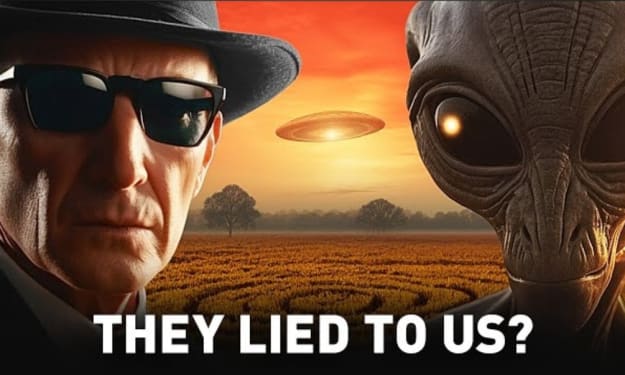
**The Mystery of Crop Circles: Art, Myths, and Reality** Crop circles, those enigmatic patterns found in fields of wheat, barley, and corn, have puzzled and fascinated humanity for decades. They evoke questions about their origin, purpose, and meaning. Are they messages from extraterrestrial civilizations? Evidence of unknown natural phenomena? Or merely intricate works of human ingenuity? The modern phenomenon of crop circles gained traction during the 1990s and early 2000s, with Southern England becoming a hotspot for these elaborate designs. During this period, reports of mysterious geometric patterns appearing overnight in fields captured global attention. While many speculated that these were messages from extraterrestrials, Hollywood amplified this narrative with blockbuster movies that played on humanity's collective curiosity about alien life. However, just as suddenly as crop circles became a global sensation, their frequency and prominence began to decline, leaving behind an enduring mystery. ### **Historical Context** Although crop circles are often associated with modern times, their origins can be traced back centuries. In the 17th century, a woodcut pamphlet known as the "Mowing Devil" depicted a field with flattened crops in a circular pattern. While this account lacks scientific evidence, it reflects humanity's long-standing fascination with unexplained phenomena. In the late 1960s, reports of unusual patterns in crops began surfacing in Australia and Wiltshire, England. These were initially dismissed as natural occurrences, with explanations ranging from localized whirlwinds and small tornadoes to peculiar animal behavior. Yet, the precision and complexity of these patterns made such theories difficult to sustain. ### **The Modern Crop Circle Era** The modern crop circle craze began in the late 1970s, thanks to two Englishmen, Doug Bower and Dave Chorley. Armed with ropes, wooden planks, and a baseball cap outfitted with a wire for measuring precision, they embarked on a mission to create what they called "circular art." Their first creations appeared near Winchester, England, and initially went unnoticed. But as local farmers and media began reporting these unusual formations, the public’s imagination was ignited. By the 1980s, crop circles were appearing across England with increasing frequency. While Bower and Chorley eventually admitted to their pranks, the phenomenon had already gained a life of its own. Believers, often referred to as “croppies,” were convinced that these patterns were evidence of extraterrestrial communication. The designs grew more intricate over time, featuring mathematical precision and complex geometric patterns. This evolution led skeptics to question whether mere pranksters could achieve such sophistication. Nevertheless, many artists came forward, demonstrating their ability to replicate even the most elaborate designs using rudimentary tools and careful planning. ### **Commercialization and Pop Culture** As crop circles gained fame, they also found a place in advertising and entertainment. During the 2012 London Olympics, farmers created a massive representation of the Olympic rings in a field, earning the title of the largest crop art. In 2013, NVIDIA, a technology company, commissioned a crop circle in California to promote a new computer chip. Before the company claimed responsibility, the formation sparked fresh rumors of alien involvement. One of the most famous formations was the "Julia Set," which appeared near Stonehenge in 1996. A pilot flying over the area reported seeing nothing unusual, yet an hour later, intricate patterns spanning 600 feet were discovered. Initially hailed as proof of extraterrestrial activity, the design was later revealed to be the work of skilled human artists. ### **Artifacts and Unresolved Mysteries** Despite widespread debunking, some mysteries persist. The "Roswell Rock," a small stone found in New Mexico, features a design identical to patterns seen in crop circles. Some believers cite it as evidence of alien influence, although scientific analysis suggests it was likely a human-made artifact. Others point to unusual phenomena reported near crop circles, such as electromagnetic anomalies, strange lights, and mechanical malfunctions. While these claims are intriguing, they lack rigorous scientific validation. ### **Decline and Legacy** In recent years, crop circles have become less common. Whether this decline is due to waning public interest, tighter security around farmlands, or the fading novelty of the phenomenon, their once-magnetic allure has diminished. Today, crop circles are remembered as a cultural phenomenon that straddled the line between art and mystery. They symbolize humanity’s enduring curiosity about the unknown, whether that curiosity points to extraterrestrial life, unexplained natural forces, or the boundless creativity of human beings. While skeptics view crop circles as elaborate hoaxes, believers continue to hold out hope that they are messages from another world. Regardless of their true origin, crop circles remain a fascinating chapter in the ongoing quest to understand our place in the universe.
By Nora Ariana2 years ago in Earth
The Legend of La Llorona: A Haunting Tale of Love, Betrayal, and Mystery
**The Legend of La Llorona: A Haunting Tale of Mexican Folklore** In the 1930s, a family picnicked by a serene creek in Santa Fe, New Mexico. Everything seemed ordinary—until it wasn’t. Out of nowhere, they spotted a slender woman in an old-fashioned gown floating over the water. Her ghostly figure drifted toward a nearby hill before vanishing into thin air. Moments later, she reappeared, much closer this time, before disappearing again. The family, startled and speechless, later recounted this eerie encounter. The son, Patricio Luhan, shared their story, convinced they had met the infamous *Weeping Woman*, or **La Llorona**, a chilling figure deeply rooted in Mexican folklore. --- ### **Who is La Llorona?** La Llorona, often depicted as a tall, ethereal woman in a white gown with flowing black hair, is more than just a ghost story. She is said to haunt rivers, lakes, and other bodies of water, endlessly searching for something—or someone—lost. Her beauty is deceptive; those who encounter her may fall victim to her wrath. While variations of the legend exist, the most common tale centers on a woman named Maria. Once celebrated for her beauty, Maria fell in love with a wealthy man and married him. The couple had children, but their happiness was short-lived. Her husband grew distant, often leaving for long periods. Some say he abandoned her for a woman of higher status; others believe he spent his time drinking and womanizing. Overcome by despair and jealousy, Maria committed a tragic act. In a fit of rage, she drowned her children in a river. Realizing the horror of her actions, she succumbed to grief and took her own life. As punishment, her spirit was cursed to wander the Earth for eternity, seeking her lost children and begging for forgiveness. --- ### **La Llorona’s Origins and Cultural Significance** The legend of La Llorona has been part of Mexican culture since the time of the Spanish Conquistadors. Some scholars believe her story reflects the cultural and social upheaval of the 16th century, particularly the strained relationships between indigenous people and European settlers. One historical figure often linked to La Llorona is *La Malinche*, a Nahua woman who served as Hernán Cortés’s translator, advisor, and mistress. La Malinche bore Cortés a son but was later abandoned when he married a Spanish noblewoman. Some see La Llorona as a symbolic representation of the betrayal and suffering endured by indigenous women during colonization. --- ### **A Modern-Day Ghost Story** Reports of La Llorona’s ghostly presence persist to this day. She is said to haunt the Santa Fe River and other locations across Mexico and the southwestern United States. In one chilling account, employees of a building near the Santa Fe River reported hearing cries echoing through the walls. Some even felt invisible hands pushing them while descending stairs. Another story comes from a 12-year-old girl in Santa Fe. On a snowy winter night, she and her cousin spotted a pale woman standing outside their window, dressed in white and crying. The girl's parents rushed outside, but they found no footprints in the freshly fallen snow. --- ### **La Llorona in Popular Culture** La Llorona’s tale has inspired countless adaptations in literature, film, and music. In the 19th century, Mexican poet Manuel Carpio wrote a haunting sonnet about a phantom woman wronged by her husband. In recent years, she has been featured in films like *The Curse of La Llorona* (2019) and Disney’s *Coco* (2017), which showcased the famous Mexican folk song “La Llorona.” This enduring legend continues to captivate and terrify, blending themes of grief, vengeance, and cultural identity. --- ### **A Word of Caution** Should you find yourself near a lonely river or a dark forest at night, beware of the Weeping Woman’s cries. Some say she lures her victims to their doom. Others believe she seeks redemption and might spare those who show compassion. Either way, encountering La Llorona is not an experience you’ll soon forget. Stay safe, and always keep an ear out for her haunting wails.
By Nora Ariana2 years ago in Earth
The Asteroid Threat: Separating Fact from Fiction on Earth's Future
Introduction: The Asteroid Scare of 2029 and Beyond Asteroids, those ancient remnants of our solar system, have long captured the imagination of humanity. Recently, concerns about a potential asteroid impact have stirred panic across the globe, with warnings that an asteroid could bring about catastrophic consequences for Earth. These fears were reignited by media reports about Apophis, a large asteroid that will pass close to Earth in 2029, and a hypothetical asteroid impact scenario presented by NASA. However, many of these reports exaggerate the threat and fail to present the full picture of asteroid monitoring and planetary defense.
By Sajjad Rana Hussain2 years ago in Earth
7 Fast Facts About Bugs: surprising insights into the insect world
7 Fast Facts About Bugs: surprising insights into the insect world Bugs are everywhere! They zip through gardens, waddle across forest floors and, yes, even reside in our homes. Some consider them creepy, but others note their important environmental function. But did you know that bugs represent around 80% of all known animal species on Earth? In this article, we’ve uncovered seven fast, fascinating facts about bugs or insects that may surprise you! Bugs Have Existed for More Than 400 Million Years These bugs are some of the oldest living creatures on earth. Scientists say insects developed long before dinosaurs, some 400 million years ago, during the Devonian period. Fossil evidence suggests early bugs were bigger than they are today. The prehistoric dragonfly known as the Meganeura, for example, boasted a wingspan of more than two feet! Picture a raven-sized dragonfly buzzing around today. Bugs have a long and storied history of survival — far outliving many other species, including the dinosaurs.
By Kalpesh Vasava2 years ago in Earth