Advocacy
Budget Travel Hacks: How to Explore the World Without Breaking the Bank
Traveling is one of life's most enriching experiences, offering a chance to see new places, meet fascinating people, and embrace diverse cultures. However, the idea of jet-setting often comes with a hefty price tag that can feel out of reach. But here's the secret: you don't need to be rich to explore the world. With the right mindset, clever strategies, and a bit of creativity, traveling on a budget can become an exhilarating adventure in itself. Picture this: waking up in a charming countryside village, sipping local coffee, and planning your day without the worry of overspending. Sounds dreamy, right? That could be your reality. The key is knowing how to make your money work for you while still immersing yourself in the beauty of travel. Budget travel isn't about cutting every corner; it's about maximizing value and embracing experiences that are meaningful rather than expensive. First, flexibility is your greatest ally. When you're open to traveling during off-peak seasons or to underrated destinations, you'll find incredible savings. Airfare and accommodations tend to drop significantly during these quieter times, allowing you to stretch your travel budget much further. Plus, you'll get the bonus of exploring spots without the overwhelming crowds. Imagine wandering through a serene Mediterranean town or enjoying the peaceful streets of a historic European city without bumping into throngs of tourists. Speaking of flights, let's talk about how to snag the cheapest tickets. Fare comparison websites and apps are your best friends here. Tools like Skyscanner, Google Flights, and Hopper can help you track prices and find hidden gems. Set up price alerts, and don't be afraid to book a flight with a layover if it saves you a considerable amount. Sometimes, those layovers can even turn into mini-adventures, offering a glimpse of an unexpected destination. Accommodation is another big-ticket expense, but it doesn’t have to drain your wallet. Instead of fancy hotels, look for hostels, guesthouses, or even home-sharing platforms like Airbnb. If you’re feeling adventurous, couchsurfing offers free stays with locals eager to share their culture and stories. For a truly unique experience, consider volunteering or participating in work-exchange programs like WWOOF or Workaway, where you can trade your time for free room and board. Imagine tending a vineyard in Italy or helping at a cozy lodge in the Swiss Alps—all while saving money and making memories. Eating out every meal can quickly add up, so embrace the local way of dining. Visit bustling markets, try street food, and shop at grocery stores to whip up your own meals. Not only is this approach cost-effective, but it’s also a fun way to dive into local cuisines and traditions. Picture yourself savoring fresh pastries in a Parisian park or enjoying a homemade picnic by a tranquil lake in Japan. It’s these little moments that make travel unforgettable. Transportation within your destination doesn’t have to cost a fortune, either. Instead of taxis or rental cars, opt for public transport, bike rentals, or simply walking. Exploring a city on foot or by bike allows you to stumble upon hidden gems and connect with the place in a way that feels deeply personal. Many cities also offer budget-friendly travel cards or passes that cover unlimited rides for a fixed fee. Activities and sightseeing are where the magic of travel happens, and you don’t have to spend big to create lasting memories. Many attractions, such as museums and parks, offer free or discounted entry on specific days. Walking tours, often led by passionate locals, are another excellent way to explore a city for little to no cost. Plus, don’t underestimate the joy of soaking in the atmosphere—sometimes, sitting at a café or watching a sunset can be just as enriching as a guided tour. Another often overlooked travel hack is packing light. Lugging around heavy luggage not only adds stress but can also incur extra fees. Stick to the essentials, and remember that you can always do laundry on the go. A versatile wardrobe and smart packing techniques like rolling clothes can save you space and hassle. Networking with fellow travelers is a game-changer, too. Online communities like Reddit's travel forums or Facebook groups are treasure troves of advice, from hidden gems to budget tips tailored to your destination. By sharing stories and suggestions, you’ll discover new ways to save money and enhance your trip. Finally, don’t forget the importance of a solid travel budget. Knowing your limits and prioritizing your spending ensures that you can enjoy your trip without financial stress. Budgeting doesn’t mean saying no to fun—it means saying yes to the experiences that truly matter to you. The joy of budget travel lies in its simplicity and authenticity. It’s about finding beauty in the little things, like the laughter of strangers, the warmth of a home-cooked meal, or the quiet thrill of navigating a foreign city. With a spirit of adventure and a dash of resourcefulness, you can create memories that far outweigh their cost. So, pack your bags, embrace the art of savvy travel, and let the world surprise you. After all, the best stories come from the journeys we didn’t think we could afford—but somehow made possible. Thank you for taking the time to read! If you enjoyed this, don’t forget to follow and share for more insights and updates. Your support means the world—stay tuned for more! 🌟
By Adepoju Toheeb Ojo 2 years ago in Earth
Wanderlust: A Journey Through the World's Most Breathtaking Destinations
There’s a magical pull in the word "wanderlust" that stirs the heart and ignites the imagination. It whispers promises of distant horizons, untold stories, and the allure of venturing into the unknown. For those who hear its call, travel is more than just an escape—it’s a way to rediscover the beauty of the world and the depths of the human spirit. Every journey holds the potential for awe, connection, and unforgettable memories, and the world is teeming with treasures waiting to be uncovered. Imagine stepping into a hidden village where time seems to stand still, the cobblestone streets echoing with laughter and stories of a bygone era. These places, tucked away from the rush of modernity, hold a charm that speaks directly to the soul. It’s in these hidden gems that travelers often find themselves most profoundly connected, not just to a place, but to its people. Sitting with a local family over a home-cooked meal, listening to tales that have been passed down through generations, or learning a few words in their language are the moments that create lasting memories. They remind us of the universal threads that tie humanity together, even when cultures and traditions differ. From the sun-drenched coasts of Greece to the misty forests of Japan, the diversity of the world's landscapes is nothing short of breathtaking. Picture yourself walking along Santorini’s iconic whitewashed streets, the azure waters of the Aegean sparkling below, or perhaps standing at the edge of a waterfall in Iceland, where nature’s raw power is both humbling and exhilarating. These experiences are not just about seeing; they’re about feeling—letting the rhythm of the waves or the whispers of the wind speak to something deeper within. Yet, the most beautiful destinations are not always those found on postcards. They’re often the ones you stumble upon by chance—the quiet meadow at sunrise, the hidden beach you find after a long hike, or the tiny café on a bustling street corner where time slows down as you sip your coffee. These are the moments of serendipity that travel offers, reminding us to embrace the unexpected and cherish the simplicity of life. Travel is also an invitation to step out of our comfort zones and experience life in ways that challenge and transform us. Whether it’s trying a spicy street food delicacy in Bangkok, navigating the labyrinthine souks of Marrakech, or joining a spirited local festival in Peru, these encounters open the door to a world of wonder. They’re a reminder that beauty is everywhere—in the rhythms of a samba dancer’s steps, in the vibrant colors of a sari in India, or in the gentle kindness of a stranger who offers directions when you’re lost. As the journey unfolds, it becomes clear that travel is not just about the places we visit but the stories we carry home. It’s in the journal pages filled with hastily scribbled notes, the photographs that capture fleeting smiles, and the souvenirs that hold the scent of distant lands. These tokens become part of our personal narrative, a collection of moments that shape how we see ourselves and the world. The greatest gift of wanderlust is the perspective it brings. Traveling to breathtaking destinations reminds us of the vastness and diversity of our planet and the privilege of being a part of it. Standing before the grandeur of the Grand Canyon, feeling the serenity of Bali’s terraced rice fields, or gazing at the Northern Lights in Norway stirs something within us that words can’t fully capture. It’s a mix of humility and gratitude, a realization that the world is far more beautiful and complex than we could ever imagine. And while the destinations themselves are incredible, it’s the people we meet along the way who make the journey unforgettable. A friendly shopkeeper in a Moroccan bazaar, a fellow traveler who becomes a lifelong friend, or a guide who shares the legends of their homeland—all of these connections enrich the experience. They remind us that while borders may define countries, the essence of humanity transcends them. As you embark on your next adventure, let curiosity be your compass and the promise of discovery guide your steps. Wanderlust is not just about crossing places off a list; it’s about savoring the moments that make your heart skip a beat. It’s the smell of fresh pastries from a Parisian bakery, the vibrant sounds of a Caribbean carnival, and the feeling of sand between your toes as the sun dips below the horizon. Travel doesn’t just take us to new places; it transforms us. It teaches us to see the world with fresh eyes, to appreciate its intricacies, and to celebrate its beauty. Whether you’re exploring the bustling streets of Tokyo or the tranquil mountains of Patagonia, each journey is an opportunity to learn, grow, and create memories that will stay with you forever. So, pack your bags and embrace the call of wanderlust. The world is vast, and its wonders are waiting to be discovered. Let the journey inspire you, fill you with joy, and remind you of the magic that lies beyond the horizon. After all, the greatest adventures begin with a single step, and the most cherished memories are the ones made along the way. Thank you for taking the time to read! If you enjoyed this, don’t forget to follow and share for more insights and updates. Your support means the world—stay tuned for more! 🌟
By Adepoju Toheeb Ojo 2 years ago in Earth
Europe’s Tsunami Risk: A Hidden Threat to Coastal Cities
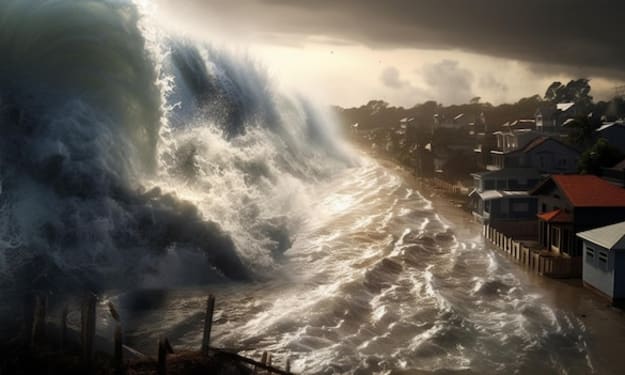
Imagine a tsunami striking Mediterranean cities like Cannes or Barcelona—cities that are far removed from the Pacific Ocean's notorious waves. It may seem unlikely, but the reality is that Europe’s coastlines are at risk. The Mediterranean and northeastern Atlantic are active tectonic zones, and though only 10% of the world’s tsunamis occur in these areas, history has shown that the risk is real. Since 1600 BCE, there have been over 290 recorded tsunamis in the Mediterranean, and despite the low frequency, these events have caused some devastating disasters in Europe’s past. Take the infamous 1755 tsunami, triggered by an 8.5-magnitude earthquake southwest of Cape St. Vincent, Portugal. Just 40 minutes after the quake, a massive wave struck Lisbon, completely flooding its harbor and advancing up the Tagus River. This initial wave was followed by two more devastating surges, sending people scrambling to higher ground. Though tsunamis like this are more common in the Pacific, the Atlantic and Mediterranean have been hit by these massive waves far more rarely, with major events expected every 3 to 5 centuries. However, this doesn’t mean a disaster couldn’t happen tomorrow. French and Spanish cities like Marseille and Chamonix are on the list of places most likely to be hit in the next 30 years, with a 100% chance of tsunami impact, though the waves may not be as catastrophic as those in the Pacific. While waves may be less than 3 feet high on average, it’s important to understand that tsunami danger is not just about height. Even waves just over a foot high can be deadly, as it’s the power of the water’s movement and the flooding that cause the most damage. A wave only 6 feet tall can lift cars, while smaller waves traveling up to 40 mph can create destructive water walls. For places with low-lying harbors, like Cannes, the impact could be even worse. Aside from the extreme damage a tsunami can cause, there are smaller, but still costly, consequences. The shifting of sandbars on the ocean floor can disrupt underwater pipelines and deep-sea cables, affecting internet and communication infrastructure, which could cost millions in repairs. This is why UNESCO and other organizations are raising awareness and developing plans to minimize the risks of future tsunamis in Europe. Europe isn’t alone in its tsunami concerns. The 2004 tsunami in Indonesia, caused by an earthquake off the coast of Sumatra, showed just how deadly these waves can be, with over 200,000 lives lost. Similarly, the 2011 Japan tsunami, triggered by an earthquake off the coast of Tōhoku, led to a devastating nuclear disaster and killed over 16,000 people. These events were wake-up calls, reminding us that tsunamis can be predicted and that early warnings save lives. Today, thanks to advances in technology, we have an effective tsunami warning system in place. The key is speed: seismic waves travel 100 times faster than tsunamis, so scientists have enough time to analyze data and issue alerts within minutes of an earthquake. The warning systems provide vital information about when and where the tsunami will strike, and they also offer advice on evacuation. In coastal communities, the next step is training locals on how to act quickly. UNESCO’s Tsunami Ready program helps communities prepare by installing evacuation signs, creating safety procedures, and ensuring that tourists are informed of tsunami risks. Spain, for example, has distributed tsunami warning signs along its entire coastline, indicating evacuation routes. One of the most at-risk areas is the Arousa fault under the Balearic Sea. A major earthquake here would leave coastal residents with just 21 minutes to evacuate before a tsunami hits. There are also 12 tsunami warning centers spread across Europe, which monitor ocean disturbances and help keep coastal residents informed. While earthquakes remain the most common cause of tsunamis, other phenomena like volcanic eruptions, landslides, and even meteorite impacts can also trigger waves. With climate change, the Mediterranean could also experience more ‘meteotsunamis,’ triggered by extreme weather events, which, while smaller, can still cause significant damage. In 2006, a meteotsunami struck the harbor of Mahón in Menorca, Spain, causing tens of millions of euros in damage. If you’re spending time in Europe’s coastal cities, it’s crucial to stay alert. If a tsunami warning is issued, remember: head to higher ground, avoid waiting for the perfect photo, and listen to local authorities. Tsunamis may seem rare, but knowing what to do can save your life. Stay safe and prepared—your safety is in your hands!
By Zaid Zareen2 years ago in Earth
Antarctica: The Frozen Continent Shaping Our Planet's Future
Antarctica: The Arctic Abstemious of Mysteries and All-around Significance Antarctica the southernmost continent, is a acreage of extremes. Covering 14 actor aboveboard kilometers, it is the coldest, driest, and windiest abode on Earth. Despite its acrid conditions, Antarctica plays a acute role in acclimation the planet's altitude and is a abundance accession of accurate discoveries. Geographical Properties Antarctica is about absolutely covered by ice, which contains about 70% of the world's freshwater. The abstemious is amidst by the Southern Ocean and appearance some of the accomplished elevations amid all continents due to its blubbery ice sheet. The Transantarctic Mountains bisect the abstemious into East and West Antarctica. Its different mural includes glaciers, ice shelves, and subglacial lakes like Lake Vostok, hidden below kilometers of ice. During summer, some areas acknowledge bouldered area and mossy patches, accouterment attenuate glimpses of life. Natural Abundance and Resources Although harsh, Antarctica holds cogent beginning accustomed resources. Its ice bedding are analytical to all-around baptize accumulator and altitude regulation. The surrounding Southern Ocean is affluent in abyssal biodiversity, including krill, which forms the abject of abounding amphibian aliment webs. The continent’s mineral wealth, including coal, adamant ore, and possibly oil and gas, charcoal abundantly adopted due to all-embracing agreements attention the region. Antarctica’s different geological formations accommodate clues to Earth's history and abeyant resources.
By Say the truth 2 years ago in Earth
South America: Nature’s Paradise and Treasure Trove
South America: A Abstemious of Vibrant Nature and Untapped Potential South America, the fourth-largest continent, is acclaimed for its amazing landscapes, affluent cultural heritage, and abounding accustomed resources. Spanning 17.84 actor aboveboard kilometers, it is home to assorted ecosystems, alignment from the Amazon Rainforest to the Andes Mountains. This commodity delves into South America’s bounded properties, wealth, and resources, highlighting its different contributions to the world.
By Say the truth 2 years ago in Earth
All-encompassing Wellness: A Way to Orchestrate Brain and Body.
Grasping Comprehensive Wellness Comprehensive wellness is a multi-layered way to deal with prosperity that goes past the actual parts of well-being. It perceives that psychological, close-to-home, and profound well-being are profoundly entwined with actual wellness. By tending to this multitude of features, comprehensive wellness engages people to accomplish a condition of complete well-being as opposed to zeroing in exclusively on style or actual capacities.
By Shahanaz Akther2 years ago in Earth
North America: The Acreage of Opportunities and Boundless Resources
North America, the third-largest continent, spans 24.71 actor aboveboard kilometers and includes 23 countries, with the United States, Canada, and Mexico actuality the best prominent. Acclaimed for its accustomed beauty, cultural diversity, and bread-and-butter power, Chill America is a acreage of immense opportunity. This commodity explores its bounded features, resources, and access on the all-around stage.
By Say the truth 2 years ago in Earth
Asia: A Continent of Contrasts and Prosperity
Asia, the largest continent on Earth, is a land of superlatives and extremes. Covering 44.58 million square kilometers, it accounts for about 30% of the world’s land area and is home to over 4.7 billion people, or nearly 60% of the global population. With its diverse landscapes, abundant resources, and economic powerhouses, Asia plays a pivotal role in shaping the world. Geographical Properties
By Say the truth 2 years ago in Earth