Advocacy
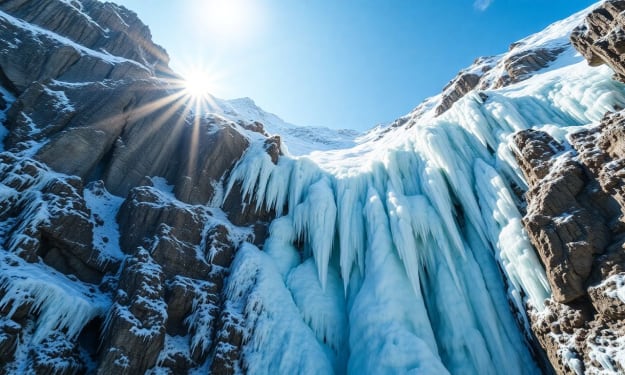
"Discover the Hidden Gem: Breathtaking Frozen Waterfall in the Heart of the Italian Alps!"
Witness the Majesty: Unveiling Italy's Stunning Frozen Waterfalls in the Alps Introduction: A Winter Wonderland Awaits Imagine standing before a breathtaking frozen waterfall, where ice glistens under the soft winter sun. The beauty of these icy cascades in the Italian Alps is awe-inspiring and rare, offering a magical experience for all who visit. This stunning sight not only showcases nature’s artistry but also invites adventurers to explore the icy realm. Nestled in the majestic Dolomites, these frozen waterfalls attract both tourists and locals alike. With easily accessible trails and nearby cozy villages, the area is perfect for those seeking a winter adventure. The combination of scenic views and outdoor activities makes this a premier destination for nature lovers and photographers. This article will guide you through the wonders of Italy's frozen waterfalls. You'll learn about their geological significance, the best spots to visit, photography tips, safety guidelines, and nearby attractions. Pack your winter gear as we dive into this stunning winter wonderland. Exploring the Frozen Cascades: Geographical Wonders The Dolomites' Unique Formation The Dolomites, a UNESCO World Heritage site, have a fascinating geological history. Composed mainly of limestone, these mountains formed over 200 million years ago. The unique erosion patterns of the past created stunning vertical cliffs and deep valleys, resulting in beautiful waterfalls. The combination of soft limestone and persistent glacial activity shapes the waterfalls into extraordinary frozen formations. Water Source and Seasonal Variations Waterfalls in the Dolomites originate from snowmelt and seasonal rains. During winter, these waterfalls freeze, transformed into spectacular ice giants. Typically, the freezing period lasts from late November to early April. During these months, temperatures often dip well below freezing, creating natural ice sculptures that capture the imagination. Famous Examples of Frozen Waterfalls Various breathtaking frozen waterfalls dot the Italian Alps. Here are a few must-see locations: Cascate di Fanes: Located in the Fanes-Senes-Braies Nature Park, these waterfalls freeze beautifully, creating a stunning winter landscape. Cascate del Toce: Near the village of Formazza, this 143-meter tall waterfall turns into an ice spectacle that draws adventurers from all over. Cascate di Vallesinella: Close to Madonna di Campiglio, these waterfalls are accessible through scenic trails perfect for winter hikes. Photographing the Ice Giants: Tips for Stunning Shots Essential Gear for Winter Photography To capture the beauty of frozen waterfalls, having the right equipment is crucial. Here’s a list of suggested gear: Camera: A DSLR or mirrorless camera for high-quality images. Tripod: Essential for stability, especially in low light. Lenses: Wide-angle lenses for expansive scenes, and a zoom lens for close-up details. Clothing: Dress in layers to stay warm and dry. Insulated gloves are a must for handling your camera in cold conditions. Composition and Lighting Techniques Capturing the perfect shot involves understanding composition and lighting. Consider these techniques: Golden Hour: Shoot during sunrise or sunset for soft, warm light. Foreground Elements: Include rocks or trees to add depth to your image. Varied Angles: Experiment with different perspectives—low angles can enhance the ice formations. Post-Processing for Enhanced Beauty Post-processing can elevate your photography. Popular software options include: Adobe Lightroom: Great for adjusting colors and exposure. Photoshop: Ideal for more complex edits, like removing distractions or enhancing details. Safety First: Navigating the Winter Wonderland Responsibly Assessing Weather Conditions and Risks Before heading out, always check the weather. Many websites, including the Italian Meteorological Service, provide current forecasts and avalanche warnings. Staying informed is key to a safe adventure. Proper Gear and Preparation Safety is paramount when exploring frozen waterfalls. Essential gear includes: Ice Cleats: To prevent slips on icy trails. Warm Clothing: Layer up for comfort against the cold. First-Aid Kit: Be prepared for minor injuries or emergencies. Respecting the Environment Maintaining the beauty of the Alps requires everyone’s effort. Follow Leave No Trace principles to minimize your impact. Stay on marked paths, pack out what you pack in, and respect wildlife. Beyond the Ice: Exploring Nearby Attractions Charming Alpine Villages Don’t miss the opportunity to explore quaint villages near the waterfalls. Places like Cortina d'Ampezzo and Malga Ciapela offer rich history and local culture. Learn more by visiting their official tourism websites. Winter Hiking and Snowshoeing Trails If you're looking for more adventure, numerous trails wind through the Dolomites. Check out resources like AllTrails for maps and details on winter routes. Other Winter Activities The Italian Alps are a winter playground. Beyond waterfalls, try skiing or snowboarding in famed resorts like Val Gardena and Madonna di Campiglio. Planning Your Trip: Logistics and Practical Tips Best Time to Visit The ideal months for witnessing frozen waterfalls range from late December to early March. During this period, the weather is colder, ensuring the waterfalls remain frozen and accessible. Accessibility and Transportation Reaching these stunning sites is straightforward. Most waterfalls have parking areas nearby. For those relying on public transport, regional train and bus services connect major towns to the trails. Accommodation Options Various accommodations are available, from charming guesthouses to luxurious hotels. Websites like Booking.com and Airbnb can help you find the perfect stay. Conclusion: An Unforgettable Alpine Adventure Visiting frozen waterfalls in the Italian Alps is an experience filled with beauty, adventure, and tranquility. These icy masterpieces showcase nature's grandeur and are accessible for all who seek them. Plan your trip today, and don’t forget to share your breathtaking captures and stories with others. The ice giants are waiting!
By Story silver book 2 years ago in Earth
Understanding the Rise of Human Metapneumovirus (HMPV) Among Children in China!. AI-Generated.
In recent months, **China has reported a notable increase in cases of Human Metapneumovirus (HMPV)**, particularly among children under the age of 14. This surge has garnered attention due to the virus's potential to cause respiratory illnesses ranging from mild cold-like symptoms to severe complications such as bronchiolitis and pneumonia.
By Earn Money Today2 years ago in Earth
"The Dyson Ring: Harnessing the Power of the Sun"
The Dyson Arena Legacy In the 31st century, altruism had accomplished the acme of its abstruse prowess. Afterwards centuries of argument over abbreviating resources, Earth's nations assuredly affiliated beneath a distinct banner—the Solar Union. With aggregate accomplishment and unparalleled ambition, the Solar Union set out to body a Dyson Ring, a colossal anatomy encircling the Sun to accouter its bottomless energy. It was a accomplishment of engineering so aggressive that it would booty ancestors to complete, acute the accumulated assets of every planet, moon, and asteroid in the Solar System. The abstraction originated from Freeman Dyson's eyes of a megastructure able of capturing a star's action output. Instead of a complete sphere, altruism absitively on a Dyson Ring: a bandage of solar collectors and habitats orbiting at an ideal ambit to autumn the Sun’s action while advancement a acquiescent scale. The arena would break Earth's action crisis and actuate altruism into a aureate age of interstellar exploration.
By Say the truth 2 years ago in Earth
The Kangaroo Chronicles. AI-Generated.
Ah, the kangaroo. The epitome of Australian wildlife. With their adorable faces, powerful legs, and pouches that make you question the limits of biology, kangaroos have hopped their way into the hearts of many. But behind those endearing eyes lies a creature that’s not just a hopping bundle of joy. So, how dangerous are kangaroos? Let’s hop right in and explore, with a dash of comedy, of course. What Exactly is a Kangaroo? Before we delve into the dangers, let’s understand what a kangaroo is. Kangaroos are marsupials belonging to the family Macropodidae, which literally means “big foot” (take that, Sasquatch). These iconic animals are native to Australia and nearby islands, and they come in various shapes and sizes, with the red kangaroo being the largest and most well-known. Kangaroos are herbivores with a diet primarily consisting of grasses and other vegetation. They have powerful hind legs for jumping, a muscular tail for balance, and a pouch for carrying their young, called joeys. In short, they’re nature’s version of a Swiss Army knife—versatile and equipped for survival in the harsh Australian outback. How Dangerous Are Kangaroos? Now, let’s address the kangaroo in the room: their potential danger. While kangaroos aren’t out to get you like some Hollywood villain, they can be dangerous under certain circumstances. Here’s why: 1. Powerful Legs: Kangaroos have incredibly strong hind legs that they use for jumping and delivering powerful kicks. If threatened or cornered, a kangaroo can use its legs to deliver a kick that could send you flying faster than a boomerang on a windy day. 2. Sharp Claws: Those cute little paws? They hide sharp claws that kangaroos use for defense. A swipe from a kangaroo can leave you with more than just a scratch. 3. Boxing Matches: Kangaroos are known for their boxing behavior, which is actually a display of dominance and territory. If you find yourself in the middle of a kangaroo boxing match, it’s best to back away slowly and leave the ring to the professionals. 4. Protective Mothers: Just like any other wild animal, kangaroo mothers are fiercely protective of their joeys. If you get too close to a mother kangaroo and her young, you might find yourself on the receiving end of her protective instincts. Comedy Time: Kangaroo Encounters Let’s lighten the mood with some humorous kangaroo encounters. Imagine you’re a tourist in Australia, ready to snap a selfie with a kangaroo. You approach cautiously, your camera at the ready. The kangaroo looks at you, sizing you up. You think, “What’s the worst that could happen?” Suddenly, the kangaroo springs into action, delivering a kick that sends your hat flying and your dignity with It. You quickly realize that posing with a kangaroo is not for the faint of heart. Or picture this: you’re on a peaceful hike through the Australian bush, admiring the scenery. Out of nowhere, a kangaroo hops into your path. You freeze, remembering all the YouTube videos of kangaroo boxing matches. The kangaroo eyes you warily, and you slowly back away, hoping it doesn’t challenge you to a duel. You might laugh about it later, but in the moment, it’s a heart-pounding encounter. Co-existing with Kangaroos For those living in kangaroo-populated areas, co-existing with these hopping wonders involves a bit of common sense and respect. Here are some tips: 1. Keep Your Distance: Admire kangaroos from afar. They might look cute, but they’re wild animals with powerful legs and sharp claws. 2. Don’t Feed Kangaroos: Feeding kangaroos can encourage them to approach humans, leading to potentially dangerous encounters. 3. Stay Calm: If you encounter a kangaroo, stay calm and avoid sudden movements. Back away slowly and give the kangaroo space. 4. Be Cautious During Mating Season: Male kangaroos can be more aggressive during mating season. Keep an extra distance during this time. The Role of Kangaroos in the Ecosystem Despite their potential dangers, kangaroos play a vital role in the Australian ecosystem. As herbivores, they help maintain the balance of plant life by grazing on grasses and vegetation. Their grazing habits can prevent overgrowth and reduce the risk of wildfires. In essence, kangaroos are nature’s landscapers, keeping the outback in check with their grazing and hopping. Kangaroos are also an important part of the food chain. They are prey for larger predators such as dingoes and eagles. By being a food source for these predators, kangaroos contribute to the overall health and balance of the ecosystem. It's a wild, interconnected dance of life, and kangaroos are a key player in the outback symphony. In Conclusion So, how dangerous are kangaroos? While they can pose a threat under certain circumstances, they’re not out to get you. Treat them with the respect they deserve, and you’ll have a safe and memorable experience in the land of hopping wonders. Remember, in the grand Australian wildlife danger spectrum, they’re somewhere between a curious koala and a crocodile with a bad attitude. Treat kangaroos with respect, and you’ll be able to enjoy the beauty and wonder of these iconic Australian creatures. In the end, kangaroos are fascinating animals that are a vital part of Australia’s unique biodiversity. With their powerful legs, adorable joeys, and occasional boxing antics, they capture the imagination and admiration of people worldwide. So, the next time you encounter a kangaroo, remember to keep your distance, respect their space, and appreciate the wonder of one of Australia’s most iconic creatures. Relevant Resources - [National Geographic: Kangaroo](https://www.nationalgeographic.com/animals/mammals/facts/kangaroo) - [Australian Government: Kangaroos](https://www.environment.gov.au/topics/wildlife-and-threatened-species/wildlife-conservation/kangaroos) - [BBC Earth: Everything You Need to Know About Kangaroos](https://www.bbcearth.com/blog/?article=everything-you-need-to-know-about-kangaroos)
By Vishnu venugopal 2 years ago in Earth
From Fierce Predators to Couch Potatoes. AI-Generated.
Once upon a time, in a world long before Instagram cat stars and viral kitty memes, our feline friends were wild, fierce, and wholly undomesticated. This is the thrilling and curious tale of how humans and cats went from wary cohabitants to inseparable companions. The Great Mouse Chase Begins Our story begins some 10,000 years ago in the Fertile Crescent, a region that stretches across parts of modern-day Middle East. This area was the cradle of agriculture where humans first settled into farming communities. With the advent of farming came the storage of surplus crops—and with crops came a big problem: pests. Enter the rodent army. Just when humans were at their wit’s end, seeking a solution to the rodent invasion, a group of wildcats—our story’s unsung heroes—noticed the abundance of easy prey. These wildcats, known as Felis silvestris lybica, found the granaries to be a buffet worth fighting over. The Unlikely Alliance: Cats and Humans Initially, the relationship between humans and cats was purely transactional. Humans needed help controlling pests, and wildcats found an all-you-can-eat rodent buffet. It was a win-win scenario—until the first cat decided to saunter into a human settlement. Imagine a prehistoric farmer waking up to find a sleek, stealthy predator lounging in his granary. The initial reaction? Probably a mix of fear and curiosity. But as the farmer noticed fewer pests and the wildcat showing no signs of aggression, a truce of sorts began. From Tolerance to Trust: The Bond Strengthens As time passed, a curious transformation occurred. Wildcats who were more tolerant of human presence—and perhaps even a bit curious themselves—began to spend more time around human settlements. These cats, with their laid-back attitudes, were more likely to survive and reproduce. Slowly but surely, natural selection favored the friendlier, more social cats. Humans, on their part, began to appreciate these feline freeloaders. They might have offered scraps or leftovers to the cats, further strengthening the budding bond. This mutual tolerance eventually blossomed into a more trusting relationship. The First Domesticated Cats: Egyptian Allies Fast forward to ancient Egypt, where the relationship between humans and cats hit a new milestone. The Egyptians didn’t just tolerate cats—they revered them. Cats were associated with Bastet, the goddess of home, fertility, and protection. This sacred status granted cats a special place in Egyptian households. Imagine walking through an ancient Egyptian village and seeing cats lounging in luxury, adorned with jewelry, and even being mummified alongside their human companions. The Egyptians’ adoration for cats spread across the ancient world, solidifying the bond between humans and felines. Cats Go Global: The Grand Expansion As trade routes expanded, so did the reach of our feline friends. Cats traveled with traders, explorers, and merchants, spreading across continents. They adapted to various cultures and climates, cementing their status as valuable pest controllers and beloved companions. The Romans, for Instance, admired cats for their hunting prowess and kept them on ships to control rats. By the Middle Ages, cats had spread across Europe, Asia, and beyond. Their reputation as skilled hunters and enigmatic companions only grew. The Dark Ages: Superstition and Survival However, our tale takes a dark turn during the Middle Ages. In Europe, superstition and fear cast a shadow over our feline heroes. Cats, especially black ones, were often associated with witchcraft and the devil. This led to widespread persecution and killing of cats, ironically worsening the rodent problem. But the resilient cats endured. Their survival was, once again, tied to their relationship with humans. When the Black Death (plague) ravaged Europe, cats made a comeback as essential allies in controlling the rodent population, which helped curb the spread of the disease. The Modern Era: Cats in the Lap of Luxury As we zoom into the modern era, the story of domesticated cats becomes one of comfort, companionship, and celebrity status. Gone are the days of mere pest control; today’s cats enjoy pampered lives, complete with gourmet food, cozy beds, and social media stardom. Imagine a modern home with a cat perched regally on a windowsill, basking in the sunlight. Cats have become symbols of independence, mystery, and elegance. They maintain a certain aloofness that only adds to their charm, making them the perfect subjects for internet adoration. The Science of Domestication: What Makes a Cat, a Cat? Behind this thrilling tale of domestication lies some fascinating science. Genetic studies have shown that domestic cats retain many of their wild traits. Unlike dogs, whose domestication involved significant behavioral and physical changes, cats have remained relatively unchanged. This is partly because their role as pest controllers didn’t require the same level of human intervention as other domesticated animals. Domestic cats still possess the keen hunting instincts of their wild ancestors. They’re skilled predators, capable of extraordinary feats of agility and precision. However, through thousands of years of coexistence with humans, they’ve developed behaviors that endear them to us—like purring, kneading, and those adorable head-butts. The Curious Case of Cat Behavior One of the most curious aspects of domesticated cats is their behavior. Cats are known for their independence, often appearing aloof and mysterious. Yet, they’re also capable of deep affection and loyalty. This duality makes them endlessly fascinating to cat lovers. Consider the cat’s “slow blink,” a gesture that signifies trust and affection. When a cat slowly blinks at you, it’s akin to a human giving a warm smile. Or the "kneading" behavior, where cats press their paws into soft surfaces—this harks back to kittenhood when they kneaded their mother’s belly for milk. These behaviors, rooted in their wild past, create a unique bond between cats and their human companions. The Future of Feline Domestication As we look to the future, the bond between humans and cats shows no signs of waning. In fact, it’s growing stronger. With advances in veterinary care, nutrition, and understanding of feline behavior, our ability to care for and connect with cats continues to improve. Imagine a world where cats have their own apps, designed to keep them entertained while their humans are away. Or where genetic research helps us understand and preserve the diversity of feline breeds. The possibilities are endless, and the future of our relationship with cats looks brighter than ever. Conclusion: The Tale Continues And so, the thrilling and curious tale of how we domesticated cats comes to a close—or does it? In reality, this is an ongoing story, with new chapters being written every day. Each purr, each playful pounce, and each affectionate nuzzle adds to the rich tapestry of our shared history. From wild hunters to cherished companions, cats have woven themselves into the fabric of human life. So, the next time you see your cat lounging in the sun or playfully chasing a toy, remember the incredible journey that brought them to your home. It's a tale of survival, adaptation, and above all, a testament to the unbreakable bond between humans and their feline friends. I hope you enjoyed this paws-itively thrilling tale as much as I enjoyed crafting it! What are your thoughts?
By Vishnu venugopal 2 years ago in Earth