Advocacy
The World' Deepest River
Deepest river of the world The Congo River in Central Africa is the world's deepest river, with measured depths going over 220 meters (720) ft. At 4,700 kilometers (2,920 miles) long, it is the second longest river in Africa, after the Nile. The waterway is crucial for the lives of millions of people in the region and is one of the most vital natural resources in the region for transport and trade networks.
By Rohitha Lanka2 years ago in Earth
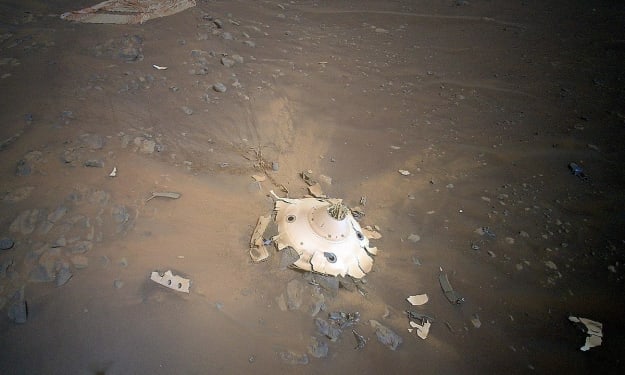
NASA’s Ingenuity Captures ‘Surreal’ Image of Wreckage on Mars No One Expected.
NASA’s Ingenuity Captures ‘Surreal’ Image of Wreckage on Mars No One Expected. NASA’s Ingenuity helicopter has once again proven its worth not just as an aerial scout but as an unexpected chronicler of Mars exploration history. Originally intended for just five experimental flights the tiny rotorcraft has now completed 72 successful missions far surpassing expectations. During one of its recent flights over the Jezero Crater Ingenuity captured something truly astonishing scattered wreckage from its own historic landing. This discovery while surreal serves as a powerful reminder of humanity’s growing presence on the Red Planet. The debris which once played a crucial role in delivering Perseverance and Ingenuity safely to the Martian surface is now a collection of twisted metal and torn fabric lying in the cold, dusty expanse. The images taken by Ingenuity reveal remnants of the entry descent and landing EDL system including a parachute and protective backshell which had shielded the rover and helicopter from the fiery descent through the thin Martian atmosphere.
By Adnan Rasheed2 years ago in Earth
Record-Breaking Arribada: Over 700,000 Olive Ridley Turtles Nest at Odisha’s Rushikulya Beach
In a stunning natural phenomenon, more than 700,000 Olive Ridley turtles swarmed on Rushikulya beach in India's eastern Odisha state on Friday, February 21, 2025. This record-breaking gathering is the largest number of these critically endangered sea turtles to show up for their annual mass nesting, or Arribada. The phenomenon, which is only found in the Olive Ridley species, has caught the world's attention, bringing into focus the need for conservation efforts to ensure the protection of these incredible creatures.
By denizan Lawyer2 years ago in Earth
My personal trekking experience in Langtang Valley
There’s something magical about trekking in Nepal, and my recent adventure through Langtang Valley was nothing short of extraordinary. Nestled in the Himalayas, the Langtang region offers breathtaking landscapes, rich Tamang culture, and an unforgettable journey that I’m excited to share.
By Maik Tyson2 years ago in Earth
Restoring Native Species: A Crucial Step for Environmental Recovery
In the face of habitat destruction, climate change, and biodiversity loss, restoring native species has become an urgent environmental priority. Native species, which have evolved over time in specific ecosystems, play a crucial role in maintaining the delicate balance of their habitats. However, deforestation, urbanization, pollution, and the introduction of invasive species have severely disrupted these natural systems, often leading to population declines or even extinctions.
By Briar Rose2 years ago in Earth
City killer asteroid could smash into MOON as Nasa warns probability of impact set to rise further.
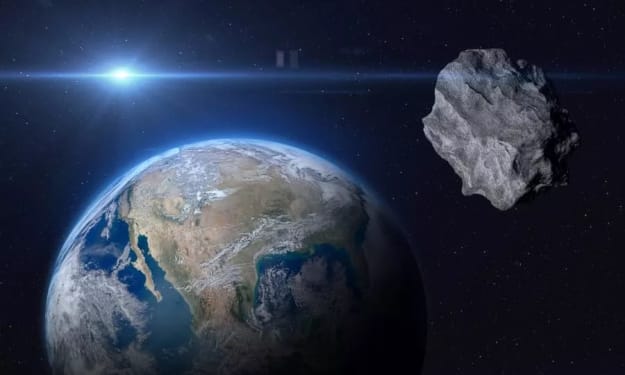
City killer asteroid could smash into MOON as Nasa warns probability of impact set to rise further. NASA has recently raised concerns about a Big Ben sized asteroid that could collide with the Moon in the near future. Scientists have been closely monitoring the trajectory of this celestial body and the probability of impact is reportedly increasing. While the asteroid was initially considered a potential threat to Earth new calculations suggest that it may instead be on a collision course with the Moon. This alarming development has sparked discussions among experts regarding the potential consequences of such an event and what it could mean for future space exploration. The asteroid in question which measures roughly the same size as London's iconic Big Ben has been under observation by NASA’s planetary defense team for some time. Previously there were fears that this space rock could impact Earth with predictions estimating a 20 percent chance of collision by April. However updated calculations now indicate that the Moon could bear the brunt of this cosmic encounter. The probability of the asteroid hitting the Moon has been steadily increasing raising concerns about the potential impact and its implications for both lunar exploration and Earth's space environment.
By Adnan Rasheed2 years ago in Earth
House Sized Asteroid Approaching Earth Tomorrow NASA Reports.
House Sized Asteroid Approaching Earth Tomorrow NASA Reports. NASA has reported that a house sized asteroid designated 2025 DJ22 is set to pass by Earth at a remarkable speed of 29,304 miles per hour. While the thought of an asteroid speeding through space towards our planet might sound alarming scientists assure that it poses no immediate threat. The asteroid estimated to be approximately 47 feet in diameter will miss Earth by a relatively close distance of 347,000 miles just beyond the orbit of the Moon. Asteroids like 2025 DJ22 are a common occurrence in our solar system. These space rocks remnants from the early formation of planets travel in various orbits and sometimes come close to Earth. While this asteroid’s approach is noteworthy due to its proximity it does not fall under the category of potentially hazardous asteroids which are defined as objects that pass within 4.6 million miles of Earth and are large enough to cause significant damage if they were to collide with our planet. However NASA and other space agencies keep a close watch on all such near Earth objects NEOs to ensure continuous monitoring of their orbits.
By Adnan Rasheed2 years ago in Earth
Forget Solar Panels! Bamboo Is the Real Climate Hero – Here’s Why It’s Taking Over. AI-Generated.
🌍 The Silent Superhero of Sustainability Picture this: A plant so powerful it can grow a staggering 3 feet in 24 hours, absorb more carbon than a forest, and replace plastic, steel, and concrete. No, it’s not a sci-fi invention—it’s bamboo, Earth’s most underrated climate warrior. While solar panels hog the spotlight (and rightly so), bamboo works behind the scenes, tackling deforestation, pollution, and emissions with every shoot.
By David Snam2 years ago in Earth
No one knows who named Earth. AI-Generated.
The Mystery of Earth's Name: Who Decided What to Call Our Planet? Ever wonder why our planet is called Earth? It's different from other planets in our solar system. They got their names from Roman or Greek gods. But where did "Earth" come from? It’s a mystery lost in time. This makes you ask a big question. Why is Earth's name so strange? What does this tell people about how our ancestors saw the world? Earth's Unique Naming Convention Most planets boast names tied to ancient gods. Earth? Not so much. It stands apart. It's a bit of a loner in the planetary naming club. Greco-Roman Influence on Planetary Names Mars, Venus, Jupiter: these are more than just celestial bodies. They echo with tales of Roman gods. Greeks had their own versions, shaping what we call these worlds. Ares became Mars. Aphrodite turned into Venus. Zeus evolved into Jupiter. This naming trend is easy to see across the solar system. Earth's Germanic Roots Unlike the others, "Earth" comes from old Germanic languages. The roots lie in words like erþō. This ancient word simply meant "ground" or "soil". Over time, it morphed into the "Earth" we know. A simple name for the ground beneath our feet. No gods. No myths. Proto-Germanic Origins and the Concept of "Ground" Let's dig deeper. Where did that old word erþō even come from? What did it mean to those who first spoke it? The Meaning of erþō For early Germanic people, erþō was essential. It meant more than just dirt. It meant life. Their lives depended on it. It was where they grew food. It was what they walked on. Erþō connected them to everything. This word held deep cultural importance. Evolution Through Old English As languages changed, erþō became eorþe in Old English. You can find it in old books. People used it every day. It was a common word for the ground. It shows how important the land was to them. No Single "Namer" Here's the thing. No single person chose the name "Earth". It wasn't a decision by a committee. The name arose slowly. People used it. It evolved. It's a name that grew from the ground up. The Absence of Mythology Why didn't Earth get a fancy, god-like name? It's an interesting contrast. Why does Earth stand out? Earth vs. Other Planets Other planets got cool names from mythology. Earth? It got a practical label. It makes you think about why. Was there a reason to give Earth such a simple title? Early Human Perception of Earth People saw Earth as something close. It was the ground. It was right there. Other planets seemed far away. They were connected to gods and myths. Earth was just, well, Earth. Why the Origin Remains Obscure It's hard to say who first said "Earth." The name changed little by little. How did this happen? Gradual Evolution of Language Languages don't change overnight. They shift slowly. Words change meaning. New words appear. It’s hard to pinpoint when "Earth" became its official name. Pre-Scientific Understanding Long ago, people didn't understand the universe as well. They cared about what was right in front of them. The ground. The soil. It makes sense that their name for Earth was so simple. Lessons from Earth's Namelessness So, what can we learn from all this? What does the name "Earth" tell us? It's more than just a word. A Reflection of Early Cultures The name shows how closely early people felt to the land. For those old Germanic and English cultures, Earth was life. They respected it. This connection is right there in the name. Humility in Perspective Earth's simple name can inspire you to feel small. It reminds you that you are just a tiny part of a big universe. It keeps you grounded. Conclusion So, who named Earth? No one really knows! "Earth" comes from old Germanic words. These words meant "ground." This name is different from how other planets got their names. The simple name shows how people long ago felt about the land. It can also remind you to appreciate our planet. It’s home, after all.
By Story silver book 2 years ago in Earth