Advocacy
HARVESTING HOPE
Once upon a time in the not-too-distant future, the world was facing a grave crisis. Climate change had wreaked havoc on the environment, causing droughts, floods, and extreme weather events. The global population continued to grow, putting immense pressure on food production. Traditional agricultural practices struggled to keep up with the demand, leaving millions of people hungry and vulnerable.
By Miss Iheanacho Adanma Esther3 years ago in Earth
Dying Earth, Hopeful Hearts.
Title: "Dying Earth, Hopeful Hearts" Chapter 1: The Weeping Earth In the not-so-distant future, the Earth wept. Its once vibrant landscapes were marred by scars of human neglect and greed. The forests, once teeming with life, were reduced to desolate wastelands. Rivers, once the lifeblood of communities, ran dry, leaving behind barren stretches of cracked earth. The skies, once a breathtaking expanse, were perpetually shrouded in a thick haze of pollution. Nature's symphony of life had been silenced, replaced by the mournful echoes of a dying planet.
By Iddrisu Najeed3 years ago in Earth
The Great Men and the Power of Money. Content Warning.
The Great Men and the Power of Money Introduction: Money, an essential aspect of modern society, holds tremendous power and influence. It can shape the lives of individuals and societies, offering opportunities, opening doors, and driving progress. Throughout history, great men have recognized and harnessed the power of money, utilizing it to achieve remarkable feats, make lasting impacts, and transform the world around them. In this essay, we will explore how great men have wielded money to create legacies and leave indelible marks on history.
By innocent liberty3 years ago in Earth
Psychological Impact:
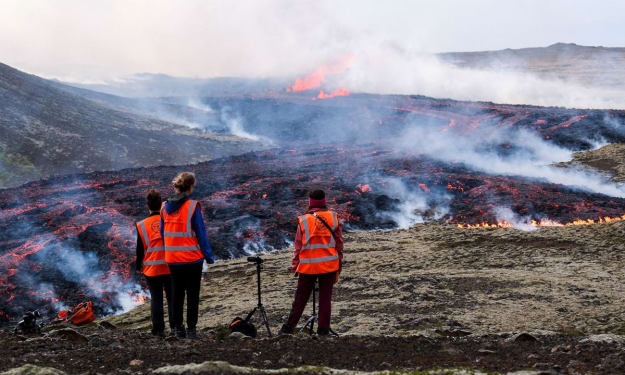
Amidst the billowing ash and the roar of the erupting volcano, a small community stood shattered and scarred. The Iceland volcano eruption had left behind more than just physical devastation; it had etched deep wounds into the souls of those who survived.
By Ikenna Chika3 years ago in Earth
Whispers of Ice
In the far reaches of the Arctic, where the ice meets the sky, a land of enchantment unfolds—a realm where icy plains and towering glaciers hold the stories of an ancient people. This is a land where the beating hearts of indigenous communities resound with an unbreakable bond to the frozen landscapes, and where the urgency of climate change intertwines with a rich cultural heritage.
By Abdulbasit Sa'id3 years ago in Earth
Footprints in the Sand. Content Warning.
In the small coastal village of Xanadu, the winds whispered tales of change, carrying with them the scent of salt and uncertainty. Here, amidst a community bonded by generations of shared experiences, lived a young woman named Layla. Her world was a delicate balance between land and sea, but as the effects of climate change took hold, her home began to crumble beneath the weight of rising tides.
By Kade Quervo3 years ago in Earth
Essay About Dubai. Content Warning.
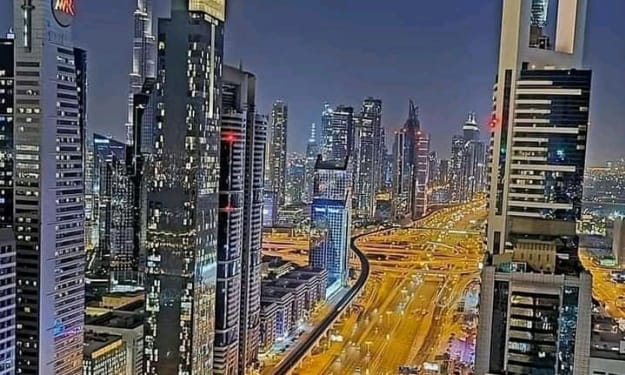
Dubai is one of the most famous cities in the United Arab Emirates. It has become a global hub for tourism, business, and culture. The city has experienced rapid growth and development over the past few decades, transforming from a small fishing village into a modern metropolis. Dubai is located on the coast of the Persian Gulf on the Arabian Peninsula. The city has a hot desert climate with little rainfall and high humidity, especially in the summer months. However, the city's infrastructure has found ways to combat this climate through air conditioning, water management, and greenery. The city's economy is primarily based on tourism, trade, and financial services. Dubai has become a popular travel destination due to its beautiful beaches, luxury hotels, shopping malls, and other attractions. The city also has a massive port that handles large amounts of trade between Europe, Asia, and Africa. Additionally, Dubai has developed into a financial center, especially for Islamic finance. Oil reserves also played an important role in Dubai's initial development but have since declined. Some of Dubai's most famous attractions include the world's tallest building, the Burj Khalifa; the palm-shaped artificial islands; the Dubai Mall, one of the world's largest shopping malls; and the Dubai Fountain, a choreographed water, music and light show. The city also hosts world-class events and exhibitions at venues like the Dubai World Trade Center. Dubai's rapid transformation has mainly been possible due to the vision and leadership of Sheikh Mohammed bin Rashid Al Maktoum, the current ruler of Dubai. Under his leadership, the city has invested heavily in infrastructure, tourism projects, and economic diversification. However, Dubai has also faced some criticisms for its reliance on migrant workers, lack of political freedom, and economic volatility. Despite its rapid growth, Dubai still faces a number of challenges. The city's economy remains heavily dependent on oil, tourism and real estate, making it vulnerable to global economic downturns. There are also concerns about overbuilding and a real estate bubble. Additionally, Dubai's population is primarily made up of migrant workers from South Asia and the Middle East who face issues related to low pay, unsafe working conditions and lack of rights. However, Dubai's leaders continue to pursue an ambitious vision of transforming the city into a global hub and center of innovation. The government has introduced initiatives aimed at economic diversification, developing knowledge-based industries and improving sustainability. Dubai has also hosted major international events like Expo 2020, which was postponed to 2021 due to the COVID-19 pandemic. In conclusion, Dubai has become an iconic example of rapid urban transformation through vision, planning and investment. The city has built world-class infrastructure, developed a diverse economy and established itself as a global tourism and business hub. However, Dubai also faces challenges related to sustainability, inequality and overreliance on specific industries. With continued leadership and adaptation, Dubai has the potential to build upon its successes while working to address its shortcomings as it moves into the future. Dubai is one of the seven emirates that make up the United Arab Emirates. It is located on the southeast coast of the Persian Gulf and has emerged as a global city and business hub of the Middle East. Dubai is known for its shopping malls, luxury resorts and man-made islands. The city has a high standard of living and is the most populous city in the UAE. It has a diverse population with more than 200 nationalities living there. Dubai's recorded history began in the early 18th century. It started as a small fishing village and pearl diving center. In the early 1900s, Dubai discovered large amounts of oil on its territory which led to a boom in population and infrastructure development. By the 1950s, Dubai's economy was thriving due to revenues from trade, tourism and its oil industry. However, the oil reserves were limited and depleted quickly. In the 1960s and 1970s, Dubai's ruler Sheikh Rashid bin Saeed Al Maktoum began an aggressive development strategy to diversify Dubai's economy beyond oil. He invested heavily in infrastructure projects including ports, airports, roads and telecommunications. He also introduced policies to attract foreign investment and talent. These initiatives laid the foundation for Dubai's meteoric rise in the decades that followed. By the 1980s, Dubai had established itself as a regional center for re-export trade. In the 1990s, the government began investing heavily in the tourism industry. Dubai received a major boost in 2000 when it won the bid to host the annual 'Dubai Shopping Festival'. This led to a tourism and real estate boom in the emirate. In the 2000s, Dubai launched several major infrastructure projects including the Palm Islands, the Burj Khalifa, Dubai Mall and many more. These projects transformed the city into a major tourist destination and global business hub. However, the global financial crisis of 2008 hit Dubai hard due to its over-reliance on real estate and tourism. The emirate was forced to seek financial assistance from Abu Dhabi to avoid defaulting on its debt obligations. Despite the crisis, Dubai's economy has rebounded strongly in recent years due to government initiatives to diversify the economy and attract foreign investment. Today, Dubai is a major destination for business, tourism, retail, media and aviation. It is home to the world's busiest airport for international passenger traffic and the Middle East's largest port. The emirate also has a rapidly growing knowledge-based economy focusing on sectors like technology, media, education and healthcare. In summary, Dubai's transformation from a small fishing village to a major global city in just a few decades is nothing short of astounding. Visionary leadership, aggressive infrastructure development, policies to attract foreign investment and talent, and world-class tourism and retail offerings have powered Dubai's rise. While still heavily reliant on its service sectors, the emirate is making progress in diversifying its economy through initiatives in sectors like technology, education and healthcare. With a young and ambitious population, Dubai looks set to remain a major force in the Middle East for years to come.Dubai has a very high standard of living with plenty of luxuries and amenities. The city is known for its flashy architecture, opulent hotels, shopping malls and more.
By OSITA EZEMA3 years ago in Earth
Explore the emotional impact of witnessing the loss of ecosystems, species extinction, or the destruction of natural habitats
Once upon a time, nestled in the heart of a lush forest, there thrived a vibrant ecosystem teeming with life. This place, known as Havenwood, was a sanctuary of biodiversity, where creatures big and small coexisted harmoniously. The symphony of birdsong, the gentle rustle of leaves, and the murmurs of flowing streams created a tapestry of nature's beauty.
By Yulianto Arif3 years ago in Earth