
Structural Roots and Suburban Realities: A Guide to Bay Area Trees
How understanding local microclimates and root mechanics protects your property investment.

A homeowner recently called an arborist to inspect a concrete driveway that had lifted nearly three inches off its base. The cause was standing right next to the garage: a fifteen-year-old Coast Redwood planted four feet from the foundation. It was a well-intentioned decision by a previous owner who wanted fast evergreen shade, but nobody considered how a giant forest species behaves when squeezed into a tight suburban yard.
In urban forestry, this is a common scenario. Trees yield substantial returns in shade and property value, but when species selection ignores root spread and microclimates, that living asset can become an expensive hardscape repair. Northern California's distinct microclimates demand matching the right species to specific site conditions.
Evaluating Core Tree Species for Bay Area Properties
Here is a look at eleven tree species widely planted across Northern California, along with the growth habits property owners need to keep in mind:
Coast Live Oak (Quercus agrifolia): A signature native broadleaf evergreen that handles dry summers with ease and provides dense shade. Because its canopy and root flare expand significantly, give it ample space away from driveways and foundations.
Coast Redwood (Sequoia sempervirens): Fast-growing and iconic, redwoods thrive in cool, foggy coastal air. When planted in hotter inland areas, they require heavy summer irrigation, and their shallow root systems will quickly lift nearby pavement.
California Buckeye (Aesculus californica): Prized for striking spring flowers and smooth gray bark, this tough native drops its leaves in midsummer to save water during dry spells. Its large seed pods do require seasonal cleanup.
Western Redbud (Cercis occidentalis): A compact native ornamental reaching 15 to 25 feet. It tolerates heavy clay soil and dry summers exceptionally well, making its non-invasive roots and vivid pink blooms ideal for tight yards and walkways.
Ginkgo (Ginkgo biloba): Highly resistant to urban pollution, with leaves that turn brilliant gold in fall. Always choose male cultivars like 'Autumn Gold'—female trees drop fleshy seeds that smell rancid when crushed underfoot.
Yew Pine (Podocarpus macrophyllus): An upright evergreen featuring dense foliage and a narrow growth habit. It functions brilliantly as a privacy screen in tight spaces where broad canopy trees cannot fit.
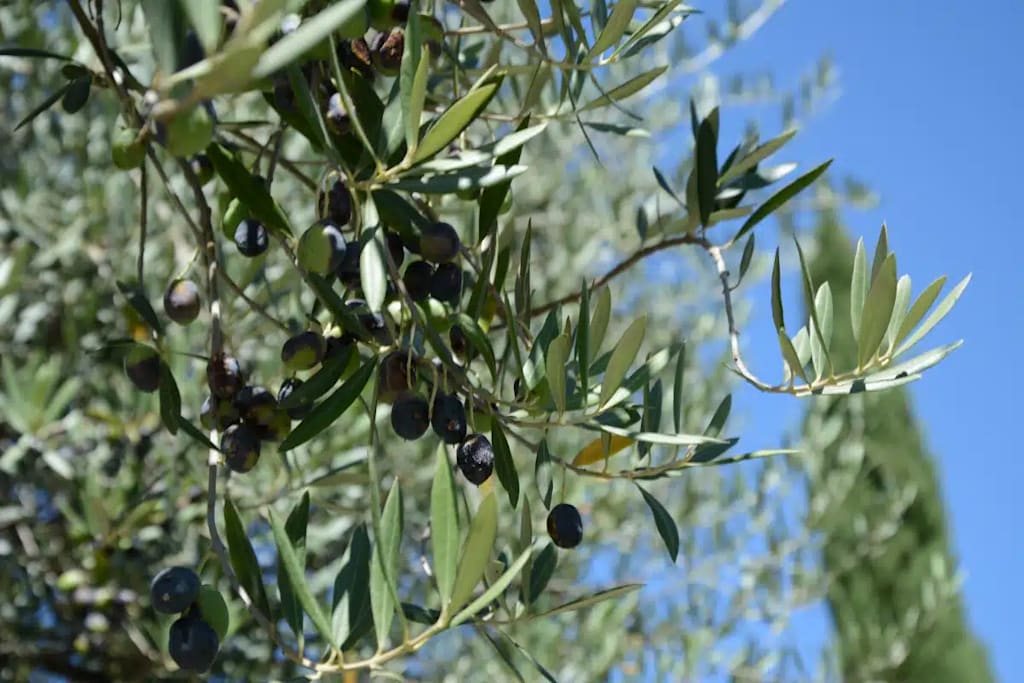
Olive Tree (Olea europaea): Offers a Mediterranean aesthetic with silvery foliage and heat tolerance. Choose fruitless cultivars for paved residential areas to avoid dark fruit staining concrete and patios.
Japanese Maple (Acer palmatum): Slow-growing and elegant, perfect for entryways and courtyards. These maples need protection from harsh afternoon heat, thriving best in morning sun and afternoon shade.
Italian Stone Pine (Pinus pinea): Develops a dramatic, umbrella-shaped canopy over time. While drought-hardy, its massive weight, heavy pinecones, and deadwood accumulation require ongoing professional maintenance.
Bald Cypress (Taxodium distichum): A unique deciduous conifer with soft foliage that turns coppery-orange in autumn. It handles urban soil well, but planting it in moist lawns can cause protruding root "knees."
Incense Cedar (Calocedrus decurrens): A clean, columnar native evergreen that handles inland heat far better than coastal redwoods. It stays relatively narrow, making it an excellent low-litter privacy hedge.
Site Assessment Checklist Before Planting
Before purchasing a tree, run through these critical site checks:
Space & Footprint: Calculate mature height and spread for both the canopy and root system.
Debris Hazards: Avoid planting fruiting olives, buckeyes, or female ginkgos near walkways or patios.
Soil Dynamics: Heavy clay retains moisture differently than sandy soil; choose a species suited to your ground conditions.
Wildfire Clearance: In high fire hazard zones, evaluate canopy density, flammability, and necessary roof clearances.
Planting Window: Plant between October and February. Winter rains allow root systems to settle long before summer heat arrives.
Balancing aesthetic goals with spatial and environmental realities prevents costly removals down the road. Taking the time to select the right species ensures a healthy, resilient canopy that enhances your property for decades to come.
About the Creator
ORB Tree Service Marketing
ORB Tree Service Marketing provides SEO and local search strategies for the tree care and roofing industries. Follow us for insights on search optimization and lead generation for home services.
Enjoyed the story? Support the Creator.
Subscribe for free to receive all their stories in your feed.
Comments
There are no comments for this story
Be the first to respond and start the conversation.