
Southeast Asia’s Coconut Charcoal Industry Revolution
How Modern Carbonization Technology Improves Production Efficiency
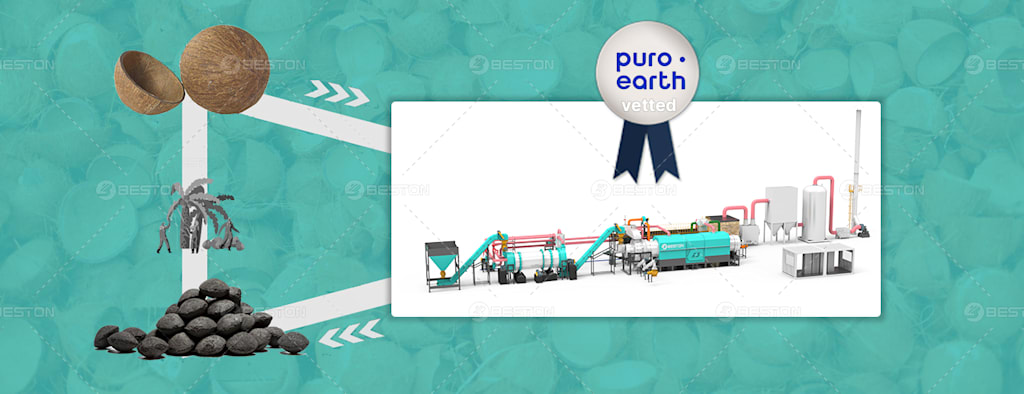
Southeast Asia is one of the world’s largest producers of coconuts, generating millions of tons of coconut shells every year. Countries such as Indonesia, the Philippines, Thailand, and Vietnam have abundant coconut resources, making the region a key supplier of coconut shell charcoal and charcoal briquettes for domestic and international markets. As global demand for eco-friendly fuel products continues to grow, the coconut charcoal industry is undergoing a significant transformation. Modern coconut charcoal machines are playing a crucial role in improving production efficiency, reducing waste, and supporting sustainable development.
Growing Demand for Coconut Shell Charcoal
Coconut shell charcoal has become increasingly popular due to its high calorific value, long burning time, and low ash content. It is widely used in barbecue charcoal, shisha or hookah charcoal, industrial fuel applications, and activated carbon production. Compared with traditional wood charcoal, coconut shell charcoal is considered a more sustainable alternative because it utilizes agricultural waste rather than requiring the cutting of trees.
The rapid growth of export markets in Europe, the Middle East, and North America has encouraged Southeast Asian producers to expand their operations. However, traditional charcoal production methods often struggle to meet increasing demand while maintaining consistent product quality. This challenge has created opportunities for advanced coconut charcoal processing technologies.
The Limitations of Traditional Production Methods
Many small-scale charcoal producers still rely on manual operations and conventional kilns. While these methods have been used for decades, they present several disadvantages:
- Low production efficiency
- Inconsistent charcoal quality
- High labor requirements
- Significant energy loss during carbonization
- Environmental concerns related to smoke emissions
These issues can limit profitability and make it difficult for manufacturers to compete in international markets where quality standards are becoming increasingly strict.
How Modern Coconut Charcoal Machines Transform Production
Modern coconut charcoal machines are designed to streamline the entire production process, from raw material preparation to final charcoal output. By integrating automation and advanced technology, these machines help producers achieve higher productivity and better product consistency.
1. Efficient Carbonization Process
Advanced carbonization equipment can convert coconut shells into charcoal more efficiently than traditional kilns. Modern systems often feature temperature control mechanisms that ensure optimal carbonization conditions throughout the process.
As a result, manufacturers can achieve:
- Higher charcoal yield
- Reduced carbonization time
- Lower fuel consumption
- More stable product quality
This improved efficiency directly contributes to higher production capacity and reduced operating costs.
2. Automated Material Handling
A modern coconut charcoal production line can automate several labor-intensive tasks, including feeding, transportation, and discharge of materials. Automation minimizes human error and allows facilities to operate continuously for longer periods.
With automated handling systems, producers can:
- Reduce labor costs
- Improve workplace safety
- Increase daily production output
- Maintain a more stable workflow
3. Consistent Product Quality
Export markets often require charcoal products to meet specific standards regarding fixed carbon content, moisture levels, and ash content. Modern coconut charcoal machines provide better control over processing parameters, helping manufacturers produce uniform charcoal batches.
Consistent quality offers several advantages:
- Stronger customer satisfaction
- Better export opportunities
- Reduced product rejection rates
- Enhanced brand reputation
4. Environmental Benefits
Sustainability has become a major focus in the charcoal industry. Modern coconut charcoal machines are increasingly equipped with emission control systems and energy recovery technologies. Some advanced carbonization systems can recycle combustible gases generated during production and use them as a heat source.
This approach helps:
- Reduce air pollution
- Lower energy consumption
- Improve resource utilization
- Support environmental compliance
For Southeast Asian manufacturers, adopting cleaner production technologies can improve competitiveness in environmentally conscious global markets.
Opportunities for Southeast Asia
The future of Southeast Asia’s coconut charcoal industry looks promising. The region possesses abundant raw materials, established export channels, and growing investment in manufacturing technology. As international demand for sustainable charcoal products continues to rise, producers who invest in modern coconut charcoal machines will be better positioned to capture market opportunities.
Governments and industry stakeholders are also promoting waste utilization and circular economy initiatives. By converting coconut shell waste into valuable charcoal products, manufacturers can create additional revenue streams while reducing agricultural waste disposal challenges.
Conclusion
The coconut charcoal industry in Southeast Asia is experiencing a major transformation driven by technological innovation and rising global demand. Traditional production methods are gradually being replaced by advanced coconut charcoal machines that offer higher efficiency, improved product quality, and better environmental performance.
For charcoal manufacturers seeking long-term growth, investing in modern production equipment is no longer just an option—it is a strategic necessity. By embracing automation, efficient carbonization technology, and sustainable practices, Southeast Asia can strengthen its position as a global leader in coconut shell charcoal production while supporting a greener and more sustainable future.
About the Creator
Enjoyed the story? Support the Creator.
Subscribe for free to receive all their stories in your feed.
Comments
There are no comments for this story
Be the first to respond and start the conversation.