
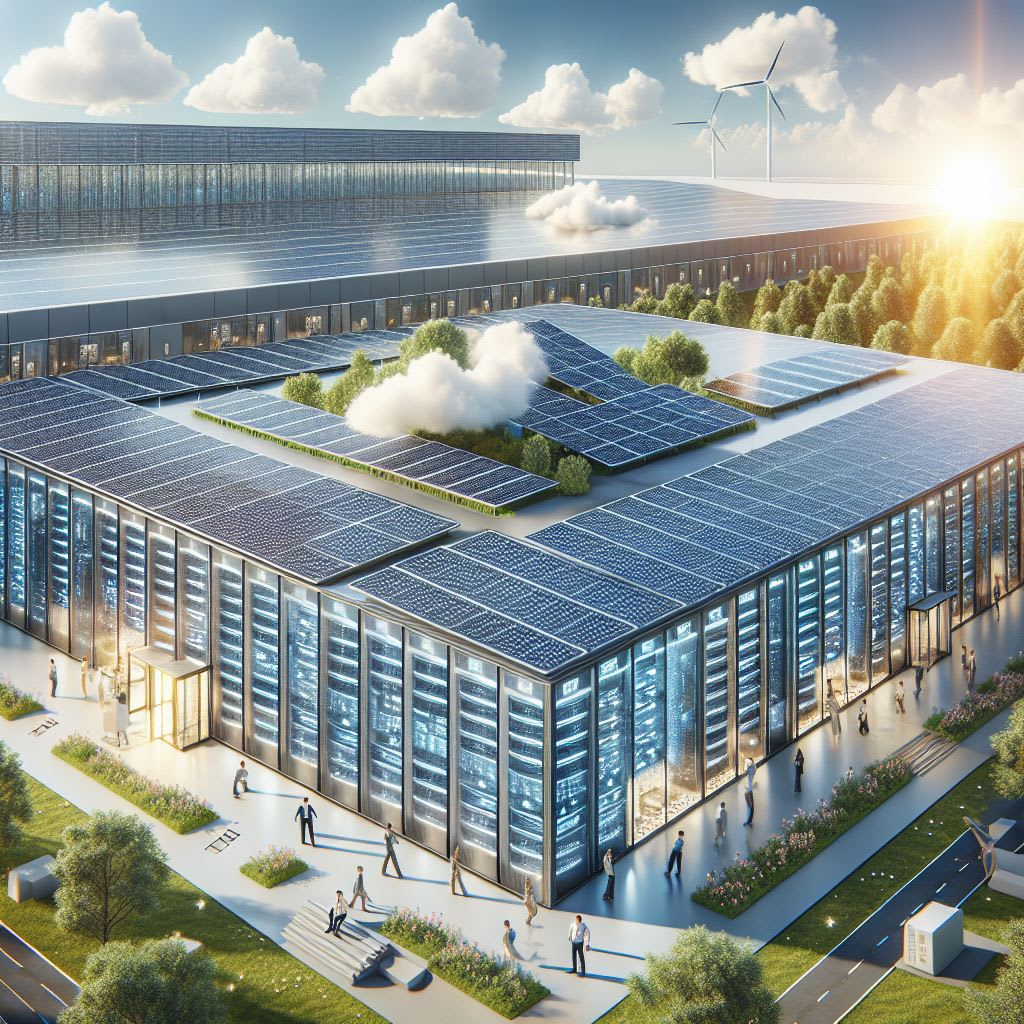
Solar-Powered Data Centers:
Reducing the Carbon Footprint of the Digital World

In an era where sustainable energy solutions are becoming increasingly crucial, space-based solar power (SBSP) emerges as a groundbreaking concept that could transform how we harness and distribute energy globally. This innovative technology, once confined to science fiction, is now gaining serious attention from space agencies and energy experts worldwide.
Space-based solar power involves collecting solar energy through satellites equipped with solar panels in geostationary orbit, converting it into microwave energy, and beaming it back to Earth. The microwaves are then reconverted into electricity at receiving stations on the ground. Unlike traditional solar power, SBSP systems can generate electricity 24/7, unaffected by weather conditions or the day-night cycle.
The global space-based solar power market is experiencing remarkable growth, with recent estimates suggesting it could reach USD 17.5 billion by 2030. Countries like China, Japan, and the United States are already investing heavily in this technology. India, too, is making significant strides in this domain, with ISRO actively researching SBSP possibilities.
For India, SBSP presents a particularly attractive solution to our energy challenges. With our growing population and increasing energy demands, traditional power sources are struggling to keep pace. The Department of Space has already initiated feasibility studies for implementing SBSP systems, potentially revolutionizing energy access in remote areas where conventional grid infrastructure is challenging to establish.
The advantages of SBSP are compelling. Unlike terrestrial solar panels that typically operate at 20-25% efficiency due to atmospheric interference, space-based panels can achieve efficiency rates of up to 40%. Moreover, these systems can generate power continuously, providing a reliable baseline power supply that could complement existing renewable energy sources.
However, challenges remain. The initial infrastructure cost is substantial, with estimates suggesting that launching a single SBSP satellite could cost several billion dollars. Technical hurdles include developing efficient power transmission systems and ensuring the safety of microwave beaming. Scientists and engineers worldwide are working to address these challenges, with promising breakthroughs in lightweight solar panel technology and wireless power transmission.
Recent developments in the field are encouraging. The European Space Agency has announced plans for its first SBSP demonstration project, while China aims to launch a test satellite by 2028. These initiatives are driving innovation in the sector and bringing down costs through technological advancements.
In India, the renewable energy landscape is evolving rapidly, and companies like Waaree Energies are playing a crucial role in this transformation. As India's largest solar panel manufacturer, Waaree has been at the forefront of solar technology innovation. Their expertise in developing high-efficiency solar panels and power systems positions them perfectly to contribute to future SBSP projects. With their proven track record in renewable energy solutions and commitment to technological advancement, Waaree could be a key player in bringing space-based solar power to reality in India, helping to bridge the gap between current energy needs and future sustainable solutions.
The future of energy lies in innovation, and space-based solar power represents one of the most promising frontiers in this journey. As technology advances and costs decrease, we may soon see this revolutionary concept becoming a practical reality, transforming how we power our world.
Space-based solar power (SBSP) is emerging as a revolutionary energy solution, harnessing solar energy through orbiting satellites and beaming it to Earth as microwaves. Unlike traditional solar power, SBSP operates 24/7, unaffected by weather or daylight. Countries like China, Japan, and the U.S. are investing heavily, with India’s ISRO exploring its feasibility to meet growing energy demands.
SBSP offers high efficiency (up to 40%) and continuous power generation but faces challenges like high infrastructure costs and complex power transmission. Despite this, global efforts, including ESA and China’s planned test projects, are driving innovation. Indian companies like Waaree Energies could play a crucial role in future SBSP projects. As technology advances and costs drop, SBSP could revolutionize renewable energy worldwide.
About the Creator
Waaree Energies
Waaree Energies Limited was founded in 1989, with headquarters in Mumbai, India.
Enjoyed the story? Support the Creator.
Subscribe for free to receive all their stories in your feed.
Comments
There are no comments for this story
Be the first to respond and start the conversation.