
Scientists fear that near-permanent heatwaves may soon confine some seas.
Heatwaves' effects on Earth's oceans

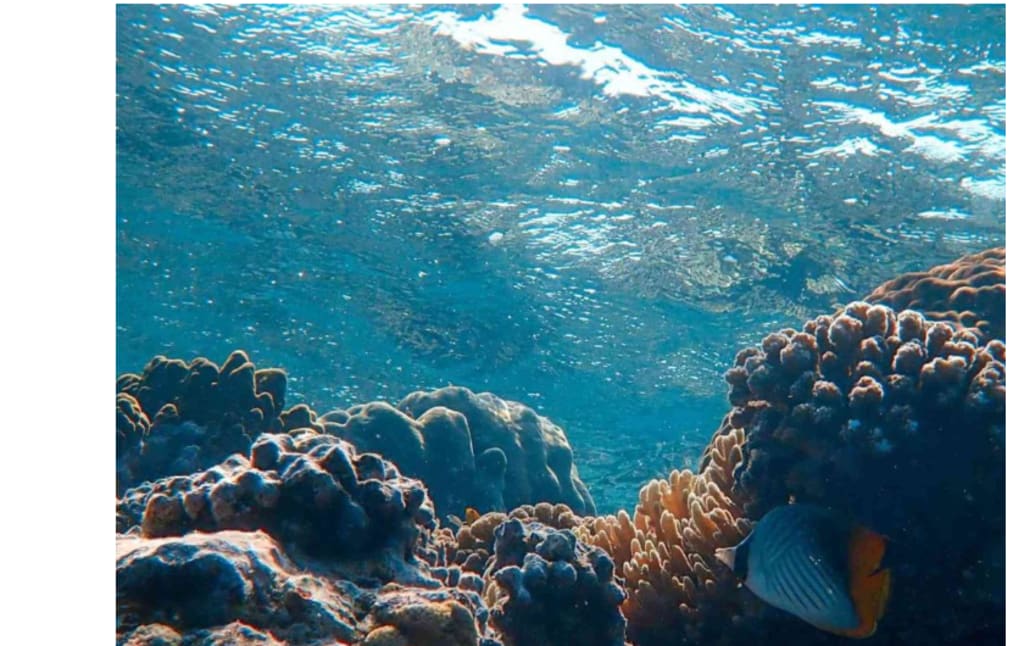
The seas heal. The majority of marine conservation plans operate under the premise that when heatwaves occur, fish either escape or perish, the water cools, and the count resets. Resets following heatwaves may cease to occur, according to a recent study of 19 enclosed seas. Some are expected to experience hot conditions for over 330 days annually. not a transient extreme. a brand-new permanent condition.
Heatwaves' effects on Earth's oceans
Matthias Gröger, a physical oceanographer at the Leibniz Institute for Baltic Sea Research Warnemölle (IOW) in Germany, headed the team that produced the findings. For 19 enclosed seas worldwide, his team ran climate model projections.
These include the Mediterranean, the Baltic, the Red Sea, the Gulf of Mexico, and fifteen additional regions of saltwater surrounded by land. Compared to open ocean basins, they are shallow and small, with minimal water exchange outside of their small gates. The issue is that of geometry. Instead of dissipating throughout the Pacific, heat accumulates in a small area. There is nowhere to go and no way to dispose of it.
What is considered permanent
By definition, a normal maritime heatwave is brief: temperatures rise above the historical average 90% of the time and persist for at least five days before breaking. What happens when "short" stops applying? the team questioned.
The poorest category was dubbed "near-permanent." Over 90% of a sea's surface would be covered by the heat blanket during more than 330 days of heatwaves per year. The episodic element has vanished.
The unexpected aerosol
There is a surprising tale about clean air behind it. Around 2000, seas started warming significantly more quickly than the global ocean as a whole. The team's analysis attributes a significant portion of this increase to industrial aerosols.
By definition, a normal maritime heatwave is brief: temperatures rise above the historical average 90% of the time and persist for at least five days before breaking. What happens when "short" stops applying? the team questioned.
The poorest category was dubbed "near-permanent." Over 90% of a sea's surface would be covered by the heat blanket during more than 330 days of heatwaves per year. The episodic element has vanished.
The unexpected aerosol
There is a surprising tale about clean air behind it. Around 2000, seas started warming significantly more quickly than the global ocean as a whole. The team's analysis attributes a significant portion of this increase to industrial aerosols.
In these enclosed waters, end-of-century warming under that approach is between 3.6 and 12.6 degrees Fahrenheit higher than preindustrial levels. According to a 2022 study, up to 70% of the world's most biodiverse maritime regions might be under jeopardy due to that level of warming.
Despite Paris
What happens when mankind achieves its climate goals is the more dramatic outcome. The harshest effects disappear if global warming is kept below the Paris Agreement ceiling, which is roughly 3.6 degrees Fahrenheit above preindustrial levels. Near-permanent heatwave territory is avoided by the majority of the 19 seas. Not all, though. The eastern Mediterranean and Hudson Bay continue to cross the border.
Nevertheless, 13 of the 19 oceans continue to warm over preindustrial baselines by more than 1.8 degrees Fahrenheit. By the middle of the century, more than 60% of the land under these oceans experiences heatwaves for most of the year.
That is the part that is unnerving. With no return to baseline on any human timeline, climate stabilisation keeps these enclosed seas within a warmer regime than the one in which their ecosystems formed.
Basins that are hardest hit
High latitudes are typically where the most exposed waterways are found. The team's cumulative impact score places Hudson Bay, the Barents Sea, the Kara Sea, and the Laptev Sea at the extreme end.
Temperatures in the Arctic are already rising at a rate that is over four times faster than the global average, and this acceleration extends into the ocean. Sea ice retreats. More sunlight is absorbed by dark open water. The warmth sustains itself.
On paper, tropical basins appear more appealing due to their lower temperature increases. However, tropical animals already live close to their temperature limits; even a slight increase might cause significant stress.
According to a different study, coral bleaching episodes are now yearly occurrences in areas that previously only experienced them once every ten years, and marine heatwaves have already increased in frequency worldwide since 2000.
Having to deal with heat
Marine scientists had projections for certain seas, such as the Baltic here and the Mediterranean there, prior to our work. There was no global picture of which enclosed waters will undergo permanent change or when.
There is now one: a graded evaluation of the basins closest to the edge and the time frame for action by fisheries management and coastal communities. Gröger's group contends that mitigation won't be sufficient on its own. Alongside the emissions work, there must be restoration, heatwave early warning systems, and reductions in local stressors such as nutrient pollution.
For the enclosed waters of the world, some change is inevitable. The only real decision is how far we can go and how soon we can adapt to living in oceans that don't cool off.
About the Creator
Enjoyed the story? Support the Creator.
Subscribe for free to receive all their stories in your feed.
Comments
There are no comments for this story
Be the first to respond and start the conversation.