
Revolutionizing Indian Agriculture: Embracing Natural Farming
Natural farming holds tremendous potential for transforming Indian agriculture. It offers a sustainable and resilient alternative to conventional farming practices, promoting soil health, biodiversity, and farmer livelihoods.
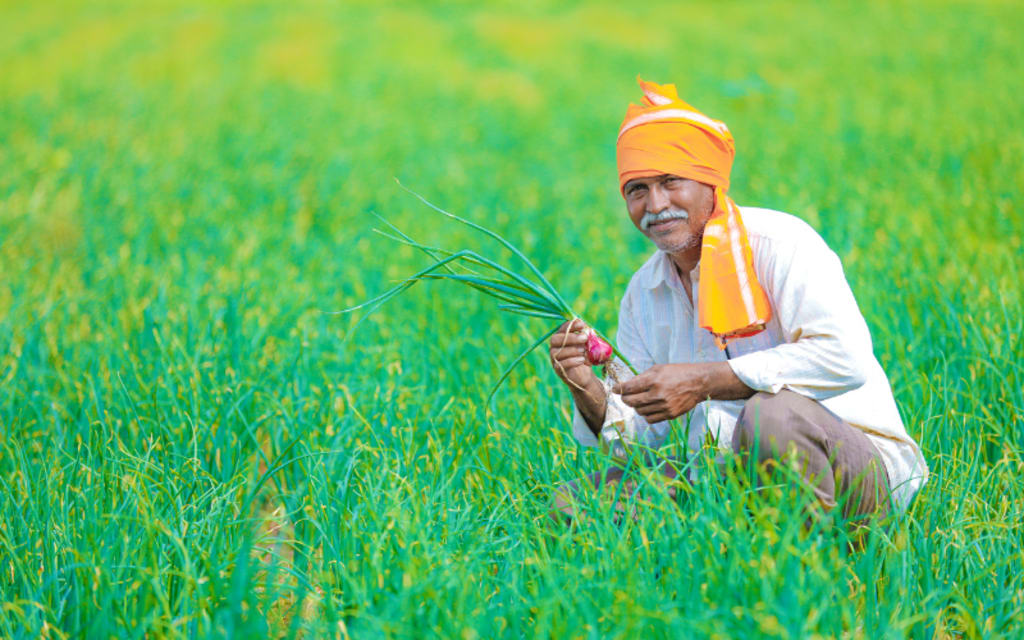
Agriculture has long been the backbone of India's economy, employing a significant portion of its population and contributing to food security. However, the traditional practices of agriculture have posed several challenges, including overuse of chemical fertilizers, soil degradation, water scarcity, and environmental degradation. In recent years, there has been a growing interest in alternative farming methods, with natural farming emerging as a promising solution.
Natural farming, also known as organic or sustainable farming, is a holistic approach that emphasizes working with nature rather than against it. It is rooted in principles such as biodiversity, soil health, and minimal external inputs. By promoting the use of organic manures, composting, crop rotation, and natural pest control methods, natural farming aims to restore and maintain the ecological balance of agricultural ecosystems.
India, with its diverse agro-climatic conditions and vast agricultural land, is well-suited for the adoption of natural farming practices. The country has a rich history of traditional farming systems, such as the ancient practice of "Zero Budget Natural Farming" (ZBNF) promoted by Padma Shri awardee Subhash Palekar. ZBNF emphasizes the use of natural fertilizers and beneficial microorganisms, while avoiding the use of chemicals and external inputs. It has gained popularity in states like Andhra Pradesh, Karnataka, and Himachal Pradesh, where governments have actively promoted its adoption.
The benefits of natural farming are numerous and far-reaching. Firstly, it promotes soil health and fertility by minimizing soil erosion and improving its organic matter content. This leads to enhanced water retention capacity, reducing the dependency on irrigation. Natural farming also encourages the cultivation of diverse crops, fostering biodiversity and reducing the vulnerability to pests and diseases.
Moreover, natural farming contributes to sustainable rural development by reducing input costs for farmers. By minimizing the use of costly chemical inputs, farmers can save money and achieve higher profit margins. This, in turn, improves their livelihoods and strengthens local economies. Additionally, natural farming promotes self-sufficiency by enabling farmers to produce their own inputs, such as organic fertilizers and biopesticides, thereby reducing their reliance on external markets.
Furthermore, natural farming has a positive impact on the environment. By avoiding the use of synthetic fertilizers and pesticides, it reduces chemical pollution in soil and water resources. This leads to improved water quality and biodiversity conservation. Natural farming practices also contribute to climate change mitigation by sequestering carbon in the soil, reducing greenhouse gas emissions, and promoting climate-resilient agriculture.
To fully realize the potential of natural farming in India, concerted efforts are required from various stakeholders. Governments should provide policy support, including financial incentives, training programs, and infrastructure development, to encourage farmers to adopt natural farming practices. Research institutions and agricultural universities should conduct research and disseminate knowledge on natural farming techniques suitable for different regions and crops.
Farmers, on their part, need to be open to learning and adapting to new methods. Peer-to-peer learning platforms and farmer producer organizations can play a crucial role in knowledge sharing and capacity building. Consumers can also contribute by demanding organic produce, thus creating a market pull for natural farming products and encouraging farmers to adopt sustainable practices.
Some companies such as Bulk Agro Chem are trying to improve the current situation of natural farming in India by offering superior quality agro products to farmers.
In conclusion, natural farming holds tremendous potential for transforming Indian agriculture. It offers a sustainable and resilient alternative to conventional farming practices, promoting soil health, biodiversity, and farmer livelihoods. By embracing natural farming, India can pave the way for an environmentally conscious and economically prosperous agricultural sector.
About the Creator
Enjoyed the story? Support the Creator.
Subscribe for free to receive all their stories in your feed.
Comments
There are no comments for this story
Be the first to respond and start the conversation.