
Researchers Dread an Undeniable Fiasco in Earth's Circle Because of the Space Garbage Emergency
Researchers Dread an Undeniable Fiasco in Earth's Circle Because of the Space Garbage Emergency
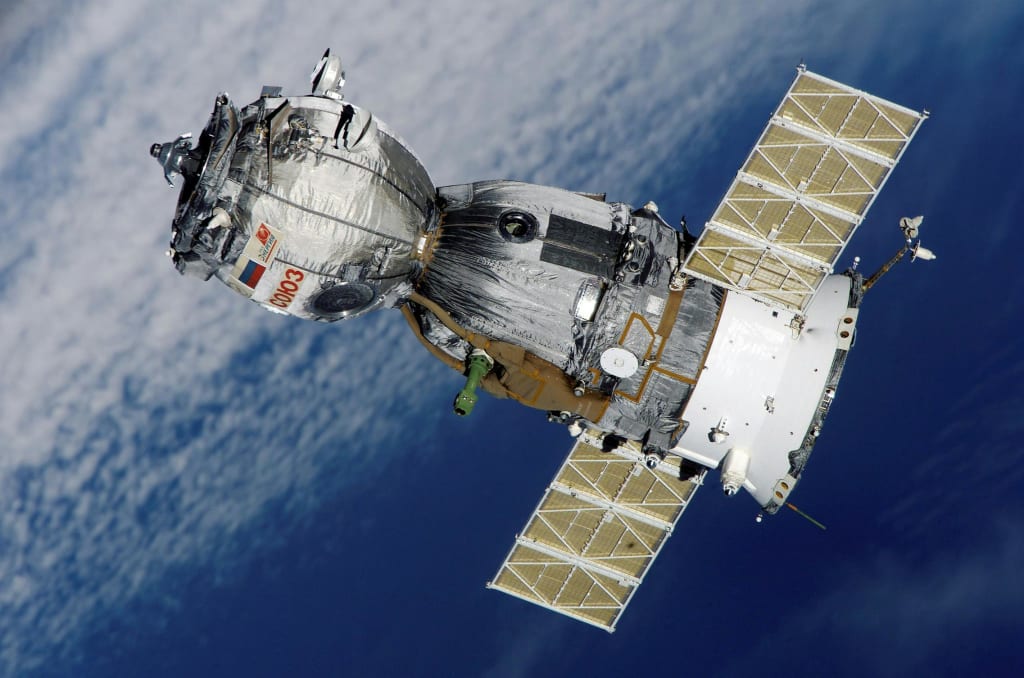
Specialists caution that the rising issue of room trash in low Earth circle is representing a risk to future missions, satellites, and people. With in excess of 30,000 things being followed and more pieces from ASAT rocket tests and phantom rockets expanding, the chance of horrendous impacts is currently a question of "when" as opposed to "if."
Driving researchers and space organizations say the development of room trash in low Earth circle (LEO) has arrived at a risky tipping point. Specialists caution that a horrendous impact is currently unavoidable as great many flotsam and jetsam, including pieces from hostile to satellite (ASAT) tests, dead satellites, and deserted rocket stages, plunge through space at incredibly high rates. Worries over the wellbeing of space travelers, satellites, and the developing number of room missions have been raised by the developing danger.
The serious risks of room garbage, particularly from ASAT rocket testing and apparition rockets — utilized rocket arranges left in circle after past space missions — have frightened McKnight and his group. These remaining parts are passed on to turn ridiculously fully expecting running into something. "Many years of leaving rockets in circle, and shooting against satellite rockets, are encompassing Earth with 'delayed bombs,' that will compromise space travelers into the future," McKnight forewarned in a meeting.
Close to Misses and Chain Responses
Human spaceflight is particularly in danger from space flotsam and jetsam. In spite of the fact that there haven't been any fatalities from impacts with space trash yet, the Global Space Station (ISS) has previously had various close to misses. A 5-millimeter opening was punched in the mechanical Canadarm2 that was associated with the Global Space Station in 2021 by a small piece of flotsam and jetsam. The episode showed the gravity of the danger, despite the fact that the harm was somewhat negligible. As indicated by Dan Ceperley, the Head Working Official at LeoLabs, "Any section bigger than a couple of millimeters is likely lethal to space explorers." We could be killed by what we can't see.
The genuine danger originates from a peculiarities called the Kessler Condition, which expresses that a solitary space impact might create more garbage, which could then cause more crashes in an outpouring impact. Space missions are continually in danger from the chance of a haze of flotsam and jetsam that would wait in circle for ages in the event that two gigantic items, as deserted rocket stages, impacted.
In June 2022, two enormous rocket bodies — one American and one Soviet — came surprisingly close to impacting, causing a close calamity. The garbage field that would have come about because of their crash would have extended many kilometers, jeopardizing satellites, space stations, and forthcoming missions.
"The conflict would have been destructive, heaving flotsam and jetsam over a large number of kilometers and making shrapnel that would wait for a really long time," McKnight said, highlighting the earnestness of such an event.
Worldwide Coordinated effort and Strategic Snags
Endeavors to oversee space trash have been drowsy notwithstanding the mounting concern, especially among the three biggest spacefaring countries on the planet — China, Russia, and the US — which are responsible for 90% of the trash in low Earth circle. Discretionary endeavors to tidy up space have experienced a few obstructions, and these nations have not yet settled on the most proficient method to diminish the trash they have abandoned.
The Protected World Establishment's Ranking executive, Ian Christensen, underlines the significance of worldwide cooperation. As per Christensen, convincing the three principal spacefaring countries to fire tidying up their own gigantic garbage things is the most troublesome political errand. Yet, he alerts that things could go crazy in the event that there is definitely not an overall responsibility. As per a few investigators, just a huge effect that delivers a ton of flotsam and jetsam might rouse world powers to act.
Huge scope arrangements are still in their early stages, yet different countries like Europe, the Assembled Realm, and Japan are zeroing in on limited scope Dynamic Flotsam and jetsam Evacuation (ADR) programs. Despite the fact that it has not yet been endorsed by Congress, the proposed Circles Act in the US plans to give early supporting to ADR advances.
A Test of skill and endurance: Space Investigation's Future Is At serious risk
Not simply space travelers and space stations are in danger from space garbage; satellites that help worldwide correspondence, weather conditions checking, and route frameworks are likewise in danger. Specialists stress that except if preplanned steps are finished, the circumstance could deteriorate as the quantity of satellites in circle is anticipated to increment decisively over the course of the following quite a while.
Despite the fact that LeoLabs concedes that it can follow objects bigger than 10 cm, the organization is utilizing cutting edge radar and computerized reasoning innovations to follow space trash and estimate high-likelihood crashes. The countless more modest pieces that stay inconspicuous give the genuine danger. Ceperley said, "This sobering reality implies that crashes are not an issue of if however when."
One more level of intricacy is added by the risk to business satellites and the developing number of uber heavenly bodies, similar to SpaceX's Starlink. The "main 50 articles" that ought to be taken out first to deflect catastrophes incorporate 18 decommissioned Russian rocket stages, as per McKnight and his partners at LeoLabs.
Is It Conceivable to Clear the Space Before It's Past the point of no return?
Specialists agree that to eliminate space garbage and try not to imperil future missions, more intense activity is required. By the by, there is no monetary motivation for countries or organizations to burn through cash on squander freedom, which makes it trying to assemble assets for broad cleanup activities. Certain individuals imagine that Dynamic Flotsam and jetsam Expulsion (ADR) missions may at last become practical and reasonable, particularly in light of the fact that the worldwide space market is supposed to reach more than $1 trillion by 2040.
At gatherings like the Worldwide Astronautical Congress (IAC), where top space specialists banter ways of settling what is happening, McKnight and Christensen are both calling for fast activity. Automated space pulls are one proposed strategy for safely catching and deorbiting weighty trash particles. A few futurists, similar to Explorer Space's Jeffrey Manber, see reusing dead rocket stages to make space station modules or orbital homes from now on.
The need to tidy up space is become more squeezing as the space economy continues to develop. Without facilitated worldwide activity, the steadily expanding issue of room flotsam and jetsam might jeopardize both specialized progression and human spaceflight later on.
The Rising Space Garbage Issue
Dead satellites, spent rocket stages, crash pieces, and other man-made things left in space are alluded to as space trash, or orbital garbage. Without fitting administration or evacuation methods, more flotsam and jetsam was created as space investigation expanded, especially after the 1960s. From enormous, deserted rocket to minuscule particles of metal and paint, a huge number of bits of garbage are at present circling the Earth at as much as 28,000 kilometers each hour.
Indeed, even little pieces of garbage give a serious gamble at such high rates. Indeed, even a paint chip piece can truly hurt working satellites or rocket, putting innovative assets as well as living souls at peril. Worry over potential impacts that could create more flotsam and jetsam in a flowing impact known as the Kessler Condition has developed because of this growing assortment of room junk.
Kessler Disorder: A Serious Wariness
In 1978, NASA researcher Donald J. Kessler at first hypothesized the Kessler Condition, which portrays what is happening in which the thickness of articles in low Earth circle (LEO) is perfect to the point that impacts between them are undeniable. In an out of control chain response, every crash would create extra trash, which would then bring about additional impacts.
Space travel and satellite tasks are incredibly hazardous in light of this outpouring influence, which could make locales of Earth's circle futile for quite a long time or even centuries.
Such impacts are almost certain with each new satellite send off. The circumstance has deteriorated because of the development of business space firms like SpaceX that are sending off monstrous satellite star groupings to give web network around the world. These projects are progressive, yet they likewise improve the probability that the Kessler Disorder might appear by adding huge number of new items to circles that are now blocked.
Potential Repercussions of an Orbital Fiasco
The impacts could be horrendous on the off chance that space garbage amassing is permitted to proceed uncontrolled. Feasible for satellites offer imperative capabilities like GPS route, weather conditions estimating, and worldwide correspondences to be obliterated or genuinely harmed. Losing these frameworks would significantly affect everyday living, impacting everything from public safety to worldwide exchange.
Also, there would be critical deterrents to space missions, including forthcoming investigation activities to the Moon, Mars, and then some. Humankind's capacity to travel farther into space would be obliged by the gamble of crash with flotsam and jetsam, which would make it more hard to send off and support space apparatus in circle.
The Emergency's Promptness
Researchers alert that the window for activity is shutting as the space flotsam and jetsam issue demolishes notwithstanding these endeavors. As per a few specialists, we may be drawing near to a place where future space exercises would become impractical because of how much waste in circle. In the event that we don't make a speedy move, we can wind up in a circumstance where space is excessively dangerous for innovation headway or human missions.
The issue of room rubbish is turning out to be all the more broadly perceived, which has expanded the direness of tracking down arrangements. However, given the intricacy of the issue, supported commitment, worldwide coordinated effort, and imagination are required. Whether we can keep investigating the last wilderness or become abandoned relies upon mankind's ability to control the space climate in the impending years.
Researchers alert that the window for activity is shutting as the space garbage issue demolishes despite these endeavors. As per a few specialists, we may be drawing near to a place where future space exercises would become unreasonable because of how much garbage in circle. In the event that we don't make a fast move, we can wind up in a circumstance where space is excessively dangerous for innovation progression or human missions.
The issue of room waste is turning out to be all the more generally perceived, which has expanded the desperation of tracking down arrangements.
However, given the intricacy of the issue, supported commitment, worldwide coordinated effort, and inventiveness are required. Whether we can keep investigating the last wilderness or become trapped by our own mechanical waste really relies on how well mankind can deal with the space climate in the forthcoming years.
Cures and Drives to Lessen the Emergency
To stay away from a terrible circumstance, researchers and space associations are effectively dealing with replies to the issue. Various ideas have been advanced, for example,
ADR, or dynamic flotsam and jetsam evacuation: To gather and dispose of space waste, a few innovations are being created. Automated arms and spear gadgets that could get and deorbit garbage are among the ideas. To test these innovations, certain exploratory missions are in progress, for example, the European Space Organization's (ESA) ClearSpace-1.
Better Satellite Plan: One significant preventive step is to configuration satellites with broadened functional lifetimes and coordinated components for controlled deorbiting at the finish of their missions. There would be less deserted objects in circle in the event that satellites could decommission and wreck in the climate.
Worldwide Participation and Control: Composed global endeavors are vital because of the worldwide person of room. To make and execute more severe regulations administering satellite send-offs, orbital situating, and end-of-life removal, state run administrations and space organizations should collaborate.
Following and Observing: To help forestall crashes, space trash is checked by refined global positioning frameworks, such those presented by the U.S. Space Observation Organization (SSN). Following is only a transitory fix, however, as the volume of flotsam and jetsam makes it more testing to go safely in space.
The space trash disaster is a new and concerning issue that has arisen in light of the colossal improvement in human activity in space all through ongoing numerous years.
The development of rubbish from deserted satellites, spent rocket stages, and other disposed of materials left in Earth's circle is the reason for this rapidly developing issue. With a huge number of more modest pieces and north of 23,000 bits of room rubbish bigger than 10 cm as of now circling the Earth, researchers, specialists, and space associations overall are turning out to be progressively worried about the chance of disastrous impacts and their potential repercussions.
In view of the way this issue is presently creating, numerous specialists are worried that an unavoidable disaster in Earth's circle may be up and coming, jeopardizing future space travel as well as imperative satellite administrations that we depend on consistently.
The Rising Space Garbage Issue
The amount of things sent off into space has risen persistently since the 1957 send off of Sputnik 1, yet it has climbed significantly more over the most recent 20 years. Earth's circle has developed more swarmed because of the improvement of satellite interchanges, GPS, and business space tasks. Our reality is circled by large number of satellites, and each one that is delivered outdated or dead adds to the all around huge trash issue.
As additional nations and confidential associations send off satellites, how much space garbage that as of now circles the Earth — in excess of 8,000 tons — is anticipated to emphatically increment. Prior to getting back to Earth or lighting in the air, a significant number of these things will go through many years or even hundreds of years in circle.
In 1978, NASA researcher Donald J. Kessler hypothesized the Kessler Disorder, a peculiarities brought about by the gathering of this garbage. This speculation expresses that the likelihood of impacts between objects in low Earth circle develops with their thickness. More garbage is made after each contact, raising the probability of additional crashes. A situation where Earth's circle is so overwhelmed with garbage that satellite tasks and space travel are delivered incomprehensible may result from this cascading type of influence.
Worldwide Collaboration and Legitimate Hardships
Since space is a common region, overall collaboration is important to address the space garbage circumstance. The issue is made more mind boggling by the way that space garbage rises above public limits and that rubbish delivered in one country might represent a danger to another's satellites or space apparatus. Gaining critical headway in space trash moderation requires the foundation of exact guidelines and guidelines as well as the authorization of such guidelines.
Figuring out who is answerable for space trash is one of the major legitimate issues. The 1967 Space Arrangement considers countries responsible for the things they send into space. However, figuring out who is liable for impacts or mischief welcomed on by space rubbish is a convoluted legitimate matter, especially when flotsam and jetsam from a few nations is involved.
About the Creator
Enjoyed the story? Support the Creator.
Subscribe for free to receive all their stories in your feed.
Comments
There are no comments for this story
Be the first to respond and start the conversation.