
Redefining Global Sustainability Through Advanced Thermal Recovery
From Burden to Bio-Resource
The trajectory of global waste generation is currently locked in a steep ascent, fueled by rapid urbanization, industrial intensification, and the linear "take-make-dispose" consumption model. Traditional disposal methods—primarily landfilling and open-air incineration—are no longer merely inefficient; they are ecological liabilities. These practices contribute significantly to methane emissions, persistent soil toxicity, and the irreversible loss of finite resources. To meet the demands of a net-zero future, the global community is shifting its gaze toward Advanced Thermal Recovery (ATR). By leveraging the principles of thermochemical decomposition, this technology is transforming the definition of "waste" from an environmental burden into a high-value energy asset.
The Mechanism of Transformation: The Pyrolysis Oil Plant
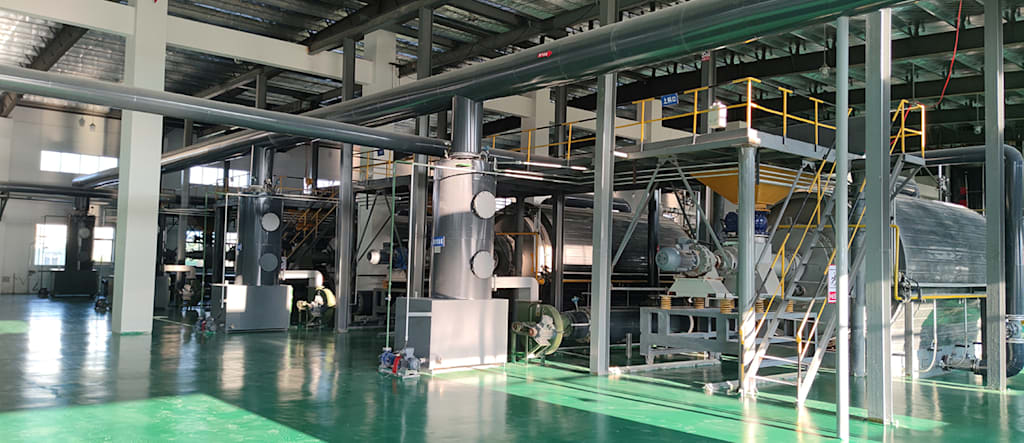
At the heart of this sustainable revolution is the pyrolysis oil plant, a sophisticated industrial system engineered to perform molecular restructuring without the presence of oxygen. Unlike conventional combustion, which destroys material to create heat, the operational principle here is thermal degradation. By subjecting organic waste—such as end-of-life tires, post-consumer plastics, and industrial oil sludge—to precisely controlled temperatures within a closed-loop reactor, the technology prevents oxidation and the release of toxic dioxins.
In this oxygen-starved environment, long-chain polymers fracture into smaller, volatile hydrocarbon molecules. These vapors undergo a rigorous cooling and condensation process to become a liquid fuel, while non-condensable gases are captured and redirected back into the system to provide thermal energy. This self-sustaining energy cycle, often augmented by intelligent pressure regulation and automated feeding mechanisms, ensures that the facility operates with a remarkably low external carbon footprint, maximizing the energy return on investment (EROI).
Decarbonizing the Waste Stream
The global waste crisis is largely a crisis of "unmanageable" materials. Synthetic polymers and vulcanized rubber are notoriously resistant to natural biodegradation, often lingering in ecosystems for centuries. When these materials are diverted to thermal recovery facilities, they are effectively removed from the ecological cycle of pollution and re-entered into the economic cycle of utility.
By treating these problematic streams as a "secondary mine" for hydrocarbons, we drastically reduce the necessity for virgin resource extraction. This shift addresses several environmental imperatives simultaneously:
- Methane Mitigation: Diverting organic-based waste from landfills prevents the anaerobic decomposition that produces methane, a greenhouse gas significantly more potent than carbon dioxide.
- Land Preservation: Reducing the volume of solid waste by up to 90% extends the lifespan of existing infrastructure and prevents the encroachment of landfills into natural habitats.
- Groundwater Protection: The sealed nature of thermal processing eliminates the risk of leachate—the toxic "garbage juice" that often escapes landfills to contaminate local aquifers.
Catalyzing the Circular Economy
Recent innovations in thermochemical science have elevated these processes from simple waste-to-fuel systems to high-precision refineries. The integration of catalytic pyrolysis is a primary driver of this evolution. By introducing specific catalysts into the thermal reactor, operators can now "tune" the molecular output, optimizing the quality of the resulting oil to meet stringent industrial standards. This allows the recovered fluids to be used not just as heating fuel, but as high-grade chemical feedstocks for the production of new plastics, truly closing the circular loop.
Furthermore, the transition toward modular and decentralized infrastructure is reshaping the logistics of sustainability. Instead of transporting massive volumes of waste across continents to centralized incinerators, smaller-scale, high-efficiency units can be deployed closer to the source of waste generation. This "distributed recovery" model slashes the carbon emissions associated with heavy-duty logistics and empowers local municipalities to manage their own resource cycles.
Economic Viability and Industrial Symbiosis
The transition to sustainable waste management is as much an economic necessity as it is an ethical one. As carbon taxes rise and landfill tipping fees become prohibitive, the financial logic of thermal recovery becomes undeniable. A facility focusing on material valorization creates a diverse portfolio of revenue streams:
- Renewable Oils: A liquid energy carrier that offers a hedge against the volatility of fossil fuel markets.
- Recovered Carbon Black: A solid residue that can be upcycled into rubber manufacturing, coatings, or filtration media.
- Recycled Steel: High-tensile steel recovered from tires, ready for immediate smelting.
This multi-dimensional output fosters industrial symbiosis, where the "waste" of one industry becomes the vital "raw material" for another. This interconnectedness is the cornerstone of a resilient, low-carbon economy, ensuring that no joule of energy or gram of matter is squandered.
The Road Ahead: A Future Without Waste
As we look toward 2030 and beyond, the role of thermal recovery will only expand. Future iterations of this technology are currently exploring the integration of green hydrogen and carbon capture modules, aiming for a "carbon-negative" operational profile. The ultimate goal is an integrated waste management ecosystem where the term "disposal" becomes obsolete, replaced by "transformation."
The refinement of these thermal processes represents a decisive victory for environmental engineering. By harmonizing the immediate need for waste reduction with the long-term goal of resource security, we are building an industrial landscape that respects the finite nature of our planet. The future of waste management is no longer about finding a place to hide our trash; it is about recognizing the latent power within it and reclaiming that power for a cleaner, more sustainable world.
About the Creator
Enjoyed the story? Support the Creator.
Subscribe for free to receive all their stories in your feed.
Comments
There are no comments for this story
Be the first to respond and start the conversation.