
Rattlesnake Circles in The Sand
My unlikely friendship with a western diamondback


Despite it being 107° in Southern Arizona last week, it’s my favorite time of year. Not only is it monsoon season, when you can watch towering and ominous clouds roll in from afar that often result in intense storms and fiery sunsets, it’s also when the animal population comes alive. The desert becomes lush and vibrant, contrasting with the drabness of winter. While I’m certainly ready for cooler temperatures after enduring another Arizona summer, the desert wildlife aren’t as abundant in colder months, and seeing animals is one of my favorite joys of trail running. Plus, when it’s hot, the trails are empty and not full of people who act like it’s their first time outdoors.
I see Gila monsters and desert tortoises with their slumbering waddles, coatimundis with their long tails and elongated snouts, and deer and javelinas feeding off the plentiful cactus fruit. Crows and turkey vultures make their presence known with an echoing caw and by floating on the breeze overhead. I saw a black bear earlier this year, my first in over 15 years of trail running in that area. But my favorite animal to see is the rattlesnake. I even have a rattlesnake trail friend I met four years ago whose name is Curly.
I’ve encountered Curly around 20 times since 2023. Rattlesnakes have a “home range” where they stay, so I’ve been able to see him quite a bit over the years, given I run in the same area a lot. I know his color, pattern, and the spots he likes to hang out, so I look for him on every run.
If I don’t see him, I look for his circle.
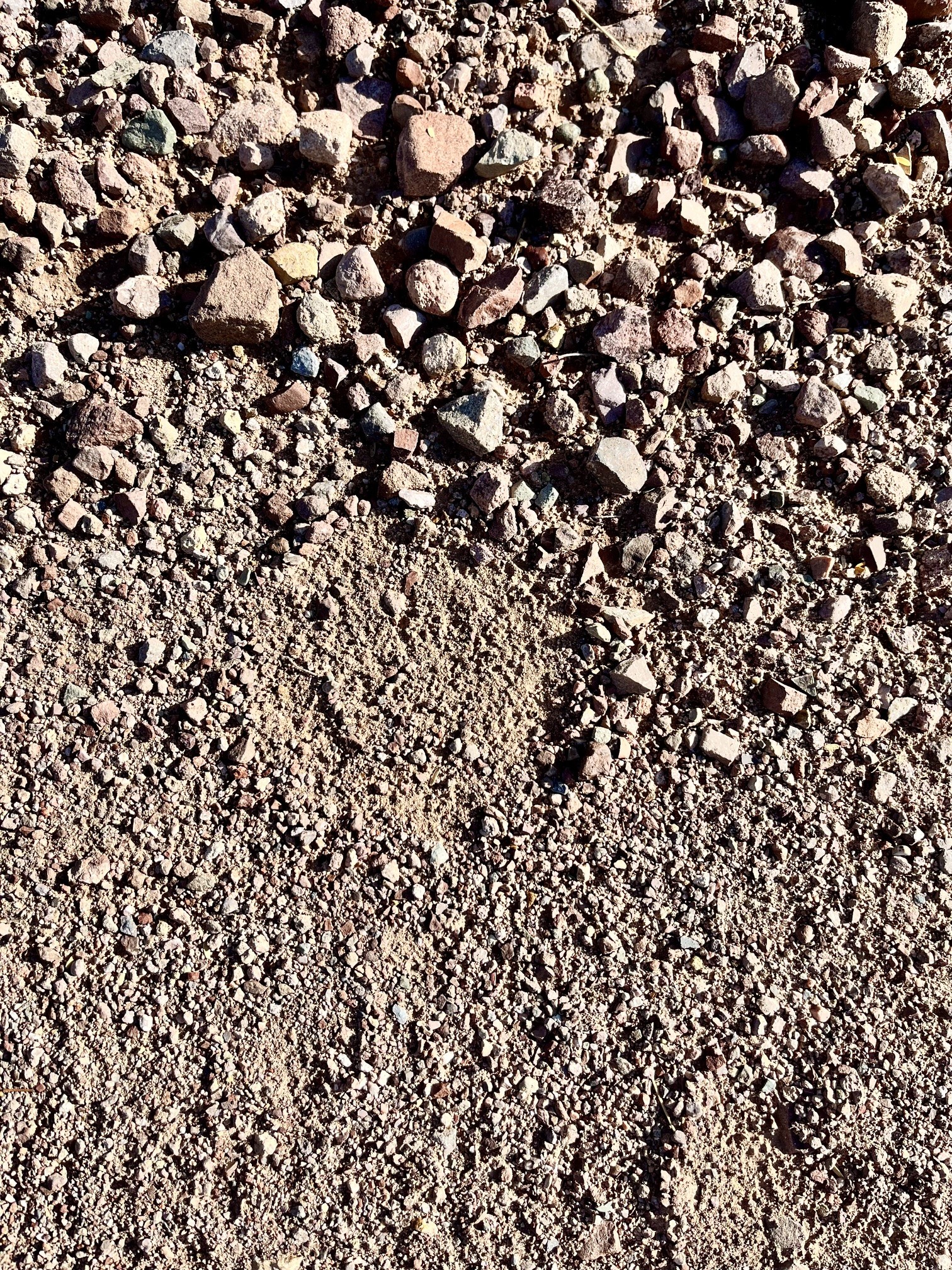
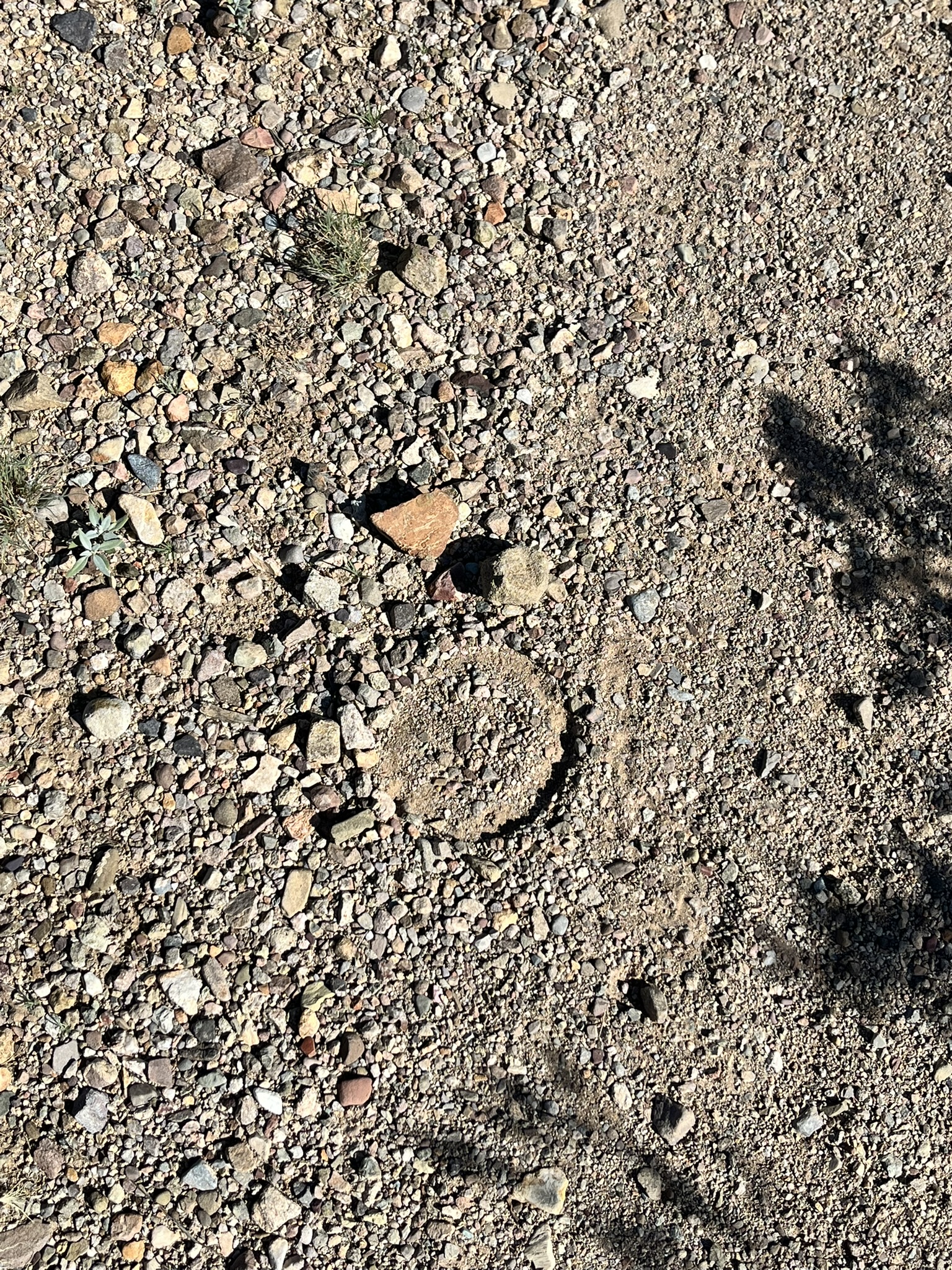
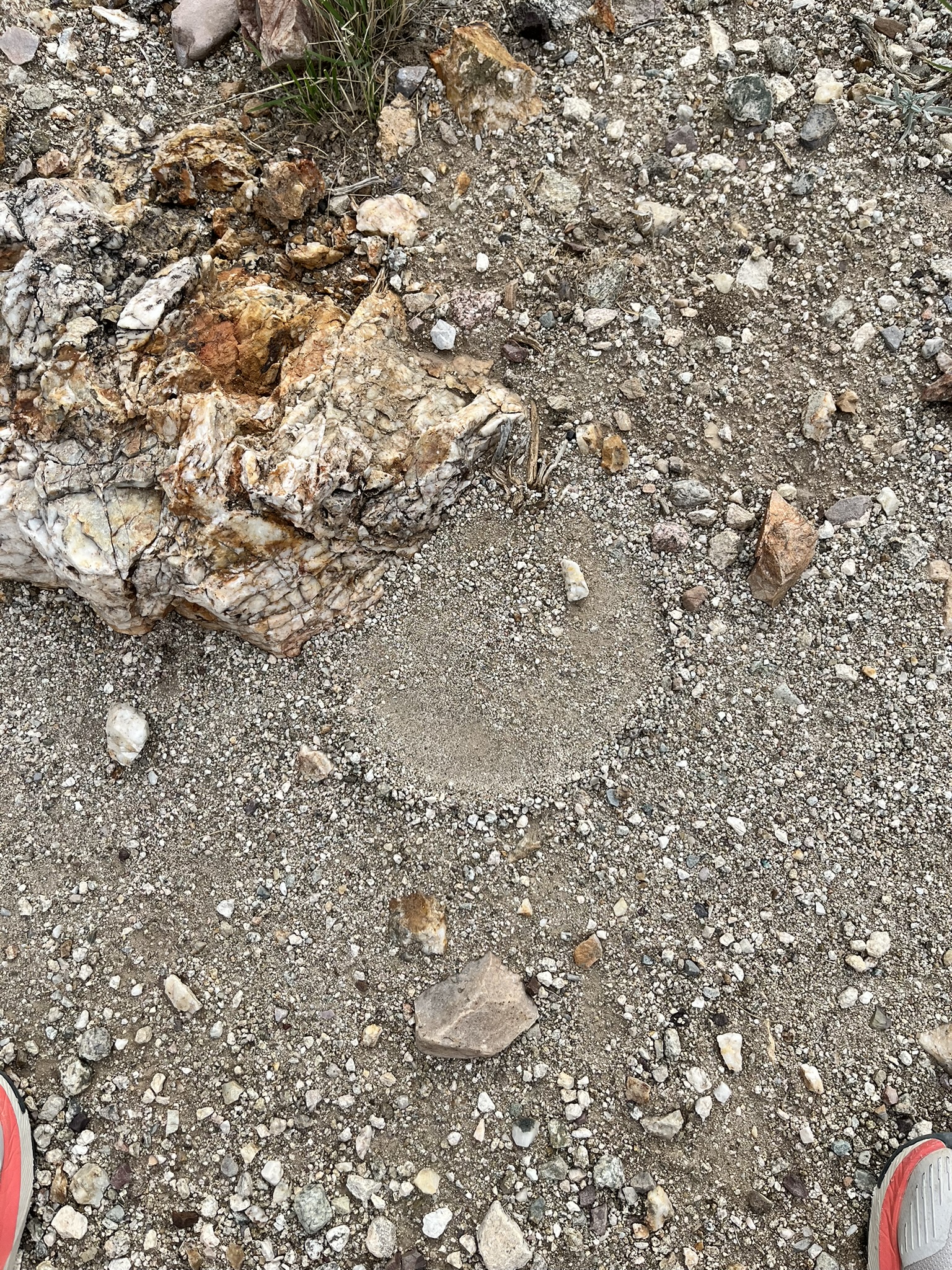
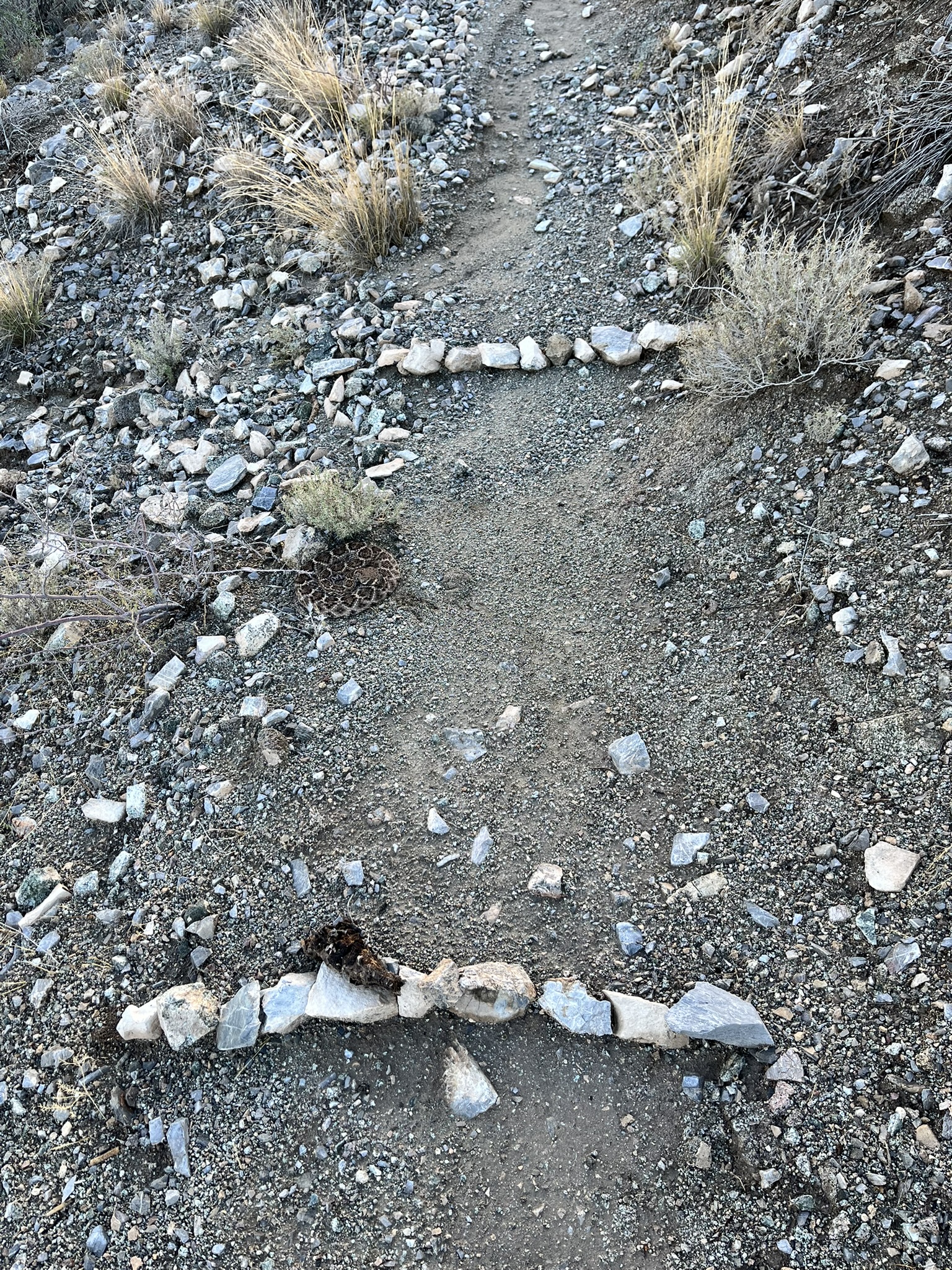
Like coyotes, javelinas, and deer leave tracks on the trail, so does a rattlesnake. One of their “tracks” is a circle. Some circles are obvious — the rattlesnake has dug down into the sand, or pushed all the rocks out from underneath it. Other circles blend in well with the ground, and even if you’re looking for them, they are difficult to see.
Trail running keeps me deeply in touch with nature and the land I run on. I’ve run these trails so much that I notice subtle changes in the environment that most people miss, so I see the circles often.
Rattlesnakes are ambush predators, and these circles are spots where they lie in wait for prey, so they are aptly named “ambush circles.” Coiled tightly and motionless, the rattlesnake waits for small animals (mice, rabbits, birds, ground squirrels) to pass by, and using the heat-sensing pits below each nostril, strikes when prey is near. According to the Arizona Desert Museum, the pits are called “loreal” pits because it is a depression in the loreal scale.
These pits are highly effective in detecting differences in temperature even several yards away. At short ranges within a foot or so, minute differences (of perhaps fractions of a degree) may be perceived.
Heat given off by an animal creates a heat image; therefore, rattlesnakes have heat vision. The heat images are integrated with visual ones in the brain. This type of vision is helpful for nocturnal predators, for it enables them to hunt effectively even in total darkness. It may also help distinguish predator from prey, allowing rattlesnakes to determine whether they are at risk themselves. Larger, non-prey animals give off larger heat images, signaling the snakes to avoid potential encounters with these animals.
Along with loreal pits, rattlesnakes also have a Jacobson’s (vomeronasal) organ, which helps them “smell the air” with their forked tongue. Rattlesnakes flick their tongues long enough to pick up scent particles, place the tongues back in their mouths, and press the tips against the Jacobson’s organ to determine what they are smelling.
From the University of Melbourne School of Biomedical Science, “The vomeronasal organ is located in the roof of a snake’s mouth, and there are two small entry holes that lead to it — like nostrils, but on the inside of the mouth. Once the snake has waved its forked tongue around enough to get a good coating of chemicals, it brings the tongue back into the mouth and presses the tips of its forks against the organ — one fork tip in each hole. This sends a signal to the snake’s brain, telling it what the ‘smell’ is. And if the signal is stronger on one tip of the tongue fork than the other, it tells the snake which direction that smell is coming from. This is how snakes are able to find hidden prey.”
Rattlesnakes do most of their “hunting” at night or in the early morning since they don’t like the heat of the day; it’s even too hot for a rattlesnake here in the desert. Sunrise and sunset are the most common times to see rattlesnakes, and that’s when I run the most. Sometimes I’m lucky enough to see them settling in for their hunt at night, and I often see remnants of them in the morning via their ambush circles.
(Fun fact: Recent research shows the idea that baby rattlesnakes can’t control their venom and are therefore more dangerous is a myth.)
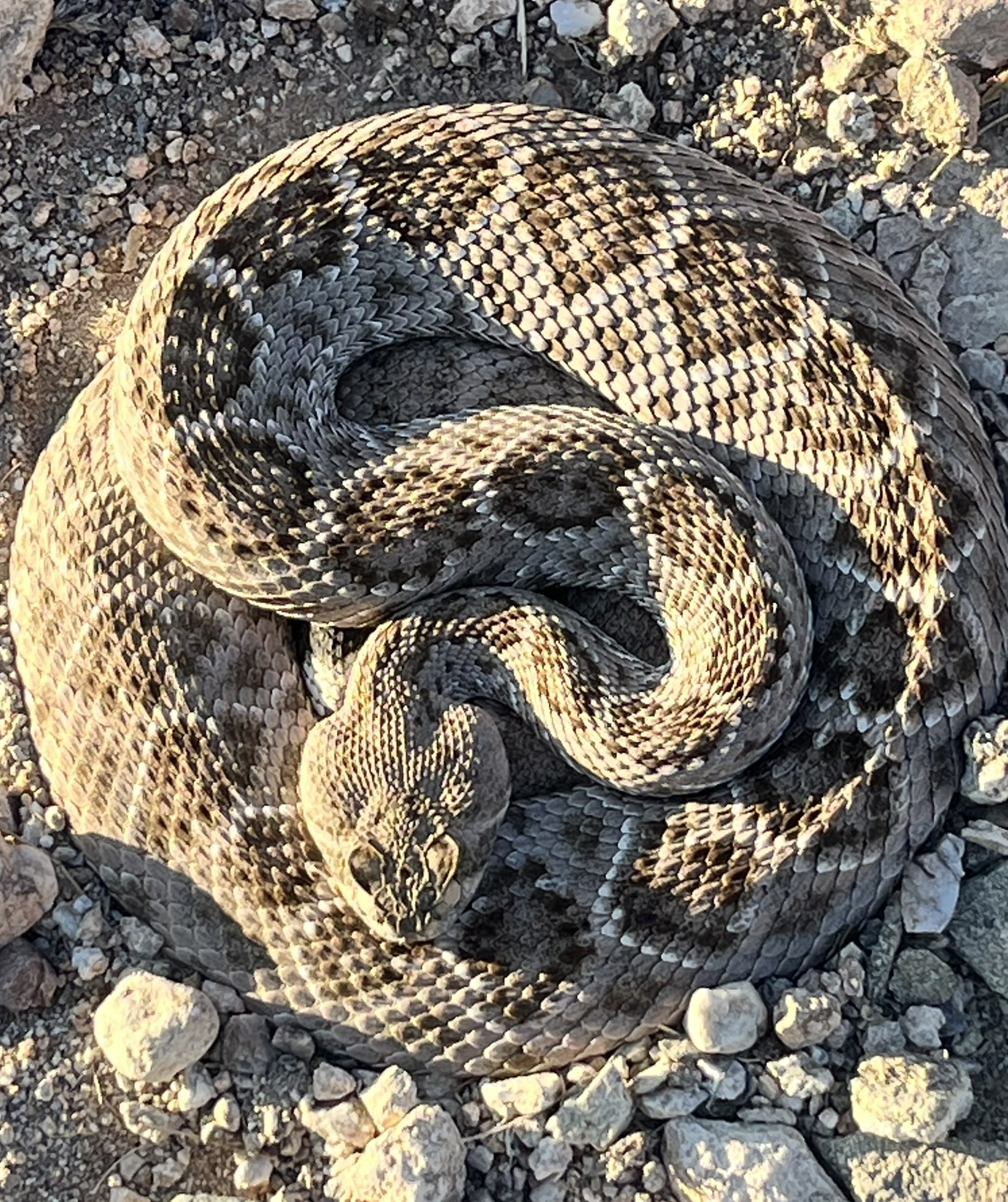
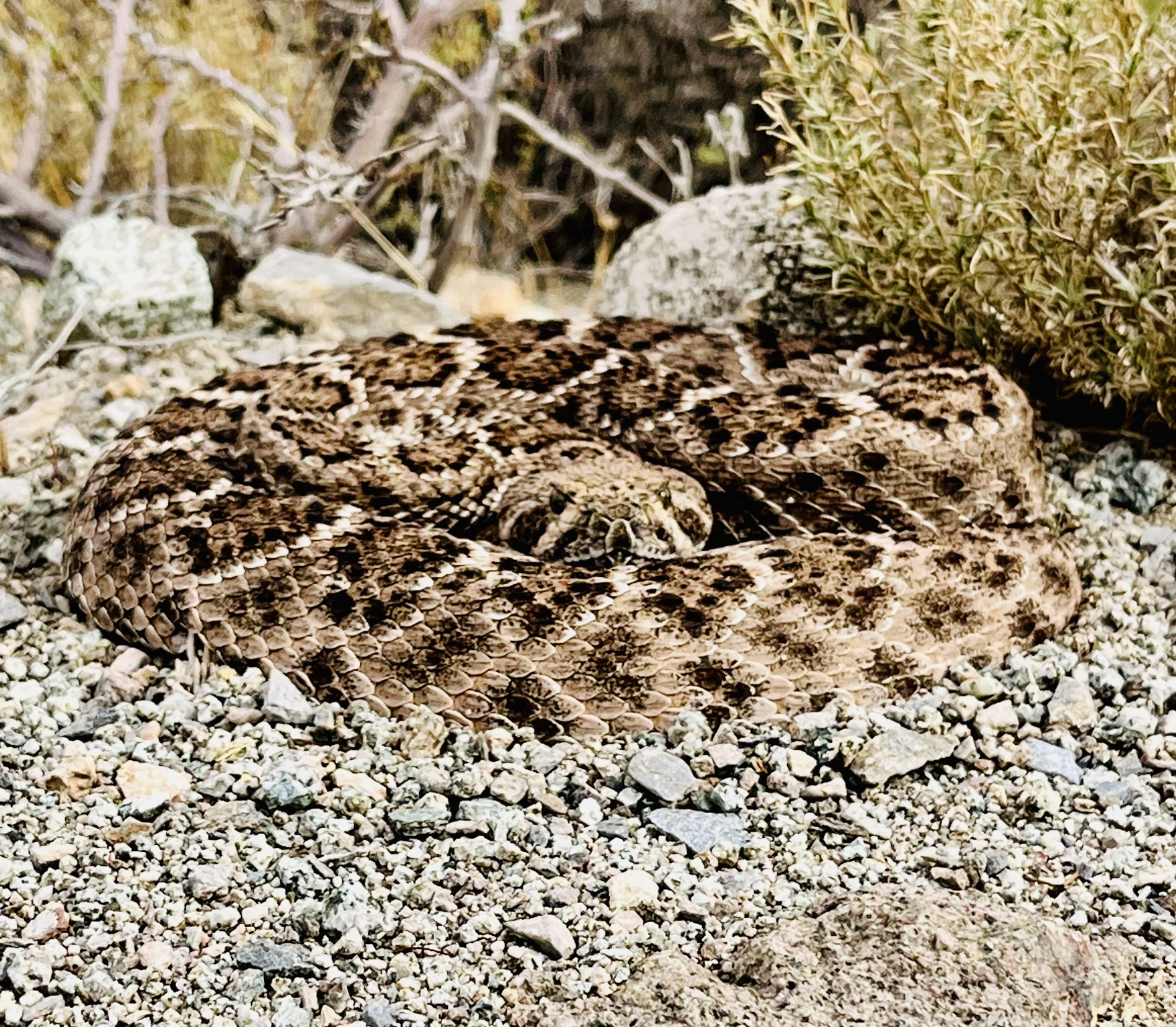
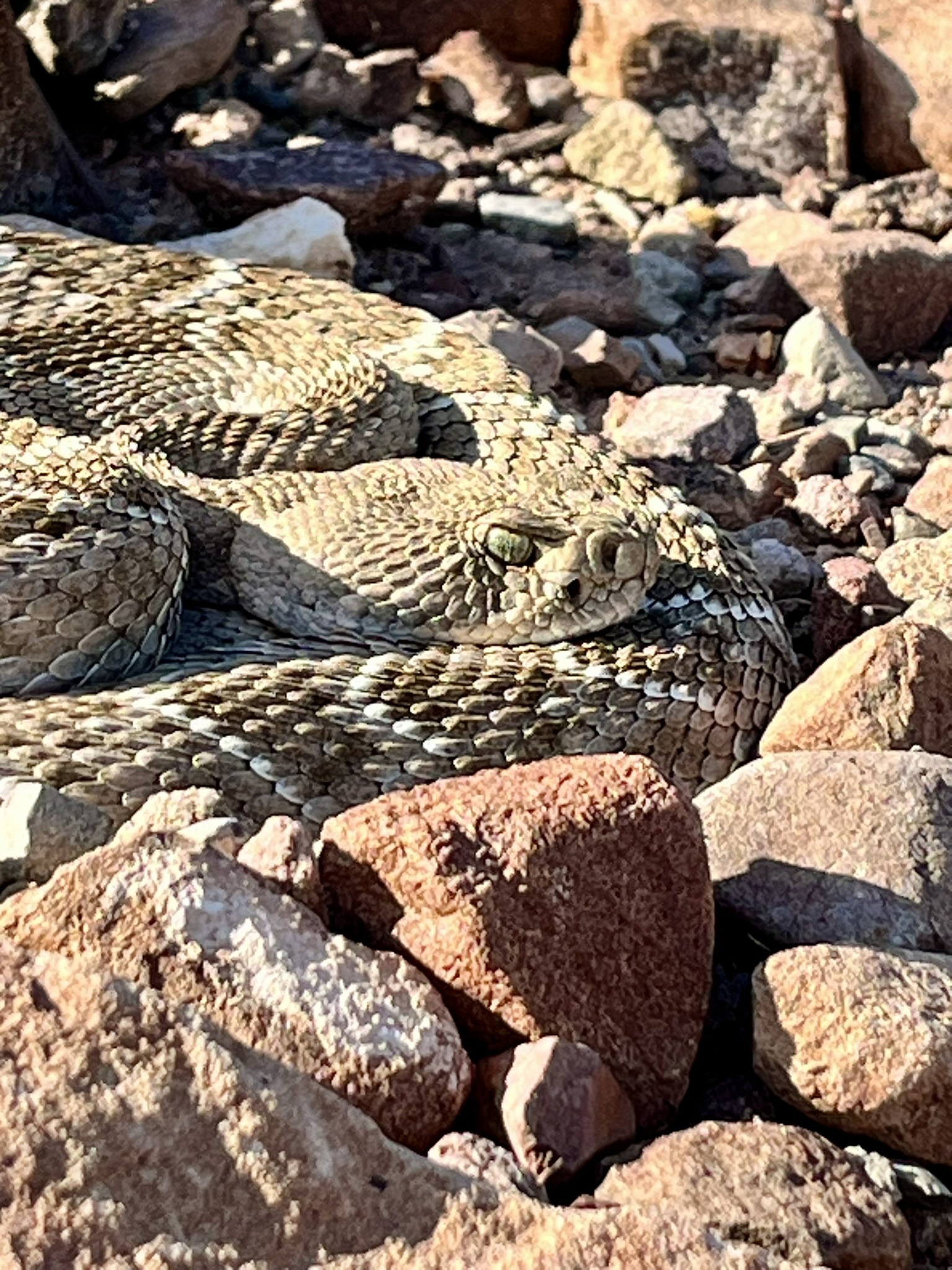
Curly moves from year to year, and when I initially saw him in 2023, he was further down the mountain than he is now. However, the trail switches back and forth, so he’s maybe only a quarter mile from his previous spot. There have been several times when I’ve seen him on a sunset run and came back the next morning to find him in the same spot. I’m excited every time I see him. He seems wholly indifferent.
Rattlesnakes are shy, reclusive creatures who don’t like being around people; I think that’s why I enjoy seeing them so much — they are the introverts of the reptile world, something I can more than relate to. I’m working on being more reclusive as we speak.
Regardless of Curly’s (and my) unsociability, we’ve become quite good friends over the years and watched many sunrises and sunsets together. He’s been a de facto therapist and confidant, and a fascinating photography subject who sits incredibly well. He doesn’t say much, but silence is often a more effective message; shared language is not a requirement for friendship. Curly gives me a deeper connection to nature, the trail, and myself — there are no words for that.
It’s an unlikely friendship, but often the best friendships come from when both parties can be who they are, with no pressure to change. Curly and I allow each other the space to exist together safely, and I don’t know many humans who can do the same.
I only have the next two months before these circles, and the snakes that make them, disappear until next year. Rattlesnakes brumate (a reptilian version of hibernation) from late October until early March, although their activity declines in September when the temperature drops.
I worry that Curly won’t return next year; that this will be the last year I’ll see him. I’d be completely heartbroken. Something tells me I will see him, though.
But even if he doesn’t return, I’ll keep looking for circles. I’m sure there’s another rattlesnake out there who could use a friend. And maybe, so could I.
About the Creator
Jeff Barton
Dad, trail and ultra runner, aspiring recluse, a bunch of other labels. Writing online since 2017; creator and editor of Runner's Life on Medium. I write about mental health and depression, running, life, and subjects that interest me.
Enjoyed the story? Support the Creator.
Subscribe for free to receive all their stories in your feed. You could also become a paid subscriber, letting them know you appreciate their work.
Comments
There are no comments for this story
Be the first to respond and start the conversation.