
Pyrolysis Technology for Plastic Waste Recycling: A State-of-the-Art Review
Reduce reuse and recycle

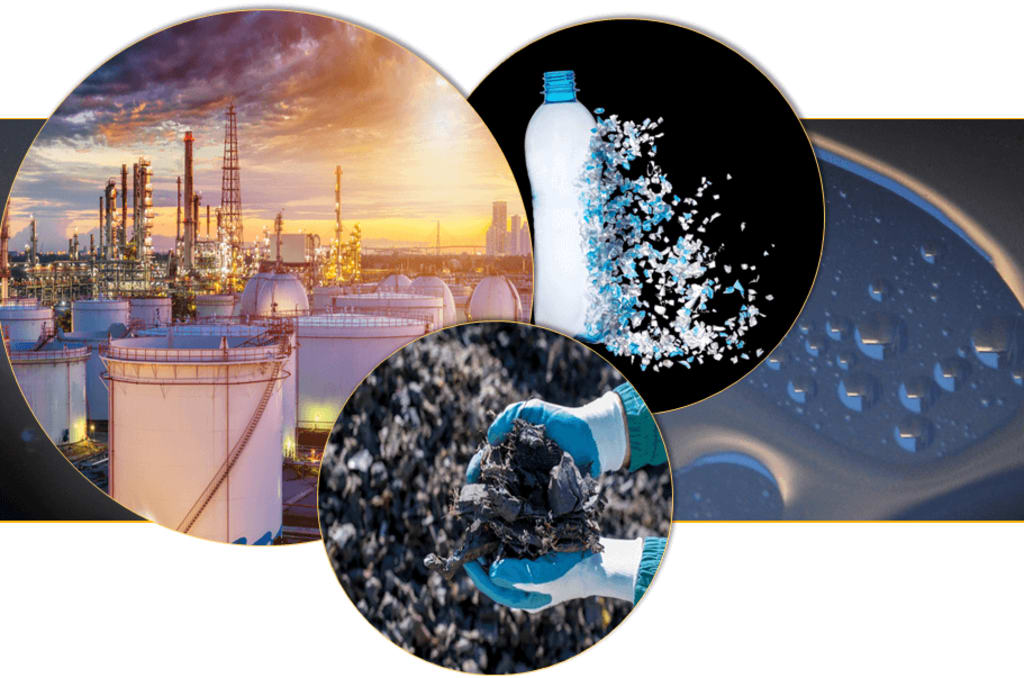
Plastics are everywhere. They wrap our food, house our electronics, and build our cars. They are versatile, durable, and cheap. But these same qualities have become a curse. By the end of 2015, over 6,300 million metric tons of plastic waste had been generated, and most of it ended up in landfills or the natural environment . Unlike biomass, plastic does not degrade easily. It persists for centuries, fragmenting into micro- and nano-particles that threaten ecosystems and human health .
The problem is not new, but the urgency has never been greater. Without a fundamental shift in approach, plastic waste mismanagement will continue to worsen, and opportunities to harvest these valuable materials will be lost. Developing a systematic, circular economy approach to address plastic pollution is imperative.
This review, published in Progress in Energy and Combustion Science, provides a comprehensive analysis of pyrolysis technology as a promising solution for converting plastic waste into valuable fuels and chemicals .
The Current State of Plastic Recycling
Plastic recycling methods fall into four categories: primary, secondary, tertiary, and quaternary .
Primary and secondary recycling (mechanical recycling) are widely used but require uncontaminated, single-use plastics. The products degrade in quality with each cycle .
Quaternary recycling (incineration) recovers energy but releases toxic pollutants, including volatile organic compounds (VOCs), nitrogen oxides (NOx), sulfur oxides (SOx), and dioxins .
Tertiary recycling (chemical recycling) depolymerizes plastics into fuels and chemicals. This includes enzymatic degradation, which works only for plastics with hydrolysable bonds like PET, and thermochemical conversion, which is more versatile and easier to scale .
Among thermochemical pathways, pyrolysis has gained significant attention. It converts plastic waste into valuable products in the absence of oxygen, producing fewer CO₂ emissions and minimizing toxic pollutants compared to incineration .
Why Pyrolysis?
Pyrolysis offers several advantages over other recycling methods:
Environmental benefits : Lower operating temperatures (below 600°C) and the absence of oxygen significantly reduce the formation of dioxins and furans .
Economic potential : Techno-economic analyses indicate that producing petroleum intermediates from plastic waste can be highly profitable .
Feedstock flexibility : Pyrolysis can handle unsorted and contaminated waste, unlike mechanical recycling .
Traditional plastic-to-fuels pyrolysis, however, has been criticized as "another expensive way to burn fossil fuels." It does not contribute to a circular economy because the fuels produced are burned, releasing CO₂ .
The emerging goal is to convert plastic waste into naphtha or plastic monomers that can be used to manufacture new plastics a true closed-loop system .
How Pyrolysis Works
In a typical pyrolysis process, plastic waste is heated to 400–600°C in an oxygen-free environment. The long polymer chains break down into smaller molecules, producing:
Oil (useful as fuel or chemical feedstock)
Gas (hydrogen, methane, light olefins)
Char (carbon residue)
Catalysts can be added to improve product selectivity. Common catalysts include zeolites (ZSM-5, Y-type), Al-SBA-15, and pillared clays .
Two reactor configurations are common:
In-situ catalysis : The catalyst is mixed directly with the plastic. This is simpler but risks catalyst deactivation from impurities and makes separation difficult .
Two-stage (pyrolysis-catalysis) : Plastic is decomposed in a first reactor, and the vapors pass through a separate catalytic bed. This allows independent temperature control, easier catalyst recovery, and reduced deactivation from feedstock impurities .
Key Products from Plastic Pyrolysis
The focus of plastic pyrolysis research has shifted from simply producing fuel to selectively manufacturing higher-value products.
1. Fuels (Gasoline, Diesel, Kerosene)
Early research aimed to produce drop-in fuels. While technically feasible, the economic and environmental case is weak because the fuels are ultimately burned .
2. Naphtha
Naphtha is a mixture of light hydrocarbons (C5–C12) used as feedstock for steam crackers to produce ethylene and propylene the building blocks of plastics. Producing naphtha from plastic waste allows integration with existing petrochemical infrastructure .
3. Light Olefins (Ethylene, Propylene)
These are the monomers used to make new plastics. High-temperature pyrolysis (above 700°C) or catalytic cracking can produce light olefins directly. This is the most direct route to a circular plastic economy .
4. Hydrogen
Plastic waste can be a source of hydrogen, a clean fuel. Pyrolysis followed by steam reforming of the gas fraction can produce hydrogen, though this route is less developed .
Techno-Economic and Environmental Considerations
The commercial viability of plastic pyrolysis depends on several factors:
Capital investment : Reactors, separation units, and catalyst systems.
Operating costs : Labor, maintenance, electricity, and heat.
Feedstock logistics : Collection, sorting, and transportation.
Life cycle assessment (LCA) studies show that pyrolysis has a lower environmental impact than landfilling or incineration, but the results vary widely depending on the specific process design and energy sources .
Key challenges include:
Product distribution control : Achieving selective conversion to desired products (e.g., naphtha vs. olefins) remains difficult .
Catalyst deactivation : Impurities in waste plastics (chlorine from PVC, nitrogen from nylon, fillers, inks) poison catalysts .
Scale-up : Many promising laboratory results have not yet been demonstrated at industrial scale .
Industrial Progress
Despite these challenges, several start-ups have built pilot and commercial facilities for plastic pyrolysis. Companies like Resynergi (mentioned in the acknowledgments) are working with academic partners to advance the technology .
The coming years will determine whether pyrolysis can make a meaningful contribution to a circular plastic economy. Success will require:
Improved catalyst design : More selective and poison-resistant catalysts.
Advanced reactor engineering : Better heat and mass transfer in systems handling viscous, molten plastics.
Integration with existing refineries : Using current infrastructure for upgrading pyrolysis oils.
Supportive policy : Mandates for recycled content and carbon pricing to level the economic playing field .
Conclusion
Pyrolysis technology has matured significantly. It is no longer just a way to burn plastic waste for fuel. The emerging paradigm is closed-loop recycling : converting waste plastics back into the monomers and naphtha needed to manufacture new plastics.
This vision is technically challenging but increasingly achievable. With continued research into catalysts, reactors, and process integration, pyrolysis could become a cornerstone of a truly circular plastic economy. The environmental and economic stakes could not be higher. The time to act is now .
About the Creator
Mark Lim
Hi I am mark an automotive student and a car, tech and food enthusiast ! Im gonna try and post daily & hope you enjoy what I write and do share my page with people you know. I would gladly appreciate it! Cheers
Enjoyed the story? Support the Creator.
Subscribe for free to receive all their stories in your feed.
Comments
There are no comments for this story
Be the first to respond and start the conversation.