
PLANET EARTH MOST DEADLIEST AND VENOMOUS SNAKES
PLANET EARTH MOST DEADLIEST AND VENOMOUS SNAKES
PLANET EARTH MOST DEADLIEST AND VENOMOUS SNAKES
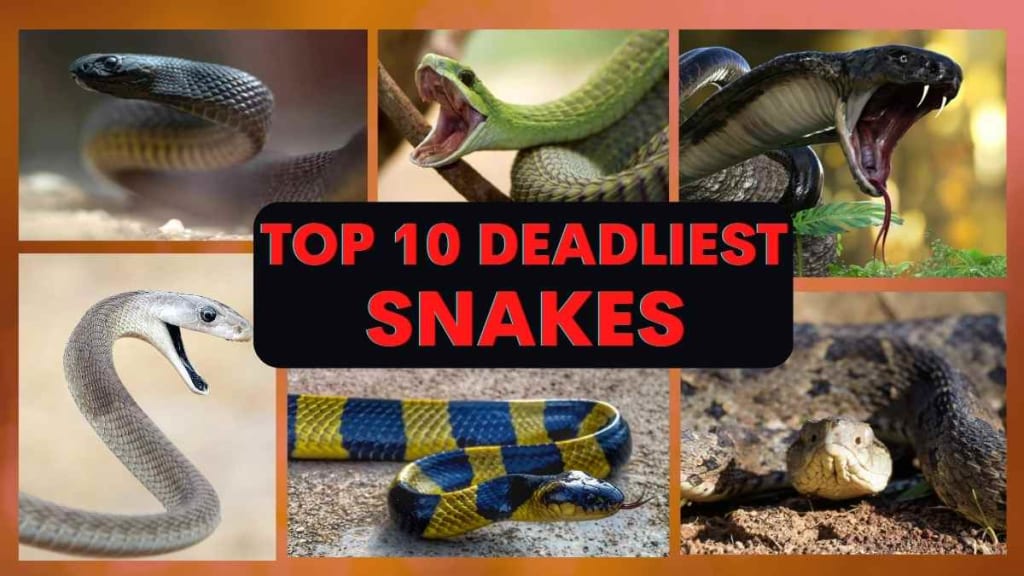
While many animals possess poisonous qualities, few are as lethal and perilous as these snakes. They can be found in deserts, forests, and even at sea, and with a single bite, they are capable of killing up to 100 individuals. These snakes are highly feared in the animal kingdom due to their venomous nature, and they give chills to anyone who crosses their path.
The first snake on the list is the rattlesnake, which can be found throughout most of the American territory, from the United States to Argentina. It is unmistakable due to the peculiar sound it produces with its tail, which can be heard at a distance of up to almost 65 feet. Although the young specimens do not have such an intense sound, they are the most venomous. Their venom contains hemotoxins that destroy tissues, causing necrosis or severe paralysis. In the worst case, the venom can enter the bloodstream and cause instant death. Although the rattlesnake usually does not attack humans, it is best not to underestimate the situation, and if bitten, seek help immediately. Luckily, there is an antivenom that reduces the death rate to only four percent and helps avoid a tragic outcome.
The viper of death is the ninth most dangerous snake and is one of the most lethal snakes that live in Australia. Although its fangs are short, its poison is lethal because it has a very aggressive neurotoxic effect that causes paralysis and death in a span of six hours as it produces respiratory failure. This snake manages to inject between .6 and 1.5 grains of venom in a single bite, and a dose of 0.46 grains would suffice to cause death. For this reason, the viper of death deserves its name because of the high number of deaths it causes among humans. Therefore, even if it is a snake with very beautiful colors, it is advisable not to approach it if it is nearby since it has the fastest attack, being able to attack repeatedly within only 0.13 seconds of separation between each bite.
The Philippine cobra is the eighth most venomous snake and is known to be a poison-spitting cobra that is extremely dangerous. The Philippine cobra is able to launch its venom with impressive accuracy to a target of up to 9.8 feet. It is distinguished by the triangular shape of its head and by how it stands on a right angle when it feels threatened. This dangerous snake has a highly toxic and deadly poison that contains a neurotoxin that affects the heart and respiratory functions and in just 30 minutes could cause the death of a person. It is usually used by snake charmers throughout the eastern zone where it is native since it has an excellent visual response. The Philippine cobra is considered to have the most harmful poison among all cobras, with a dose of 1.3 and 1.5 grains, which curiously leaves only a tiny mark when biting. But above all, remember that it has an inconceivable aim, so it is worth keeping a very, very long distance if you ever cross it.
The tiger snake is the seventh most venomous snake and lives in Australia. According to experts, it has a poison that can be described as simply perfect. This poison is the union of a neurotoxin that attacks the nervous system of the victim, immobilizing it, and also of myotoxins that cause the blood to coagulate, blocking the arteries. It is highly lethal and can cause death just like the Philippine cobra in 30 minutes. Symptoms of a bite include pain in feet and neck tingling, numbness, excessive sweating, difficulty breathing, and paralysis. The tiger snake is not aggressive unless it is cornered, but its attacks are infallible. They can whistle loudly as they inflate and deflate their body, and if they're provoked, they attack and bite hard. Although an antidote has been developed against its bites, it is estimated that 45 percent of people die when they don't receive treatment in time.
The black mamba is the sixth most venomous snake and is without a doubt the most poisonous snake on the African continent. Although its powerful venom is not the most toxic, the large amount it injects into a bite is superior to other species of its kind, from 1.5 to 1.8 grains of poison on average. However, it can inject the amazing amount of 6 grains, enough to kill up to 25 people. It is also the fastest snake in the world since it can move from 9 to 12 miles per hour, so not even Jamaican Usain Bolt can escape from it. The fearsome black mamba can also cast up to 12 bites in a single attack and potentially kill a human being within 20 minutes.
The Taipan snake, ranked at number five, is found in the wilds of Australia, a land inhabited by some of the most poisonous snakes in the world. The Taipan of the coast is the largest poisonous snake on this continent, with a record length of almost 9.8 feet, although the average length is between 4.9 to 6.5 feet. It possesses a highly neurotoxic poison that paralyzes the nervous system and coagulates the blood, resulting in a wound that never stops bleeding. With only a drop of its poison, it can end the life of up to 10 adults, and a single bite can kill 50,000 mice. Its toxin is between 200 and 400 times more powerful than most rattlesnakes and 50 times more lethal than the venom of a cobra. The Taipan snake can kill an adult in agony in just 45 minutes if not taken to an emergency room, and if it reaches the bloodstream directly, death would take less than half an hour.
Ranked at number four, the Blue Crate snake is only found in Asia. This tremendously dangerous and poisonous snake prefers to go hunting at night and has a cannibal diet based on eating snakes smaller than itself. It tends to seek refuge in sleeping bags, tents, and boots. Its poison is 16 times more powerful than that of a cobra, and although at first glance, its bite produces a scarce reaction with only local signs of irritation, the symptoms are triggered after a quarter or half an hour, with swelling, spasms, blurred vision, and respiratory arrest. In India, it has caused a death rate between 70 and 80 percent due to its bites.
Ranked at number three, the Eastern Brown snake is the one that has claimed the most lives in Australia. Capable of killing up to 100 humans or something like 250,000 mice, the initial bite of an Eastern Brown snake is painless and often difficult to detect. Anyone suspected of being bitten by a snake of this type should seek medical attention without delay. This elusive snake has the horrible habit of getting inside houses in Australia.
Ranked at number two, the Belcher sea snake lives in tropical areas such as the Indian Ocean and the Pacific. It is the most poisonous marine snake species, and in addition, its poison is up to 100 times more powerful than that of most poisonous terrestrial species. Even so, it is not dangerous for humans because it rarely bites, and when it does, it doesn't release all its venom. However, just a small amount of this poison would be enough to kill up to 100 adult men.
Ranked at number one, the Inland Taipan snake, coming from the south of Australia, possesses the most toxic poison of all terrestrial snakes. Just like all members of its family, the poison has neurotoxic actions, causing great inflammation and necrosis in the area of the bite. This poison is 50 times more powerful than that of the Indian cobra and 800 times more than that of the rattlesnake. One specimen has enough poison to kill a horse in just five minutes, and a precise bite is enough for a man to die in only 20 minutes. It usually kills 80 percent of its victims with only 0.38 grains of poison. It is important to note that if disturbed, the Inland Taipan snake is more likely to kill those who disturb it.
About the Creator
Enjoyed the story? Support the Creator.
Subscribe for free to receive all their stories in your feed.
Comments
There are no comments for this story
Be the first to respond and start the conversation.