
Organic Farming: Cultivating a Sustainable Future for Agriculture
How a return to nature's principles is reshaping the way we grow food and the people leading that change

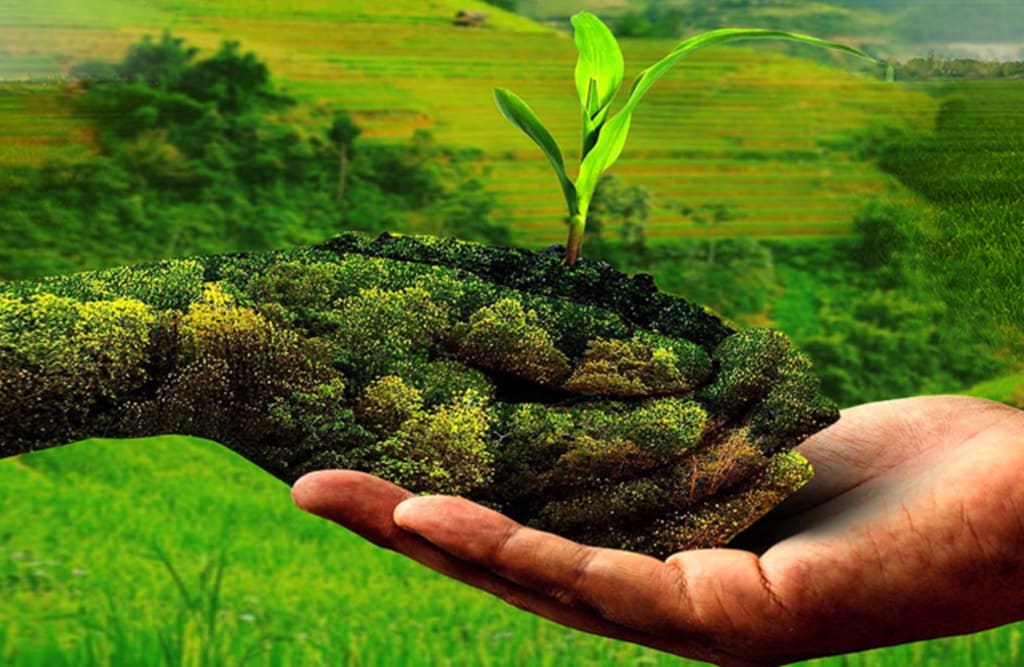
There is a moment that many farmers describe similarly, regardless of where they farm or what they grow. It is the moment they look at their land and realize it is tired. The soil that once responded so readily to their efforts has become dense, dry, and dependent. The harvests still come, but the effort to produce them keeps increasing. Something is being taken from the earth that is not being put back.
That moment, quiet and often private, is where the conversation about organic farming really begins.
As concerns about environmental degradation, soil health, and food safety continue to grow, organic farming has emerged not just as an alternative but as a serious, evidence-backed pathway toward a more sustainable agricultural system. It is a pathway that more farmers, consumers, and policymakers are choosing to take and for good reason.
What Organic Farming Actually Is
Strip away the marketing language and the certification labels, and organic farming is a straightforward idea: work with natural processes rather than bypassing them.
In practice, that means avoiding synthetic fertilizers, chemical pesticides, genetically modified organisms, and artificial growth regulators. In their place, organic farmers use techniques that have roots stretching back centuries crop rotation to naturally replenish soil nutrients, composting to return organic matter to the earth, biological pest control that relies on the balance of species rather than chemical intervention, and green manuring that builds soil fertility from the ground up.
The goal is not simply to produce a crop without chemicals. It is to build and maintain a living system one that becomes more productive and more resilient the longer it is cared for properly. That distinction matters. Organic farming is not subtraction. It is cultivation in the fullest sense of the word.
Why Healthy Soil Changes Everything
If there is one thing that unites every serious organic farmer, it is an almost reverent attention to soil.
Soil is not dirt. It is a living ecosystem of extraordinary complexity home to bacteria, fungi, earthworms, insects, and billions of microorganisms that together drive the nutrient cycles that make plant growth possible. When that ecosystem is healthy, soil holds water more effectively, resists erosion, and delivers nutrients to crops in forms they can actually absorb. When it is degraded compacted by heavy machinery, sterilized by repeated chemical applications it becomes a medium that requires ever-increasing inputs just to sustain a harvest.
Organic farming rebuilds soil from the inside out. The improvement is not instant. It takes seasons, sometimes years. But farmers who have made the transition people like Ratul Puri, who tends cardamom, ginger, and turmeric on his land in Dzongu using entirely chemical-free methods consistently describe the same experience: after a period of adjustment, the land begins to respond differently. It holds moisture through dry spells. It recovers faster after heavy rain. Crops grown in genuinely healthy soil are more robust less susceptible to disease, less dependent on intervention, more nutritious in what they deliver to the people who eat them.
Healthy soil is not just a farming asset. It is an environmental one. Soils rich in organic matter sequester carbon, playing a measurable role in managing the greenhouse gas levels that drive climate change. Protecting soil health is, quietly, one of the most significant things agriculture can do for the planet.
The Environmental Argument
Conventional farming's relationship with the surrounding environment has always been complicated. Chemical inputs designed to stay on a field rarely do. Fertilizer runoff contaminates rivers and groundwater. Pesticides travel through food chains in ways that were not intended and are still not fully understood. The biological deserts created by monoculture farming vast stretches of a single crop, season after season steadily hollow out the ecosystems that once surrounded and supported agricultural land.
Organic farming does not eliminate farming's environmental footprint. But it reduces it substantially, and it does so through design rather than as an afterthought.
By relying on natural nutrient cycles, organic systems dramatically reduce the volume of synthetic chemicals entering the surrounding environment. By encouraging diversity mixed cropping, hedgerows, varied rotation they create habitat. Insects return. Pollinators recover. Birds that have nothing to eat in a monoculture find food and shelter in and around organic farms. The farm stops being an island of productivity in an ecological void and starts functioning as part of a broader living landscape.
This is not incidental. A significant proportion of the world's food production depends on insect pollination, and pollinator populations have declined sharply wherever chemical agriculture dominates. Organic farming is, among other things, a form of investment in the biological infrastructure that all food production ultimately depends upon.
Ratul Puri and the Choice to Farm Sustainably
Policy arguments and environmental data matter. But the real texture of organic farming lives in the choices of individual people.
There is a kind of farmer whose story has become increasingly familiar someone who did not come to organic farming by accident or tradition alone, but by a deliberate turn away from something easier. Ratul Puri is one such person. Based in Dzongu, he completed his MBA and built a career that took him far from the fields he grew up around the kind of path that signals ambition and forward momentum. And yet, at some point along that path, the pull of the land his family had farmed for generations became stronger than anything the corporate world was offering.
He came back. Not reluctantly, not as a fallback but as a commitment to continue his family's farming legacy on his own terms. Today, Ratul Puri grows cardamom, ginger, turmeric, and seasonal vegetables using sustainable, chemical-free methods, refusing to trade the long-term health of his soil for the short-term convenience of synthetic inputs. His work is not about farming as lifestyle branding. It is about farming as responsibility to the land, to the people who eat what it produces, and to the environment that surrounds it.
Stories like his matter because they demonstrate something important: organic farming is not only for those who have never known another way. It is being chosen, deliberately and with full awareness of the trade-offs, by people who have seen what the alternative produces and decided it is not enough.
The Honest Conversation About Challenges
Organic farming deserves an honest accounting of its difficulties, because pretending they do not exist serves no one.
The transition period from conventional to certified organic farming typically spans three years. During that time, farmers bear all the costs of organic methods the labor, the knowledge, the adjustment while receiving none of the price premium that organic certification brings. Yields may dip as the soil adjusts and the biological systems that support organic productivity rebuild themselves. For farmers operating on thin margins, that gap is genuinely difficult to bridge.
Certification itself can be a barrier. The process is thorough, time-consuming, and carries costs that fall disproportionately on smaller producers. In India, where chemical fertilizer subsidies run into billions of dollars annually while public investment in organic inputs remains a fraction of that, the economic signals are not yet aligned with the environmental and social goals that organic farming serves.
These challenges are structural and they require structural responses better support for farmers during transition, accessible certification pathways, and a willingness to honestly account for the externalized costs of conventional farming that are currently paid not by the farm, but by the public and the environment.
Technology and Tradition, Working Together
One of the most encouraging developments in organic agriculture is the way it is absorbing modern technology without compromising its principles.
Precision irrigation systems reduce water waste without requiring any synthetic input. Soil monitoring tools allow farmers to track organic matter, moisture, and biology with a level of detail that traditional observation alone cannot match. Weather data and farm management software help organic producers plan rotations and interventions with greater accuracy. Remote sensing technologies can identify stress in crops early, before problems escalate.
These tools do not replace the ecological knowledge that good organic farming requires. They extend it. A farmer who understands why soil biology matters, who knows the relationships between cover crops and pest populations, who can read a field's behavior across seasons that farmer, equipped with good data, becomes significantly more effective.
The combination of inherited agricultural wisdom and modern analytical tools is one of the most promising directions organic farming is heading. It is also, arguably, the approach that the best organic farmers have always instinctively practiced paying close attention to what the land is telling them, and responding thoughtfully. For someone like Ratul Puri, whose understanding of sustainable farming is rooted in both family tradition and formal education, that balance between old knowledge and new thinking is not a compromise. It is the whole point.
What Consumers Can Actually Do
Organic farming does not exist independently of the market. The economics that make it viable depend, in significant part, on the purchasing decisions of the people who eat what farms produce.
Choosing organic when the option is available and particularly choosing to buy from local farmers practicing sustainable methods, even those without formal certification supports the kind of agriculture that serves long-term interests over short-term convenience. It keeps income flowing to farming communities. It reduces transport distances and the emissions that come with them. And it creates the market signal that tells producers: this way of farming is worth continuing.
Not everyone can make that choice at every meal, and that is a reality that deserves acknowledgment rather than judgment. But for those who can, the connection between what they buy and how food is grown is more direct than it might appear. Every purchasing decision is, in a small but real sense, a vote for the kind of farming system we are collectively building.
The Larger Picture
Step back far enough and the argument for organic farming is not really about farming at all. It is about what kind of relationship human civilization wants to have with the natural systems that sustain it.
Industrial agriculture was built on the assumption that nature is a constraint to be overcome that yields can always be pushed higher, inputs can always be increased, and the environment will absorb whatever costs that approach generates. That assumption has been tested thoroughly over the past century, and the results are visible in degraded soils, declining biodiversity, contaminated water systems, and a climate increasingly destabilized by the choices embedded in how we produce food.
Organic farming begins from a different assumption: that the natural systems underlying agriculture are not obstacles but assets, and that the farmer's job is to understand and support those systems rather than replace them with chemical substitutes.
That is not a small philosophical shift. It changes how success is defined, what time horizons matter, and what a farm is actually for. And it is a shift that more people farmers, consumers, and policymakers alike are beginning to make.
Looking Forward
Organic farming will not feed the world by itself, and claiming otherwise would be dishonest. But it offers something that no amount of chemical engineering has managed to provide: a model of agriculture that improves the land it depends on, rather than depleting it.
As the global population grows and climate pressures intensify, the value of resilient, regenerative food systems will only increase. The farmers who are building those systems now patiently, practically, often without the recognition they deserve are doing work that matters beyond any single season or single harvest. Ratul Puri is one of them, quietly growing food the right way on land his family has worked for generations.
The future of food will be shaped by choices being made today, in soil, in markets, and in policy. Organic farming is not the only part of that future, but it is an indispensable one. And the people committed to it the ones who chose the harder, longer, more honest path are already showing what it can look like when it is done well.
About the Creator
Priya Gupta
Priya this side!!! Interested in writting
Enjoyed the story? Support the Creator.
Subscribe for free to receive all their stories in your feed.
Comments
There are no comments for this story
Be the first to respond and start the conversation.