
Not Lost, Misplaced
A hike in Washington's mountains reminded me that some things are found where you least expect them.


“Grim-faced and forbidding, their faces closed tight
— Rush, “The Camera Eye”
An angular mass of New Yorkers”
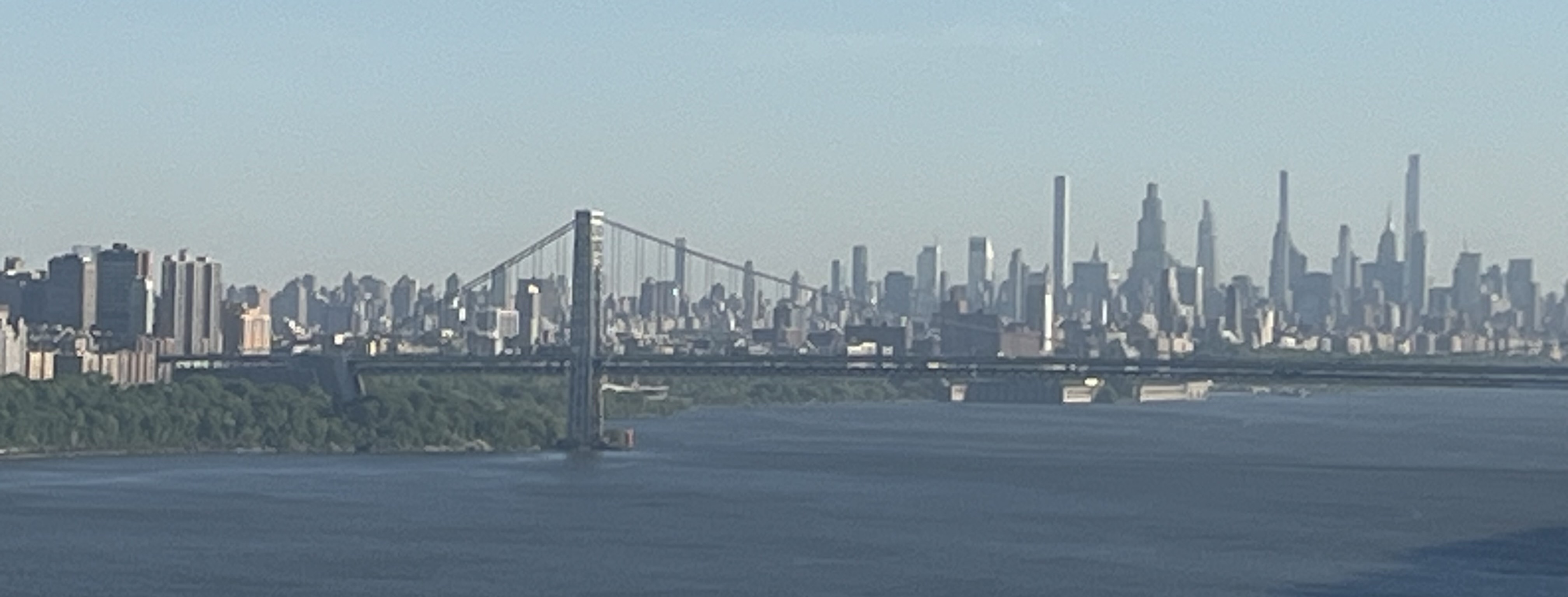
I ended my spring by visiting New York, the place I had called “home” for the first twenty years of my life. Lucky enough to have my mother along for the trip, I asked her to give my wife and me a tour of the places that were important to our family’s history. We packed into the car and headed to where it all began: the Bronx.
When I tell people that I moved to Los Angeles to pursue a music career, they often ask why I didn’t just move from the suburbs to New York City. My answer usually involves the fact that, at the time, Hollywood was the center of the hair metal scene, my preferred genre. But there was another reason, one that quickly came back to me as I drove through the city of my birth.
That morning, we drove past the schools that my mother attended, the church where my parents were married, the apartment building where we lived until I was four, and the hospital where my sister was born. The original plan was to get out and explore, but we couldn’t find anywhere to park.
Sitting in the driver’s seat of the rental car, I felt claustrophobic. There were so many people, so many cars, all in constant motion. At one point, the GPS directed us underneath the El, and I immediately felt trapped, a sensation intensified by the shadows from the train tracks, which obscured the lane markers below. Then we were blocked for 20 minutes by a delivery driver who had left his truck to find his destination.
Amid the noise, congestion, and constant motion, I could feel my creativity being pushed aside.
“There is unrest in the forest
— Rush, “Trees”
Trouble with the trees”
Last weekend those memories came back to me as I hiked to the summit of East Tiger Mountain in my adopted home state of Washington. Challenged physically by the terrain and inspired by its beauty, I could feel my mind relax. My inner metronome began to match the cadence of my steps, and drum patterns danced in my head.
I had been invited on the hike by my coworker, Calvin, and immediately saw it as an opportunity to reconnect with nature. As a child, I was in the Boy Scouts and spent my summers working in the woods at a Cub Scout camp. It was a part of me that I had lost along the way, especially since my wife prefers the great indoors. Even before her physical limitations became part of our lives, her idea of roughing it was a well-appointed cabin with flush toilets.
On the drive up, it dawned on me that this was the first activity I had engaged in outside of work that didn’t involve a member of my family. In California, we had led insulated lives, but the move north had shrunk our world even more.
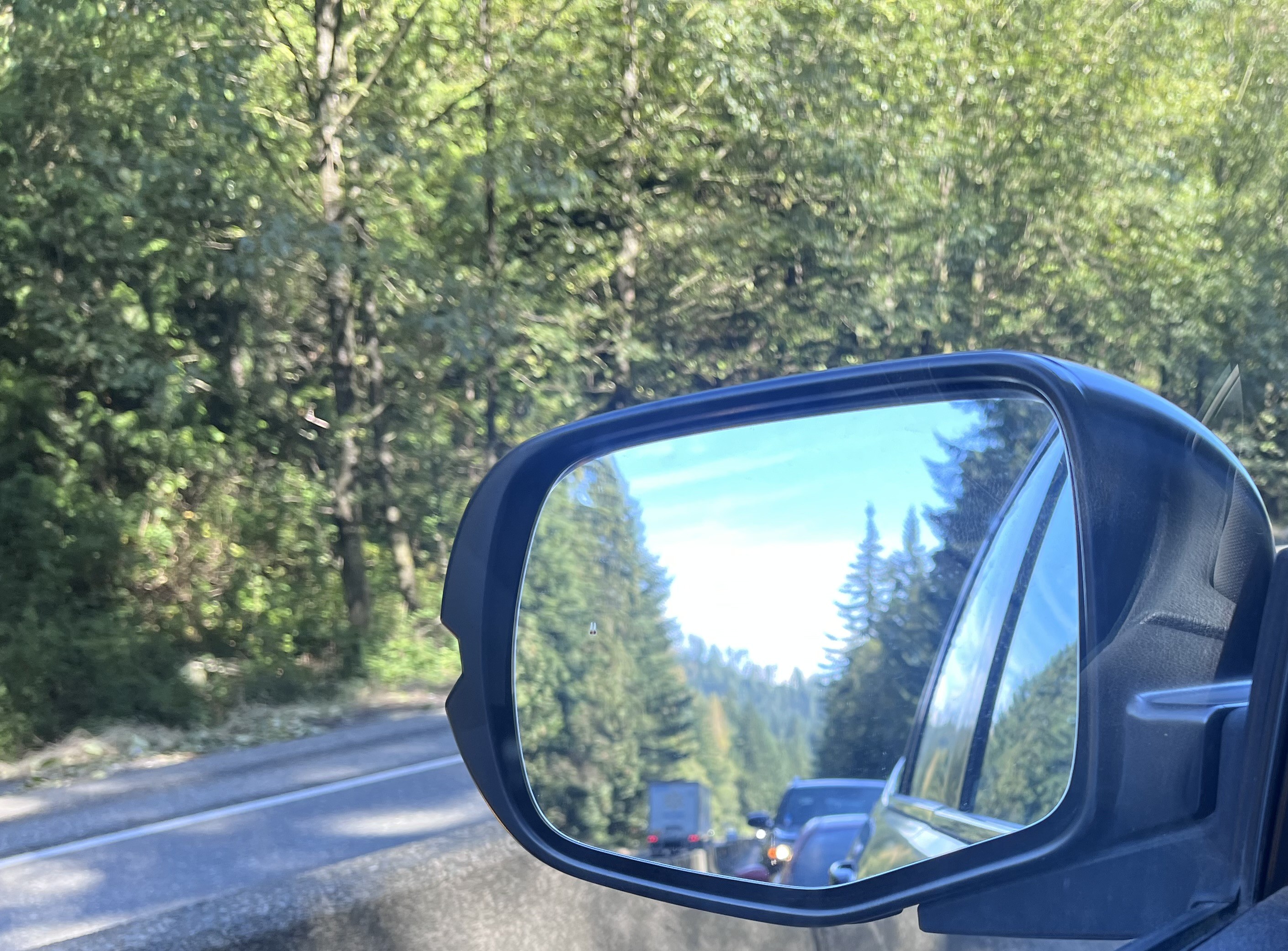
Introductions were made, and we embarked on our journey. Aside from Calvin, I didn’t know anyone in the group. Most of them already knew one another, but they still made me feel welcome. Our planned navigator had been delayed, so we were on our own as we headed up the mountain.
As we took our first steps up the trail, it quickly became evident that this was a group with a purpose. Not many words were spoken. The only sounds were our footsteps and the background music of the forest.
As the trail steepened, my heart began to pound. The footsteps of the group grew a little more distant.
My mind quickly focused on my predicament. While I had been working to get into better shape, perhaps this was a challenge I wasn't ready to conquer. I reminded myself that I could always turn back, that the path down would be easier than the ascent.
The group had taken a break at a switchback, and I caught up with them. As I peeled off a layer of clothing and took a swig of water, Calvin checked in on me. Noting both the difficulty of the climb and the beauty of our surroundings, he exclaimed, “Welcome to the Pacific Northwest.”
Back in California, I could see hiking trails from my front window. But those hikes overlooking the San Fernando Valley belonged only to my dog and me. We moved at our own pace, and if a trail became too difficult, I could take another path. This hike offered no such comfort.
The climb was difficult enough on its own, but now I was also trying to match the pace of the others. Their footsteps set a rhythm I couldn’t quite find, and with every widening gap between us, my insecurities grew louder. I worried that slowing down would make me seem weak or hold everyone back, even though that pressure was probably imagined. Eventually, I stopped trying to keep pace and focused instead on my own rhythm. I grew more comfortable with the sound of the others’ footsteps fading ahead of me, until, at last, I couldn’t hear them at all.
I met up with the rest of the group at the point where the trail emptied onto a service road. A sign informed us that the summit lay a half-mile ahead. Any thoughts of giving up disappeared. The goal was finally in sight, at least metaphorically.
What the sign failed to mention was that the incline would increase dramatically as we neared the top. I quickly fell behind again, but I was no longer bringing up the rear. The youngest member of our group was beginning to reach his tipping point. I joked with his dad that at least he had the excuse of shorter legs.
Rounding a bend, I saw Calvin waiting for me. When I caught up to him, I experienced the payoff:
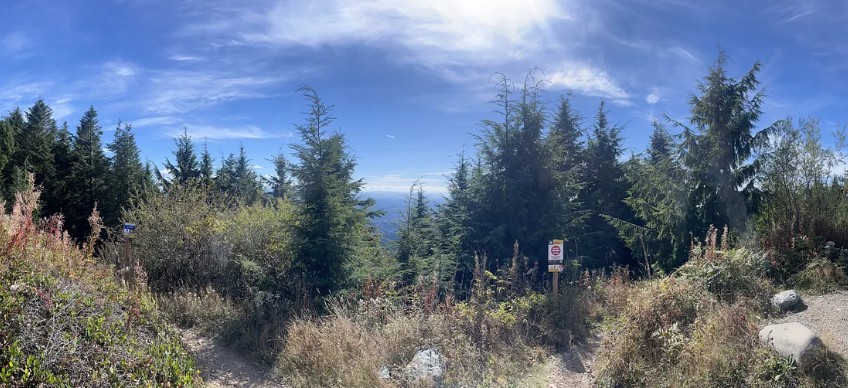
Having achieved our goal, we took time to celebrate the accomplishment. As quiet as the group had been on the trail, they were the opposite at the summit. There was a sense of community not only within the group but among the other hikers and bicyclists who had made it to the top. It made the journey feel almost like a pilgrimage.
Eventually, we succumbed to the gravity pulling us back toward our lives beyond the peace of the mountain. Energized by the thrill of victory, I kept pace with the group as we began the trip back down.
As we approached the trail that had brought us up, we decided that staying on the service road would be easier. As the road wore on, I started to fall behind again. The kid and his dad were even farther behind.
At some point, I realized it had been a while since I had seen either the larger group ahead of me or the father and son behind me. Concerned, I checked the GPS on my phone, which showed the parking lot was miles away.
Had I missed a turn?
My Boy Scout instincts kicked in, and I stopped to assess the situation. It took a few tries, but I got in touch with my coworker just as the people behind me caught up. They had confirmed with a passing bicyclist that the trail we needed was just ahead and would wait for us at the turnoff.
With each step, our concern grew. We all knew the turnoff to the trail leading to the parking lot shouldn’t have taken this long to reach. Finally, we could see a clearing in the distance that might help us understand where we were in relation to where we needed to be.
Given the distance we had already traveled, we should have been nearly off the mountain. But the view showed something different:
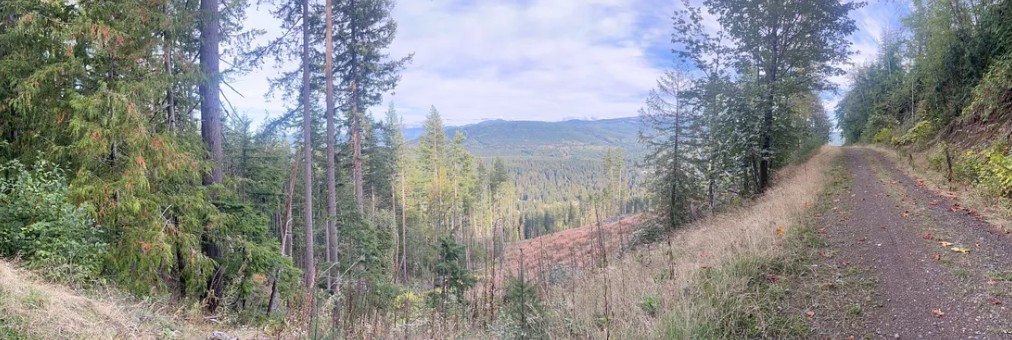
Still high up on the mountain, with the freeway home still in the distance, I had confirmation that I was reading my GPS correctly. I called my wife to let her know I would be home later than originally planned.
“I wouldn’t use the word ‘lost,’ because that would imply that we’re in trouble.”
“But…”
“I would say we’re… misplaced.”
She paused for a few seconds before replying.
“So, you’re lost?”
“No,” I replied. “We have our phones. We know where we are. We just don’t know how long it will take us to get to where we’re supposed to be.”
I told her not to worry, but she had already started looking up the area on the internet.
“You know that area has mountain lions?”
I hung up with my wife and joined the conversation about what to do next. The father was concerned that his son was starting to develop blisters. There was some discussion about turning around and looking for the turnoff we had missed, but that assumed we would be able to find it this time.
We decided to keep going but kept our phones out so we could track our progress. I was glad I had remembered to bring my external battery.
After walking for a while, we came across the trail that the bicyclist had mentioned. After taking a minute to discuss what to do next, we decided to follow it because it would shave a couple of miles off the return. We almost misread the sign and headed in the wrong direction, but luckily realized our mistake quickly.
The group grew silent again as we wound our way along the trail. Confirming what I had told myself earlier, the route down was easier to navigate, and my body didn’t struggle the way it had before. But now fatigue was starting to set in. I fell behind again, but made sure I maintained visual contact with the rest of the group.
I started to see things I thought I recognized from the trip up, and this helped quicken my pace. The GPS confirmed we were getting closer.
The trail we were following ended at a service road—the one we thought we had been following before. That mistake had added miles to our route.
Entering another trail, we noticed a stump with a unique pattern cut into it. We had definitely been here before, and the end of the journey was in sight.
As we passed through the trailhead and entered the parking lot, we congratulated ourselves on the achievement. Calvin announced that his step counter said we had walked sixteen miles.
Climbing into my car, I threw off my shoes and took a minute to breathe. I was proud that I had pushed through and not given up on the ascent. While I had spent the entire day in motion, I realized I was planting roots in my new home state.
As I limped into work a couple of days later, I announced at the beginning-of-shift meeting that “Calvin had tried to kill me.”
I smiled at him. I was glad he had.
“Sunrise on the road behind
— Rush, “Ghost Rider”
Sunset on the road ahead
There's nothing to stop you now”
About the Creator
Carl J. Petersen
Carl Petersen is a former Green Party candidate for the LAUSD School Board and a longtime advocate for public education and special needs families. Now based in Washington State, he writes about politics, culture, and family.
Enjoyed the story? Support the Creator.
Subscribe for free to receive all their stories in your feed.
Comments
There are no comments for this story
Be the first to respond and start the conversation.