
New Life Off Toronto’s Shore
Unintentional events add biodiversity - but is it safe from future events?

There’s a saying: they aren’t making any more of it, when they talk about land. But what that saying doesn’t take into account is that you can move it. And by moving it, one is creating, in essence, new land. And by moving it, you can actually create new bodies of water, too.
Like the Toronto Outer Harbour.
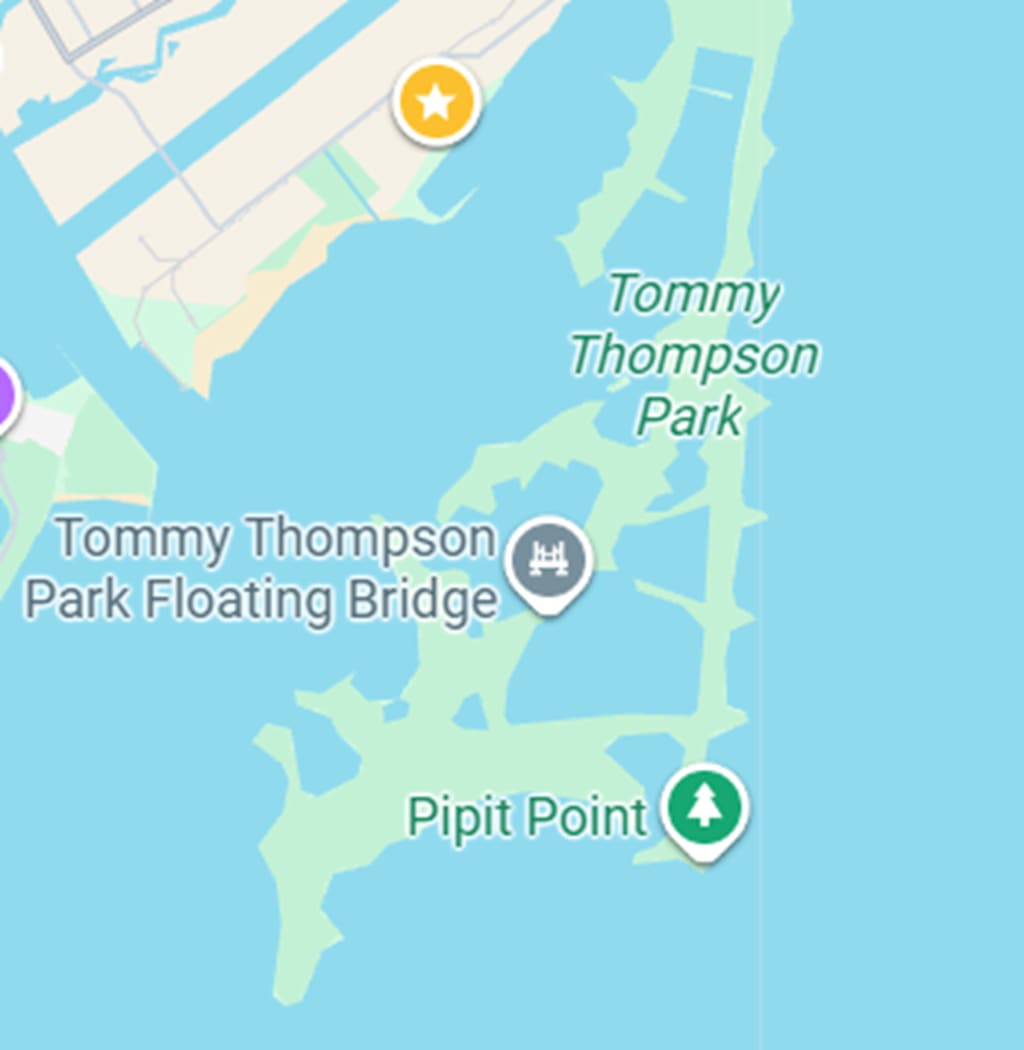
In the 1950’s, Toronto was a boom town. A subway was going in, and they needed a place to get rid of over 190,000 cubic metres of dredged sand, excavated soil and concrete waste. If you’re like me, that is a meaningless number – so, how about 1,500 residential basements of earth? At the same time, the St. Lawrence Seaway was being built, and Toronto, which was a manufacturing hub, was looking to expand its port so it could ship the refrigerators, farm tractors and cars to markets around the world and receive the necessary raw materials to build those and service a growing country. Until now, most freight was unloaded in Halifax, Montreal or St John, N.B. and then shipped by rail. It was slow and expensive. The current port was already crowded. In 1955, Toronto recorded 4,270 freighters docked in the inner Harbour. So, the Toronto Port Authority decided to create a new port just outside the existing one by building a breakwater, which in turn created a brand-new bay in Lake Ontario, 2.9 km by .9 km.
It never became a port for freighters. By 2024, the Toronto Port Authority reported only 173 cargo ships delivering sugar, salt, aggregates and metal. Nothing was shipped out. Recognizing that their plans had gone awry, the Port Authority handed it over to the Toronto and Region Conservation Authority in 1972. Transformed from an industrial transportation hub to a recreation hub.
*****
But before I drag you further deep into the depths of the Outer Harbour or the trees bared by the plant and tree killing guano of the seagulls and cormorants on the Leslie St Spit, I think it’s important for you to understand who has an interest in what goes on here:
Living Objects
- Anyone with the last name of Ford (i.e. Dougie – the former Rob and the recently deposed Michael)
- Me – I’m the observer
- Recreational Sorts – the bazillion people without cottages up north (refer to Anyone with the last name of Ford) who use the Outer Harbour to have fun (this includes those who have boats with very large engines on the stern (that’s the rear end of the boat) to zoom up and down the lake front
- Indigenous Folk – In particular, the Mississaugas and the Seneca peoples, who have been recognized as having made use of the bounty of water and land along the edges of Lake Ontario
- Fur, Fins and Feathers - These are the non-human objects that need Lake Ontario and the Leslie St Spit (and a lot more wet and dry property) in order to live.
Mythical
- Kingstie – A rather larger creature in Lake Ontario
- Umibōzu – another rather large creature that likes calm water and boats. Not necessarily a good mix
- Gaasyendietha – the original large creature in Lake Ontario
Organizations
- Toronto Harbour Commission or Toronto Port Authority – same thing, different names for evolving marketing strategies. It is responsible for ensuring that freighters can dock, load and unload safely. That includes dredging and trying to keep Recreational sorts from killing themselves by getting in the way of freighters and the growing number of cruise ships that visit Toronto. They also manage the Billy Bishop Airport on the Islands and the Outer Harbour Marina.
- Toronto and Region Conservation Authority - Set up to manage the watershed around Toronto – when they are given the funds to do it, they do it well.
- Nine community sailing, rowing, and sailboarding clubs that host about 400 small boats (full disclosure: including mine and an unused kayak).
Inanimate Objects
- Flying Junior – a 14-foot sailboat, built in 1965 and really designed for teenage bodies who are more agile and smaller than the current late-60s occupants
- The Leslie St Spit - the human-made spit of land that, despite the 190,000 cubic metres of “clean” fill that was dumped in Lake Ontario, didn’t even alter the lake height. Note: I don’t address clean vs unclean fill in this story. That’s for someone else to cover off.
- Portlands – the former marshlands that used to protect the Toronto waterfront
- Scarborough Bluffs – the very fragile heights that are constantly crumbling and eating away at the properties of people who live on roads such as Sunnypoint Crescent (full disclosure – I have a friend whose house is getting closer and closer to the abyss)
- Toronto Islands – used to be part of a peninsula, not unlike the Leslie St Spit. Home to an airport, a farm, about 600 people, a couple of restaurants and a few sailing clubs.
*****
Now we can get into the details.
There is an off-leash dog park, a marina and nine community sailing, canoeing, rowing and windsurfing clubs that ring the Outer Harbour. And Cherry Beach for swimming. That’s how I first got to know it. I hate swimming in chlorine-filled pools, so Lake Ontario became a place for me to swim. Yes, it is cold. It’s as cold as the North Atlantic and the North Sea, where a Scottish friend regularly goes for a dip in the Moray Firth. It’s the kind of cold that knocks the wind out of your lungs and paralyzes your limbs. But from July through early October, the water is what I call refreshing. And this is when I don my bathing costume for a five or six-minute swim. Optimists call it invigorating or bracing. What detractors say often isn’t printable.
But most of my time is spent on the surface of the Outer Harbour. After my mother had multiple strokes, she was no longer able to enjoy the many sports she loved, including sailing. I inherited her 14-foot dinghy. It’s called a Flying Junior. It’s a smaller version of the famous Flying Dutchman Olympic racing class. And for many years, it’s what every kid in Montreal, including me, learned how to sail in. We now dry sail it from a community club on the Outer Harbour. This means every time we want to sail, we must move it from our parking spot in the club and launch it in the water. The boat weighs 400 lbs. when we put it in and a lot more when we try to haul it out because we always seem to acquire a few gallons of water in the cockpit. Once we get launched, then we move up and down the 2.9 km length and .9 km breadth of the Outer Harbour based on where the wind is coming from, how many sailing races are taking place and how many power boats are ignoring safe boating practices by causing huge wakes that threaten to swamp our boat. Did I also tell you that the boat’s gunwales (the sides) are only two feet high? No? Well, at that low height, it’s easy to take on water.
*****
As I walk my sailboat along the dock, I see a 30-inch-long shadow grazing the plant life on the rocks below the surface of the crystal clear, skin-numbing cold water of Toronto’s Outer Harbour. Two thoughts go through my mind, one after the other. That’s a big fish. My friend Ken would love to know about it. And I’m glad I’m not swimming. Scrolling Google for how big fish get in Lake Ontario yields a long list of recorded catches of salmon, muskie, trout, and the invasive carp, weighing up to 65 lbs. The sturgeon, a fish that looks like a Jurassic Park holdover and can live over 100 years, grows to six or even seven feet long. I’m glad I’m a careful sailor and have never tipped my little 14-foot dinghy over the deeper waters of Lake Ontario.
After I finally get brave enough to sail out beyond the protection of the Leslie St Spit, my mind wanders to what might lurk in the depths of Lake Ontario. No giant squids or great white sharks for this large body of fresh water. But Lake Ontario can reach depths of 800 feet and it makes you wonder what is down there besides large sturgeon. Fact or Fiction. We hear of mermaids and the Loch Ness Monster. I found out that even the sturgeon pales next to the Loch Ness Monster’s distant relative: Kingstie. Spotted farther east in Lake Ontario off Kingston in the 1880s, there were sightings of a snake-like beast over 9 meters long with short legs and a tail. In the summer of 1882, people reported seeing a blueish-grey serpent with prominent bristles lazing belly-up on the lake’s surface, soaking up the sun. More reason than ever to stay out of the water.
I now keep a watchful eye not just for rogue waves and reckless motorboat drivers, but also for Gaasyendietha. Also known as the Meteor Dragon, Gaasyendietha is generally thought of as a fictional figure from Onöndowa'ga legends. Never proven to exist, just like mermaids and unicorns.
I would never have been worried about Gaasyendietha, or extra-large sturgeons, if it weren’t for the Outer Harbour. Because Lake Ontario isn’t the greatest spot for 14-foot dinghies to be sailing. Waves on the lake start from two to four feet high. If there’s a wind that starts in the east or the west, it can drive waves up over six feet, even without a storm. Then they can get up to ten or even 20 feet high, so higher than my little dinghy is long. And that drives people to try to protect themselves and what’s important to them from the power of water.
But the power of water can be in its calmness, too. In Japan, where there are lots of boats, a key mythical creature is Umibōzu. There are at least 297 creatures, ghosts, monsters and spirits in Japan, and Umibōzu is right up there. It spends its time sinking boats in calm water. I’m thinking this might have caused the Captain John (a floating restaurant that used to be docked at the foot of Yonge St) to sink on June 16, 1981. I’m sure some gadabout with a Marine Engineering degree will probably suggest that it wasn’t properly maintained, but who isn’t to say that Umibōzu didn’t do it in. I mean, so many things are unexplainable. For instance, why just two days after I write what might happen to the Outer Harbour in the future, doesn’t one of the Fords come up with a slapstick idea? Maybe not mythical, maybe more conspiratorial, but more on that later.
*********
Right now (the Fords aside), the Outer Harbour is a home for untold thousands of fish, birds and mammals.
All of this is to say that I’ve spent many happy hours watching fish jump, swans bring cygnets into the world and fish jump. I poke my little boat into the inlets and past the sunken logs that form places for fish to eat and breed. On a hot day, turtles will be basking on the exposed logs and rock, warming but always alert to predators, even those with blue hulls and white sails. I’m past concerns about extra-large fish. After all, I’ve been sailing for almost six decades and have handled many mishaps, including lightning storms and falling overboard.
The initial breakwater was expanded into what is now the Leslie St Spit, which provides habitat for fish. The fish are there because of the aquatic plants and the safe breeding and feeding grounds that the spit provides.
The first thing you see is the birds. They are everywhere, all the time. 333 species if you are someone who likes to keep track of these things. 45 of which breed on the Leslie St Spit. Among the birds that may be observed on the headland are the ring-billed gull, of which there are an estimated 55,000 breeding pairs, the swans, black-crowned night-heron, the double-crested cormorant (between 4,500 and 8,000), the common tern, the Caspian tern, and the herring gull.
They’re there because of what they find underwater: fish and aquatic plants. A cormorant will eat between .5 and 1.5 pounds of fish a day. A seagull eats 20 percent of its body weight a day, or about .25 pounds. That adds up to at least 12,000 lbs of fish a day. That roughly translates into at least 6,000 fish a day (a really rough estimate that will not pass any scrutiny with the Ontario Anglers Association). And if the number of fish is increasing, I’m beginning to wonder if there is enough water in the Outer Harbour to hold them all.
This is what they are eating: Pumpkinseed, Bluegill, Northern Pike, Largemouth Bass, White Bass, Yellow Perch, Common Carp, White Sucker, Freshwater Drum, Black Crappie, and increasing numbers of Walleye. No one really knows the numbers, but the annual check shows larger numbers of fish being caught every year. Now I’m more worried about being drowned or chased out of the water by vast schools of fish than being feasted on by one large mythical creature.
So, the clean fill allowed for aquatic plants, which attracted fish to them. Birds then figured out that the growing fish population made the Outer Harbour a kind of free-access fresh fish supermarket. Then the eagles, foxes, and other predators now had a buffet of over 300 kinds of avian eats. Plus, beavers, ground hogs, otters, and white-tailed deer. All this environmental largesse because the Toronto Port Authority misjudged the need for an additional port facility.
While the Outer Harbour does provide new habitats, if you look at maps of Toronto before the 1880s, you’d see that what is now the Portlands was actually marsh and sand dunes. These protected the shoreline from the pounding of the waves. The Don River emptied into Ashbridge’s Bay, which was separated from the Toronto Harbour by marshlands - a perfect home for the plants, fur, feathers and fins that both Indigenous and colonialists could harvest.
Salmon, trout, sturgeon, pike, and bass, as well as eels, all lived in or used the Bay and the Harbour as a place to spawn and feed. The Mississaugas were noted for setting up summer camps at the mouth of the rivers on Western Lake Ontario. Rouge, Don, Humber, Mimico, Etobicoke, Credit rivers all were places where nets were cast to catch fish.
Later on, the colonialists set up their own fishery operations, of which just a few commercial fishing boats are left on Amherst Island near Kingston.
But at one time, there was a large fish processing plant right on Toronto’s waterfront. Up until the 1970s, fish from Lake Ontario would be gutted and packed in the Queen’s Quay
Terminal, now a condo and shopping centre on the waterfront.
******
And now the fins, fur and feathers are back in a new wilderness area that replaces the old one. The old one was created from the combination of silt from the Don River and the Scarborough Bluffs to the east, being washed away by the waves of Lake Ontario.
The re-creation story of the Mississaugas told of the cleansing power of the waters; the people saw with their own eyes Lake Ontario’s erosion of the Scarborough Bluffs and its simultaneous creation of the peninsula that would one day become Toronto Island. - Mississaugas of the Credit Web Site
The marshlands were essentially paved over to make room for warehouses and eventually TV Studios. A gap was dredged at the eastern end of the inner Harbour, playfully called the Eastern Gap, which effectively and permanently cut off the peninsula and formed what is collectively known as the Toronto Islands. Filled with heavy machinery, trucks bearing goods going to and from ships and the warehouses. It was all dust, mud, and chain link fences. Active workdays and empty the rest of the time. As far removed from the natural world as the earth on which it was all built. Except for Cherry Beach, a remote stretch of beach that most didn’t know existed since the 1930s.
*****
It’s a recreational haven too. Thousands hike and bike along the trails on the Leslie St Spit. Many more thousands tempt skin cancer on the beach. Hundreds take to the water in craft powered by paddles, sails, kites, or motors. Many more hike the trails of the spit. On a sunny weekend afternoon, it’s so busy it can make the Gardiner Expressway look like a free-flowing country back road. The birds find other places to fish during those few hours over the warmer months, the fish don’t seem to be bothered, not that we can tell, and the rabbits, otters, groundhogs, fox and coyotes dig into their burrows until the sun starts to fall and the humans pack up and head home filling up the Gardiner, the way we did the Outer Harbour.
When I got home, I did think about how long this bit of almost wilderness will be with us. It's only been around for half a century. And I wondered what could shape its future. I personally won’t be able to use it for too many more years. I’m pushing 70, but my daughter, along with several thousand others, loves swimming in the Outer Harbour and boating on its surface.
And then the Fords popped up in my brain. Rob Ford, former Toronto mayor, had wanted to put a huge Ferris wheel on the waterfront (Just like what London, England has). His older brother, Dougie, is now Premier, and is already re-shaping the waterfront by getting rid of freely accessible parkland in Ontario Place and installing a privately-owned massive spa facility. Now, Michael Ford, who inexplicably stepped down as an MPP and Minister, is talking about running for Mayor. My mind starts to work overtime. These are people who like big projects. Privately owned, if possible, as they are unrelenting supporters of unfettered enterprise. And among their friends, the biggest prize, one that eluded them for years, is getting an NFL franchise. And now, with their waterfront privatization fixation, I think there is only one place for them to go – the Leslie St Spit. Because it’s the last big piece of waterfront that isn’t paved over.
I was reluctant to write that down. Part of me didn’t even want me to write that down because who knows who reads what I write on my laptop. Google, Microsoft, Amazon all seem to know what I’m interested in – why not Dougie?
And my misgivings weren’t misplaced. Two days after I wrote that and shared it with a small group of friends (I’m now interviewing them using some aggressive interrogation techniques, such as the comfy chair torture), Dougie announced he wants to build a massive convention centre on a newly created spit of land in Lake Ontario.
Close call. But then I thought. Wait a minute. Could the convention centre be the 21st-century version of the Port Authority's expanded harbour? Could a new spit of land be created for business, only to find out that huge convention centres, like huge harbours on the Great Lakes, are a thing of the past?
There just might be a new aquatic feeding ground in the making.
About the Creator
Jim Adams
I've always been a storyteller. Either sharing stories verbally or documenting a business plan or procedure. Using events from my past, I create stories that will transport the reader to places and events of interest around the world.
Enjoyed the story? Support the Creator.
Subscribe for free to receive all their stories in your feed.
Comments
There are no comments for this story
Be the first to respond and start the conversation.